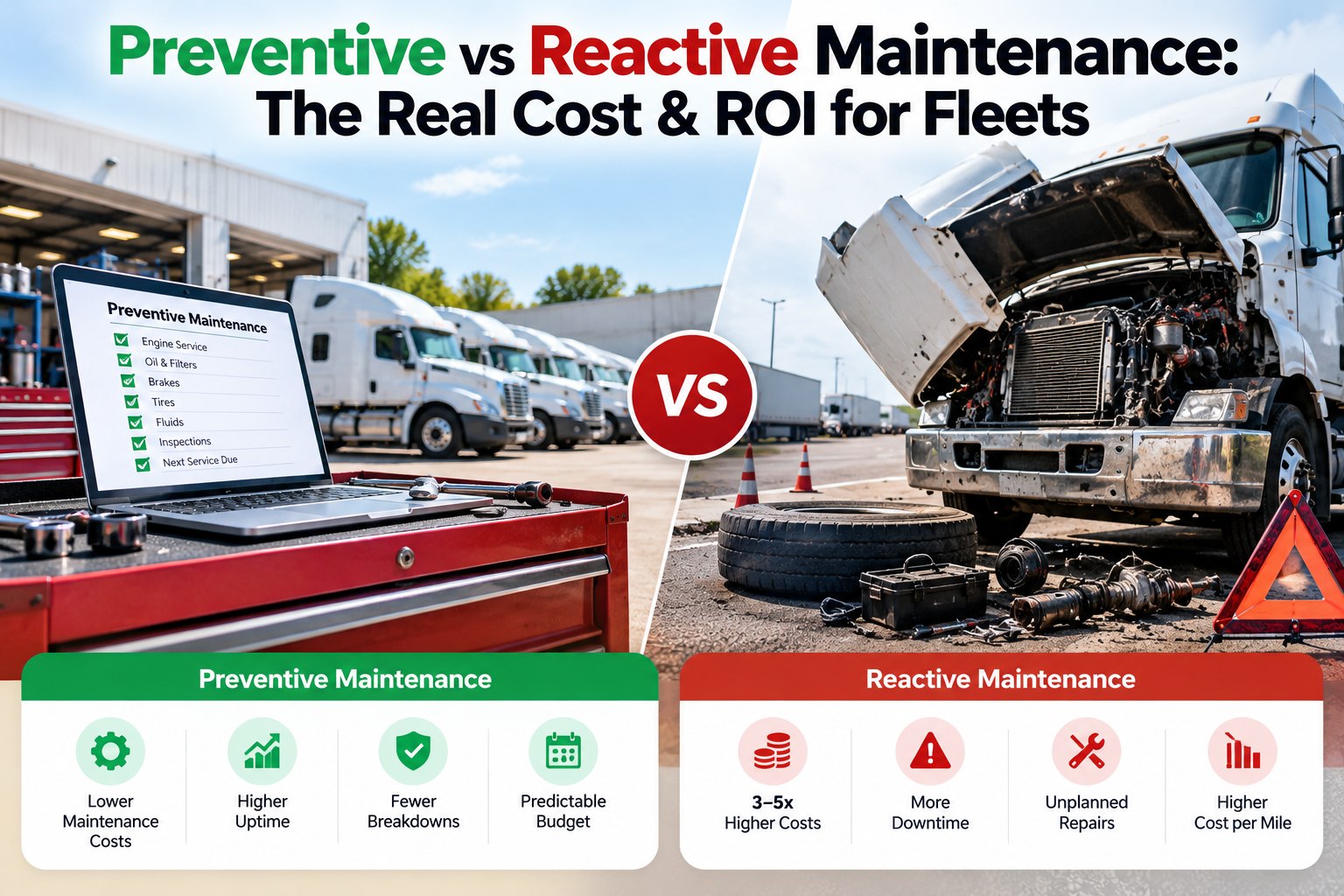
Every fleet manager knows the feeling: a truck breaks down at 2 AM, the driver is stranded, the load is late, and an $800 scheduled repair just became a $4,500 emergency. Multiply this across your fleet, and you understand why reactive maintenance destroys profitability. The solution isn't working harder—it is automating your PM schedule so breakdowns become rare exceptions, not daily firefighting.
The Real Cost of "Fix It When It Breaks"
Fleets still running reactive maintenance are bleeding money they can't see—until it's too late.
reactive vs preventive
vehicle downtime
preventable
with automation
Still Tracking Maintenance on Spreadsheets?
See how automated PM scheduling prevents breakdowns and saves 30%+ on maintenance costs.
Reactive vs Automated PM: The Numbers Don't Lie
The gap between reactive and automated preventive maintenance isn't marginal—it's transformational. Here's what the data shows for a typical 50-vehicle fleet:
- 50-60% unplanned repairs
- $0.18-0.25 cost per mile
- 85-90% vehicle availability
- 120-200 downtime hours/year
- $36,000+ emergency repair costs
- High compliance risk
- 80-85% planned maintenance
- $0.10-0.14 cost per mile
- 96-99% vehicle availability
- 15-40 downtime hours/year
- Minimal emergency repairs
- Audit-ready compliance
Every 10% shift from reactive to preventive maintenance reduces total costs by 6-8%. Fleets achieving 80:20 planned-to-reactive ratios spend 25-35% less than those stuck at 50:50—while achieving better reliability and stronger DOT compliance.
How Automated PM Scheduling Actually Works
Automated PM scheduling isn't magic—it's systematic execution of maintenance best practices, powered by software that never forgets, never miscalculates, and never takes a day off.
Set Your Triggers
Configure PM intervals by mileage, engine hours, or calendar time—whichever comes first. Oil every 15,000 miles, brakes at 25,000, annual DOT inspections.
Automatic Tracking
System monitors every vehicle continuously. Telematics sync updates mileage automatically—no manual entry, no missed updates.
Smart Alerts
Notifications sent at 90/60/30 days before service is due. Alerts escalate to managers if not addressed. Nothing falls through cracks.
Work Order Generation
PM triggers auto-generate work orders with checklists, parts lists, and labor estimates. Technicians know exactly what to do.
Industry data confirms what experienced fleet managers already know: reactive maintenance costs 3-5× more than preventive work. A brake job that costs $420 during scheduled service runs $1,850+ after a roadside failure. An oil change missed by 5,000 miles can trigger engine damage costing $4,000-$10,000—plus towing and 2-3 days of downtime.
Why Spreadsheets and Memory Don't Work
Most fleets start with good intentions. Someone creates a spreadsheet, posts a whiteboard, or relies on experienced drivers to "know" when service is due. Then reality hits:
Missed Intervals
Manual tracking misses services when mileage varies. High-use vehicles get overlooked while low-use trucks get over-maintained.
No Documentation
Paper logs get lost. Service history disappears. DOT audits become nightmares with incomplete records.
Compliance Risk
49 CFR Part 396 requires systematic maintenance programs. "We forgot" isn't a valid audit defense.
Hidden Costs
Emergency parts ship at 35-60% premium. Overtime labor. Towing fees. Rental vehicles. Costs pile up invisibly.
5 Features That Make PM Automation Actually Work
Not all PM software delivers results. The platforms that work share these capabilities that turn scheduling from a chore into an automated system:
Multi-Trigger Scheduling
Set intervals by mileage, engine hours, or calendar—whichever comes first. No manual adjustment needed.
Escalating Alerts
Notifications go to drivers, then managers, then executives if ignored. Critical services trigger immediate escalation.
Auto Work Orders
PM triggers auto-generate work orders with checklists, required parts, and estimated labor times.
Mobile Access
Technicians access work orders, record completions, and document repairs from any device in the field.
Complete History
Every service documented with date, mileage, cost, and notes. Searchable records for audits and warranty claims.
Telematics Sync
Automatic mileage sync from GPS. No manual odometer readings. Real-time data drives accurate scheduling.
Calculate Your PM Automation ROI
For a typical 50-vehicle fleet, here's what automated PM scheduling delivers:
Most fleets see measurable ROI within 30-90 days of implementation.
Ready to Stop Reactive Maintenance?
Join thousands of fleets saving 30%+ with automated PM scheduling. Free to start, live in days.
Getting Started: Your 4-Week Implementation Plan
Transitioning from reactive to automated PM doesn't require months of planning. Most fleets go live within 2-4 weeks using this proven approach:
Setup & Configuration
Import vehicle list, set PM intervals based on manufacturer specs and your operating conditions. Configure alert recipients and escalation rules.
Connect Data Sources
Integrate telematics for automatic mileage sync. Connect DVIR workflows so inspection defects flow directly into maintenance work orders.
Train Your Team
Brief technicians on mobile app usage. Train managers on dashboard monitoring. Review alert handling procedures with dispatch.
Go Live & Monitor
Activate automated scheduling. Monitor PM compliance rates. Adjust intervals based on actual fleet performance data.
Frequently Asked Questions
FleetRabbit offers a free tier for up to 3 assets, with paid plans starting at $3/vehicle/month. For most fleets, the software pays for itself within the first month through prevented breakdowns and reduced admin time. A single prevented roadside breakdown typically saves more than an entire year of software costs.
PM automation works without telematics—drivers can update mileage through the mobile app, or you can use calendar-based scheduling. However, telematics integration eliminates manual entry and ensures scheduling stays accurate as vehicles accumulate miles at different rates.
Most fleets see measurable improvements within 30 days—reduced missed services, better documentation, and fewer emergency repairs. Full ROI typically arrives within 90 days as PM compliance improves and breakdown frequency drops. The admin time savings are immediate.
Absolutely. Automated PM scheduling creates the systematic maintenance program required by 49 CFR Part 396. Complete service histories, documented procedures, and audit-ready records help you pass DOT inspections and avoid compliance penalties.
Stop Firefighting. Start Preventing.
Automated PM scheduling turns reactive chaos into predictable operations. FleetRabbit is free to start—see results in days, not months.