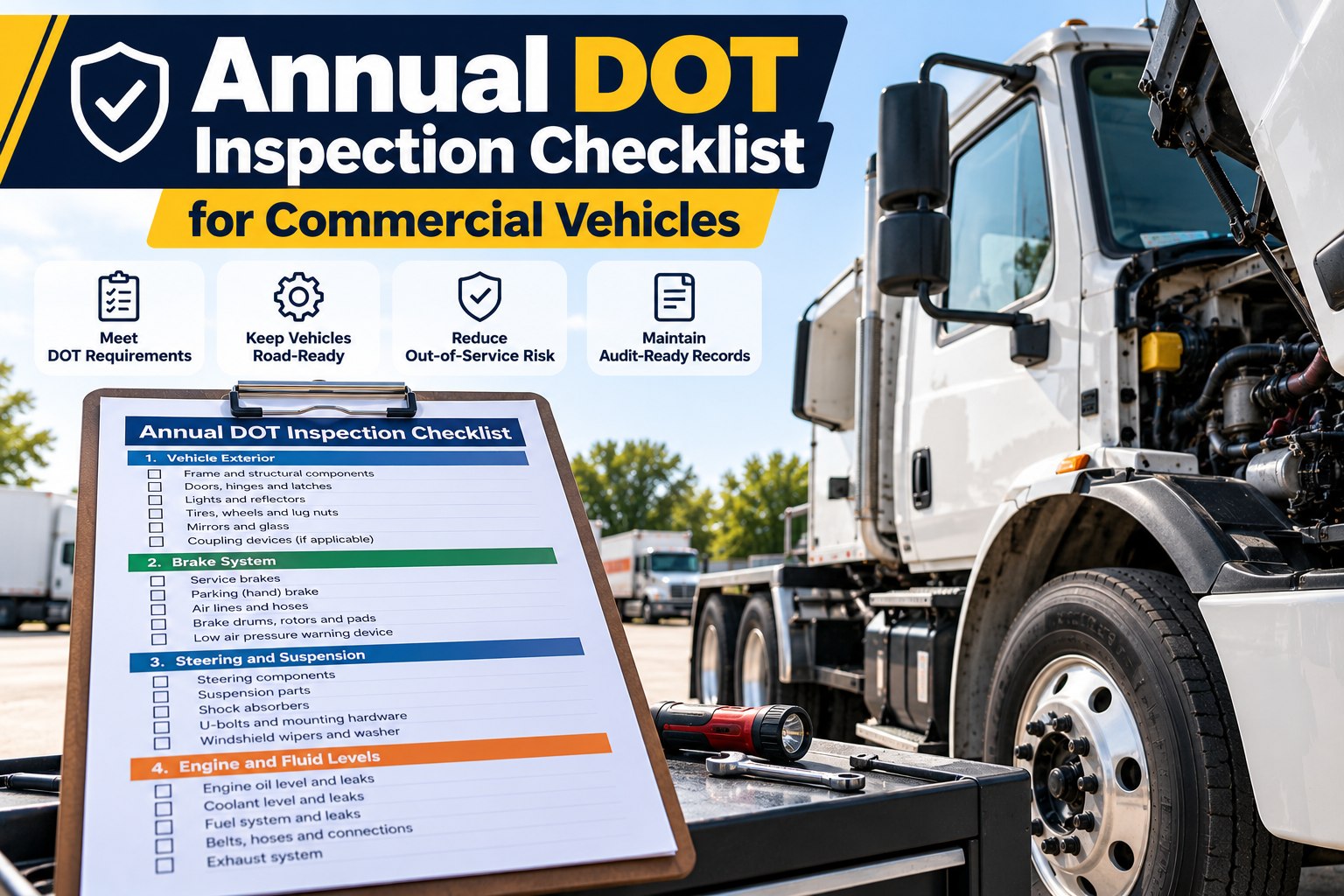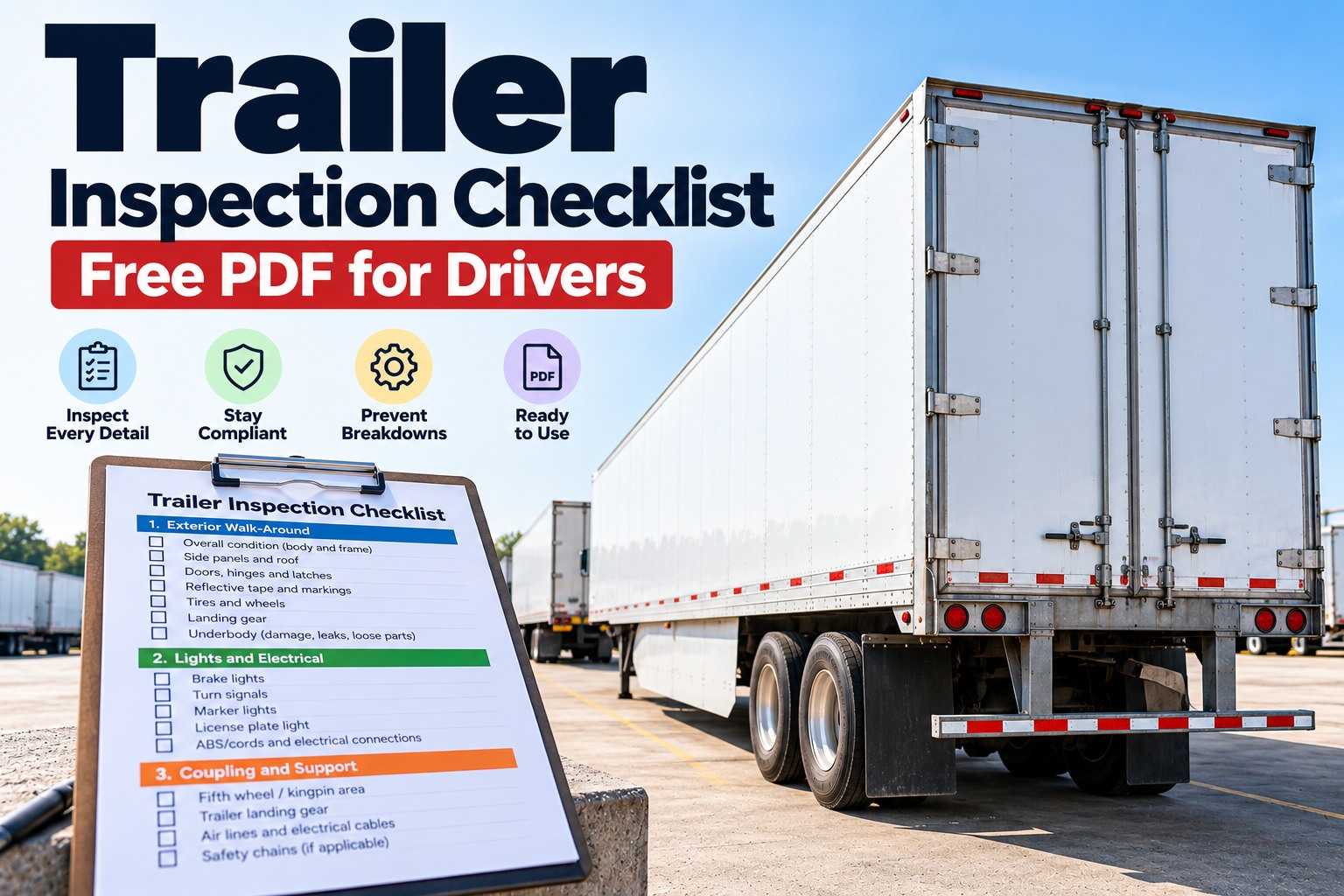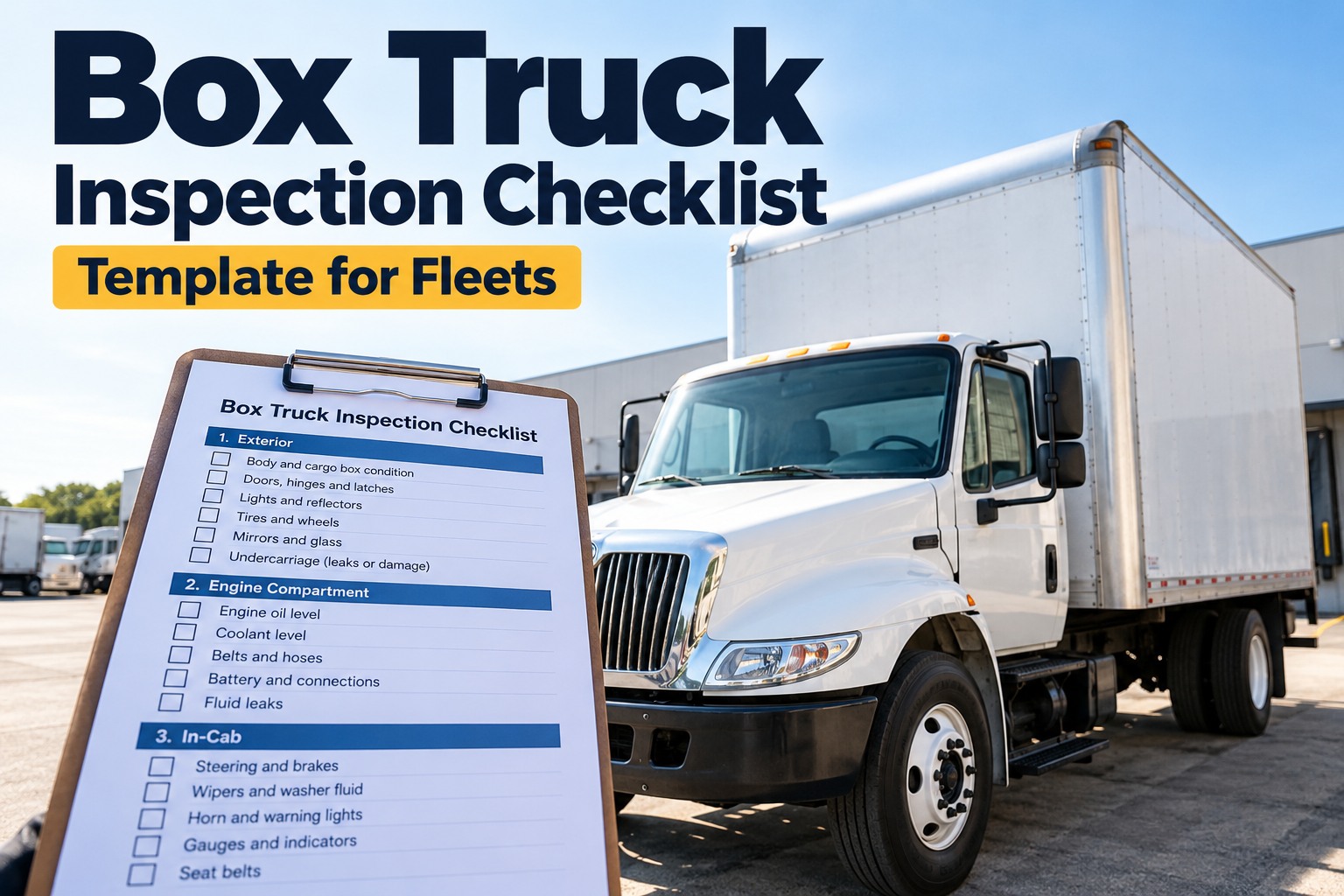
A box truck inspection checklist is a short walkaround that covers the cab, tires, brakes, lights, cargo box and rear door or liftgate before the truck leaves the yard. The route matters as much as the list, because most missed defects are missed by skipping a zone, not by failing to recognize the problem. The six-zone route below has 40 tick boxes you can use on paper or on a phone. Schedule a call to set up your box truck checklist, or compare it with the DOT pre-trip checklist.
The Route: Start at the Cab and Finish at the Back Door
Begin in the driver's seat, then circle the truck in one direction so nothing is skipped. The numbers on the truck match the checklists further down.
Where Box Trucks Fail Roadside Inspections
At the 2025 International Roadcheck, inspectors put 10,148 vehicles out of service from 56,178 inspections and wrote 13,553 out-of-service vehicle violations. Brakes and tires made up most of the top of that list, and zones 3 and 4 below target the same items.
The Checklist, Zone by Zone
Print this page or run it on a phone. Tick each box only after you have looked at the item, not before.
- Seat belt latches and retracts
- Horn, wipers and washer fluid
- Mirrors clean, tight and adjusted
- Windshield free of cracks in the sweep area
- Gauges, warning lights and parking brake
- Fire extinguisher, warning triangles and spare fuses on board
- Registration, insurance and DVIR book present
- Engine oil, coolant and brake fluid levels
- Belts and hoses free of cracks and leaks
- Battery terminals tight and clean
- Power steering fluid and steering play
- No fluid dripping beneath the truck
- Exhaust free of leaks and loose mounts
- Hood latch secure, bumper not loose
- Tread at least 4/32 in on steering tires
- Tread at least 2/32 in on all other tires
- Inflation correct, no bulges or cuts
- Lug nuts present, no rust trails
- Rear duals not touching or mismatched
- Brake pedal firm, no pull when stopping
- Air gauge builds and holds (air brake units)
- Headlights, low and high beam
- Turn signals and four-way flashers
- Brake lights and tail lights
- Marker and clearance lights, all lenses intact
- Reflective tape clean and attached
- Backup lights and backup alarm
- License plate light working
- Floor free of holes, soft spots and oil
- Walls and roof free of leaks and damage
- Tie-down rails, straps and load bars intact
- Interior light and door seals working
- Load secured, heavy items low and forward
- Weight stays within the GVWR on the door plate
- Roll-up or swing door opens, latches and locks
- Door springs and tracks free of damage
- Liftgate platform, rollers and hydraulics sound
- Liftgate controls and safety latch working
- Ramp or bridge plate stored and secured
- Rear bumper, license plate and lights clean
What to Do When a Box Does Not Get Ticked
A checklist is only useful if everyone agrees what a failed item means. Use three levels and write them on the form. Swipe the table horizontally on mobile.
| Finding | Level | Action |
|---|---|---|
| Brake pedal soft, low or pulling | Stop | Do not drive. Tag out and call the shop. |
| Tire bulge, cut cord or tread below limit | Stop | Replace before the next trip. |
| Steering play, fluid leak under truck | Stop | Tag out until a technician clears it. |
| Headlight, brake light or turn signal out | Fix first | Replace the bulb or fuse before dispatch. |
| Liftgate hydraulics slow or leaking | Report | Log it today and restrict liftgate use. |
| Door spring noisy, latch stiff | Report | Schedule within the week. |
| Dirty mirror, worn wiper, torn floor mat | Monitor | Note it and fix at the next service. |
How Often Each Inspection Happens
The walkaround is the daily layer of a longer schedule. Federal rules set the report and the yearly inspection, and your own program sets everything in between.