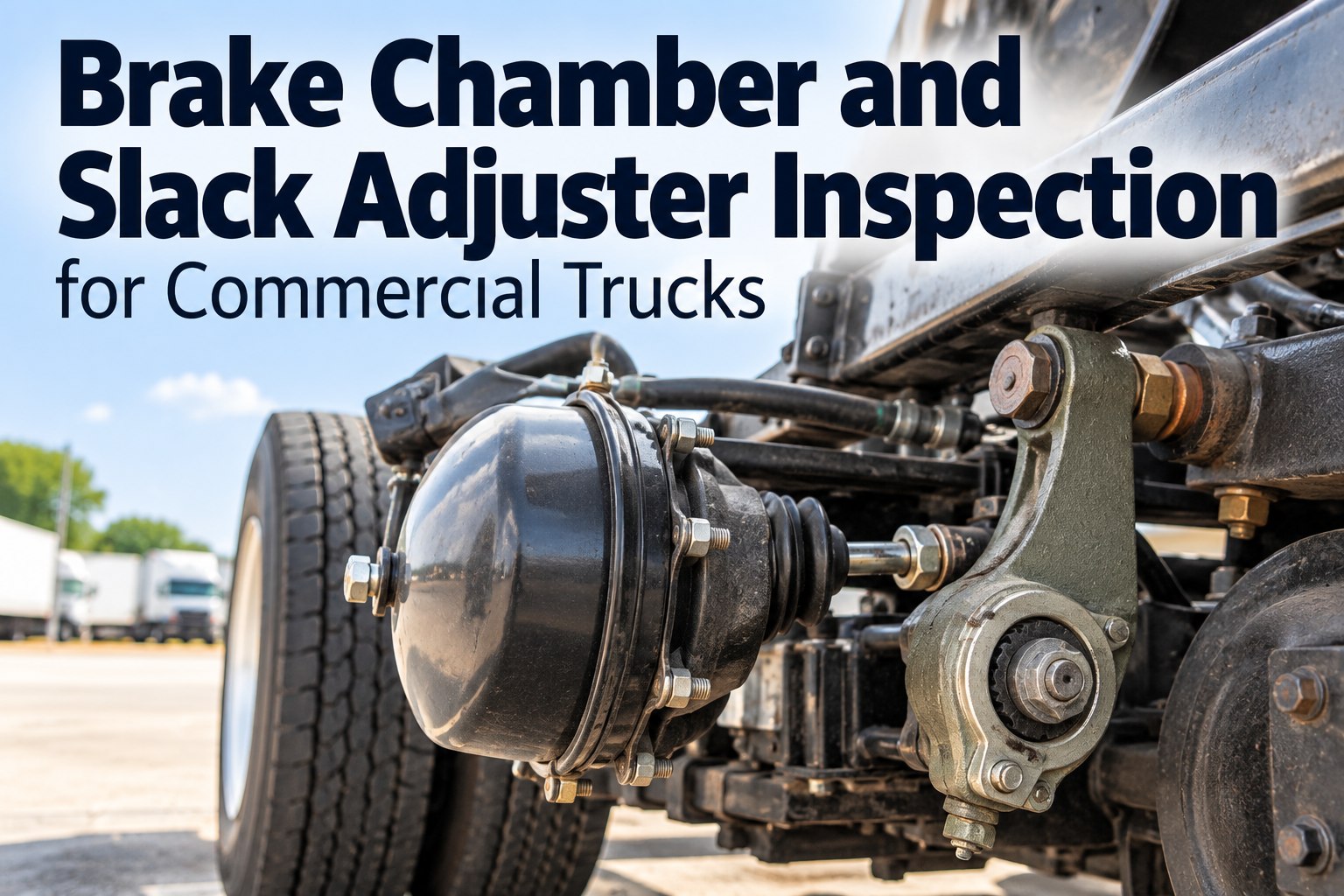
A slack adjuster inspection answers two separate questions, and most shops only ask one. Applied stroke — how far the pushrod travels under a full brake application — tells you whether the brake is legal right now. Free stroke, the small amount of travel before the shoes touch the drum, tells you whether the adjuster and the foundation are healthy, and it is the measurement that catches a problem weeks earlier. Trucks, Parts, Service puts the normal free play range at 3/8 to 5/8 inch, measured at the center of the large clevis pin, and it should match across every brake on the system. The rule that matters most sits behind both numbers: an automatic slack adjuster that is over-stroking must never be manually readjusted. As that publication states, there are many factors that can cause an automatic slack adjuster to overstroke, but none will be remedied by a manual readjustment. This guide covers both measurements, the eight root causes behind over-stroke, the full inspection checklist, the spring brake safety rule, and what the repair costs planned versus at a roadside. Book a 30-minute demo to see wheel-end measurements tracked over time, or start free with 3 vehicles.
If You Adjusted It and It Came Back, You Didn't Fix Anything — You Reset the Symptom.
For fleet mechanics, shop leads and maintenance managers: how to measure free stroke and applied stroke, what over-stroke is actually telling you, and the inspection that finds the cause instead of hiding it.
No credit card required. Works alongside your existing inspection routine.
Free play range per Trucks, Parts, Service technician training. Applied stroke limits come from the chamber type.
The two measurementsFree Stroke Tells You the Truth Long Before Applied Stroke Does
Applied stroke is the compliance number; free stroke is the diagnostic one. A brake can pass its applied stroke limit while its free stroke is already wrong, and that gap is where a shop gets warning that the adjuster, the cam or the springs are going. Measuring both takes a few extra seconds per wheel end. You can record both per wheel end on a free account.
How it's measured
- Brakes released, wheels chocked
- Magnet-ended tape against the face of the chamber
- Measure at the center of the large clevis pin
- Move the slack adjuster with a small pry bar
- Normal range: 3/8 to 5/8 inch
How it's measured
- Bleed the system down to 90–100 psi
- Note the clevis pin position at rest
- Full brake application, held
- Measure the distance the pin travelled
- Compare against the limit for that chamber type and size
Procedure and free play range: Trucks, Parts, Service, "How to measure brake free play and stroke." Applied stroke limits are set per chamber type in the federal readjustment tables; always cross-check the limit marked on the chamber body.
"Properly installed and maintained automatic slack adjusters should never need adjusting after the initial setup."
Mark Kromer, chief engineer at Bendix, quoted in For Construction ProsThe ruleWhy Manually Adjusting an Automatic Slack Adjuster Is the Wrong Move
Backing off an automatic adjuster to bring a measurement into range hides a mechanical problem and resets the clock on a brake that will drift again — usually sooner. The industry position is unambiguous: many factors can cause an automatic slack adjuster to over-stroke, and none of them are remedied by a manual readjustment. Treat over-stroke as a symptom and go looking for its cause. We'll show repeat over-stroke flagged per wheel end in a demo.
Root causesEight Things to Check When a Slack Adjuster Keeps Over-Stroking
This is the list that replaces the wrench. Work through it with the drum off where the findings warrant it, and record what you found so a repeat visit starts further along. Log findings against each cause, free on 3 vehicles.
Radial and axial end play in the bushings lets the cam move instead of rotating the shoes into the drum.
Check radial play and end play at every wheel endA worn cam profile or flattened rollers changes how far the pushrod has to travel for the same braking force.
Inspect the cam head and rollers with the drum offShoe return springs that no longer pull the shoes back leave the adjuster chasing a moving zero point.
Confirm the shoes return to true zero strokeA pin that cannot move freely binds the linkage and defeats the adjustment mechanism.
Free the pin, clean it, coat with anti-seizeMissing lubrication at the cam tube or the adjuster body stops the internal mechanism working as designed.
Lubricate on the maker's interval, with the specified greaseWear and cracking inside the adjuster itself mean it can no longer hold the setting.
Replace the adjuster — it is not a serviceable adjustmentAn oversized, heat-checked or out-of-round drum increases travel before the shoes bite.
Measure the drum diameter and check the surfaceSlack adjusters and chambers must match in type and size across an axle, or one side works harder than the other.
Confirm both sides match before chasing a measurementInspection points drawn from Bendix guidance as reported by For Construction Pros, covering camshaft and cam tube lubrication, cam head and roller wear, friction block condition, camshaft bushing radial and axial end play, drum diameter and finish, and shoe and chamber return springs.
A spring brake chamber stores enough energy to injure someone who opens it
The power spring inside a spring brake chamber stays under load whether or not there is air in the system. Cage the spring with the supplied caging bolt before removing or servicing the chamber, never cut or torch a chamber apart, and replace a damaged or corroded chamber as a unit rather than attempting to open it. Anyone working on wheel ends should know this before they pick up a tool.
The checklistWhat a Complete Brake Chamber and Slack Adjuster Inspection Covers
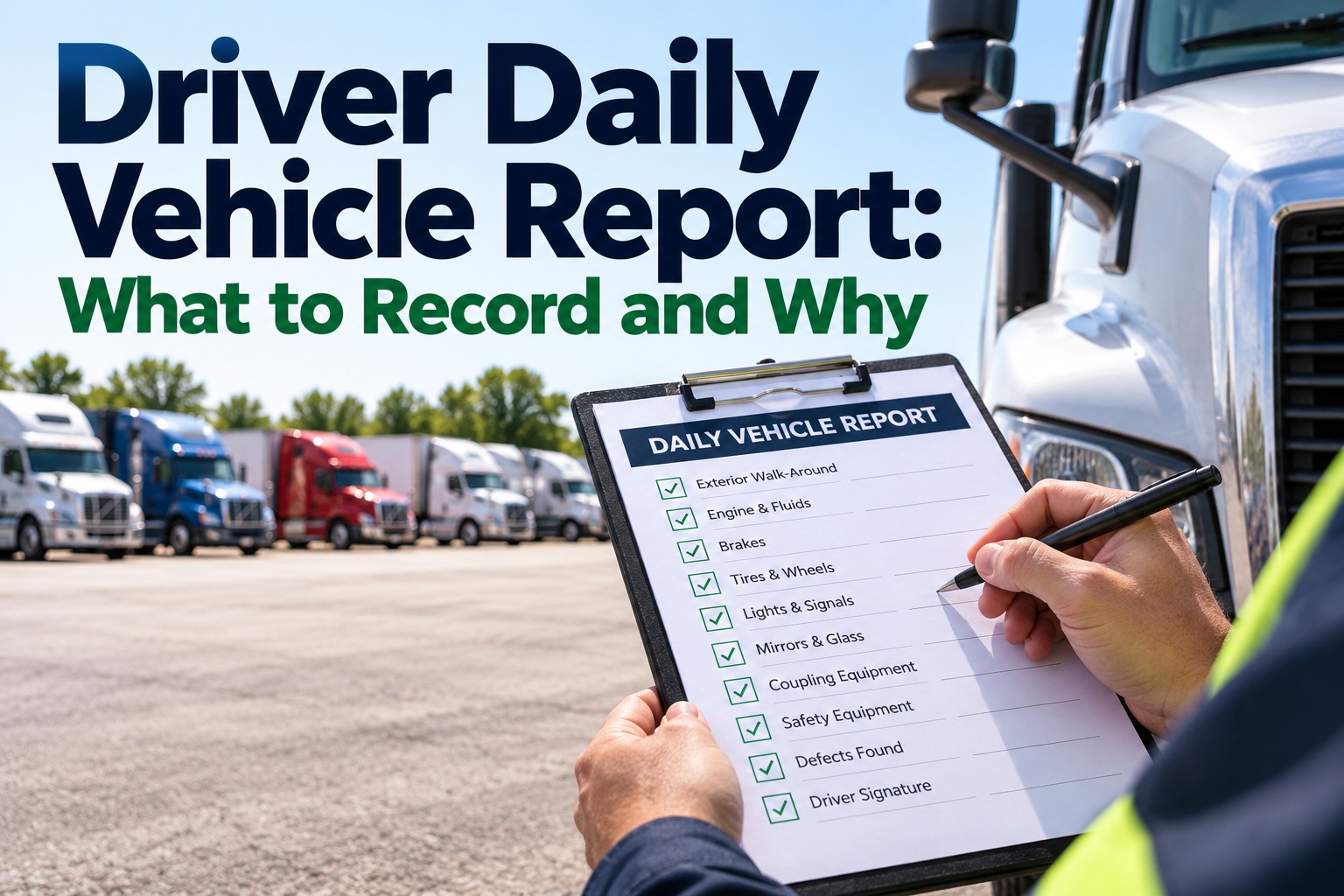
Twelve checks, all of which can be recorded per wheel end so the next inspection compares against the last one rather than starting fresh. Put them on the daily inspection report where a driver can see them, and on the PM sheet where a technician can measure them. We'll build this as your template in a demo.
Which Wheel Ends Have Been Adjusted More Than Once This Year?
That single question usually finds the failing adjusters and cam bushings in a fleet. Bring your last few brake inspection sheets and we'll load the measurements, group them by unit and wheel position, and show which ends are drifting between services instead of holding.
SymptomsWhat Drivers Report When a Chamber or Adjuster Is Failing
Drivers rarely say "over-stroke." They describe feel, sound and behavior, and these four patterns are the ones worth turning into a work order the same day. Turn driver reports into measurements, free.
One end doing more work than the other — often uneven stroke, a seized adjuster, or a dragging brake on the opposite side.
Force at the foundation falls as stroke grows, so the truck needs more distance for the same pedal.
A leaking chamber diaphragm or fitting shows up as pressure loss that gets worse on application.
A brake that is not fully releasing — return springs, a seized cam, or a stuck adjuster.
LubricationThe Service Interval That Keeps Adjusters Working as Designed
Most adjusters that stop adjusting were never lubricated on schedule. Bendix recommends an NLGI grade 2 lubricant at every preventive maintenance inspection, which it puts at roughly every three months or 30,000 miles, and advises following the manufacturer's own specification for frequency and grade. Build it into preventive maintenance rather than leaving it to memory. See it scheduled per unit in a demo.
NLGI grade 2 per Bendix guidance, or the grade the adjuster maker specifies for your component.
Every PM inspection — roughly every three months or 30,000 miles by that guidance, tightened for severe duty.
The camshaft and cam tube need lubrication too; a dry cam makes a healthy adjuster look faulty.
A lubrication record is what tells you whether a repeat over-stroke is a service gap or a failing part.
CostWhat This Repair Costs in the Bay Versus at the Side of the Road
The parts here are inexpensive relative to almost anything else on a truck; the cost is entirely in where and when the work happens. Industry benchmarking puts unplanned downtime at roughly $448 to $760 per truck per day before towing and repair, and ATRI puts 2025 repair and maintenance cost at $0.215 per mile, up 8.6%. A wheel end found at a PM is a short job; the same wheel end found at a scale house is a parked truck with a load behind it. Estimate your own exposure with our team.
Relative cost by where the work happens, illustrative — not prices. Downtime benchmark: FleetNet America and ATA's Technology & Maintenance Council via industry reporting.
MeasureFour Numbers That Show Whether Your Wheel Ends Are Actually Holding
A single stroke reading is a snapshot. These four turn the snapshots into a trend, which is what tells you a component is failing rather than a setting drifting. Start tracking them free.
QuestionsSlack Adjuster and Brake Chamber Questions Fleet Mechanics Ask
What is normal free stroke on an air brake?
Roughly 3/8 to 5/8 inch measured at the center of the large clevis pin, and it should be consistent across every brake on the system. A reading outside that range is a reason to inspect the foundation components, not to adjust the slack adjuster. See free stroke tracked per wheel end.
Can I manually adjust an automatic slack adjuster?
You should not use manual adjustment to correct over-stroke. Many things cause an automatic adjuster to over-stroke and none of them are fixed by readjusting it — the measurement comes back while the underlying wear continues. Track repeat adjustments free.
Why does the same wheel end keep going out of adjustment?
Usually worn camshaft bushings, a worn cam head or rollers, weak return springs, a seized clevis pin, missing lubrication, or an adjuster that has worn internally. Drum condition and mismatched components on the axle also produce it. Review your repeat offenders with us.
How often should slack adjusters be lubricated?
Bendix recommends NLGI grade 2 lubricant at every preventive maintenance inspection, which it describes as roughly every three months or 30,000 miles — and to follow the component maker's own specification. Put it on the PM schedule free.
Do both sides of an axle have to match?
Yes. Slack adjusters and air chambers on an axle must match in type and size, including arm length, or one side applies differently from the other. Check that before chasing an odd measurement. Check your configurations with our team.
Is it safe to take a spring brake chamber apart?
No. The power spring stays under load with or without air in the system. Cage it with the caging bolt before removal, never cut or torch a chamber, and replace damaged chambers as a complete unit. Record chamber replacements per unit free.
Keep Every Stroke Reading Against the Wheel End It Came From
FleetRabbit stores free stroke, applied stroke, lubrication and parts fitted per wheel position, flags the ends that drift between services, and turns a driver's brake complaint into a work order with that position's full history attached.
No credit card required. Start with your next PM.