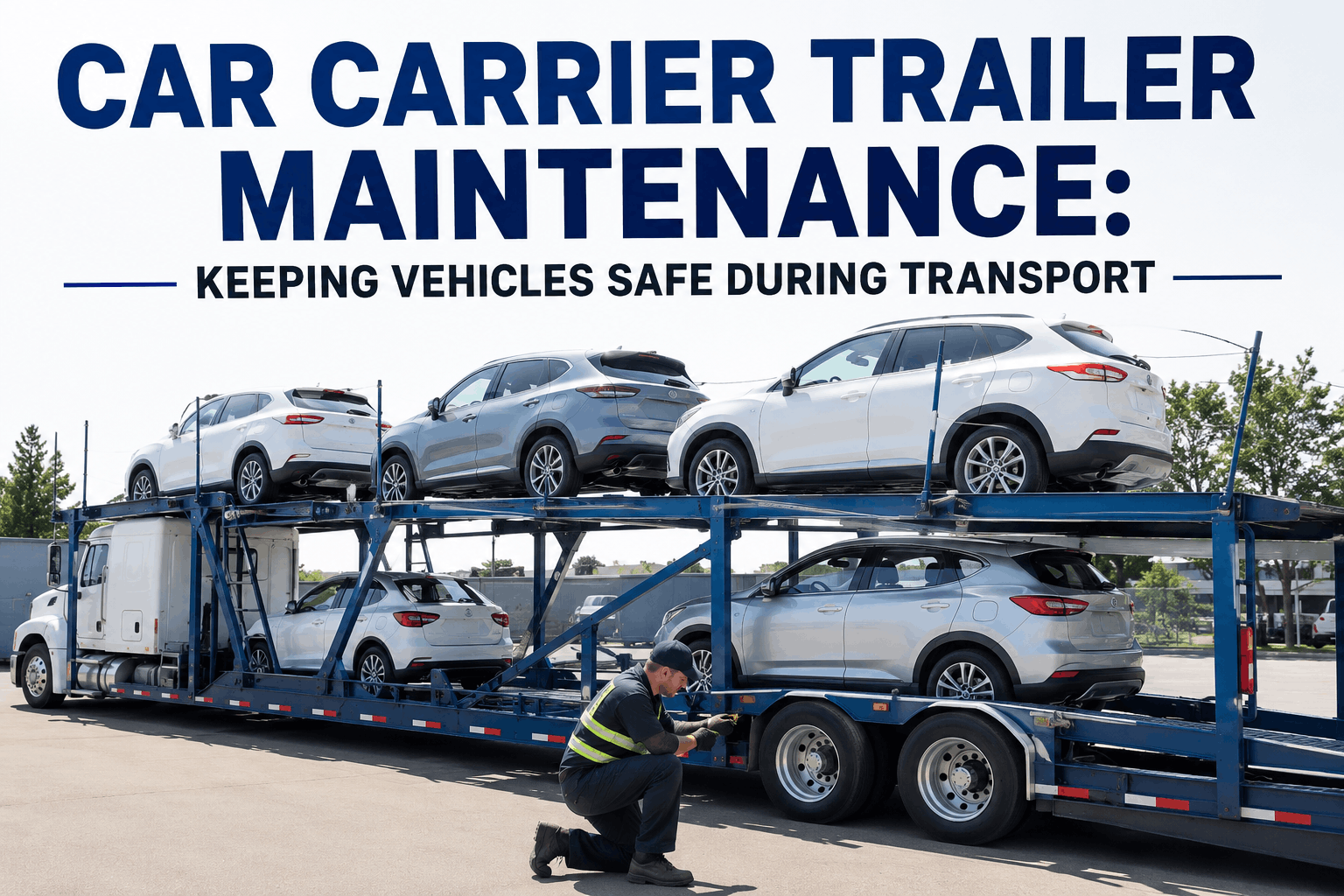
Car carrier trailer maintenance isn’t just about extending equipment life—it’s the invisible shield that protects millions of dollars worth of vehicles on the road. Every year, preventable trailer failures cause costly delays and damaged cargo. With FleetRabbit’s smart telematics and inspection workflows, you move beyond guesswork. sign up for a smarter maintenance ecosystem or book a demo to see how real-time trailer diagnostics reduce accidents.
Car Carrier Trailer Maintenance: Keeping Vehicles Safe During Transport
From five-car wedge trailers to advanced hydraulic Cottrell models, a single overlooked air leak or worn tire can lead to catastrophic failure and damaged luxury vehicles. The National Highway Traffic Safety Administration notes that 29% of cargo-related incidents in auto transport trace back to poor trailer upkeep. Whether you own a small fleet or manage 50+ haulers, mastering auto transport trailer inspection protocols is non-negotiable. Let’s dive into data-backed strategies that keep every vehicle secure.
1. Why Vehicle Hauler Inspection Saves Lives & Revenue
Your car carrier endures constant stress: heavy hydraulic lift systems, moving decks, and dozens of tie-down points. Without rigorous vehicle hauler inspection, micro-cracks in the frame or frayed chains go unnoticed. Fleet data shows that fleets using digital pre-trip checklists reduce violation rates by 58%. sign up for FleetRabbit to automate DVIR and avoid DOT penalties. Moreover, proper maintenance directly impacts insurance premiums — certified inspection logs lower liability costs by nearly 22%.
2. Cottrell Trailer & Hydraulic Deck Precision
Leading manufacturers like Cottrell dominate the car-hauling industry. Their MUV and MVP series require specialized attention: inspect pivot pins, slide mechanisms, and hydraulic fluid contamination. A leaking cylinder can drop an upper deck suddenly — causing scrapes and frame damage to high-end sedans. Implement a 30-day hydraulic oil analysis program. book a demo to see how FleetRabbit’s maintenance reminders reduce Cottrell repair costs by 34%. Additionally, check for equalizer beam cracks and roller wear: these silent threats account for 19% of structural failures in five-year-old trailers.
Pro Tip: After every 15,000 miles, torque all suspension U-bolts and inspect the gooseneck coupling. Loose bolts are responsible for nearly 12% of coupling detachment risks in auto transport trailers.
3. Brake & Lighting: The Most Critical Safety Net
According to the CVSA’s 2025 Roadcheck, lighting defects and brake adjustment issues are top violations for car carriers. A single burnt-out tail lamp on a multi-car hauler can trigger a Level 1 inspection, costing hours of delay. Combine air system checks with automatic slack adjuster testing weekly. Develop a ‘brake balance test’ routine: measure pushrod stroke and check for audible air leaks. Fleets using predictive brake wear sensors cut unplanned repairs by 41%. sign up to access real-time trailer health dashboards. Remember, load security lights must illuminate all tie-down points — non-compliance fines average $2,800 per event.
second visual: statistics inside carousel-like row4. Creating a Preventive Maintenance Schedule (That Works)
We recommend tailoring intervals based on mileage and operating environment. For example: daily walkaround (tires, lights, chains), weekly air dryer filter change, monthly lubrication of all moving decks and winch tracks. Integrate technology: digital sensors can track hydraulic temperature, tire pressure, and door latch status. The most profitable fleets follow a 90-day major inspection covering frame alignment, deck panel fatigue, and gearbox lubrication. Using FleetRabbit’s cloud-based platform, you can build automated reminders, attach photos, and assign tasks to technicians. book a demo to explore our AI-driven inspection checklists that boost compliance by 87%.
5. Loading & Securement: The Final Defense
Even a perfectly maintained trailer becomes dangerous if vehicles are improperly tied. Use at least four-point restraints per car, inspect webbing for cuts, and replace any ratchet with less than 80% remaining strength. Overhang limits: standard carriers allow 36 inches front/rear, but be aware of axle weight distribution. Overloaded front axles cause steering instability and increased tire blowouts. Fleet data suggests that 33% of cargo damage claims stem from improper securement, not mechanical failure. Implement a 'load master' certification for drivers; sign up to get digital load verification templates on FleetRabbit.
Don’t let hidden trailer defects risk your reputation
Join hundreds of auto haulers using FleetRabbit to reduce cargo damage and improve DOT scores. Get real-time analytics and maintenance history.
Real-World ROI: From Reactive to Predictive Maintenance
Consider a Midwest auto hauler with 12 Cottrell trailers: after shifting to a digital fleet management system (like FleetRabbit), they reduced flat tires by 48% and eliminated two major deck collapses in 18 months. The secret? Routine inspection data linked to parts inventory and service alerts. Every time a driver flagged a weak airbag, the maintenance team was notified before failure. That’s the power of connecting inspection workflows. book a demo to see the live dashboard in action.
Climate & Corrosion Protection: Overlooked Factor
Road salts and humidity accelerate rust on wire harnesses and hydraulic fittings. Undercoating trailers and using dielectric grease on electrical connectors reduces breakdowns by 27% in winter conditions. Incorporate corrosion check into your quarterly inspection — many carriers miss hidden oxidation near the fifth wheel plate. And always wash the undercarriage after hauling in de-iced zones. sign up to get customizable annual maintenance templates for seasonal threats.
Frequently Asked Questions
Ready to revolutionize your trailer maintenance?
Stop cargo damage before it happens — thousands of vehicles protected with FleetRabbit. Sign up now and keep every transport safe and compliant.