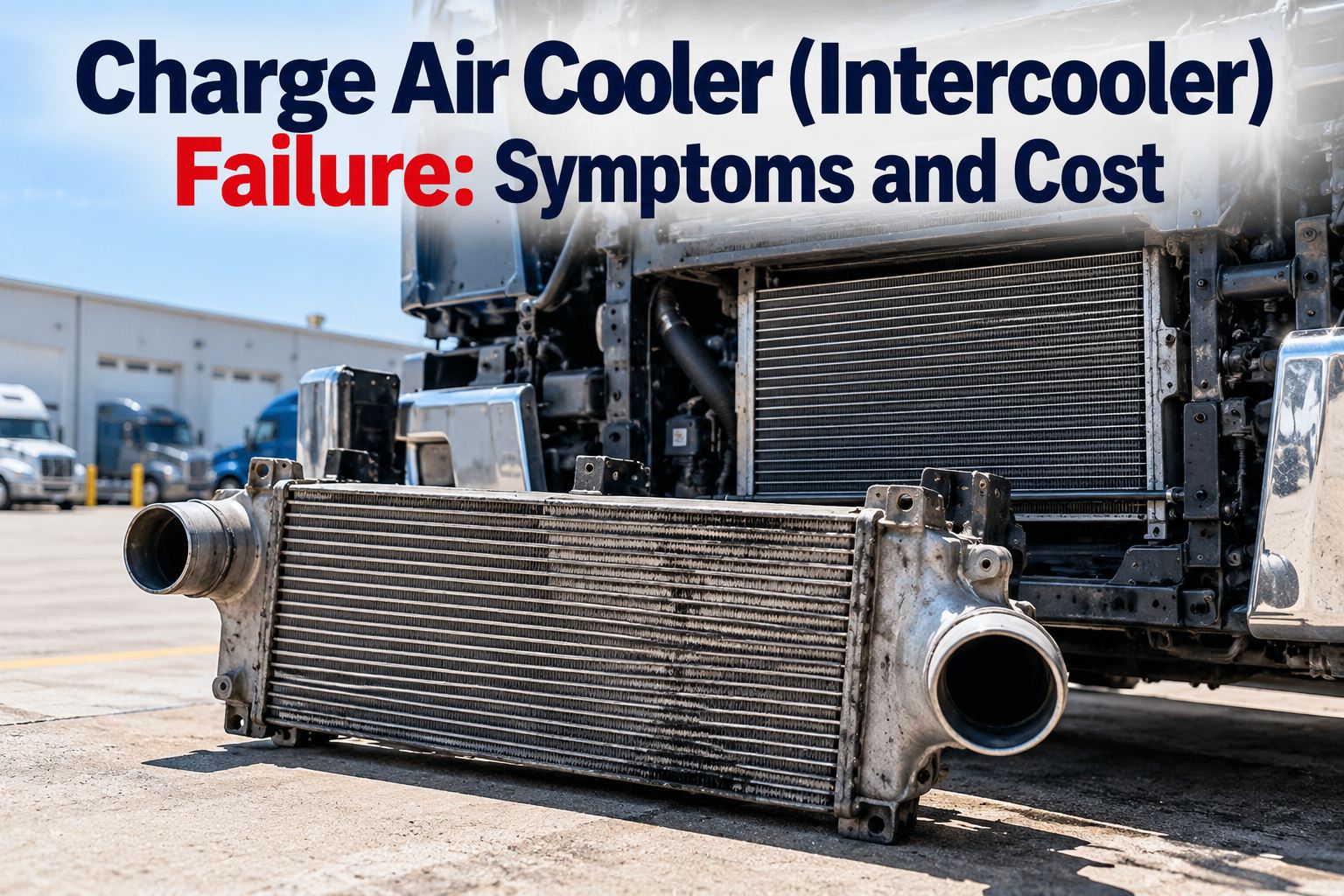
Charge air cooler failure usually shows up as lost power, worse fuel economy and a hissing or whistling sound before it shows up as a breakdown. The charge air cooler, also called the intercooler, cools the air the turbo has compressed so the engine gets denser air, and a leak or blockage means it gets less. This page covers the symptoms from early to urgent, the four common causes, a five-step diagnosis, and what parts cost for heavy-duty trucks. Schedule a call to log charge air cooler repairs and PM reminders in one place.
HEAVY-DUTY TRUCK DIAGNOSTICS · TECHNICIANS AND FLEET MANAGERS
A Boost Leak You Can Hear Is One You Are Already Paying For
Lost power, thirstier fuel use and a hiss under load all point at the same place. Here is how to find the cause quickly and what to expect on the invoice.
THE AIR'S PATH TO THE ENGINE
1
TURBOCHARGER
Compresses the air
Hot and compressed
2
PIPING AND HOSES
Carries it forward
Leaks start here
3
CHARGE AIR COOLER
Sheds heat to the airflow
Cooler and denser
4
ENGINE INTAKE
Burns more fuel cleanly
Full power
What the Charge Air Cooler Does
A turbocharger heats the air it compresses. Cooling it before it reaches the engine makes it denser, which raises power, lowers combustion temperatures and helps both fuel economy and emissions. When the cooler leaks or clogs, the engine loses the benefit and the turbo works harder to make up for it.
1
Turbo
Compresses intake air and heats it as it does.
→
2
Hot-side pipe
Carries the hot air to the cooler.
→
3
Charge air cooler
Cools the air with outside airflow.
→
4
Cold-side pipe
Returns cooler, denser air.
→
5
Intake manifold
Delivers it to the cylinders.
Symptoms, From Early to Urgent
Most failures give warning. The sooner the signs are written down, the cheaper the fix is likely to be.
EARLY
Watch it
- Slightly less power on grades
- Fuel economy slipping on familiar routes
- Whistling or hissing at idle or under load
DEVELOPING
Find it this week
- Noticeably sluggish throttle under load
- Higher engine and exhaust temperatures
- Boost or intake air temperature fault codes
- Oil film in the intake piping or air filter housing
URGENT
Stop and check
- A "pop" followed by sudden power loss, often a hose or clamp
- Black or white smoke under load
- Turbo surge or unstable boost
Four Causes of Charge Air Cooler Failure
OUTSIDE
Clogged or bent fins
Bugs, dirt and road debris block airflow. This is the most common problem, and bent fins restrict air the same way.
CONNECTIONS
Hoses and clamps
Cuts, abrasion from rubbing and clamps that are crooked or wrongly torqued let boost air escape. White fabric showing under a clamp suggests leaking.
CORE
Cracks and weld failures
Vibration can crack the end tank welds and core-to-tank joints, which causes a pressure leak.
INSIDE
Oil and moisture
Worn turbo seals push oil into the cooler, where it coats the fins. Moisture is a further problem on humid or high-altitude routes.
Same truck, same boost fault, third time?
Log each fault and repair against the unit so a repeat problem shows up as a pattern, not a surprise.
Diagnose It in Five Steps
This order finds most leaks without removing the cooler until you need to.
1
Read the codes
Check for boost pressure and intake air temperature faults, and note whether they are active or stored.
2
Look and listen
Inspect hoses, clamps, fins and mounts with the hood closed, and listen for hissing at idle.
3
Find the leak
Spray soapy water on seams, tubes and joints while the system is pressurized and look for bubbles.
4
Pressure test
Cap the inlet and outlet, pressurize to the maker's spec and watch the drop.
5
Repair or replace
Fix clamps and hoses, clean fins, or replace the cooler if the core or tanks are damaged.
The Pressure Test
Pressure testing is the step that confirms a leak. Always use the engine maker's specification, because test pressure and hold time vary. Swipe the table horizontally on mobile.
← Swipe to see all columns →
What Parts Cost
Public price lists show what the part itself costs. The bar chart uses one aftermarket parts retailer's listing prices in US dollars for heavy-duty cooler units and kits across many truck makes. Labor and OEM parts are extra, and prices move.
LISTED PARTS PRICES, US DOLLARS
Cooler hose kit
$63 – $155
Charge air cooler
$432 – $940
Cooler plus radiator kit
from $2,046
Prices are from one retailer's listings of 42 items. Each bar spans the lowest to the highest listed price for that kind of part. Bars show parts only, so they exclude labor, tax and shipping.
What Else Is on the Bill
The cooler is rarely the whole cost. Ask your shop to quote each of these separately so you can compare repair and replacement fairly. A patched core is usually a short-term fix, so a cracked cooler is normally replaced.
Parts
The cooler, hoses, clamps and seals. This is the one number with public prices.
Labor
Shop rate multiplied by hours, which varies by truck model and access. Get it quoted.
Diagnosis
Scan, leak and pressure test time, even if the repair is small.
Related repairs
A turbo that is feeding oil into the cooler will foul the new one too.
Downtime
Tow, lost loads and driver time if the truck fails on the road.
How to Catch It Before It Fails
A simple schedule finds blocked fins and loose clamps long before a hose lets go.
EVERY TRIP
Look and scan
Check piping, boots and clamps for damage and watch the dash for fault codes.
→
EVERY OIL CHANGE
Inspect the cooler
Check fins, hoses and clamps for rubbing, blockage and leaks.
→
SCHEDULED SERVICE
Pressure test
Leak test the cooler and check the intake piping for oil.
→
HIGH MILEAGE
Check efficiency
Compare boost data and consider replacing a cooler that has degraded.
Keep Every Boost Fault and Repair on the Truck's Record
FleetRabbit stores fault codes, inspection findings, repairs and parts against each unit, and sends reminders for the cooler inspections and pressure tests above. A driver's note about a hiss becomes a work order the shop can act on.
Faults tied to the unit
Repairs and parts logged
PM reminders
Repeat-failure history
Frequently Asked Questions
What are the symptoms of a failing charge air cooler?
Reduced power, worse fuel economy, higher engine temperatures, hissing or whistling, boost or intake air temperature fault codes, oil in the intake piping and, in urgent cases, a pop followed by sudden power loss.
What causes charge air cooler failure?
Clogged or bent fins, damaged hoses and clamps, cracked end tanks or core joints, and oil or moisture inside the cooler. Debris on the outside is the most common problem.
Can I drive with a leaking charge air cooler?
A small leak will cost power and fuel, and it makes the turbo work harder. A failed hose or clamp can cause sudden power loss, so repair it promptly rather than running it.
How much does charge air cooler replacement cost?
In the listings reviewed, heavy-duty coolers run from about $432 to $940 for the part, and hoses and clamps are much cheaper. Labor, OEM pricing and any related repairs come on top, so ask your shop for a written quote.
How often should it be inspected?
At least at every oil change, with a daily look at the piping and a pressure test at scheduled service. Trucks in dusty, hot or stop-and-go work need it more often.
Can a cracked cooler be repaired?
Patching is usually a short-term fix. If the core or end tanks are cracked, replacement is the lasting repair. Find out why it cracked, since vibration and oil fouling can repeat.
What does FleetRabbit cost?
Hear It Early, Fix It Cheap
A driver who reports the hiss, a technician who tests before replacing and a record that shows the history turn a roadside failure into a scheduled repair.
Free tier for up to 3 vehicles · No credit card required · Repairs stored per unit
October 10, 2026By Emily Parker
All Blogs