Managing a chip truck fleet in forestry operations demands relentless attention to hydraulics, tire health, and body integrity. Unlike standard dump trucks, wood chip hauling exposes vehicles to extreme moisture, abrasive bark residue, and high-cycle live-floor or ejector systems. Without proactive maintenance, breakdowns spike, and downtime can cost a forestry operation up to $1,200 per hour. sign up for FleetRabbit's digital fleet hub or book a demo to see how tailored forestry maintenance plans reduce unplanned outages.
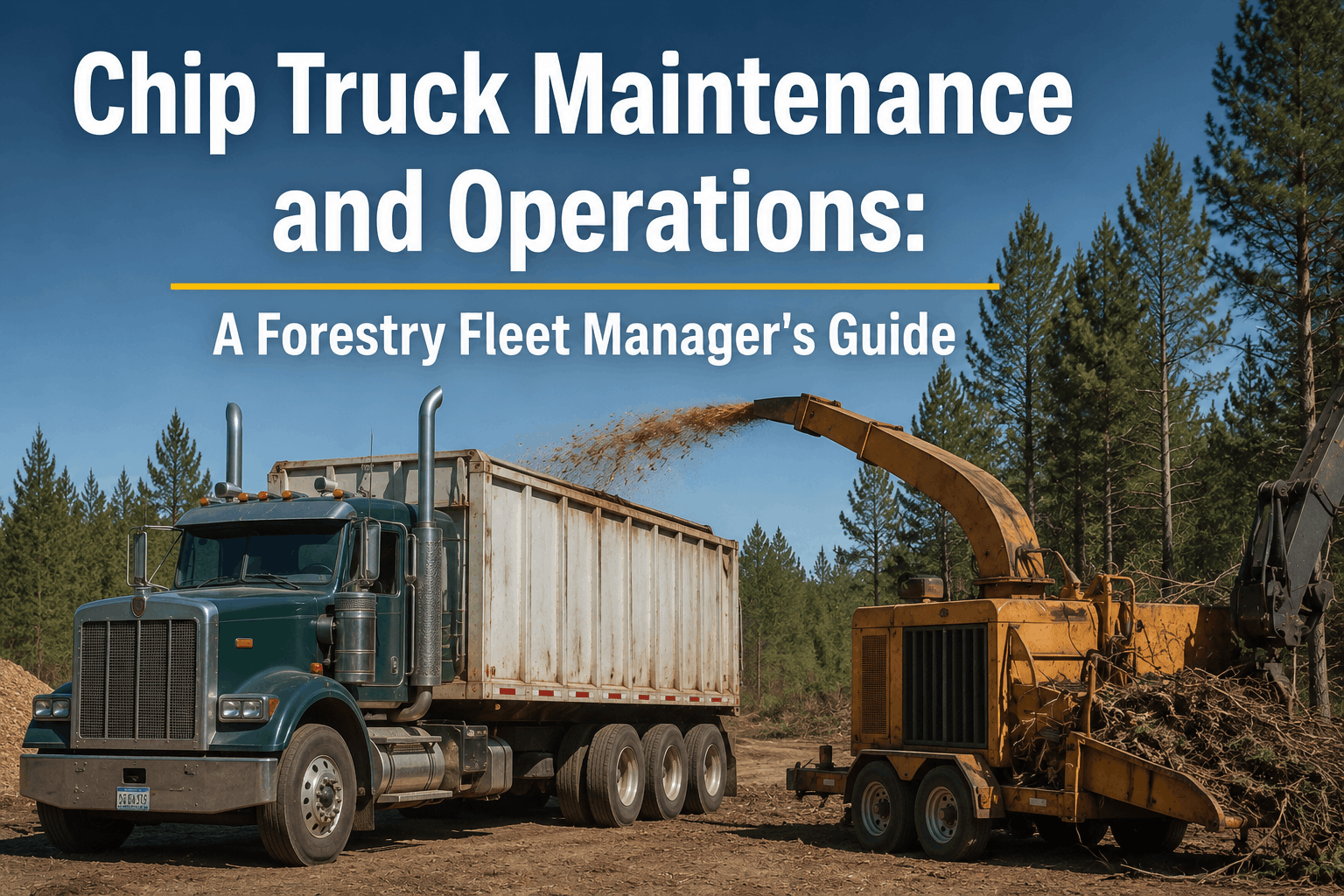
Chip Truck Maintenance and Operations: A Forestry Fleet Manager's Guide
From cascade logging sites to large-scale biomass facilities, chip trucks are the backbone of wood fiber logistics. Yet many fleets suffer from early wear on hydraulic pumps, corrosion in subframes, and overlooked conveyor chain tension. Data from the Forest Resources Association shows that preventive maintenance can reduce chip truck unscheduled downtime by 48%. Whether you operate live-floor trailers or walking-floor chip vans, this guide delivers actionable tactics backed by real-world forestry data.
statistics block to add engagement1. Hydraulic System Care for Chip Bodies
The hydraulic system powers live floors, ejector gates, and tarp arms – all essential for efficient wood chip unloading. Contaminated oil is the number one cause of valve sticking and pump cavitation. For forestry chip trucks, water ingress from pressure washing and condensation accelerates oxidation. Change hydraulic filters every 500 operating hours and take oil samples quarterly. sign up to get automated oil sampling reminders and real-time trend analysis. A well-maintained system also prevents cylinder drift, which can lead to uneven load distribution during transport – a common cause of roll instability on forest roads.
2. Tire & Suspension Strategies for Rough Forestry Roads
Gravel roads, sharp turns, and heavy chip loads create extreme tire strain. Forestry chip trucks typically require all-position ribbed or traction tires with ply rating up to 18. Underinflation leads to sidewall cuts from logging debris; overinflation reduces traction on wet grades. Implement a daily tire pressure check and visual inspection for embedded wood splinters. Statistics indicate that 28% of chip truck blowouts are due to punctures from roadside debris. book a demo to learn how FleetRabbit's tire health module tracks PSI anomalies. Additionally, check spring hangers and equalizers every 15,000 miles because rough terrain accelerates suspension fatigue.
Forestry fact: Wood chip dust masks early bearing noise. Use thermal imaging quarterly to detect hot wheel ends before failure – fleets adopting this reduce roadside trailer fires by 34%.
3. Corrosion Control and Body Preservation
Chip trucks are constantly exposed to moisture, acidic tree sap, and wood acids that accelerate rust in subframe rails, crossmembers, and hinge points. High-pressure washing after every shift helps, but also apply lanolin-based undercoating twice a year. Pay special attention to electrical harness connections near the rear gate – corrosion causes intermittent lighting violations. According to CVSA data, lighting defects are the top violation for chip haulers (38% of all inspections). sign up to leverage digital pre-trip checklists that enforce corrosion inspection checkpoints.
4. Live Floor & Conveyor Chain Maintenance
The conveying system (slat floors, belts, or walking floors) is the heart of a chip truck’s unloading efficiency. Regularly inspect slat wear bars, adjust chain tension, and lubricate bearings per manufacturer specs. A seized roller can snap the chain, leading to 8+ hours of downtime and costly body removal. Fleet data indicates that 45% of unplanned chip truck repairs involve the live floor system. Use a maintenance log to track chain elongation – replace when stretch exceeds 3%. book a demo to see how FleetRabbit alerts you when critical component intervals approach. Also, never ignore the hydraulic motor that drives the floor; low charge pressure increases wear dramatically.
5. Brake Performance & Air System Reliability
Hauling heavy chip loads down steep logging roads demands perfect brake balance. Water contamination in air tanks (due to condensation) is common in forestry service. Drain air reservoirs daily and test brake stroke every 2 weeks. Upgrading to automatic slack adjusters reduces adjustment errors, but manual verification is still crucial. Recent FMCSA data shows that 19% of chip truck out-of-service orders come from brake adjustment violations. Combine air dryer cartridge replacement every 12 months with desiccant checks. sign up for FleetRabbit's brake performance dashboard that visualizes pushrod travel history across your fleet.
first CTA section with buttonsStop chip truck breakdowns before they stop your operation
Leading forestry fleets use FleetRabbit to centralize inspections, schedule predictive tasks, and slash maintenance costs. Join them today.
6. Training Drivers for Forestry Conditions
Your maintenance plan is only as good as the daily walkaround performed by operators. Train chip truck drivers to identify unusual vibrations from the live floor, listen for hydraulic pump whine, and check for chip residue near bearing seals. The forest environment also means more frequent radiator cleaning – debris accumulation causes overheating on long uphill grades. Create a 10-point pre-trip checklist that includes: chip cover tension, rear door seals, hydraulic fluid level, and suspension airbags. book a demo to see digital driver vehicle inspection reports that flag issues instantly.
Proactive monitoring delivers results: FleetRabbit customer insights (2025)
7. Seasonal Overhaul & Component Replacement Schedule
Chip truck wear accelerates in wet winters and dusty summers. Design a seasonal overhaul prior to peak hauling months: replace all hydraulic hoses every 3 years (or sooner if chafing), rebuild air dryer every 2 years, and inspect all wiring for rodent damage in storage yards. Many fleet managers miss the importance of greasing pivot pins on chip gates and tarp arms. Apply extreme-pressure grease every 100 operating hours. According to the Forest Operations Review, fleets using advanced scheduling reduce major component failures by 37%. sign up to build custom recurring maintenance plans for each chip truck in your inventory.
FAQ Section without accordion and no ? icons
Frequently Asked Questions
Take control of chip truck reliability today
From live floor diagnostics to automated service reminders, FleetRabbit delivers forestry-ready maintenance intelligence. See the difference.
No installation required | Designed for forestry fleets of all sizes
Mastering chip truck maintenance and operations is a continuous cycle of inspection, data-driven decisions, and technology. By focusing on hydraulics, corrosion prevention, and proactive component replacement, you maximize uptime and extend asset life. FleetRabbit empowers forestry fleet managers to digitize every step – start your journey today.