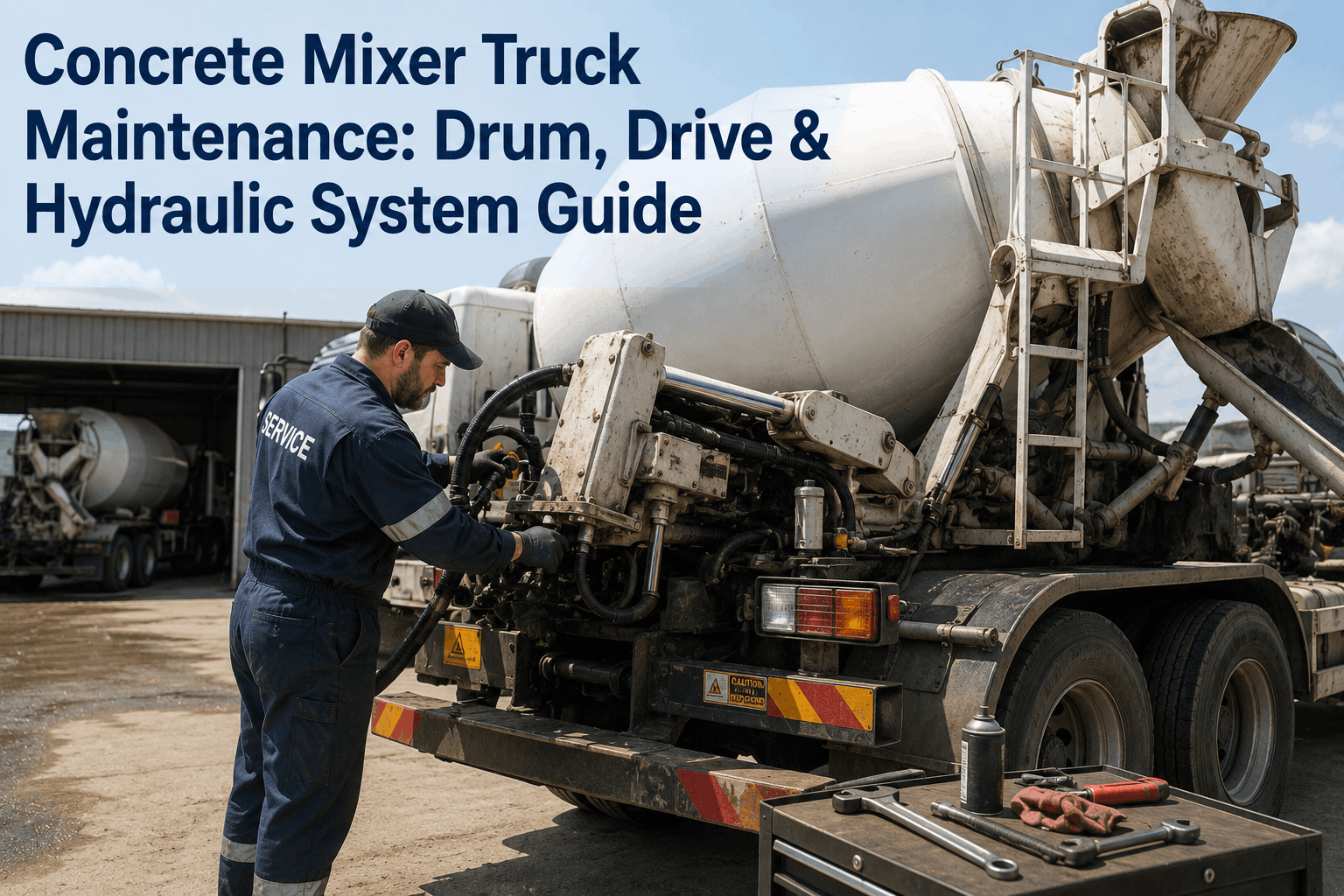
Concrete mixer trucks operate in one of the most punishing environments in the commercial vehicle industry. Between the constant drum rotation, abrasive concrete residue, high-pressure hydraulic systems, and severe weight loads, a well-maintained mixer can last 15 years while a neglected one fails in under five. The difference comes down to a systematic approach to concrete mixer truck maintenance that addresses the three critical systems: the mixing drum, the drive system, and the hydraulic components. Whether you manage five mixers or fifty, this guide walks you through every essential maintenance practice to keep your fleet pouring profitably. Ready to digitize your mixer maintenance program? sign up for FleetRabbit's fleet management platform or book demo to see how we help ready-mix fleets reduce downtime by 32%.
Why Concrete Mixers Need Specialized Maintenance
Unlike standard dump trucks or tractor-trailers, concrete mixers face unique wear patterns: abrasive concrete eats away at drum fins, constant hydraulic pressure strains pumps and motors, and the drum's rotational inertia places stress on drive hubs and bearings. A generic fleet maintenance program will miss these critical points. Mixer drum maintenance requires understanding of concrete's corrosive properties (pH up to 12.5), the importance of regular washout cycles, and the specific lubrication schedules for drum drive components. One Midwest ready-mix operator reduced drum replacement costs by 47% after implementing mixer-specific PM checklists. The key is treating the mixer body as the primary asset, not an afterthought to chassis maintenance. sign up to access FleetRabbit's ready-mix maintenance templates.
Core Systems of a Concrete Mixer Truck
Drum Maintenance: The Heart of Your Mixer
The mixing drum is the most visible and most abused component. Concrete buildup inside reduces capacity by up to 20% if not cleaned properly. Daily washout after every load is non-negotiable — but many operators rush this step. Use a high-pressure washer (minimum 2,500 PSI) to remove all residue from fins and the drum interior. Weekly, inspect fins and flights for wear or breakage; missing fins cause poor mixing and increased segregation.
Monthly, check the drum shell for cracks, especially around weld seams and the front head. Apply drum lubricant to the rear drum ring every 40 operating hours. For mixers with carbon steel drums (most common), monitor for rust perforation — catch small holes before they become blowouts that ruin concrete mid-pour. Many fleets extend drum life by 5+ years with proper lubrication and prompt fin replacement. book demo to see how FleetRabbit schedules these drum-specific tasks automatically.
Drive System: PTO, Driveshaft & Hub Assembly
The drive system transfers power from the truck engine to the hydraulic pump, then to the drum. Inspect the PTO (power take-off) engagement daily for smooth operation and listen for unusual grinding. Every 500 hours, lubricate the PTO and check driveshaft u-joints for play. The drive hub (where the hydraulic motor connects to the drum) is a frequent failure point — check for oil leaks weekly and rebuild every 3,000-4,000 hours.
Pay special attention to the slew ring (turntable bearing) that allows the drum to rotate while the truck moves. Grease the slew ring fittings every 100 operating hours with NLGI #2 lithium grease. A failed slew ring costs $6,000-$12,000 to replace and requires removing the entire drum assembly. Proactive greasing reduces slew ring failures by over 80%. sign up to set automated lubrication reminders for every component.
Hydraulic System: Pump, Motor, Hoses & Fluid
The hydraulic system is the nervous system of your mixer. Contaminated oil is responsible for 70% of hydraulic failures. Change hydraulic oil and filter every 1,000 hours or annually, whichever comes first. Use only manufacturer-specified fluids — mixing brands destroys seals. Weekly, inspect all hydraulic hoses for chafing, bulging, or leaks. A burst hose at a jobsite not only stops the pour but can cause serious injury.
Monitor hydraulic pump temperature with an infrared gun (should stay under 180°F). Overheating indicates worn internals or low oil. Clean hydraulic oil coolers monthly to ensure proper heat dissipation. When replacing hoses, use only SAE 100R series rated for concrete mixer duty cycles. Proactive hydraulic maintenance typically reduces pump rebuilds from every 2 years to every 5-6 years. book demo to see how FleetRabbit tracks hydraulic oil change intervals across your fleet.
Water System & Discharge Components
Mixers use water tanks for two purposes: washout and slump adjustment. Check the water tank for rust and sediment monthly — debris clogs spray nozzles. Inspect water pump operation (typically a 12V diaphragm pump) and clean strainers weekly. During cold weather, drain water tanks completely to prevent freeze damage, and use RV antifreeze in the pump.
Chutes and hoppers take constant abuse. Apply chute lube (or non-toxic release agent) before every load to prevent concrete buildup. Inspect chute hinges and lock pins weekly — a falling chute is a serious safety hazard. Replace worn hopper liners when thickness falls below 1/4 inch. Many fleets find that investing in polyurethane chute liners reduces concrete adhesion by 60%. sign up for FleetRabbit's pre-built mixer inspection checklists covering all discharge components.
Concrete Mixer Preventive Maintenance Schedule
Chassis & Tire Considerations for Mixer Trucks
Concrete mixers carry heavy, uneven loads that shift during rotation. This creates unique tire wear patterns — inner duals often wear faster due to constant drum torque. Rotate tires every 15,000 miles and maintain 5-10 PSI higher in inner dual positions. Check suspension air bags weekly for leaks; a collapsed bag on one side tilts the drum, accelerating bearing wear.
Inspect frame rails near the front drum support for cracking — this is a common failure point on high-mileage mixers. Have frame stress cracks welded immediately and reinforced with gusset plates. Brake inspections should be more frequent than standard trucks (every 20,000 miles) due to the heavy gross vehicle weight (often 66,000+ lbs). The combination of rigorous chassis maintenance and mixer-specific care extends overall truck life by 30-40%. book demo to see integrated mixer+chassis PM scheduling.
Winterization & Extended Storage Procedures
In cold climates, winterization is critical. Drain all water from tank, pump, and hoses. Run RV antifreeze through the water system. For hydraulic systems, ensure oil viscosity is appropriate for expected temperatures (use synthetic winter-grade hydraulic oil below 20°F). If storing mixers for 30+ days, drain fuel and add stabilizer, disconnect batteries, and elevate tires off concrete.
Most importantly, prevent concrete residue from freezing inside the drum — this creates an imbalance that destroys bearings when the drum rotates. Perform a thorough washout, then apply a drum release agent before storage. For fleets in freeze-thaw climates, consider heated indoor storage or engine block heaters on standby units. sign up for FleetRabbit's winterization checklist template to ensure no step is missed.
Top 5 Mixer Failures & How to Prevent Them
1. Hydraulic pump failure — prevent with clean oil changes every 1,000 hours and annual pump output testing.
2. Drum bearing seizure — prevent with weekly grease application and monthly end-play measurement.
3. Fin breakage — prevent with weekly visual inspections and careful washout to avoid hammering fins.
4. Chute hinge breakage — prevent with daily lubrication and avoiding overloading chutes.
5. Concrete hard-buildup — prevent with daily washout and monthly acid wash (using concrete dissolver).
Addressing these five failure modes alone can reduce mixer downtime by 55% according to ready-mix fleet data. FleetRabbit's failure tracking module helps you identify which issues affect your specific equipment most. book demo to see predictive analytics for your concrete fleet.
Real-World Impact: Proactive Mixer Maintenance ROI
Based on data from 12 ready-mix fleets implementing structured maintenance programs
Implementation: 90-Day Concrete Fleet Maintenance Upgrade
Month 1 – Assessment & Digital Setup: Audit all mixers for current condition. Enter each truck into digital fleet system with drum size, hydraulic specs, and service history. Set up automated reminders for daily, weekly, and monthly tasks.
Month 2 – Training & Pilot: Train mechanics on mixer-specific inspection points. Pilot the digital system on 5 mixers. Gather feedback and adjust checklists. Order critical spare parts (hydraulic hoses, drive hub seals, chute pins).
Month 3 – Full Rollout & Analytics: Deploy to entire fleet. Start tracking compliance rates and repair trends. Use first 90 days of data to optimize PM intervals for your specific mix models and operating conditions.
FleetRabbit provides implementation support and mixer-specific content libraries to accelerate your program. sign up to get your 90-day implementation plan.
Frequently Asked Questions
FleetRabbit — Maintenance management built for concrete mixer fleets. Drum, drive, hydraulic, water systems, and chassis. All in one platform.