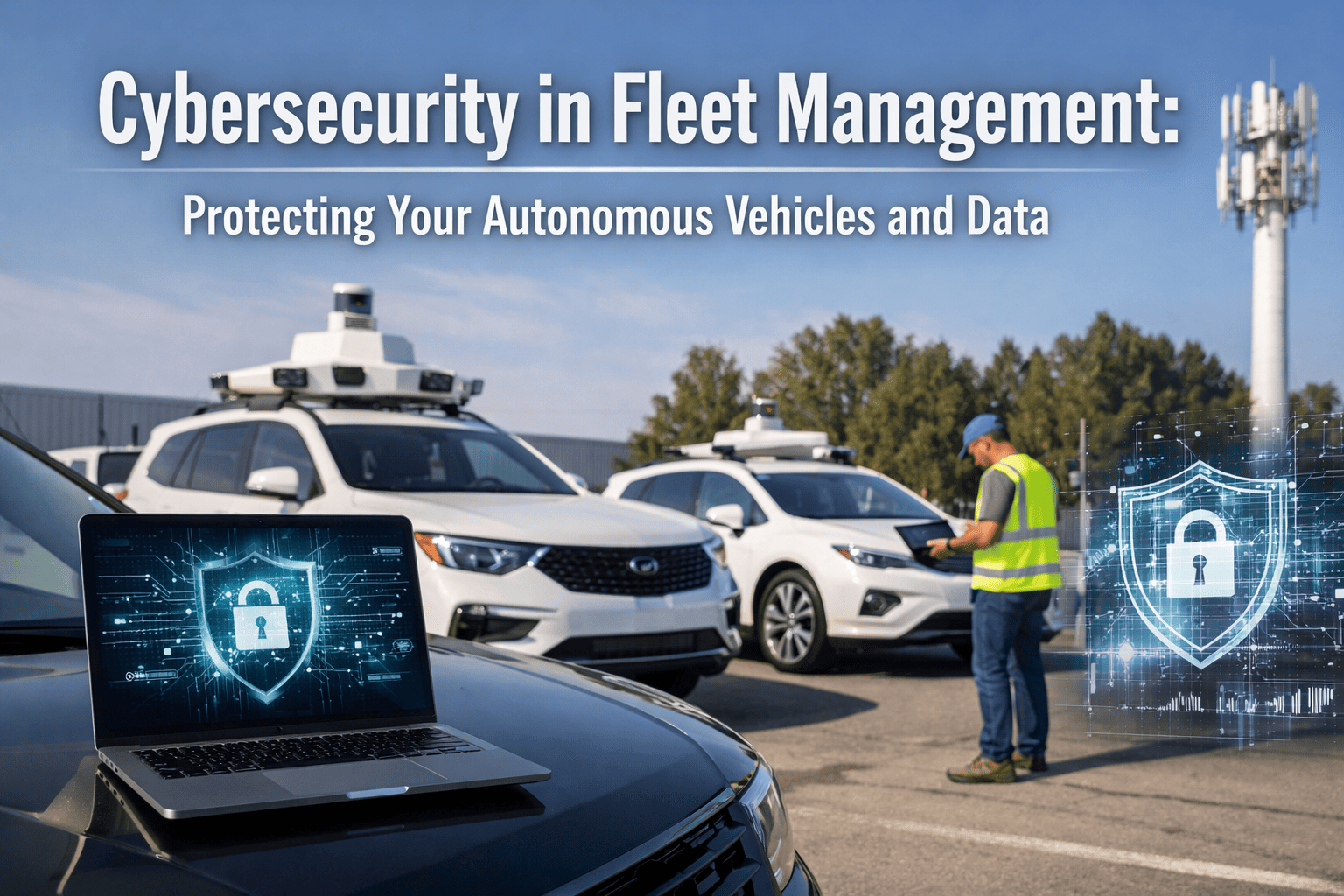
Autonomous fleets are no longer a future promise — they are operating on real highways in 2026. With this rapid growth comes a serious new risk: cyber attacks. Hackers are actively targeting connected vehicles, telematics systems, electronic control units (ECUs), GPS signals, and cloud-based fleet management software. A single breach can lead to vehicle takeover, massive data theft, ransomware locking entire operations, or safety incidents. Industry reports show ransomware incidents in automotive and mobility doubled in 2025, with 44% of attacks being ransom-related and 67% originating from telematics or cloud systems. For fleet managers, the question is no longer whether a cyber attack will happen — it is how to implement strong cybersecurity in fleet management to protect autonomous vehicles, sensitive fleet dataand ensure secure fleet operations before competitors or attackers get ahead.
As autonomous fleets expand, so do the cyber threats. Here’s what every fleet operator needs to know about protecting autonomous vehicles, preventing data breaches, and building secure fleet operations in 2026 and beyond.
The Growing Cyber Threats to Autonomous Fleets in 2026
Modern fleets are complex connected ecosystems. Autonomous vehicles depend on sensors, V2X communication, cloud platforms, and IoT devices. Every connection creates potential vulnerabilities that attackers are actively exploiting. Understanding these real-world threats is the first step toward building effective autonomous fleet security and fleet data protection.
Ransomware attacks lock dispatch, routing, maintenance, and telematics systems until ransom is paid. These attacks doubled in 2025 and now make up 44% of reported incidents in the mobility sector. A single successful attack can bring an entire fleet to a halt, causing massive revenue loss and customer dissatisfaction.
Attackers send fake GPS signals to mislead autonomous trucks, causing wrong routes, delays, or serious safety risks. This threat is especially critical for self-driving vehicles that heavily rely on accurate location data for navigation.
Hackers exploit vulnerabilities in electronic control units (ECUs) to gain unauthorized control over braking, steering, engine, or autonomous driving systems. This is one of the most severe threats to vehicle cybersecurity.
Weakly secured IoT sensors and telematics devices are frequently used as entry points. 67% of recent attacks originated from telematics or cloud systems, often leading to data theft or lateral movement into corporate networks.
Protect Your Fleet Before an Attack Occurs
Whether you operate traditional or autonomous vehicles, strong cybersecurity in fleet management is now essential. FleetRabbit helps secure your operations with encrypted data handling, access controls, and compliance-ready tools in one secure platform.
Essential Steps to Strengthen Cybersecurity in Fleet Management
Here’s what proactive fleet operators are doing in 2026 to protect their autonomous vehicles and sensitive data:
Implement cybersecurity engineering throughout the vehicle lifecycle with proper Threat Analysis and Risk Assessment (TARA).
Use digitally signed and encrypted firmware updates with secure boot to prevent malicious code injection in autonomous systems.
Separate critical vehicle systems from general IT networks using zero-trust principles and strong access controls.
Encrypt all fleet and customer data in transit and at rest. Deploy continuous monitoring and anomaly detection for early threat identification.
Select platforms with built-in security, regular audits, role-based access control, and full compliance support.
The Business Case: Why Cybersecurity Investment Matters
A major cyber incident can cost millions in downtime, recovery expenses, regulatory fines, and lost customer trust. Strong cybersecurity not only prevents losses but also reduces insurance premiums and builds confidence for autonomous operations.
Secure Your Connected & Autonomous Fleet Today
FleetRabbit delivers secure fleet management with encrypted communications, access controls, and compliance tools designed for modern connected fleets.
Frequently Asked Questions
Ransomware on fleet software, GPS spoofing, remote ECU attacks, and vulnerabilities in telematics/IoT devices are the most common and dangerous threats facing fleets in 2026.
Implement secure OTA updates, network segmentation, data encryption, continuous monitoring, and choose fleet management software with strong built-in security features.
Yes. FleetRabbit provides a secure platform with encrypted data handling, role-based access control, audit-ready compliance tools, and protection for both manned and autonomous fleet assets. Book a demo to learn more.
Book a Demo — Secure Fleet Management with FleetRabbit
Keep your vehicles, data, and operations safe with modern, secure fleet management software designed for the autonomous era.