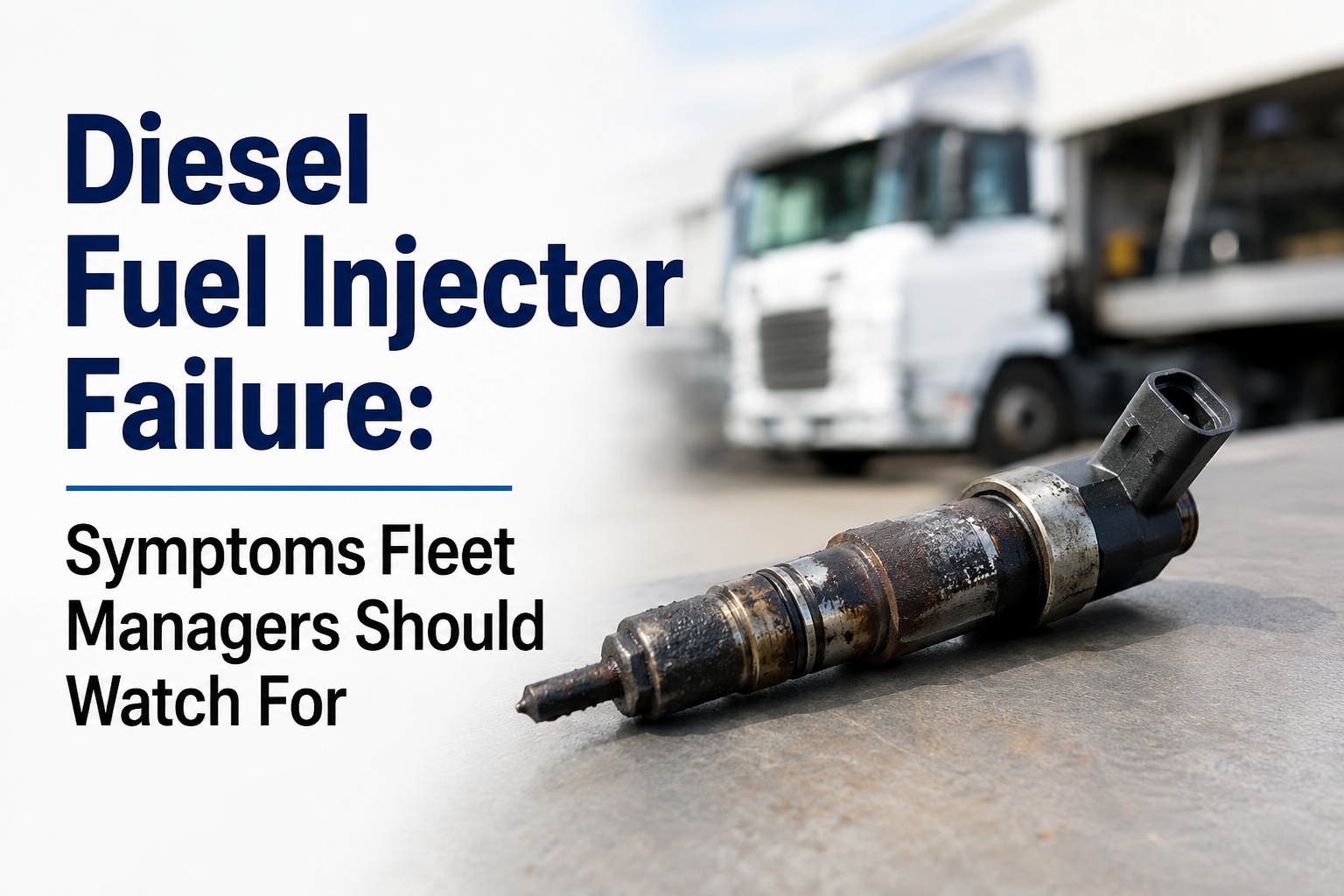
A single failing fuel injector rarely announces itself loudly — it starts as a barely-noticeable shake at idle, a wisp of dark smoke on hard acceleration, a few extra seconds of cranking on a cold morning. For a fleet manager, those early signals are worth thousands of dollars, because the same injector that costs $700 to $1,800 to replace this week can wash down a cylinder wall, dilute the engine oil, and clog the DPF into an $8,000 to $15,000 engine rebuild within two months if it is ignored. The trucks that avoid that fate are not luckier — they run on fleets where drivers know the warning signs, symptoms get logged the day they appear, and maintenance software turns a reported "rough idle" into a scheduled work order before the damage compounds. This guide breaks down the early symptoms of injector failure, what exhaust smoke color tells you, and how defect tracking flags fuel-system issues before a breakdown strands a truck. Start free trial or book a demo to catch fuel-system issues before they escalate.
DIAGNOSTICS & REPAIR · FUEL SYSTEM
One Bad Injector Is a $700 Repair — Or a $15,000 One, Depending on How Fast You Catch It
Injector failure is progressive. The symptoms show up early and cheap to fix, then compound into cylinder wash, oil dilution, and DPF damage. The single biggest variable in the final repair bill is how many days pass between the first symptom and the work order.
THE 7-DAY RULE
2+
symptoms together
↓
Inspect within 7 days
before the damage compounds
40–60%
Lower fuel-system repair costs with proactive injector management
85%
Less unplanned downtime when symptoms are caught early
$700
Single injector replacement if caught in week one
$15K
Engine rebuild if the same injector is ignored for two months
The Early Warning Signs of Injector Failure
Injectors talk to you before they fail. Each symptom points to a specific breakdown in fuel delivery — and while any one alone might be dismissed, two or more appearing together is the signal to inspect within seven days. Here are the signs every driver and fleet manager should know how to spot.
EARLIEST SIGN
Rough Idle & Engine Shake
The most common early symptom on nearly every diesel platform. A healthy engine has a steady rhythm at idle; when one injector delivers too much or too little fuel, that rhythm breaks and the engine feels lopey or like it's missing.
WARNING
Excessive Exhaust Smoke
Black smoke signals over-fueling from a stuck-open or leaking injector; white smoke means unburned fuel that isn't atomizing properly. The color is a direct diagnostic clue to what's failing inside.
WARNING
Power Loss Under Load
When pulling a grade or accelerating with a load, a weak injector can't deliver enough fuel to meet demand. The truck feels sluggish, may enter limp mode, or struggles to hold speed — often with visible smoke.
EARLY SIGN
Hard Starting & Long Cranking
Poor fuel atomization hurts combustion efficiency, so a weak or failing injector often shows up as extended cranking, hard cold starts, or in severe cases a no-start condition.
WARNING
Rising Fuel Consumption
A faulty injector imbalances the fuel-air mixture, causing incomplete combustion and higher fuel usage. Fleet fuel-per-mile data trending the wrong way on one truck is a quiet but reliable early flag.
WARNING
Engine Knock & Diesel Clatter
Uneven fuel delivery and bad spray patterns disrupt combustion timing, producing knocking or pinging sounds. It's the engine telling you the fuel isn't burning the way it should.
WARNING
Strong Fuel Smell
A noticeable diesel odor points to a leaking injector or fuel that isn't fully atomizing and burning. Raw fuel where it shouldn't be is both a performance problem and a fire risk.
CRITICAL
Check Engine Light & Fuel Codes
The ECU logs injector circuit faults as trouble codes P0201 through P0208, one per cylinder. When the light is on with a fuel code, the engine has already detected a delivery problem you can confirm.
A driver reports "rough idle." Then what?
Fleet Rabbit turns that report into a tracked defect and a scheduled work order the same day — so the symptom doesn't sit in someone's memory until the truck strands on the highway.
Read the Smoke: What Exhaust Color Tells You
Before any tool comes out, exhaust smoke color gives a mechanic — or an observant driver — a fast read on what's happening inside the cylinder. Each color maps to a different failure mode, and knowing the difference tells you how urgent the problem is.
BLACK
Over-Fueling
Too much fuel or poor atomization — often a stuck-open or leaking injector dumping excess diesel into the cylinder. Most visible under load or at light throttle.
Act soon
WHITE
Unburned Fuel
Fuel entering the cylinder without properly atomizing and burning — a classic sign of a leaking or cracked injector, most common on cold starts.
Inspect now
BLUE
Oil Consumption
Usually oil burning — but fuel wash from a leaking injector can damage rings and lead to oil consumption, so it can be a downstream sign of injector failure.
Investigate
Don't Confuse These With Something Else
Injector symptoms overlap with other problems, and misdiagnosis costs both money and time. Many owners blame tuning, sensors, or even the transmission when the real culprit is mechanical fuel delivery. Here is how the most common symptom — rough idle — sorts out. Swipe the table horizontally on mobile.
← Swipe to see all columns →
!
Symptoms alone can't tell you which injector is bad. A rough idle with white smoke could be one failing injector or all four. That's why mechanics confirm with a balance rate test, a cylinder cut-out test, or bench testing — measuring how much fuel each injector delivers relative to the others. But diagnosis only happens if the symptom gets reported and logged in the first place. The trucks that end up with $15,000 rebuilds are the ones where a driver noticed something weeks ago and it never made it into the system.
See how symptom logging triggers the inspection.
Why Waiting Is So Expensive: The Escalation Timeline
Injector failure is not a fixed-cost repair — it is a curve that steepens with every week of delay. The same root problem moves from a routine part swap to a catastrophic teardown as raw fuel does progressive damage to the cylinder, the oil, and the emissions system. Swipe the table horizontally on mobile.
← Swipe to see all columns →
Fleet reality check: a single failing injector left unchecked doesn't just fail — it destroys pistons, contaminates engine oil, damages turbochargers, and clogs DPF systems. The difference between a $500 repair and a $15,000 rebuild comes down to three things: knowing what to look for, acting quickly when symptoms appear, and maintaining the fuel system proactively. Software handles the second and third for you.
Book a demo to stop the escalation before it starts.
Turn Every "It Felt a Little Rough" Into a Tracked Work Order
Fleet Rabbit lets drivers log fuel-system symptoms the moment they appear, auto-creates a defect and work order, and flags fuel-per-mile trends that quietly signal a weakening injector — so problems get fixed at the $700 stage, not the $15,000 stage. Deploy at $5/vehicle/month, no hardware, live within 72 hours.
Driver symptom logging
Auto defect-to-work-order
Fuel-trend anomaly flags
Fault-code tracking
The Root Causes You Can Actually Control
Injectors are precision instruments operating under immense stress, and most failures trace back to a handful of preventable causes. Attack these and you extend injector life across the whole fleet.
Contaminated Fuel
Dirt, water, and metal shavings clog injector nozzles and score internal surfaces. A current fuel filter and a working water separator are the first line of defense.
Low-Quality Diesel
Poor lubricity accelerates wear on the injector's precision internals. Fuel sourcing and additive discipline directly affect how long a set of injectors lasts.
Overheating
High cylinder temperatures can crack injector tips. Cooling-system health and load management keep injectors inside their thermal limits.
Skipped Maintenance
Extended oil and filter intervals let debris into the fuel system. A tracked, usage-based maintenance schedule is the difference between clean fuel and contaminated fuel.
How Maintenance Software Catches It Early
Every point in the escalation timeline where a fleet loses money is a point where software would have intervened. Here is exactly how Fleet Rabbit turns injector health from a reactive fire drill into a managed, early-warning system.
01
Driver Symptom Reporting
Drivers log rough idle, smoke, hard starts, or a fuel smell from their phone the moment they notice it — capturing the earliest, cheapest-to-fix signal before it fades from memory.
02
Automatic Defect-to-Work-Order
A reported symptom becomes a tracked defect and a scheduled work order automatically, so nothing depends on someone remembering to write it down or pass it along.
03
Fuel-Trend Anomaly Flags
When one truck's fuel-per-mile drifts the wrong way, the dashboard flags it — surfacing the quiet, gradual injector weakness that no single driver would notice on a given day.
04
Fault-Code Tracking
Injector circuit codes like P0201–P0208 are logged against the vehicle and tied to the open defect, giving the mechanic a confirmed starting point instead of a guessing game.
05
Usage-Based PM Scheduling
Fuel filter and water separator services scheduled by mileage and engine hours keep the contamination that kills injectors out of the system in the first place.
06
Repeat-Symptom History
A complete per-truck symptom and repair history shows when a "one-off" rough idle is actually a recurring pattern pointing at a specific injector before it fails outright.
Frequently Asked Questions
What is the earliest sign of a failing diesel injector?
A rough or uneven idle is the most common early symptom on nearly every diesel platform. A healthy diesel has a steady rhythm at idle, and when one injector delivers too much or too little fuel that rhythm breaks — the engine sounds lopey, stumbles slightly, or feels like it's missing even though it doesn't stall. Because it's subtle, it's exactly the kind of symptom that gets noticed and then forgotten unless it's logged the same day.
Book a demo.
What does the color of my exhaust smoke mean?
Black smoke usually means over-fueling — often a stuck-open or leaking injector dumping excess diesel into the cylinder. White smoke means fuel entering the cylinder without atomizing and burning properly, a classic sign of a leaking or cracked injector, most common on cold starts. Blue smoke typically points to oil consumption, but fuel wash from a leaking injector can damage rings and cause oil burning, so it can be a downstream injector symptom too.
Book a demo.
Can one bad injector really cause major engine damage?
Yes. A leaking injector can wash fuel down the cylinder walls, removing the lubrication film and causing piston scuffing. Raw fuel dilutes the engine oil, which accelerates bearing wear, and the extra unburned fuel loads and clogs the DPF. Left unchecked over two months, a single failing injector can turn a $700 part swap into an $8,000 to $15,000 engine rebuild. Catching it early is the entire game.
Book a demo.
Should I replace one injector or the whole set?
Many shops recommend replacing the full set to ensure balanced performance and prevent a second injector from failing shortly after — injectors on the same engine have usually seen the same fuel, heat, and mileage. That said, the right call depends on the engine, the mileage, and the diagnosis. What matters most from a fleet perspective is catching the problem early enough that you're choosing between injectors, not between an injector and a rebuild.
Book a demo.
How do mechanics confirm which injector is bad?
Symptoms alone can't identify the failing injector — a rough idle with white smoke could be one injector or four. Mechanics confirm with a balance rate test (measuring how much fuel each injector delivers relative to the others, checked at idle with the engine fully warmed up), a cylinder cut-out test, or bench testing. Fault codes P0201–P0208 also point to specific cylinders. The prerequisite for all of it is that the symptom was reported and the truck was pulled in for diagnosis.
Book a demo.
How does software help prevent injector failures across a fleet?
It closes the three gaps that let a cheap symptom become an expensive failure. Drivers log symptoms the moment they appear, those reports auto-convert into tracked work orders so nothing is forgotten, and fuel-per-mile anomaly flags surface the gradual weakening no single person would notice. Combined with usage-based fuel filter and water separator scheduling, it keeps contamination out and catches problems at the $700 stage. Fleets that manage injector health this way report 40–60% lower fuel-system repair costs and 85% less unplanned downtime.
Book a demo.
Catch the $700 Symptom Before It Becomes the $15,000 Failure.
Fleet Rabbit lets drivers log fuel-system symptoms instantly, auto-creates the defect and work order, flags fuel-trend anomalies, and schedules the preventive maintenance that keeps injectors alive — turning reactive breakdowns into managed, early repairs. Integrated with your existing systems in 5–7 working days, at $5/vehicle/month, with no new hardware required.
Free tier for up to 3 vehicles · No credit card required · No hardware installation
July 21, 2026By Derek Goes
All Blogs