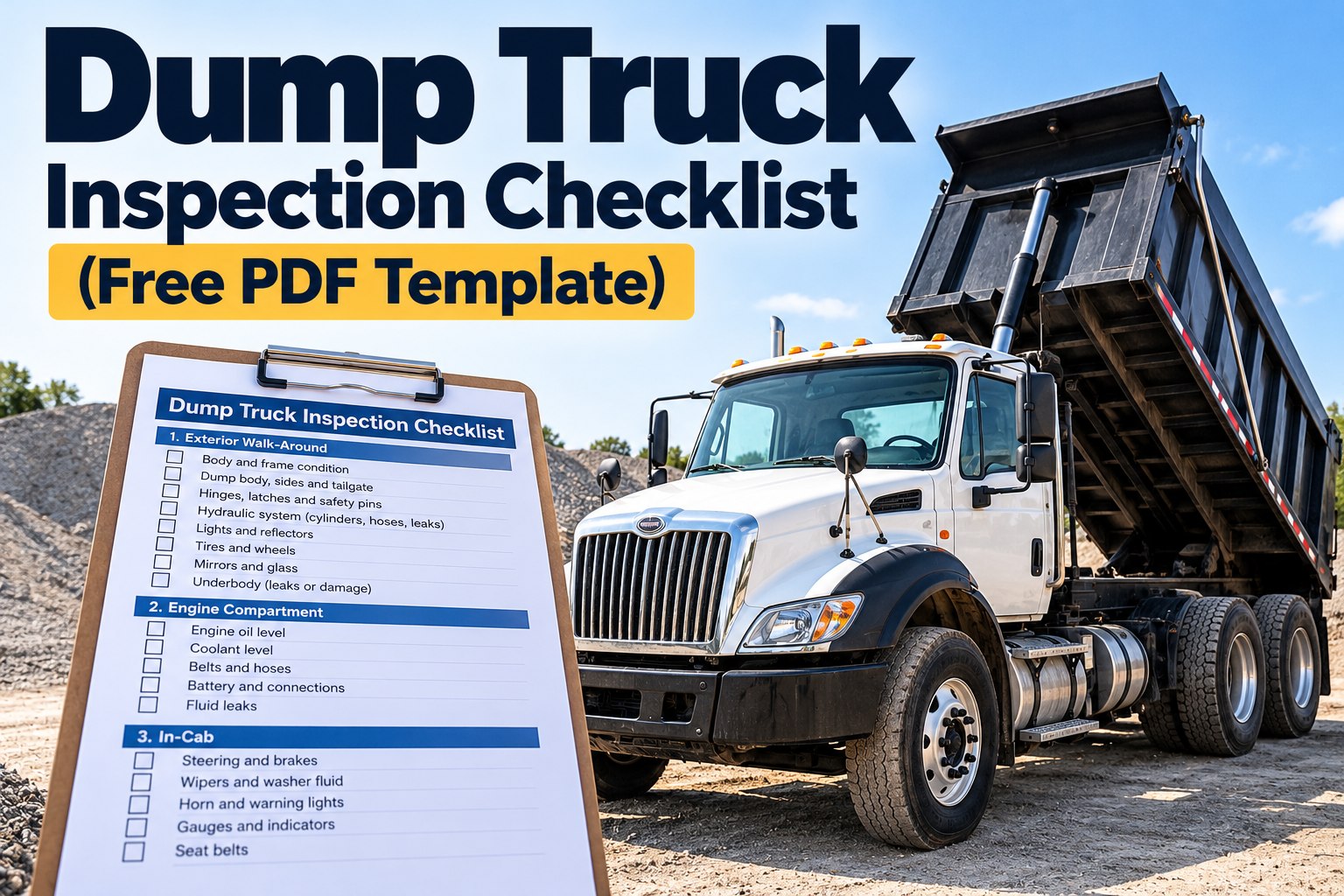
A dump truck inspection checklist is a pre-trip walkaround with three parts that ordinary truck checklists skip: the hoist and hydraulic system, the body prop and tailgate, and a short test of the raised body. This template has 30 checks in three phases, and 18 of them are marked critical because a failure means the truck should not move or raise its body. Schedule a call to set up your dump truck inspections, or compare it with the standard DOT pre-trip checklist.
Six Points That Only a Dump Truck Has
Everything else on the truck is inspected like any heavy vehicle. These six points are why a dump truck needs its own checklist, and each one is covered in the phases below.
The Checklist in Three Phases
Do the phases in order. Phase C is done empty, on level ground, and takes only a few minutes. Critical items mean no driving or no raising until fixed.
- Tires: tread 4/32 in steer, 2/32 in all othersCRITICAL
- Lug nuts present, no rust trails or loose wheelsCRITICAL
- Leaf springs, U-bolts and spring hangers intactCRITICAL
- Frame rails and crossmembers free of cracksCRITICAL
- Hoist cylinder rods clean, no scoring or leaksCRITICAL
- Pivot pins and body hinge secure, no excess wearCRITICAL
- Body prop present, accessible and undamagedCRITICAL
- Tailgate latches, hinges and pins soundCRITICAL
- Dump body free of cracks and rust-through at cornersSTANDARD
- Hydraulic hoses free of chafing, bulges and weepingSTANDARD
- Hydraulic fluid at the sight glass levelSTANDARD
- Tarp system, arms and straps undamagedSTANDARD
- Air pressure builds and holds, no audible leaksCRITICAL
- Service and parking brake holdCRITICAL
- Backup alarm sounds when reversingCRITICAL
- Body-up warning light and alarm workCRITICAL
- Seat belt, horn, wipers and mirrors workSTANDARD
- Gauges and warning lights normalSTANDARD
- Headlights, brake lights, signals and markers litSTANDARD
- Fire extinguisher, triangles and spare fuses on boardSTANDARD
- PTO indicator works and PTO is off for drivingSTANDARD
- Registration, insurance and DVIR book presentSTANDARD
- Level ground, clear of people and equipmentCRITICAL
- Look up: no power lines or branches overheadCRITICAL
- PTO engages fully and smoothlyCRITICAL
- Body rises evenly with no shudder or tiltCRITICAL
- Body holds in position with no driftCRITICAL
- Tailgate releases and closes and locksSTANDARD
- Body lowers fully and seats on the frameCRITICAL
- Warning light goes out, PTO off before drivingSTANDARD
The Raise-and-Dump Sequence
Lifting is where a dump truck is most exposed to tip-overs and power line contact. The same six steps every time keep the first one from being skipped.
What to Do if the Body Touches a Power Line
Heavy trucks touching overhead lines caused 35 fatalities between 2011 and 2022, according to a recycling industry association. Drivers are often hurt after they leave the cab, so the rule is to stay put unless there is fire.
Dump-Specific Failures and How to Spot Them
Swipe the table horizontally on mobile.
| Component | Typical failure | What to look for | Level |
|---|---|---|---|
| Hoist cylinder | Seal leak, scored rod | Oil on the rod, drift when holding | Tag out |
| Body prop | Missing, bent or not reachable | Present, pinned and able to hold the raised body | Tag out |
| Pivot pins and hinge | Worn bushings, loose retainers | Play when the body moves, shiny wear marks | Tag out |
| Tailgate latch | Bent hook, seized hinge | Locks in closed and open positions | Fix first |
| Hydraulic hoses | Chafing, bulges, weeping fittings | Wet fittings, rubbed covers | Report |
| Tarp system | Torn tarp, bent arms | Deploys and retracts fully | Report |
| Body floor and corners | Cracks, rust-through | Light through the floor, split corner welds | Monitor |