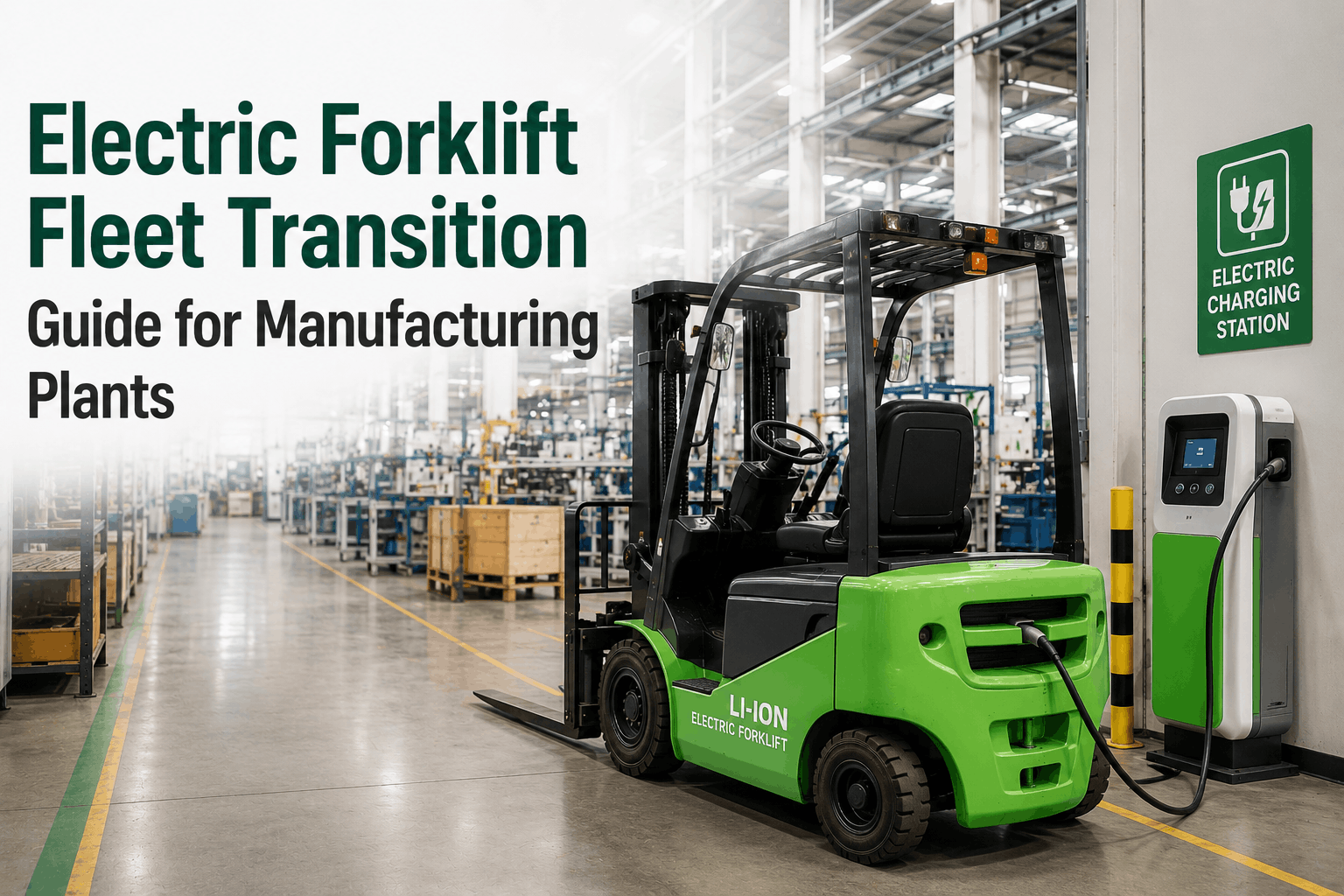
The transition from internal combustion to electric forklifts is no longer a question of if, but when. With advancing battery technology, decreasing costs, and tightening emissions regulations, electric forklifts are becoming the preferred choice for manufacturing plants seeking to reduce operating costs, improve workplace conditions, and meet sustainability goals. However, the transition requires careful planning to maintain productivity, ensure operator safety, and avoid costly disruptions. This guide provides a step-by-step framework for manufacturing facilities to transition their forklift fleets to electric power while preserving uptime and operational efficiency.
Why Transition to Electric Forklifts?
Electric forklifts offer several compelling advantages over their internal combustion counterparts, particularly in indoor manufacturing environments. The most immediate benefit is the elimination of emissions, creating cleaner, healthier working conditions for operators and nearby workers. Electric forklifts also operate with significantly less noise, reducing plant noise levels and improving communication on the production floor. From a cost perspective, electric forklifts typically have lower operating costs, with energy expenses often 50-70% less than fuel costs for comparable internal combustion models. Maintenance requirements are also reduced, as electric motors have fewer moving parts and no need for oil changes, fuel filters, or exhaust system repairs.
Beyond the operational benefits, the transition to electric forklifts supports corporate sustainability commitments and helps manufacturing plants comply with increasingly stringent environmental regulations. As more manufacturing companies set science-based carbon reduction targets, electrifying material handling equipment is a tangible and visible step toward these goals. Sign up to learn how FleetRabbit can help you manage your electric fleet transition.
Phase 1: Assessment and Planning
The transition to an electric forklift fleet begins with a thorough assessment of your current operations, equipment, and infrastructure. This foundational phase sets the stage for a smooth transition and prevents costly surprises later in the process.
- Analyze Duty Cycles: Review the usage patterns of your current forklifts. How many hours per shift are they operating? What are the typical distances traveled? What are the load requirements? This data informs the selection of electric forklift models and battery capacities appropriate for your application.
- Assess Electrical Infrastructure: Evaluate your plant's electrical capacity to support charging infrastructure. Determine if upgrades are needed to accommodate multiple chargers and peak power demands. Consider whether opportunity charging, quick charging, or battery swapping is most appropriate for your operation.
- Calculate Total Cost of Ownership: Compare the total cost of ownership for electric versus internal combustion forklifts. While electric forklifts often have higher initial acquisition costs, lower operating and maintenance expenses typically result in lower TCO over the equipment's lifetime.
- Define Transition Timeline: Develop a realistic timeline that balances the need for electrification with operational requirements. A phased approach that gradually introduces electric forklifts while retiring older internal combustion units often minimizes disruption.
Phase 2: Infrastructure Preparation
Proper charging infrastructure is essential for successful electric forklift operations. Inadequate charging capacity or poorly located charging stations can create bottlenecks and reduce productivity. Planning and preparing your infrastructure before equipment arrives ensures that the transition proceeds without delays.
Charging Infrastructure Considerations
Working with qualified electrical contractors and equipment suppliers early in the planning process helps ensure that infrastructure design meets both current and future needs. Consider whether you will need to upgrade electrical panels, add dedicated circuits, or install load balancing systems to manage peak power demands across multiple chargers. Book a demo to see how FleetRabbit can help track infrastructure readiness and equipment performance during your transition.
Phase 3: Equipment Selection and Procurement
Selecting the right electric forklifts and batteries is critical to meeting operational requirements and achieving the expected financial and environmental benefits. The selection process should consider not only the forklift models but also the battery technology and charging systems that support your specific duty cycles.
- Forklift Specifications: Match lift capacity, lift height, and maneuverability to your application requirements. Consider whether you need standard counterbalance forklifts, reach trucks, order pickers, or specialized models for specific tasks.
- Battery Technology: Lithium-ion batteries offer longer life, faster charging, and no maintenance requirements compared to lead-acid batteries. However, they have higher initial costs. Lead-acid batteries remain a lower-cost option but require regular watering, equalization charges, and more careful charging management.
- Charger Compatibility: Ensure that chargers are compatible with your chosen battery technology and can provide the charging speed needed to meet your operational requirements. Consider chargers that can communicate with fleet management software for monitoring and optimization.
- Supplier and Support: Evaluate equipment suppliers based on their experience with electric forklifts, availability of local service, and access to replacement parts. A reliable support network is essential for minimizing downtime during the transition and beyond.
Phase 4: Operator Training and Change Management
Electric forklifts operate differently from internal combustion models, and operators need training to adapt to these differences. Effective training and change management help ensure a smooth transition, maintain productivity, and reduce the risk of incidents.
- Operation Differences: Electric forklifts have different acceleration and braking characteristics, often with regenerative braking that requires operator adjustment. In-cab displays may provide different information, such as battery state-of-charge and energy consumption.
- Charging Procedures: Operators need clear instruction on charging procedures, including proper plugging and unplugging, monitoring charging progress, and safely handling batteries. For lead-acid batteries, watering and equalization procedures are essential maintenance tasks.
- Safety Protocols: Electrical safety is a critical consideration. Operators should understand how to disconnect charging cables safely, avoid damage to charging equipment, and respond to electrical emergencies.
- Performance Expectations: Communicate performance expectations clearly, including productivity targets, charging compliance, and maintenance reporting requirements. Recognize operators who demonstrate effective use of electric equipment.
Engaging operators early in the transition process, seeking their input, and addressing their concerns builds buy-in and reduces resistance to change. Involving experienced operators in equipment selection and charging station design can also provide valuable practical insights that improve the transition outcome. Sign up to access FleetRabbit's training and compliance tracking tools for your electric fleet transition.
Phase 5: Pilot Implementation and Refinement
Before fully converting your fleet, consider implementing a pilot program with a small number of electric forklifts operating in a representative area of your plant. This pilot phase allows you to identify issues, refine processes, and build confidence before scaling across the entire fleet.
- Select Pilot Area: Choose a production area with consistent duty cycles and moderate complexity to minimize risks while providing meaningful learning opportunities.
- Monitor Performance: Track productivity metrics, energy consumption, charging cycles, and operator feedback during the pilot. Compare performance against baseline data from internal combustion equipment in the same application.
- Identify and Resolve Issues: Use pilot data to identify any mismatches between equipment specifications and operational requirements. Adjust charging schedules, infrastructure, or training as needed.
- Document Lessons Learned: Capture insights and best practices from the pilot to inform the broader transition. Share successes and challenges with the team to refine the transition plan.
Data collected during the pilot phase is invaluable for optimizing the full-scale transition. Book a demo to see how FleetRabbit's analytics tools can monitor pilot performance and provide data-driven guidance for your transition.
Phase 6: Full-Scale Deployment and Optimization
With successful pilot results, the transition can proceed to full-scale deployment across the manufacturing plant. This phase requires careful planning of equipment deliveries, training schedules, and operational adjustments to maintain productivity throughout the transition period.
- Staged Rollout: Implement electric forklifts in stages, retiring internal combustion equipment in phases. This approach maintains operational capacity while building experience with electric equipment.
- Coordinate with Operations: Plan equipment changes around production schedules to minimize impact. Coordinate shutdowns, maintenance windows, and shift changes to ensure smooth transitions.
- Ongoing Monitoring: Continue tracking productivity, energy consumption, and maintenance costs to validate the expected benefits of electrification. Use analytics to optimize charging schedules, battery usage, and equipment allocation.
- Continuous Improvement: Use performance data to identify improvement opportunities, adjust training, and refine operational procedures. As the fleet matures, evaluate opportunities for additional efficiency gains through software updates or process changes.
A successful full-scale transition to electric forklifts positions the manufacturing plant for long-term operational and environmental benefits. The investment in planning, infrastructure, training, and analytics pays dividends through lower operating costs, improved working conditions, and stronger regulatory compliance. Sign up to manage your electric fleet transition with FleetRabbit's comprehensive analytics and fleet management platform.
CTA section 1Ready to Start Your Electric Forklift Transition?
Step-by-step guidance, real-time analytics, and fleet management tools to support your electrification journey.
Frequently Asked Questions
The transition timeline depends on fleet size, infrastructure requirements, and operational complexity. A phased transition typically takes 12-24 months for complete replacement of a medium-sized fleet, with smaller fleets potentially completing in 6-12 months.
Electric forklifts typically have 20-30% higher upfront acquisition costs but 50-70% lower operating costs over the equipment's lifetime. The total cost of ownership is generally lower for electric forklifts, with payback periods often ranging from 2-4 years depending on duty cycles.
Charging infrastructure requirements vary based on battery type and operational needs. At minimum, plants need dedicated charging stations with appropriate electrical connections, ventilation, and safety equipment. Larger fleets may require industrial chargers, load management systems, and potentially battery swapping stations.
Operators need training on the different driving characteristics of electric forklifts, including acceleration and braking differences. They also need instruction on charging procedures, battery maintenance (for lead-acid batteries), and electrical safety protocols specific to electric equipment.
FleetRabbit provides real-time tracking of equipment utilization, charging status, battery health, and maintenance needs for electric forklifts. The platform also helps optimize charging schedules, monitor energy costs, and track productivity during the transition, ensuring a smooth and data-driven electrification process.
Join 800+ Operations Using FleetRabbit
From electrification planning to operational optimization — FleetRabbit helps you transition to electric forklifts with confidence.