Engine mount failure on a truck means the mounts that hold the engine and transmission to the frame have cracked, collapsed or lost their fluid, so the engine moves more than it should. The first signs are a vibration at idle or a clunk when the driver shifts into gear. This page explains how mounts work, the symptoms, the causes, how to test for a bad mount, how urgent each finding is and what the repair costs. Schedule a call to turn mount inspections into scheduled PM.
TRUCK ENGINE DIAGNOSTICS · SHOPS AND FLEET MANAGERS
When the Engine Can Move, Everything Bolted to It Starts to Break
A bad mount rarely strands a truck on its own. It shakes the cab, rocks the drivetrain and quietly cracks hoses, wiring and exhaust joints, so the repair bill is bigger than the mount.
How Engine Mounts Work and Why They Break Down on Trucks
Mounts carry the engine's weight and absorb its torque
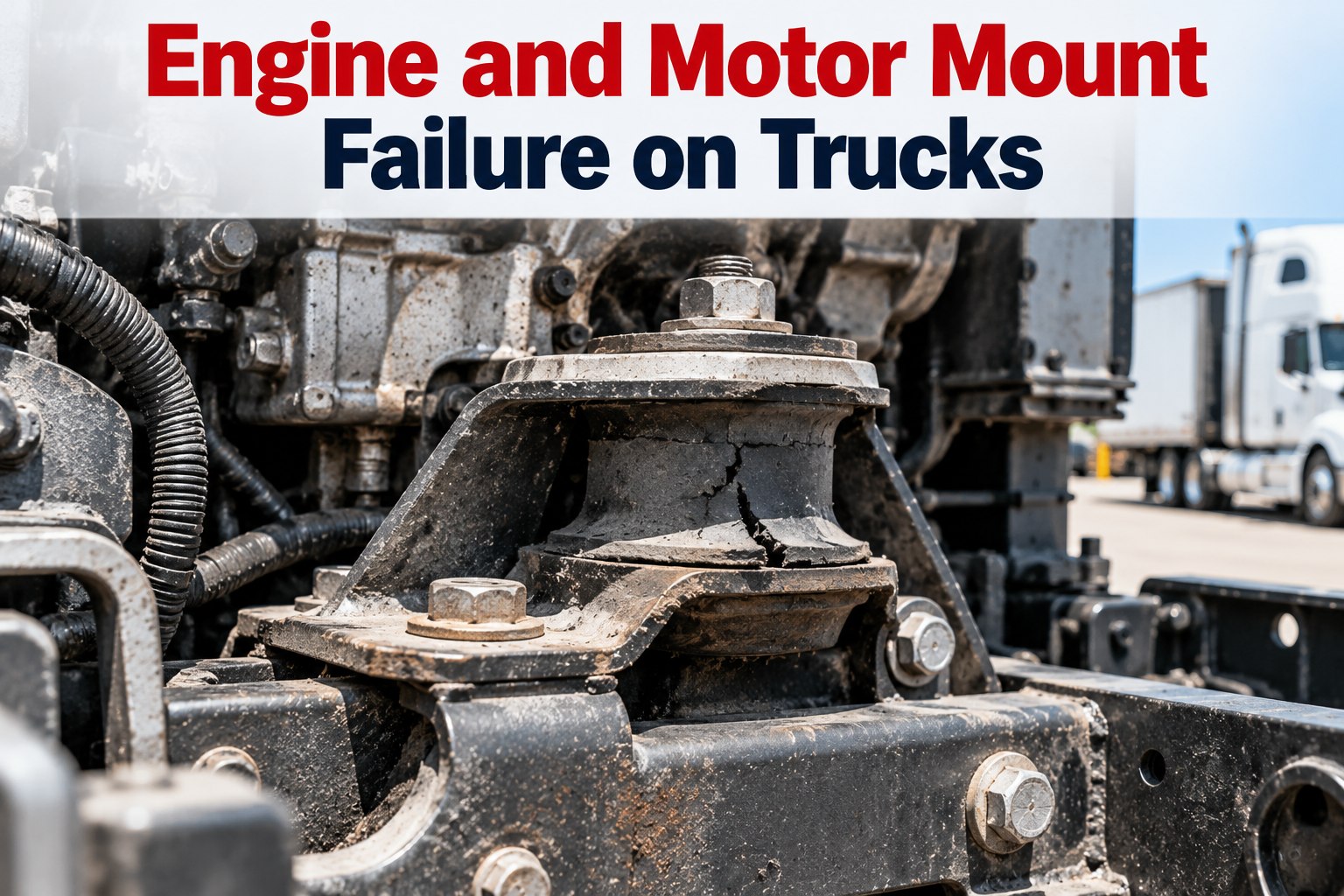
Every mount is a bonded block of rubber, sometimes filled with fluid, between the engine or transmission and the frame. It holds the weight, lets the engine rock a little under torque and stops the shake from reaching the cab. When that rubber fails, the engine moves more, and that movement is what causes the damage.
Rubber mounts crack, while hydraulic mounts leak
RUBBER MOUNT
Fails by cracking and separating
Heat and age harden the rubber until it splits or pulls away from the metal plates. Any separation means the mount is bad.
HYDRAULIC MOUNT
Fails by leaking its fluid
Dark or brown oily residue means the fluid has escaped and the mount can no longer damp vibration.
Engine Mount Failure Symptoms: What You Feel, Hear and See
Start with the driver's report, because vibration and clunks come first
Drivers usually describe a shake at idle or a thud when the truck takes up the load. Use the table to turn those words into a likely cause and a deadline for action.
WHAT YOU NOTICE
WHAT IT POINTS TO
WHAT TO DO
WHAT YOU NOTICEIdle vibration that eases in Neutral
WHAT IT POINTS TOA worn mount is passing engine shake into the cab
WHAT TO DOInspect within days
WHAT YOU NOTICEClunk shifting into gear or on hard acceleration
WHAT IT POINTS TOThe engine is rocking on a mount that no longer holds
WHAT TO DOInspect immediately if it repeats
WHAT YOU NOTICEEngine sits low or tilted under the hood
WHAT IT POINTS TOA mount has collapsed or separated
WHAT TO DOInspect immediately
WHAT YOU NOTICEShaking in every gear
WHAT IT POINTS TOMore likely a misfire or vacuum leak than a mount
WHAT TO DOScan for codes first
WHAT YOU NOTICEDark oily residue on a fluid-filled mount
WHAT IT POINTS TOThe mount has lost its hydraulic fluid
WHAT TO DOReplace it and find the oil source
Then confirm the report with what a technician can see under the hood
A flashlight and a mirror are enough to find most failed mounts. These are the signs that settle it.
Cracked, split or separated rubber
Rubber pulled away from its metal plates
Dark or brown oily residue on a fluid-filled mount
Cracks in the housing near the bolt holes
Bent, missing or rusted bolts and studs
Metal-to-metal marks where brackets strike the frame
Engine Mount Failure Causes: Why Mounts Wear Out Early
Slow wear and sudden damage are two different causes with different fixes
Slow wear
The mount ages out over months and years
Heat cycles that harden rubber until it cracks
Oil or coolant leaks that soften the rubber
Road grime and moisture that corrode brackets
Plain age, because mounts are wear items
Sudden damage
The mount is overloaded in a single event or a bad install
Hard launches that shear the mount in one event
Heavy towing and torque loads
Wrong torque, missing shims or reused hardware at install
One failed mount overloading the others
Engine mount inspection overdue? Schedule the check before a clunk turns into a tow.
Add mount checks to every preventive maintenance service and log each driver report against the truck.
How to Diagnose a Bad Engine Mount Before You Replace It
Run four checks in order so look-alike faults are ruled out first
1
Scan for codes
Misfires and vacuum leaks can feel exactly like a bad mount.
→
2
Compare Neutral and Drive
Vibration that eases in Neutral points to a mount.
→
3
Run the brake-torque test
Hold the brake, apply throttle briefly, and watch the engine. A lift beyond about 1 inch points to a failed mount.
→
4
Inspect with light and mirror
Look for cracked or separated rubber, fluid, damaged hardware and impact marks.
Safety note. A pry-bar flex test is a technician's job, with the engine off, because of pinch and drop risks. During the brake-torque test, keep everyone clear of the engine bay and the drive line.
Engine Mount Failure Fix: Repair Now or Keep Driving?
Match the urgency to what you find, not to how the truck drives
DO NOT DRIVE
Collapsed mount, metal-to-metal contact or snapped studs
Tow it or repair it where it sits.
INSPECT IMMEDIATELY
Persistent clunks or visible engine sag
Get it into the shop before the next run.
INSPECT WITHIN DAYS
Idle vibration or an occasional clunk
Book it into the next service window.
Replace mounts as a set, then check everything the engine was rubbing against
Replacing both mounts together is recommended, because the remaining mounts take extra load and often fail within months. Some jobs also need new brackets or bolts, so check the parts catalog before ordering, and look over hoses, exhaust joints and wiring that the moving engine may have chafed.
Engine Mount Failure Cost: Parts, Labor and the Price of Waiting
The part is cheap and the labor is the bill
The figures below come from published estimates for heavy-duty pickups such as the F-350 Super Duty and Silverado HD. Class 8 mounts are larger and priced differently, so treat them as a guide.
ENGINE MOUNT REPLACEMENT PRICE RANGES, US DOLLARS
New OEM mount, part only
$70 – $110
Shop labor for the job
$425 – $625
Typical professional replacement
$500 – $750
Estimate for F-350 Super Duty years
$648 – $1,209
Shop and dealer prices, same trucks
$749 – $1,713
$0
$600
$1,200
$1,800
Waiting adds damage to the transmission, drive line, hoses and wiring
Driving on broken mounts can damage the transmission and axle shafts, and the extra movement can crack hoses, exhaust joints and wiring. A mount caught at an inspection costs a service slot. A mount caught after a failure costs a tow and everything it damaged.
$461
average estimate, about $81 parts and $380 labor
$500 – $750+
professional replacement on an HD pickup
About 3 hours
typical labor time for one mount
Engine Mount Inspection Checklist for Fleet Preventive Maintenance
Check mounts at every PM, and again after any repair that disturbs them
At every preventive maintenance service
Check mount rubber for cracks, splits and separation
Look for oily residue on fluid-filled mounts
Compare idle vibration in Neutral and in gear
Check mount bolts, studs and brackets for damage or rust
Log driver reports of clunks or vibration
Before replacing, and after the repair
Scan for misfire codes before replacing a mount
Replace mounts as a set, not one at a time
Use the correct torque, shims and new hardware
Check hoses, exhaust joints and wiring for chafe
Set the next mount inspection reminder
Prevent Engine Mount Failure Downtime: Schedule Mount Inspections and Track Every Repair
FleetRabbit turns a driver's note about vibration or a clunk into a work order, then keeps the inspection, the repair and the parts on that truck's record. Preventive maintenance reminders bring mounts back up before the next failure, and repeat repairs show up as history.
Quick answers on engine mount symptoms, causes, fixes and cost
What are the symptoms of engine mount failure?
Idle vibration that eases in Neutral, clunks when shifting into gear or accelerating, an engine that sits low or tilted, cracked or separated rubber, and oily residue on a fluid-filled mount.
What causes engine mount failure?
Heat cycling and age, oil or coolant contamination, hard launches and heavy towing, corroded brackets, and poor installation such as wrong torque or reused hardware.
How do you fix a bad engine mount?
Replace it, ideally as a set, and check brackets, bolts, hoses and wiring that the extra movement may have damaged.
How much does engine mount replacement cost?
One estimate averages about $461, and a heavy-duty pickup guide puts professional replacement at roughly $500 to $750 or more. Labor is most of the bill.
Can I drive with a bad engine mount?
It depends on the damage. A collapsed mount, metal-to-metal contact or snapped studs means do not drive. Persistent clunks or visible sag need an immediate inspection, and idle vibration should be checked within days.
How do you test an engine mount?
Scan for misfire codes, compare vibration in Neutral and in gear, run a brake-torque test and look for engine lift beyond about 1 inch, then inspect the mounts with a light and mirror.
What does FleetRabbit cost?
FleetRabbit is free for up to three vehicles and $5 per vehicle per month after that. Start free with 3 vehicles.
Catch Engine Mount Failure Early: Turn Every Inspection Into a Scheduled PM
A mount that is inspected, logged and replaced on schedule costs a service slot. One that is ignored can cost a drivetrain. Put the inspection on the calendar and let the reminder do the remembering.