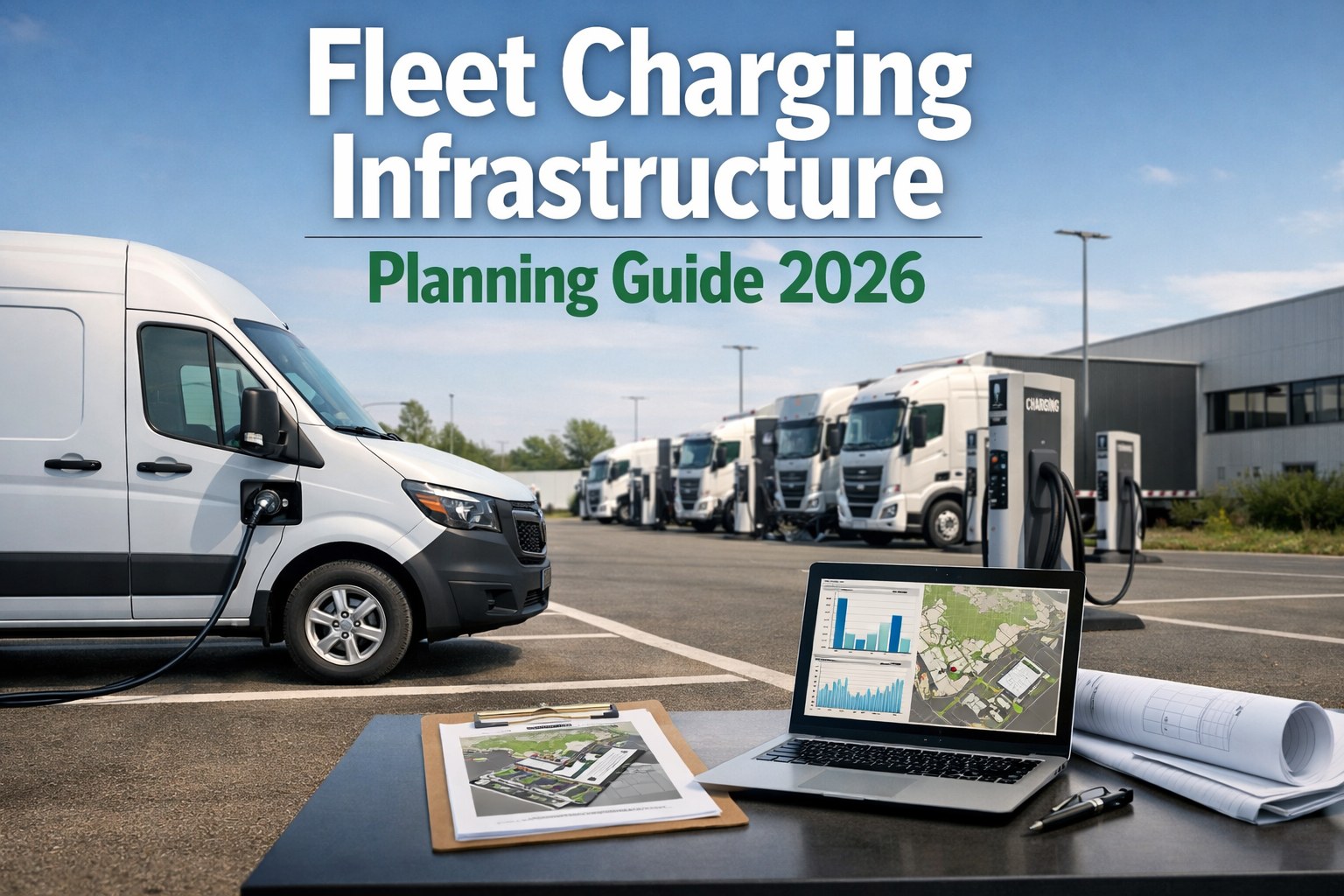
Charging infrastructure is the second biggest barrier to fleet electrificationright after vehicle cost. You can purchase electric vehicles, but without properly planned charging systems at your depot, those vehicles sit idle. This guide walks you through the complete fleet charging infrastructure planning process to ensure your electrification project succeeds. Start managing your charging infrastructure free →
Why Charging Infrastructure Planning Matters
Fleets cannot simply install chargers and expect success. Unlike fueling stations that tap into existing networks, EV charging requires significant electrical infrastructure most depots weren't designed to support.
Electrical Capacity Limits
Most depots have electrical service sized for lighting and HVAC—not high-power EV charging.
Grid Constraints
Local utility grids may lack capacity. Upgrades can take 12-24 months and cost hundreds of thousands.
Depot Layout Issues
Existing parking layouts may not accommodate charger placement or safe vehicle circulation.
Future Expansion
Infrastructure sized only for current needs becomes obsolete. Retrofitting costs 2-3x more.
Manage Your Fleet Charging Infrastructure Smarter
FleetRabbit helps you monitor chargers, optimize charging schedules, and reduce energy costs by up to 30%.
7-Step Fleet Charging Planning Process
Successful depot charging follows this systematic process. Skipping steps leads to costly mistakes and delays. Need help planning? Book a free consultation →
Fleet Electrification Assessment
Determine which vehicles will electrify, when they'll arrive, and their charging requirements. Calculate daily energy needs based on route analysis. This defines your infrastructure scale and timeline.
Depot Site Analysis
Evaluate parking layout, vehicle circulation patterns, and distance from electrical service entrance. Identify charger placement options and cable routing paths.
Electrical Capacity Evaluation
Assess current service capacity vs. charging requirements. Determine transformer ratings, panel capacity, and what upgrades are needed to support your charging load.
Charger Type Selection
Choose Level 2 for overnight depot charging (8+ hour dwell) or DC fast chargers for high-utilization fleets (1-4 hour windows). Match charger power to vehicle capabilities and operational needs.
Utility Coordination
Submit load letters to your utility early. Apply for new service, explore EV rate structures, and enroll in demand response programs. Utility timelines are the #1 cause of project delays.
Installation Planning
Develop engineering designs, obtain building and electrical permits, and schedule construction to minimize operational disruption. Plan for conduit to future expansion zones.
Software Integration
Connect chargers to fleet management software for scheduling, monitoring, and energy optimization. Train drivers and operators on charging procedures.
Charger Selection Guide
Choose chargers based on vehicle dwell times and daily energy requirements:
Fleet Charger Comparison
| Charger Type | Power Output | Best Use Case | Cost (Unit + Install) |
|---|---|---|---|
| Level 2 AC | 7-19 kW | Overnight depot charging, 8+ hour dwell | $5,000-$16,000 |
| DC Fast Charger | 50-150 kW | High-utilization fleets, 1-3 hour windows | $45,000-$120,000 |
| High-Power DC | 150-350 kW | Transit buses, medium-duty trucks | $140,000-$300,000 |
| Megawatt (MCS) | 1 MW+ | Heavy-duty Class 8 trucks | $350,000+ |
Charger-to-Vehicle Ratios:
- Overnight Level 2: 1:1 ratio (1 charger per vehicle)
- Smart scheduling: 1:1.5-2 ratio possible with FleetRabbit's charging scheduler
- DC fast charging: 1:3-5 ratio with managed scheduling
Electrical Infrastructure Costs
Typical Infrastructure Investment by Fleet Size
| Component | Small (10-25 EVs) | Medium (25-100 EVs) | Large (100+ EVs) |
|---|---|---|---|
| Utility service upgrade | $25K-$75K | $75K-$250K | $250K-$1M+ |
| Transformer | $15K-$40K | $40K-$150K | $150K-$500K |
| Panels & switchgear | $10K-$30K | $30K-$100K | $100K-$300K |
| Conduit & wiring | $15K-$50K | $50K-$200K | $200K-$500K |
| Total Infrastructure | $65K-$195K | $195K-$700K | $700K-$2.3M+ |
Project Timeline
Fleet charging infrastructure typically takes 12-18 months from planning to commissioning:
Critical Timeline Note:
Start utility conversations 12-18 months before planned deployment. Utility timelines are the most common cause of delayed fleet electrification. Simple upgrades take 3-6 months; major grid work can take 18-36 months. Talk to our experts about your timeline →
How FleetRabbit Helps with Charging Infrastructure
Planning is just the first step. Once your chargers are installed, you need software to manage them effectively. FleetRabbit's charging management features help you maximize your infrastructure investment:
Real-Time Charger Monitoring
See all charger status in one dashboard—available, in-use, or faulted. Get instant alerts when chargers go offline so vehicles are always ready.
Smart Charging Schedules
Automatically schedule charging during off-peak hours when electricity is cheapest. Reduce energy costs by 20-30% with intelligent load management.
Demand Charge Prevention
Balance charging loads across your depot to avoid demand spikes. Our customers save $500-$2,000/month on utility demand charges alone.
Charging Analytics & Reporting
Track energy consumption by vehicle, charger utilization rates, and total charging costs. Make data-driven decisions about infrastructure expansion.
Frequently Asked Questions
What is fleet charging infrastructure?
All equipment needed to charge EVs at a depot: chargers (EVSE), electrical service upgrades, energy management systems, and charging software platforms.
How many chargers does a depot need?
Typically 1 charger per vehicle for overnight Level 2 charging. With smart scheduling, 1:1.5-2 ratios are possible. DC fast charging supports 1:3-5 ratios.
Level 2 or DC fast chargers?
Level 2 (7-19 kW) for 8+ hour overnight dwell times. DC fast (50-350 kW) when charging windows are 1-4 hours or for high-utilization vehicles.
How long does deployment take?
12-18 months typical. Utility coordination and electrical upgrades are the longest phases. Simple deployments with adequate power: 6-9 months.
Optimize Your Charging Infrastructure with FleetRabbit
Monitor chargers, automate scheduling, and cut energy costs by up to 30%. Join 500+ fleets managing their EV charging smarter.