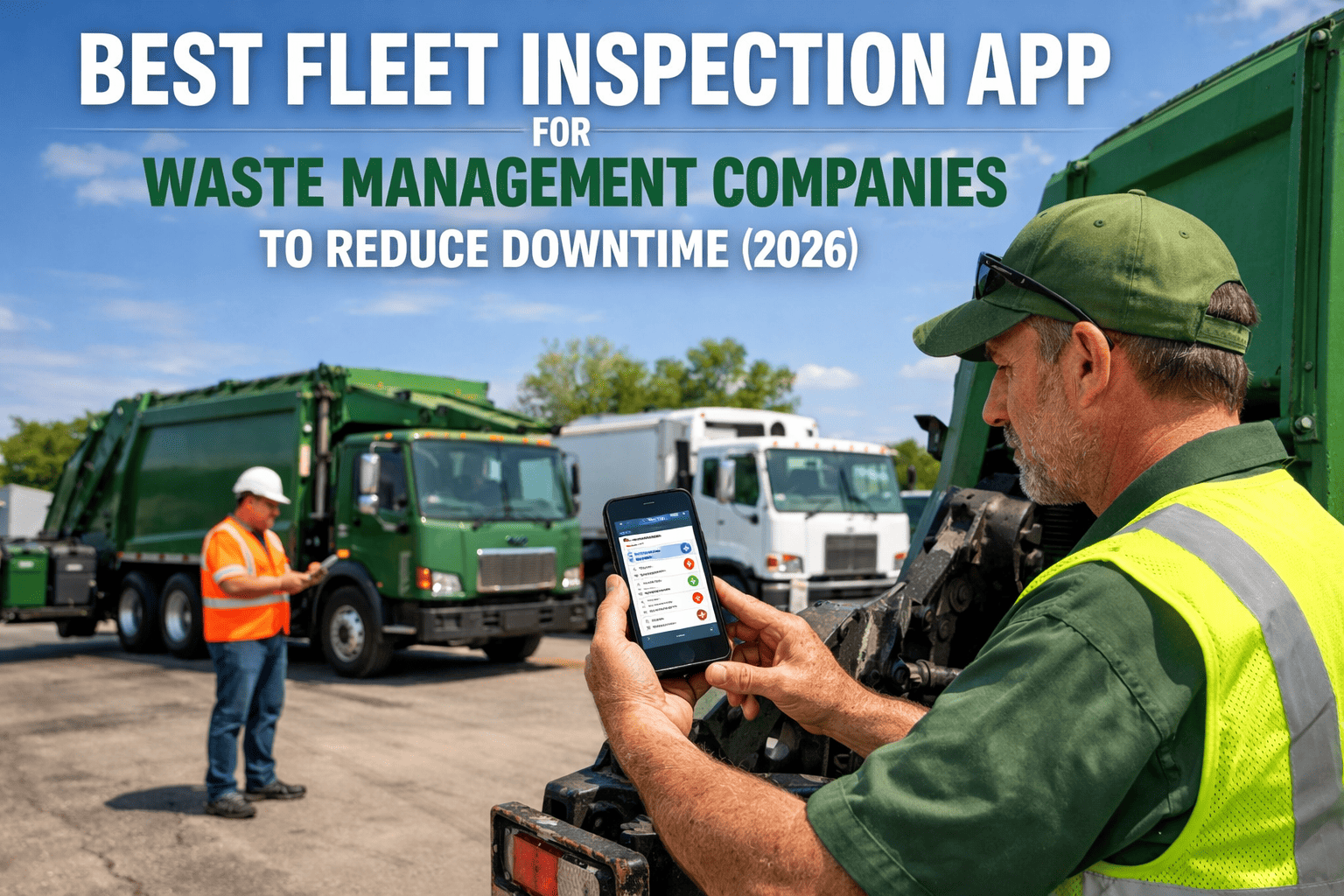
Waste management fleets face operational demands that would overwhelm standard commercial vehicle operations—stop-and-go cycles every 30 seconds, heavy compaction loads exceeding 25,000 pounds exposure to corrosive materials, and hydraulic systems cycling thousands of times daily. When inspections fall through the cracks, the consequences hit fast: roadside breakdowns costing $1,500+ per incident, DOT violations averaging $2,500 per citation and route disruptions that cascade into overtime costs and customer complaints. The difference between waste fleets that struggle with constant downtime and those achieving 98%+ vehicle availability comes down to one thing—systematic digital inspections that catch problems before they cause failures.
Paper-based inspection logs made sense when fleets had five trucks. Today's waste management operations running 20, 50, or 100+ garbage trucks need fleet inspection software that provides real-time visibility, automated compliance tracking, and mobile-first workflows that drivers actually complete. This guide covers everything waste management companies need to know about choosing and implementing the right fleet inspection app to reduce downtime, ensure compliance, and protect their most valuable assets.
Struggling to manage garbage truck inspections?
See how modern fleets are simplifying it — schedule your free demo.
Book Free DemoWhy Inspections Are Critical for Waste Fleets
Garbage trucks operate under conditions that accelerate wear far beyond typical commercial vehicles. Understanding why systematic inspections matter helps justify investment in proper inspection tools and processes.
Driver and Public Safety
Brake failures, hydraulic malfunctions, and tire blowouts on 60,000+ pound garbage trucks create serious safety hazards. Daily inspections catch developing issues before they cause accidents on residential streets.
DOT Compliance Requirements
Federal regulations require pre-trip and post-trip inspections with documented DVIRs. Missing or incomplete inspection records result in violations, fines, and potential out-of-service orders during roadside inspections.
Operational Efficiency
Every breakdown means incomplete routes, emergency repairs, and overtime costs. Systematic inspections identify problems during scheduled maintenance windows rather than mid-route when costs multiply 3-5x.
Problems with Manual Inspection Systems
Paper-based inspection processes that worked for small fleets become liability nightmares as operations scale. Understanding these limitations helps identify where digital inspection waste management solutions add the most value.
Paper DVIRs Get Lost or Incomplete
Handwritten inspection forms disappear, become illegible, or sit in truck cabs for days before reaching the office. When DOT auditors request records, scrambling through filing cabinets wastes hours and often reveals gaps that trigger violations.
Critical Issues Go Unreported
Without standardized checklists and photo documentation, drivers skip items or mark everything "OK" to save time. Small problems that should trigger maintenance become major failures that sideline trucks for days.
No Real-Time Fleet Visibility
Managers discover inspection problems hours or days after they occur. By then, a truck with brake issues has completed an entire shift, or a hydraulic leak has worsened from minor to catastrophic.
Zero Analytics or Trend Detection
Paper records can't reveal patterns. You won't notice that truck #7 consistently reports brake issues or that your afternoon shift skips tire checks. Data-driven decisions require digital data.
Still relying on paper logs?
Take a quick look at how digital inspections actually work.
What is a Fleet Inspection App?
A fleet inspection app replaces paper-based DVIRs with mobile-first digital workflows that drivers complete on smartphones or tablets. Instead of filling out forms that disappear into filing cabinets, inspections sync instantly to cloud-based dashboards where managers see real-time fleet status.
Mobile-Based Inspections
Drivers complete inspections on their phones with guided checklists, photo capture, and digital signatures. No paper forms to lose, no illegible handwriting to decipher.
Real-Time Data Sync
Completed inspections upload immediately to cloud dashboards. Managers see defects the moment drivers report them—not hours or days later.
Automated Compliance Records
Every inspection is timestamped, GPS-tagged, and stored with full audit trails. DOT compliance documentation is always complete and instantly accessible.
Key Features to Look For in Waste Fleet Inspection Software
Not all vehicle inspection apps serve waste management needs equally. Garbage truck operations have unique requirements that generic fleet software often misses. Here's what to prioritize when evaluating refuse truck inspection app options.
Digital DVIR Compliance
DOT-compliant driver vehicle inspection reports with required fields, digital signatures, and automated record retention meeting federal requirements.
Custom Inspection Checklists
Configurable checklists for garbage trucks including hydraulic systems, compactor mechanisms, hopper condition, and packer blade inspections that standard forms miss.
Photo Documentation
In-app camera capture with automatic attachment to inspection records. Visual evidence of defects, damage, and repairs creates indisputable documentation.
Real-Time Defect Alerts
Instant notifications when drivers report critical issues. Mechanics and managers know about safety defects immediately—not at end of shift.
Maintenance Integration
Inspection defects automatically create work orders in your maintenance system. No manual re-entry, no defects falling through cracks between systems.
Fleet-Wide Reporting
Dashboards showing inspection completion rates, common defect trends, compliance status, and vehicle health scores across your entire waste fleet.
How Inspection Apps Reduce Downtime
Digital inspection automation creates measurable downtime reduction through multiple mechanisms. Understanding how waste fleet inspection software prevents failures helps calculate ROI and justify investment.
Early Issue Detection
Standardized digital checklists ensure drivers check every critical component every shift. Photo documentation captures developing problems that verbal descriptions miss. Issues identified at 10% severity get fixed for $200—not discovered at 90% severity requiring $2,000 emergency repairs.
Faster Inspection Completion
Mobile-guided inspections take 3-5 minutes versus 10-15 minutes for paper forms. Drivers complete them consistently because they're easier. Higher completion rates mean fewer missed inspections that allow problems to develop undetected.
Data-Driven Maintenance Scheduling
Inspection data reveals patterns—which trucks need more frequent attention, which components fail most often, which drivers report the most issues. Predictive insights let you schedule maintenance proactively rather than reactively.
FleetRabbit: Purpose-Built for Waste Fleet Operations
FleetRabbit delivers garbage truck inspection software designed specifically for waste management operations. Unlike generic fleet tools adapted for refuse trucks, FleetRabbit includes waste-specific inspection templates, hydraulic system monitoring, and compactor maintenance tracking built into the core platform.
Mobile-First Inspections
Drivers complete inspections in under 3 minutes on any smartphone. Guided workflows with photo capture ensure thorough, consistent inspections every shift.
Real-Time Dashboards
See fleet-wide inspection status, defect trends, and compliance metrics instantly. Know which trucks need attention before they leave the yard.
Automated Alerts
Critical defects trigger instant notifications to mechanics and managers. Safety issues get addressed immediately—not discovered hours later.
Maintenance Integration
Inspection defects automatically create work orders. No manual data entry, no issues falling through cracks between inspection and repair.
Want to see how much downtime you can prevent?
Get a personalized FleetRabbit walkthrough tailored to your waste fleet operations.
Manual vs Digital: Inspection System Comparison
Understanding the differences between inspection approaches helps waste management companies evaluate options and identify which solution level matches their operational needs.
| Capability | Paper-Based | Basic Digital | FleetRabbit |
|---|---|---|---|
| Inspection Method | Paper forms | Simple app | Guided mobile |
| Completion Time | 10-15 min | 5-8 min | 2-3 min |
| Photo Documentation | None | Manual upload | In-app capture |
| Real-Time Visibility | None | Delayed | Instant |
| Defect Alerts | End of day | Hourly | Immediate |
| Compliance Records | Filing cabinets | Basic storage | Full audit trail |
| Maintenance Link | Manual entry | Export/import | Auto work orders |
| Waste Fleet Features | Generic only | Limited | Purpose-built |
Why Waste Management Companies Need Inspection Apps Now
The waste management industry faces convergent pressures that make digital inspection adoption increasingly urgent. Companies delaying modernization fall further behind operationally while compliance risks grow.
Growing Fleet Complexity
Waste fleets are expanding to meet service demand. Managing 50+ trucks with paper processes that barely worked for 15 trucks creates exponential chaos. Digital systems scale efficiently.
Increasing Compliance Pressure
DOT enforcement is intensifying with electronic logging mandates and stricter inspection requirements. Fleets without proper documentation face more violations and higher penalties.
Cost Control Imperative
Tight margins mean every breakdown hurts. At $1,500+ per emergency repair plus lost route revenue, preventing even one monthly breakdown through better inspections delivers significant ROI.
Driver Workforce Changes
Younger drivers expect mobile tools. Paper forms feel antiquated and create friction that hurts retention. Modern inspection apps match driver expectations and improve compliance.
Better inspections lead to better fleet performance
Take the next step toward smarter operations—see how FleetRabbit can transform your waste fleet inspections.