Fleet maintenance is the single largest controllable cost center in commercial fleet operations. In 2026, unplanned breakdowns cost fleets an average of $448 to $760 per incident in direct repair costs alone - not counting tow fees, driver downtime, missed loads, and customer penalties that can push the true cost of a single roadside failure above $2,500. Yet 82% of fleet operators still rely on manual tracking methods that virtually guarantee missed maintenance intervals, compliance gaps, and preventable failures. The fleet maintenance software market has exploded in response, with over 285 products now competing for your budget. Choosing the wrong platform means paying for features you never use, getting locked into multi-year contracts, or worse - adopting a system so complex that your technicians abandon it within weeks. This showdown compares the leading fleet maintenance platforms head-to-head on the five dimensions that actually matter: preventive maintenance automation, work order management, digital inspections, cost analytics, and mobile execution. We break down pricing, feature depth, fleet size fit, and the 2026 technology trends - from AI predictive maintenance to digital DVIR automation that separate platforms built for the future from those still stuck in the past.
The Ultimate Fleet Maintenance Software Showdown
Head-to-head comparison of the platforms fleet managers are actually evaluating in 2026. Preventive maintenance, work orders, digital DVIR, cost analytics, and AI predictive capabilities - scored, ranked, and explained.
Why Fleet Maintenance Software Matters More in 2026 Than Ever Before
Three forces are converging to make fleet maintenance software a non-negotiable investment in 2026. First, Class 8 truck orders jumped 118% in a single month at the end of 2025, meaning more vehicles are hitting the road and more assets need systematic maintenance tracking. Second, Tech.co survey data from January 2026 shows technology adoption has become the top priority for 18% of fleets - up from 16% the prior quarter - as operators shift from cost-preservation to strategic investment. Third, the technician shortage is not improving: maintenance teams are stretched thin while vehicles grow more complex with embedded telematics, EV components, and software-defined systems.
The platforms winning in 2026 are not just digitizing paper processes. They are automating maintenance decisions, predicting failures before they happen, and connecting every data point from the OBD-II port to the work order to the cost ledger. Predictive Maintenance 2.0 is here: 65% of maintenance teams plan to use AI by end of 2026, yet only 27% currently use predictive maintenance. That gap is where competitive advantage lives.
The Contenders: Fleet Maintenance Platforms Head-to-Head
We evaluated the platforms fleet managers are actually comparing in 2026 across five critical dimensions: preventive maintenance automation, work order management, digital inspections and DVIR, cost and fuel analytics, and mobile-first execution for field teams. Here is how each platform stacks up.
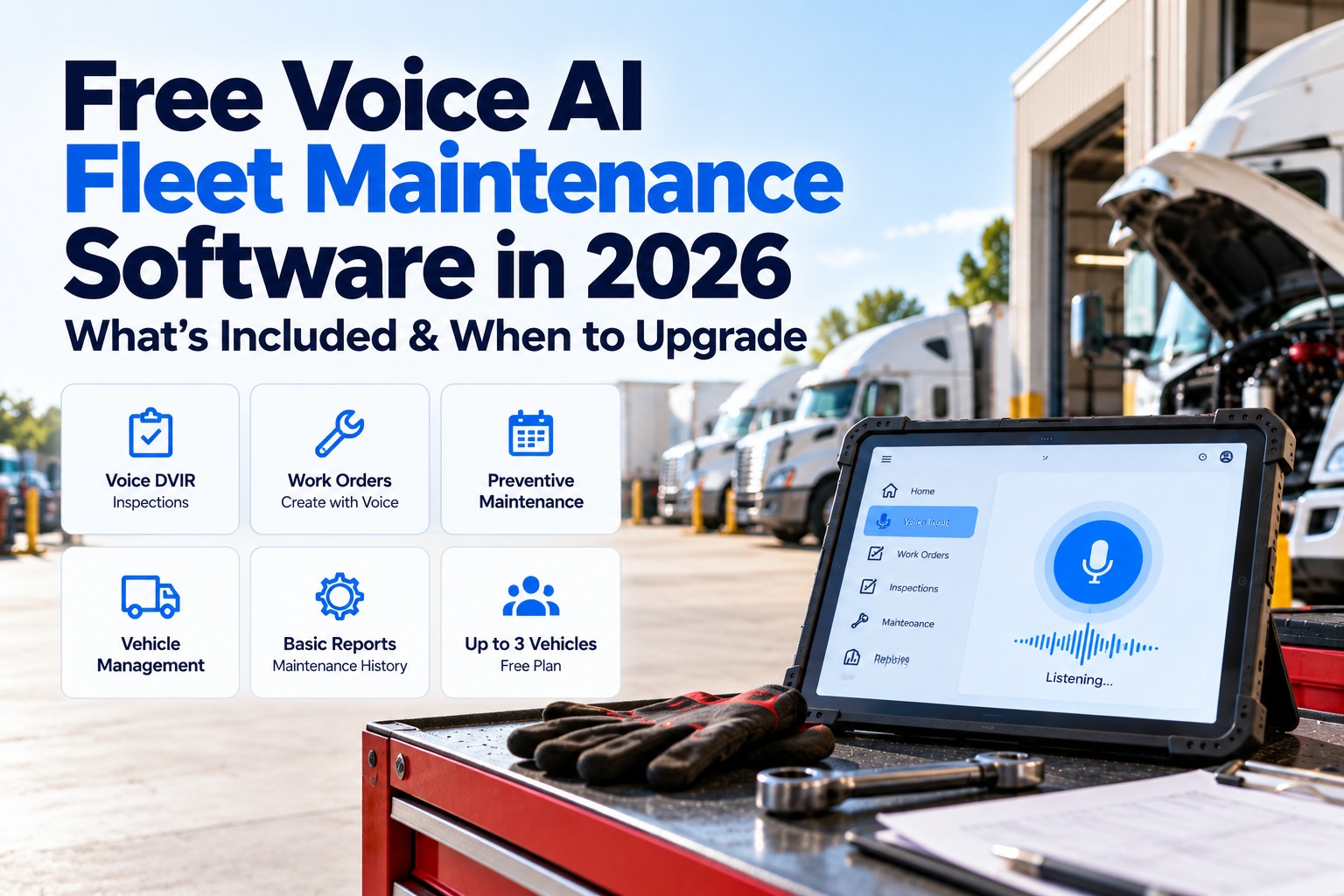
FleetRabbit is built maintenance-first, not tracking-first. Where most platforms treat maintenance as a secondary module behind GPS, FleetRabbit puts preventive maintenance, digital DVIR, work orders, and cost analytics at the center of everything. AI-powered predictive maintenance analyzes telematics data to forecast failures weeks ahead. Free for up to 3 assets with all 15 features included. No contracts at any tier.
Fleetio is one of the most widely adopted fleet maintenance platforms for small to mid-size operations. Strong on maintenance alerts, fuel card integrations (Comdata, FLEETCOR), and total cost of ownership calculations. Connects with 30,000+ national repair shops. However, no native GPS tracking - requires third-party integration. Vehicle minimums apply, and critical features like work orders and parts management are reserved for higher-priced tiers.
Samsara is a telematics-first platform that layers maintenance capabilities on top of GPS tracking, AI dash cams, and driver safety monitoring. Real-time IoT diagnostics stream battery voltage, engine status, and fluid levels for predictive fault detection. Powerful for large enterprises needing unified tracking and maintenance. However, the maintenance module is secondary to telematics - less depth than dedicated maintenance platforms. Requires multi-year contracts and proprietary hardware.
Motive built its reputation on ELD compliance and has expanded into fleet maintenance, safety, and spend management. AI-powered dash cams, HOS automation, and maintenance scheduling are all part of the unified platform. Motive's 2026 AI Road Safety Report signals a major push into real-time AI intervention. Strong compliance automation but maintenance depth is thinner than dedicated platforms. Requires proprietary hardware and per-vehicle pricing.
Verizon Connect offers advanced GPS tracking, route optimization, and maintenance scheduling for large logistics and delivery operations. Customizable reports and compliance tools are strong differentiators. The Reveal platform provides detailed fleet insights but requires a more complex setup process and longer onboarding. Maintenance scheduling available but not as deep as dedicated maintenance platforms. Pricing requires custom quotes with multi-year commitment.
AUTOsist focuses specifically on fleet maintenance for small to mid-size operations. Straightforward work order management, centralized maintenance records, custom DVIR inspection forms, PM scheduling, and parts management are all included in the base plan. More feature-rich at entry level than Fleetio, making it a solid choice for small fleets upgrading from spreadsheets. Limited in advanced analytics and AI capabilities compared to newer platforms.
See Why 3,200+ Fleet Managers Chose FleetRabbit
Free for up to 3 assets. All 15 features included. No contracts. Setup in 5 minutes. Book a personalized demo to see FleetRabbit vs your current workflow.
Quick Comparison: Pricing and Feature Matrix
Side-by-side pricing and feature availability across all six platforms. Scroll horizontally on mobile to see all columns.
| Feature | FleetRabbit | Fleetio | Samsara | Motive | Verizon Connect | AUTOsist |
|---|---|---|---|---|---|---|
| Starting Price | Free / $3/mo | Contact vendor | Contact vendor | Contact vendor | Contact vendor | Contact vendor |
| Contracts Required | None | Annual rec. | 3-5 years | Annual+ | 3 years | Monthly ok |
| Vehicle Minimum | 1 (free to 3) | 5 vehicles | Custom | Custom | Custom | 5 vehicles |
| PM Scheduling | Included | Included | Included | Included | Included | Included |
| Digital DVIR | Photo + auto WO | Basic | Available | Available | Add-on | Custom forms |
| Work Orders | Included free | Higher tier | Available | Basic | Limited | Included |
| Parts Inventory | Included free | Higher tier | Limited | No | No | Included |
| AI Predictive Maint. | Yes | Limited | IoT-based | AI alerts | Limited | No |
| GPS Tracking | Integration | Integration | Native | Native | Native | No |
| Mobile App | iOS + Android | iOS + Android | iOS + Android | iOS + Android | iOS + Android | iOS + Android |
| Setup Time | 5 minutes | 1-2 days | Weeks | 1-2 weeks | Weeks | Same day |
2026 Fleet Maintenance Technology Trends
The fleet maintenance landscape is evolving faster than at any point in the past decade. Here are the technology trends that should inform your platform decision in 2026.
In 2025, predictive maintenance was about proving the technology worked. In 2026, the phase has shifted to operationalizing it. Predictive Maintenance 2.0 does not just detect anomalies - it predicts specific component failures, automatically orders parts, schedules technicians, and notifies managers of planned downtime windows. AI models trained on billions of data points now forecast which part will fail, when, and with what confidence level. Fleets report 40-60% reductions in emergency parts procurement. A Texas contractor with 35 excavators implemented AI predictive maintenance and cut hydraulic failures by 73%, saving $210,000 annually.
The technician shortage is not improving. PM 2.0 addresses this by deploying AI copilots that guide diagnostics, suggest troubleshooting steps, estimate repair times, and surface tribal knowledge captured from thousands of previous repairs. AI copilots reduce mean time to repair, improve first-time fix rates, and help junior technicians perform at senior levels faster. This is not about replacing humans - it is about amplifying limited maintenance capacity at a time when skilled labor is scarce and vehicles are more complex.
Over 90% of vehicles manufactured in 2026 ship with embedded telematics hardware. Rich diagnostic data - tire pressure, battery voltage, engine parameters, DTC codes - streams directly from the factory without installing aftermarket devices. Geotab has partnerships with Volvo, Ford, GM, Stellantis, Mercedes-Benz, Rivian, and VW for unified dashboards. This eliminates installation friction and means fleet maintenance platforms must integrate with OEM data streams, not just aftermarket OBD-II dongles.
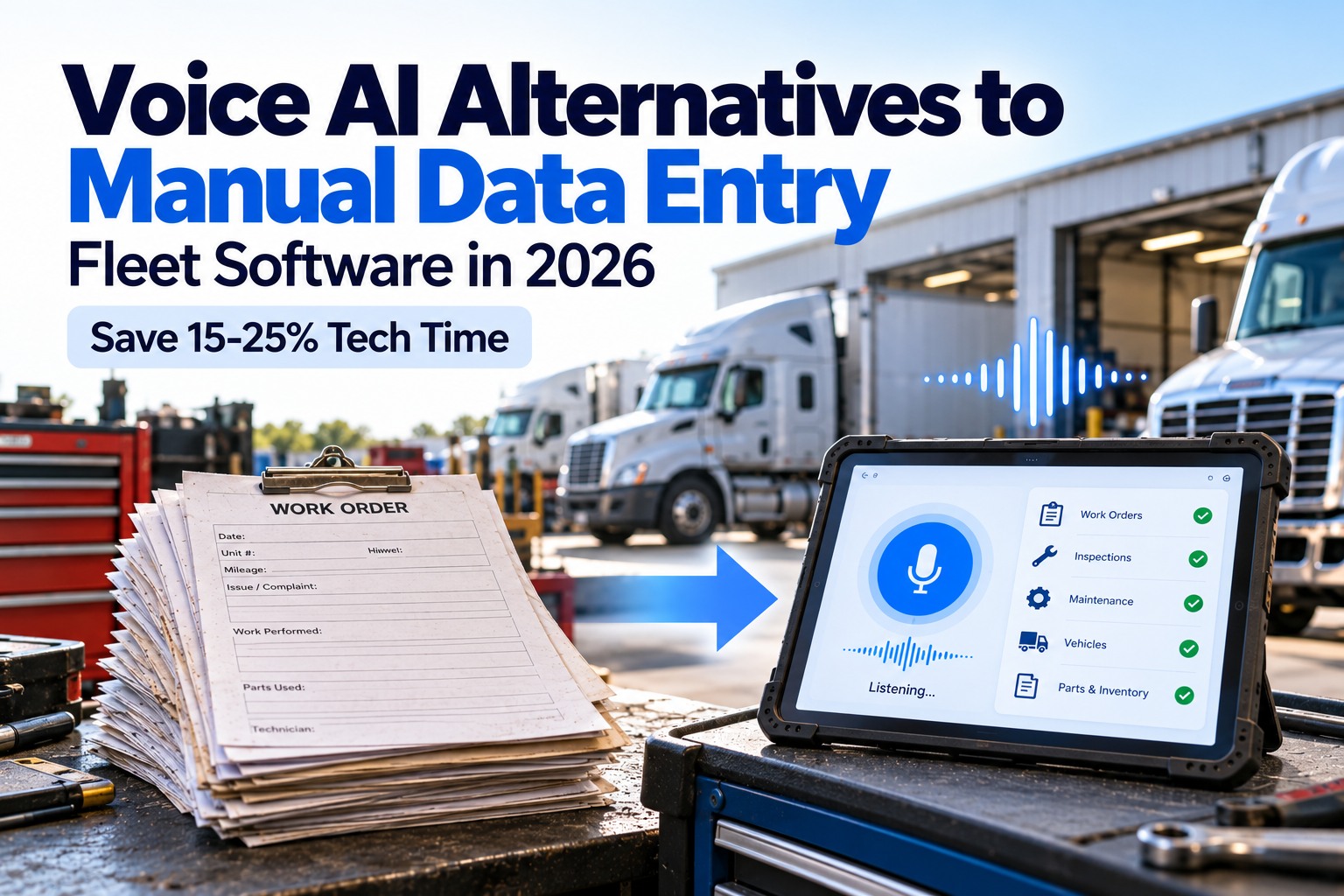
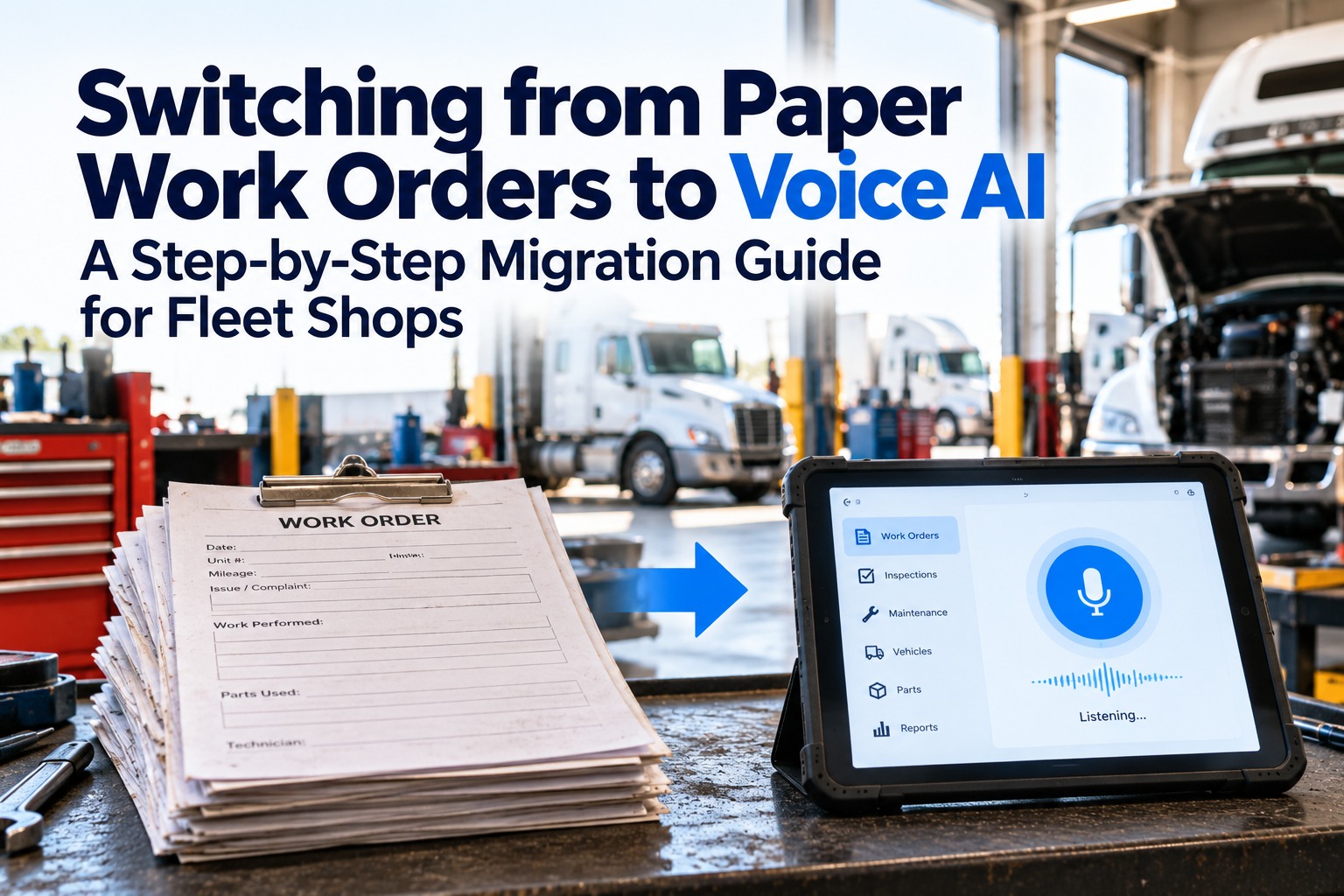
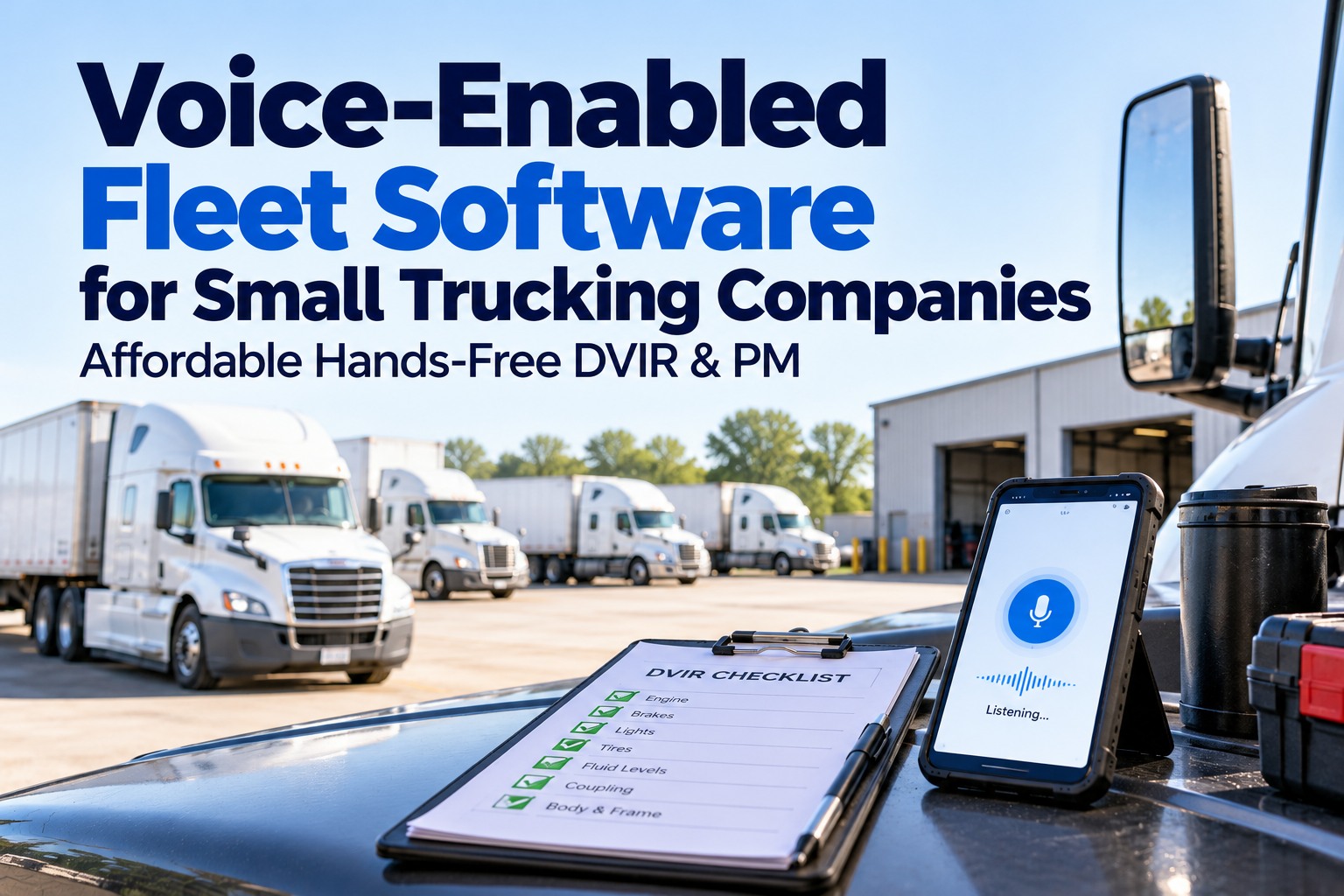
Paper inspection forms get lost, create compliance risk, and slow maintenance response. In 2026, digital DVIRs are the fastest-growing feature in fleet maintenance software. FMCSA now explicitly accepts electronic DVIRs. Mobile apps guide drivers through standardized inspections with photo documentation, GPS stamps, and electronic signatures. Failed items automatically create work orders routed to the correct technician. Digital inspections combined with telematics deliver the fastest payback of any fleet maintenance technology: 60 to 90 days to positive ROI.
Fleet operators are moving away from juggling separate systems for dispatch, billing, maintenance, and compliance. Motive's 2026 strategy explicitly targets unified platforms. Cloud-hosted, web-based, mobile-friendly SaaS products are replacing heavy on-premise systems. The shift is from "best-of-breed point solutions" to "one connected command center" where technicians, supervisors, and fleet managers work from the same real-time platform. Technology adoption is now the top priority for 18% of fleets in Q1 2026.
As electric vehicles enter mixed fleets, maintenance platforms must handle fundamentally different service requirements: battery health monitoring, thermal management, regenerative braking systems, and charging infrastructure management. EV predictive maintenance strategies are becoming critical in 2026 as electric fleets scale. Platforms that cannot manage both ICE and EV maintenance workflows in a single system will force fleet operators to maintain parallel processes - exactly the kind of fragmentation modern software should eliminate.
How to Choose the Right Fleet Maintenance Platform
Choosing fleet maintenance software is not about finding the platform with the most features. It is about finding the platform that matches your operational reality: your fleet size, your maintenance team's technical capacity, your compliance requirements, and your budget. Here is the decision framework that cuts through vendor marketing.
You need a platform that works immediately, costs little, and does not require IT support. Start with a free or low-cost option that includes PM scheduling, digital DVIR, and work orders in the base plan. Avoid platforms with 5-10 vehicle minimums, multi-year contracts, or features locked behind premium tiers.
You need deeper analytics, fuel card integrations, and cost-per-mile reporting alongside PM and work orders. Look for platforms that scale without dramatic price jumps and offer API integrations with your existing telematics and accounting systems.
You need unified telematics, maintenance, compliance, and safety in one platform. AI predictive maintenance and real-time IoT diagnostics become ROI-positive at this scale. Consider whether you need maintenance-first with telematics integration, or telematics-first with maintenance modules.
Frequently Asked Questions
The best platform depends on your fleet size and primary need. For small to mid-size fleets needing maintenance-first capabilities with free entry pricing, FleetRabbit offers the strongest combination of preventive maintenance, digital DVIR, work orders, and cost analytics without contracts. For enterprises needing unified telematics and maintenance, Samsara provides IoT-driven diagnostics. For maintenance-only at low cost, AUTOsist covers basics well. The key differentiator in 2026 is AI predictive maintenance capability - platforms that can predict failures, not just schedule inspections. Book a demo to compare FleetRabbit to your current tools.
FleetRabbit is free for up to 3 assets with all features included. Paid plans start at $3 per vehicle per month with no contracts required. Other platforms vary widely - some charge per vehicle monthly, others require custom quotes with multi-year contracts. Hidden costs to watch across the industry: multi-year contracts, vehicle minimums, mandatory hardware purchases, per-seat mobile app fees, and critical features locked behind premium tiers. Always request a full pricing breakdown before committing.
Predictive maintenance uses AI and sensor data to forecast equipment failures before they happen - not just schedule service at fixed intervals. In 2026, AI models predict specific components, estimate failure timelines, and auto-generate work orders. For small fleets, the ROI is often higher as a percentage because preventing even one breakdown saves thousands against tight margins. Studies show predictive maintenance reduces unplanned downtime by 32% and maintenance costs by 20-40%, with most fleets seeing positive ROI within 6 months.
Yes. Modern fleet maintenance platforms like FleetRabbit combine CMMS (maintenance tracking) and FSM (field service management) capabilities into a single system. Work orders, parts inventory, preventive maintenance scheduling, cost tracking, and technician management are all built in. For fleets that also need vehicle-specific features like DVIR inspections, compliance tracking, and telematics integration, a fleet maintenance platform is a better fit than a generic CMMS because it understands fleet-specific workflows.
Start with a platform that offers free or low-friction onboarding. Add your vehicles and drivers, set up PM schedules for each vehicle type, and have drivers download the mobile app for digital inspections. Import existing maintenance history if available. The fastest-adopting teams focus on two things first: digital DVIR inspections (replacing paper immediately) and automated PM reminders (replacing the whiteboard). Both deliver measurable results within 60-90 days. Create a free FleetRabbit account and add your first vehicle in 5 minutes.
Book a Demo and See FleetRabbit Against Your Current Workflow
Every fleet's maintenance challenges are different. The best way to evaluate any platform is to bring your real vehicles, real work orders, and real maintenance data into a live demo. See if FleetRabbit is the right fit for your operation - no commitment required.