A truck breaks down on I-95 at 2 AM. The driver is stranded, the load is late, and your dispatcher is scrambling to find a tow truck 400 miles away. The repair? A $200 water pump that showed warning signs for three weeks signs that nobody caught because maintenance records lived in a filing cabinet nobody checked.
This scenario plays out thousands of times daily across the trucking industry. Unplanned maintenance costs fleets 2-3x more than scheduled repairs, yet many trucking companies still manage maintenance with spreadsheets, paper logs or the "fix it when it breaks" approach. Fleet maintenance software changes this equation entirelydigitizing scheduling, automating service reminders, and tracking vehicle health in real-time to prevent breakdowns before they happen.
See How Maintenance Software Works
Get a personalized demo showing how FleetRabbit automates preventive maintenance, work orders, and vehicle tracking for trucking companies.
What Is Fleet Maintenance Software?
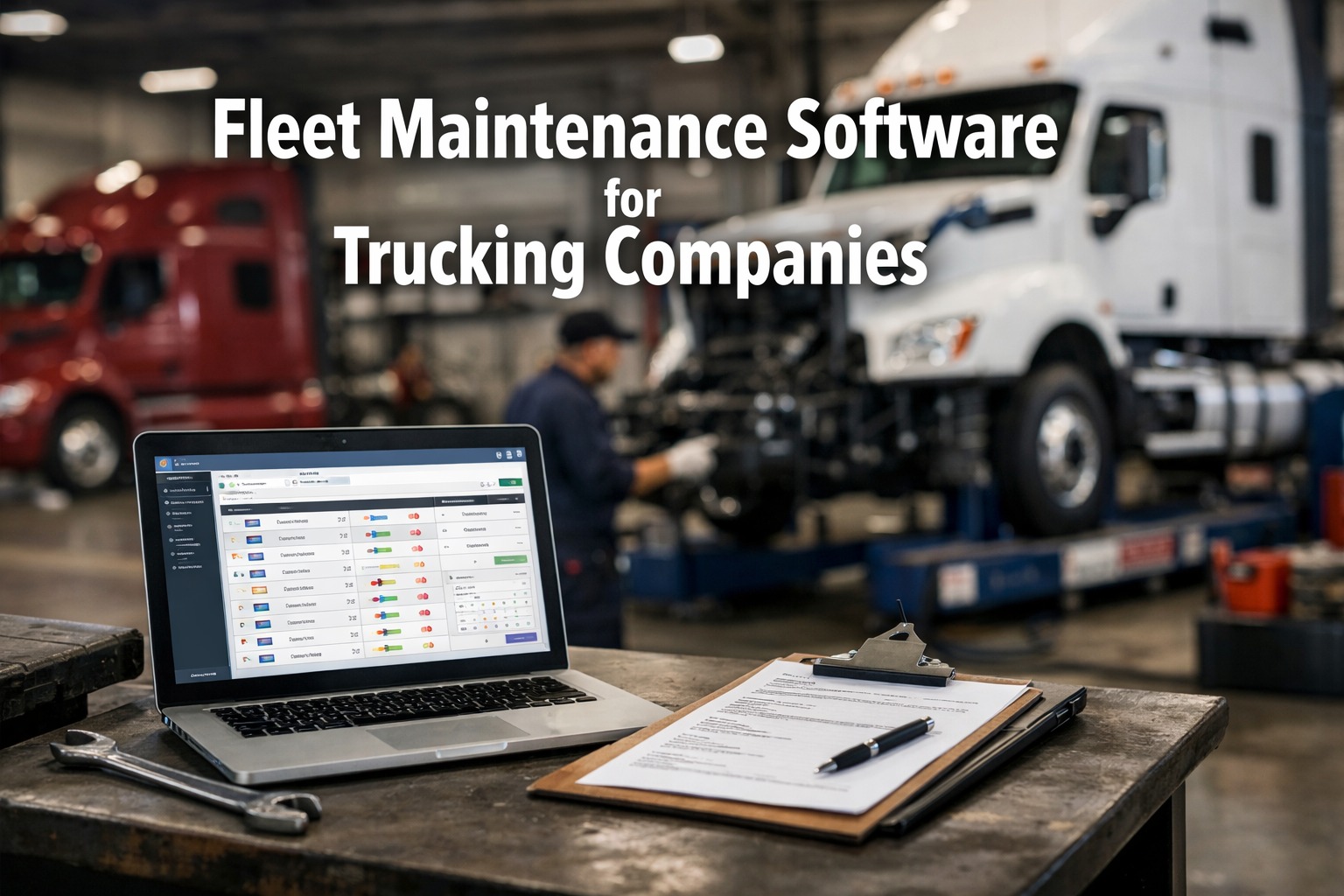
Fleet maintenance software is a digital platform that helps trucking companies schedule, track, and manage all vehicle maintenance activities from a single dashboard. Instead of relying on manual logs, memory, or paper-based systems, truck maintenance software automates the entire process—from triggering service alerts to tracking repair history and managing parts inventory. See how it works in a live demo →
Preventive Scheduling
Automatically triggers service reminders based on mileage, engine hours, or calendar intervals—never miss another oil change or inspection.
Work Order Management
Create, assign, and track repair jobs from identification through completion with full documentation and technician accountability.
Vehicle History Tracking
Maintains complete service records for every truck—repair history, parts replaced, costs incurred, and compliance documentation.
Real-Time Diagnostics
Integrates with telematics and ELDs to pull live engine data, fault codes, and performance metrics directly into maintenance workflows.
Why Trucking Companies Struggle with Maintenance
Maintenance management sounds straightforward in theory: change the oil every 25,000 miles, replace brake pads when they wear down, inspect before every trip. In practice, trucking operations face unique challenges that make consistent maintenance difficult. See how software solves these problems →
Trucks Are Always Moving
Your assets are scattered across highways in multiple states. A truck due for service might be 1,500 miles from your shop when the maintenance interval hits. Coordinating service with driver schedules, load commitments, and shop availability requires planning that paper systems simply can't handle.
Driver Turnover Disrupts Continuity
When drivers change frequently, institutional knowledge about vehicle quirks disappears. The new driver doesn't know that Truck 47 "always runs a little hot" or that the air dryer on Unit 23 needs extra attention. Without documented history in a fleet maintenance system, these critical patterns get lost.
Reactive Culture Is Hard to Break
Many trucking companies grew up in a "run it until it breaks" culture. Preventive maintenance feels like unnecessary downtime when the truck is running fine. This mindset changes quickly after a few $15,000 roadside breakdowns, but breaking old habits requires systems that make PM easier than reactive repairs.
Compliance Adds Complexity
DOT inspections, annual certifications, emissions testing, and DVIR requirements create a compliance burden that compounds maintenance challenges. Missing a single inspection can result in out-of-service orders, fines, and CSA score damage that affects your entire operation.
The True Cost of Poor Maintenance Management
Trucking companies often underestimate how much inadequate maintenance actually costs. The repair bill is just the beginning—the real expense comes from cascading consequences that multiply the initial problem. Calculate your true maintenance costs →
Hidden Costs of Reactive Maintenance
Roadside Breakdowns
Towing a Class 8 truck costs $500-2,000, plus driver detention, load delays, expedited shipping to cover missed deliveries, and potential customer penalties.
Emergency Repair Premium
Rush repairs cost 30-50% more than scheduled service. Parts availability becomes a gamble—expedited shipping or waiting days for components.
Extended Downtime
A truck waiting for parts can sit for days, losing daily revenue while still incurring fixed costs like payments, insurance, and driver wages.
Secondary Damage
A failed water pump becomes a blown head gasket; worn brakes become a DOT violation. Small problems cascade into major repairs when not caught early.
Reactive vs. Preventive: The Numbers Don't Lie
| Metric | Reactive Maintenance | Preventive Maintenance |
|---|---|---|
| Cost Per Mile | $0.18 - $0.25 | $0.12 - $0.15 |
| Vehicle Availability | 85-90% | 95-98% |
| Downtime Hours/Year | 120-200 hours | 30-60 hours |
| Major Repairs | High frequency | Reduced by 85% |
| Compliance Risk | High (missed inspections) | Low (automated tracking) |
Key Features of Effective Fleet Maintenance Software
Not all truck maintenance software is created equal. When evaluating preventive maintenance fleet software for your trucking operation, focus on capabilities that directly address the unique challenges of keeping trucks on the road. See these features in action →
Automated Service Scheduling
The foundation of any fleet maintenance system. Track multiple maintenance intervals simultaneously—mileage-based oil changes (every 25,000 miles), time-based inspections (annual DOT), engine-hour-based services (DPF regeneration). Better systems also consider vehicle location and driver schedules when generating alerts, suggesting nearby service centers.
Work Order Management
Creating a work order should take seconds, not minutes. Look for software that lets you assign jobs to specific technicians, track labor hours in real-time, attach parts used with costs, and document completion with photos or notes. Mobile access is essential so technicians can update work orders directly from the shop floor.
DVIR and Inspection Management
Digital Vehicle Inspection Reports should flow directly into your maintenance system. When a driver reports a defect during pre-trip or post-trip inspection, the software should automatically create a work order, assign priority based on severity (safety-critical vs. minor), and track resolution through completion—creating an audit trail for DOT compliance.
Telematics & ELD Integration
The most powerful trucking maintenance software connects to your existing ELD or telematics system to pull real-time vehicle data. Fault codes, actual mileage (not estimated), engine diagnostics, and performance metrics flow automatically into maintenance records—eliminating manual data entry and catching problems before drivers notice symptoms.
Parts Inventory Management
Running out of filters during a scheduled service disrupts your entire maintenance schedule. Fleet maintenance automation should include basic inventory management—tracking stock levels for common parts, setting automatic reorder points, and connecting parts usage to specific vehicles and repairs for accurate cost allocation.
Reporting and Analytics
Data without analysis is just noise. Your fleet repair tracking software should provide actionable insights: cost per mile by vehicle, component failure trends, technician productivity metrics, and maintenance ROI calculations. These reports help identify problem vehicles before they drain your budget, optimize service intervals, and justify maintenance investments to leadership.
Want to See These Features in Action?
Book a 30-minute demo to see how FleetRabbit handles maintenance scheduling, work orders, and compliance tracking for trucking companies like yours.
Best Practices for Implementation
Adopting digital fleet maintenance isn't just about buying software—it's about changing how your operation approaches maintenance. Get implementation guidance from our team →
Start with Clean Data
Before going live, invest time in entering accurate vehicle information, current mileage, and known maintenance history. Starting with bad data creates bad results. Even partial history is better than nothing—focus on the last 12 months of service records.
Set Realistic Intervals
Don't copy OEM recommendations blindly. Your operating conditions matter. Trucks running mountain routes need different brake service intervals than flatland highway haulers. Use your fleet's actual experience to customize preventive schedules.
Train Everyone
Maintenance software only works if people use it. Train dispatchers on how maintenance scheduling affects load planning. Train drivers on digital DVIRs. Train technicians on work order completion. Buy-in across the organization is essential.
Enforce Consistent Usage
The biggest implementation failure is inconsistent adoption. If some repairs get entered and others don't, your data becomes unreliable and the system loses value. Make software usage mandatory for all maintenance activities—no exceptions.
How Digital Tools Transform Fleet Maintenance
The shift from paper-based to digital fleet maintenance delivers benefits that compound over time. Start your free trial today →
Visibility Across Locations
Whether you have one terminal or twenty, fleet maintenance software gives you a single view of every vehicle's maintenance status. No more calling shop managers to check on specific trucks.
Proactive Instead of Reactive
Automated alerts mean you're scheduling service before problems occur, not scrambling after breakdowns. This shift alone can reduce emergency repairs by 60-70%.
Compliance Confidence
Digital records are searchable, organized, and audit-ready. When DOT asks for maintenance documentation, you produce complete histories in minutes instead of hours.
Data-Driven Decisions
Over time, your maintenance data reveals which vehicles are reliable, which need replacement, and where your maintenance dollars deliver the best return.
How FleetRabbit Helps Trucking Companies
FleetRabbit provides fleet maintenance software designed specifically for trucking operations. The platform combines preventive maintenance scheduling, work order management, DVIR tracking, and vehicle health monitoring in a single, easy-to-use system. Book a demo to see it in action →
Affordable for Any Fleet Size
Start free with up to 3 vehicles. Paid plans at just $3/vehicle/month—no contracts, no hidden fees. Scale as your fleet grows.
Frequently Asked Questions
How long does it take to implement fleet maintenance software?
Most cloud-based platforms can be set up in a few hours to a few days, depending on fleet size and data migration needs. Basic setup—adding vehicles, setting maintenance schedules, inviting users—typically takes less than a day. Building complete maintenance history takes longer but can be done gradually.
Can fleet maintenance software integrate with my existing ELD system?
Most modern fleet maintenance systems offer integrations with popular telematics and ELD providers including Samsara, Motive, Geotab, and others. This allows automatic mileage updates, fault code imports, and real-time vehicle data syncing without manual entry.
Is fleet maintenance software worth it for small trucking companies?
Absolutely. Small fleets often benefit most because they lack the administrative staff to manage maintenance manually. A single prevented breakdown can save $5,000-15,000—easily justifying annual software costs. Many platforms offer free tiers for small fleets.
What's the difference between fleet maintenance software and a general CMMS?
Fleet maintenance software is essentially a CMMS (Computerized Maintenance Management System) designed specifically for vehicles. While general CMMS platforms handle any asset type, fleet-specific software includes features like mileage tracking, DVIR management, telematics integration, and DOT compliance that generic systems lack.
Ready to Modernize Your Maintenance?
See how FleetRabbit helps trucking companies automate scheduling, reduce breakdowns, and keep complete service records—all from one simple platform.