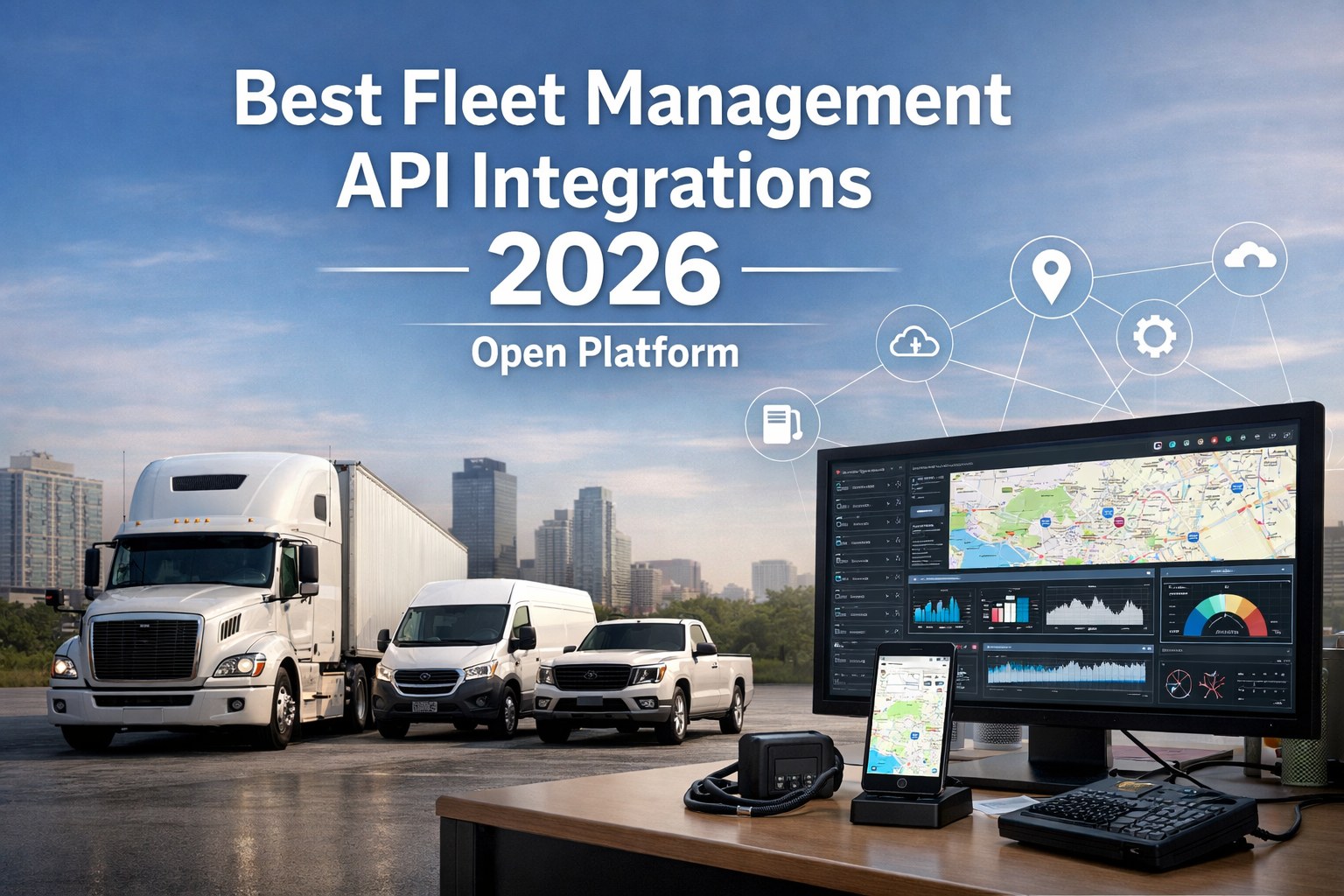
Open API ecosystem has emerged as the number one buyer requirement for fleet management software in 2026, fundamentally reshaping how transportation companies evaluate and select technology platforms. Gone are the days when fleet managers accepted siloed software that couldn't communicate with their existing systems. Today's fleet operators demand seamless connectivity between their fleet management platform, ELD devices, fuel card programs, accounting software, and dozens of other critical business systems. This comprehensive guide explores the essential fleet management API integrations for 2026, helping you build a connected tech stack that eliminates data silos, automates workflows, and delivers real competitive advantages.
The shift toward API-first fleet platforms reflects a broader transformation in how transportation companies operate. With driver shortages, fuel volatility, and tightening margins, fleet operators can no longer afford manual data entry, disconnected systems, or delayed information flow. Modern fleet management API integrations enable real-time data synchronization across your entire technology ecosystemfrom the moment a driver completes an inspection to when that data flows into your maintenance system, accounting platform, and customer reporting dashboards.
Ready to build your connected fleet tech stack? FleetRabbit offers open API access and pre-built integrations with the platforms you already use. Book a free demo to see our integration capabilities.
What Are Fleet Management APIs?
An API (Application Programming Interface) is essentially a digital bridge that allows different software systems to communicate and share data automatically. In fleet management, APIs enable your fleet platform to connect with other business systems—sending and receiving information without manual intervention. Think of APIs as translators that let your fleet software "speak" to your accounting system, fuel cards, ELD devices, and customer platforms in their native languages.
How Fleet APIs Work in Practice
When your driver completes a fuel purchase, the fuel card API automatically sends transaction data to your fleet management platform. That data then flows through additional API connections to your accounting system for expense categorization, your dispatch platform for cost tracking, and your reporting dashboard for real-time visibility. What once required hours of manual data entry now happens in seconds, with zero human intervention and zero data entry errors.
Types of Fleet Management APIs
REST APIs
The most common type, using standard web protocols for reliable data exchange. Ideal for real-time integrations and widely supported by fleet software vendors.
Webhooks
Event-driven notifications that push data automatically when something happens—like a vehicle crossing a geofence or completing an inspection.
GraphQL APIs
Advanced query-based APIs that let you request exactly the data you need, reducing bandwidth and improving performance for complex integrations.
SOAP APIs
Legacy enterprise APIs still common in older ERP and accounting systems. Important for connecting with established enterprise platforms.
Essential Fleet Management API Integration Categories
Building an effective connected fleet tech stack requires understanding which integration categories deliver the highest value for your operations. Here are the essential API integration categories every fleet should consider:
1. ELD & Telematics Integrations
Electronic Logging Device (ELD) and telematics integrations form the foundation of modern fleet connectivity. These APIs pull real-time vehicle data including location, speed, engine diagnostics, hours of service, and driver behavior metrics directly into your fleet management platform.
Key ELD/Telematics API Capabilities:
- Real-time GPS tracking with position updates every 10-30 seconds
- Hours of Service data synchronized for compliance monitoring
- Engine diagnostics including fault codes and performance metrics
- Driver behavior scoring for safety and coaching programs
- IFTA mileage reporting automated by jurisdiction
Popular integrations: Samsara, KeepTruckin, Geotab, Omnitracs, Platform Science
2. Fuel Card & Expense Integrations
Fuel represents 25-35% of fleet operating costs, making fuel card API integrations critical for cost control and fraud prevention. These integrations automatically import transaction data, match purchases to vehicles, and flag suspicious activity.
Key Fuel Card API Capabilities:
- Automatic transaction import eliminating manual data entry
- Vehicle matching linking purchases to specific assets
- Fraud detection flagging unusual purchase patterns
- MPG calculations comparing actual vs. expected fuel economy
- IFTA tax reporting with automated fuel tax calculations
Popular integrations: WEX, Comdata, Fuelman, EFS, RTS, Pacific Pride
3. TMS & Dispatch Integrations
Transportation Management System (TMS) integrations connect your fleet operations with load planning, dispatch, and customer communication workflows. These APIs ensure drivers receive assignments automatically while dispatchers maintain real-time visibility.
Key TMS API Capabilities:
- Load assignment automation pushing orders directly to drivers
- ETA calculations based on real-time traffic and vehicle location
- Proof of delivery documentation flowing back to TMS
- Rate confirmation with automated carrier communications
- Customer visibility portals with live shipment tracking
Popular integrations: McLeod, TMW, MercuryGate, Trimble, Oracle Transportation
Build Your Connected Fleet Platform
FleetRabbit integrates with your existing systems through open APIs and pre-built connectors. See how easy integration can be.
4. Accounting & ERP Integrations
Financial system integrations eliminate the manual work of transferring fleet data to your accounting platform. These APIs automate expense categorization, invoice processing, and financial reporting for fleet operations.
Key Accounting API Capabilities:
- Automated expense posting with proper GL coding
- Vendor invoice matching for maintenance and fuel purchases
- Driver payroll data including miles, stops, and accessorial charges
- Asset depreciation synchronized with fleet records
- Cost center allocation for departmental accounting
Popular integrations: QuickBooks, Sage, NetSuite, SAP, Microsoft Dynamics
5. Maintenance & Parts Integrations
Maintenance system APIs connect diagnostic data from vehicles with work order management, parts inventory, and vendor networks. These integrations enable predictive maintenance workflows that reduce downtime and extend asset life.
Key Maintenance API Capabilities:
- Fault code alerts triggering automatic work orders
- Parts lookup with real-time pricing and availability
- Vendor scheduling for outsourced maintenance coordination
- Warranty tracking ensuring covered repairs are claimed
- PM scheduling based on actual mileage and engine hours
Popular integrations: Fleetio, RTA, TMT, Dossier, Mitchell 1
6. HR & Driver Management Integrations
Human resources integrations synchronize driver records, credentials, training status, and payroll data across systems. With driver retention critical in 2026, these integrations help fleets manage their most important asset—their people.
Key HR API Capabilities:
- CDL verification with automated license monitoring
- Drug testing compliance tracking and alerts
- Training records synchronized with safety programs
- Payroll integration with automated settlement calculations
- Benefits administration connected to driver profiles
Popular integrations: ADP, Paychex, Workday, Tenstreet, DriverReach
Benefits of Fleet API Integrations
Implementing a connected fleet tech stack through API integrations delivers measurable benefits across operations, compliance, and profitability:
65% Reduction in Data Entry
Automated data flow between systems eliminates manual entry, freeing staff for higher-value work and eliminating transcription errors.
Real-Time Visibility
Data synchronization across platforms provides instant access to current information, enabling faster and better-informed decisions.
Improved Compliance
Automated data capture ensures complete records for DOT audits, IFTA reporting, and safety compliance without manual tracking.
Lower Operating Costs
Integrated systems identify cost savings opportunities through better fuel management, optimized maintenance, and reduced administrative overhead.
Real-World Integration Use Cases
Understanding how API integrations work in practice helps illustrate their value. Here are common use cases that demonstrate the power of connected fleet systems:
Automated Fuel Reconciliation
A 200-truck fleet connects their WEX fuel card API with their fleet management and accounting platforms. Every fuel transaction automatically matches to a vehicle, validates against GPS location, calculates MPG, flags exceptions, and posts to QuickBooks—eliminating 40 hours per month of manual reconciliation.
Predictive Maintenance Workflow
Telematics API detects an engine fault code on a delivery truck. The fleet platform automatically creates a work order, checks parts availability through supplier API, schedules the repair at the nearest service location, and notifies dispatch to reassign the driver—all within minutes of the fault occurring.
Customer Visibility Portal
A logistics company uses APIs to provide customers real-time shipment tracking. GPS data flows through the fleet platform to a customer portal showing live location, accurate ETA based on traffic, and automatic delivery confirmation with photo documentation—improving customer satisfaction scores by 35%.
Driver Settlement Automation
An owner-operator fleet integrates ELD, fuel card, and dispatch systems to automate weekly settlements. Miles, fuel advances, accessorial charges, and deductions calculate automatically, generating accurate pay statements in minutes instead of hours while eliminating disputes.
See FleetRabbit's Integration Capabilities
Our open API platform connects with the systems you already use. Schedule a demo to see how FleetRabbit can eliminate your data silos and automate your workflows.
Implementation Best Practices
Successfully implementing fleet API integrations requires careful planning and execution. Follow these best practices to maximize value and minimize disruption:
1. Audit Your Current Tech Stack
Document all systems currently in use, their data inputs/outputs, and integration capabilities. Identify gaps where manual processes exist and prioritize integrations that eliminate the most manual work.
2. Prioritize High-Impact Integrations
Start with integrations that deliver immediate ROI—typically ELD/telematics, fuel cards, and accounting. Build momentum with quick wins before tackling more complex enterprise integrations.
3. Ensure Data Quality First
Clean up your existing data before connecting systems. Integrations amplify both good and bad data quality—garbage in, garbage out applies across connected systems.
4. Plan for Error Handling
Build processes for when integrations fail or data doesn't sync properly. Establish monitoring, alerts, and fallback procedures to maintain operations during technical issues.
5. Document Everything
Maintain clear documentation of all integration configurations, data mappings, and business rules. This proves invaluable for troubleshooting and onboarding new team members.
6. Start with Pre-Built Connectors
Use vendor-provided integrations when available rather than building custom connections. Pre-built connectors are tested, supported, and maintained by the vendors.
Future Trends: Fleet APIs in 2026 and Beyond
The fleet management API ecosystem continues evolving rapidly. Here are the key trends shaping connected fleet technology:
AI-Powered Integration Intelligence
Machine learning algorithms are increasingly analyzing data flows across integrated systems, automatically identifying anomalies, suggesting optimizations, and predicting issues before they impact operations.
Low-Code Integration Platforms
New middleware tools enable fleet managers to build custom integrations without developer resources. Drag-and-drop interfaces make connecting systems accessible to non-technical users.
Real-Time Streaming APIs
Moving beyond request-response patterns, streaming APIs deliver continuous data flow for applications requiring instant updates—critical for autonomous vehicle coordination and real-time optimization.
Embedded Insurance & Fintech
APIs enabling embedded insurance, instant payments, and financial services within fleet platforms are growing rapidly, creating new revenue opportunities and driver benefits.
Standardized Industry APIs
Industry groups are developing standardized API specifications for common fleet data types, making it easier to switch vendors and connect disparate systems across the supply chain.
Frequently Asked Questions
A fleet management API is a programming interface that allows different software systems to exchange data automatically. APIs enable your fleet management platform to connect with ELD devices, fuel cards, accounting software, TMS platforms, and other business systems—eliminating manual data entry and creating a unified, connected tech stack where information flows seamlessly between applications.
Most modern fleet platforms offer pre-built integrations that require minimal technical knowledge—often just entering API credentials and configuring basic settings. For custom integrations, you may need developer resources, but many vendors provide implementation support. Low-code integration platforms are also making it easier for non-technical users to build custom connections without writing code.
Costs vary widely based on integration complexity. Many fleet platforms include popular integrations at no additional charge. Custom API development typically costs $5,000-$50,000+ depending on complexity. Middleware platforms charge $200-$2,000+ monthly. However, ROI typically exceeds costs quickly—a single fuel card integration eliminating 10 hours of weekly manual work pays for itself within months.
Start with integrations that eliminate the most manual work and deliver immediate visibility: ELD/telematics for real-time vehicle data, fuel cards for automated expense tracking, and accounting software for financial automation. These foundational integrations provide quick ROI and create the data infrastructure for additional connections. Prioritize based on where your team spends the most time on manual data handling.
Key factors to evaluate include: number of pre-built integrations available, quality of API documentation, availability of webhooks for real-time events, rate limits and performance specifications, authentication methods supported, dedicated integration support, and a public API roadmap. Request API documentation during your evaluation and ask for references from customers using similar integrations.
Build Your Connected Fleet Tech Stack
Fleet management API integrations have evolved from nice-to-have features to essential requirements for competitive fleet operations in 2026. With 78% of fleet software buyers now requiring open API capabilities, platforms that don't offer robust integration options are quickly falling behind. The fleets winning in today's market are those that have eliminated data silos, automated manual workflows, and created unified visibility across their entire technology ecosystem.
Building your connected fleet tech stack doesn't require massive IT resources or complex development projects. Modern fleet platforms offer pre-built integrations with the most common systems, straightforward API access for custom connections, and implementation support to get you connected quickly. The key is choosing a platform designed from the ground up for integration—one that treats connectivity as a core capability rather than an afterthought.
Whether you're connecting your first ELD or building a sophisticated multi-system integration ecosystem, the principles remain the same: start with high-impact integrations, ensure data quality, document your configurations, and continuously optimize as your needs evolve. The result is a fleet operation that runs more efficiently, responds faster to changing conditions, and delivers better service to your customers.
Connect Your Fleet Technology Ecosystem
FleetRabbit's open API platform integrates with the systems you already use. Eliminate data silos, automate workflows, and gain real-time visibility across your entire operation.