Every trucking company owner knows the feeling: it's 6 AM, a driver calls saying the check engine light came on somewhere in Oklahoma, and you're scrambling to figure out when that truck last had service. The maintenance folder is at the office. The spreadsheet on your laptop shows different numbers than the one your dispatcher uses. Nobody's quite sure if that brake inspection ever happened.
This isn't poor managementit's the inevitable result of running a complex operation with disconnected tools. Trucks spread across multiple states, drivers with different habits, maintenance due at different intervals, inspections required at different times. No human can keep all of this straight, and spreadsheets weren't designed to. Fleet management software for trucking companies exists because the alternative—manual chaos—costs real money in breakdowns, violations, and wasted hours. See how centralized fleet management works →
- Information scattered across files and people
- Maintenance tracked in spreadsheets (maybe)
- Inspections on paper, filed somewhere
- Costs estimated, rarely accurate
- Problems discovered after breakdowns
- Everything in one accessible system
- Automated scheduling and alerts
- Digital records, instantly searchable
- Real costs tracked per vehicle
- Problems caught before failures
Your Entire Fleet, One Platform
Vehicles. Maintenance. Inspections. Drivers. Costs. Everything trucking companies need to run efficiently—without the spreadsheet chaos.
What Fleet Management Software Actually Does
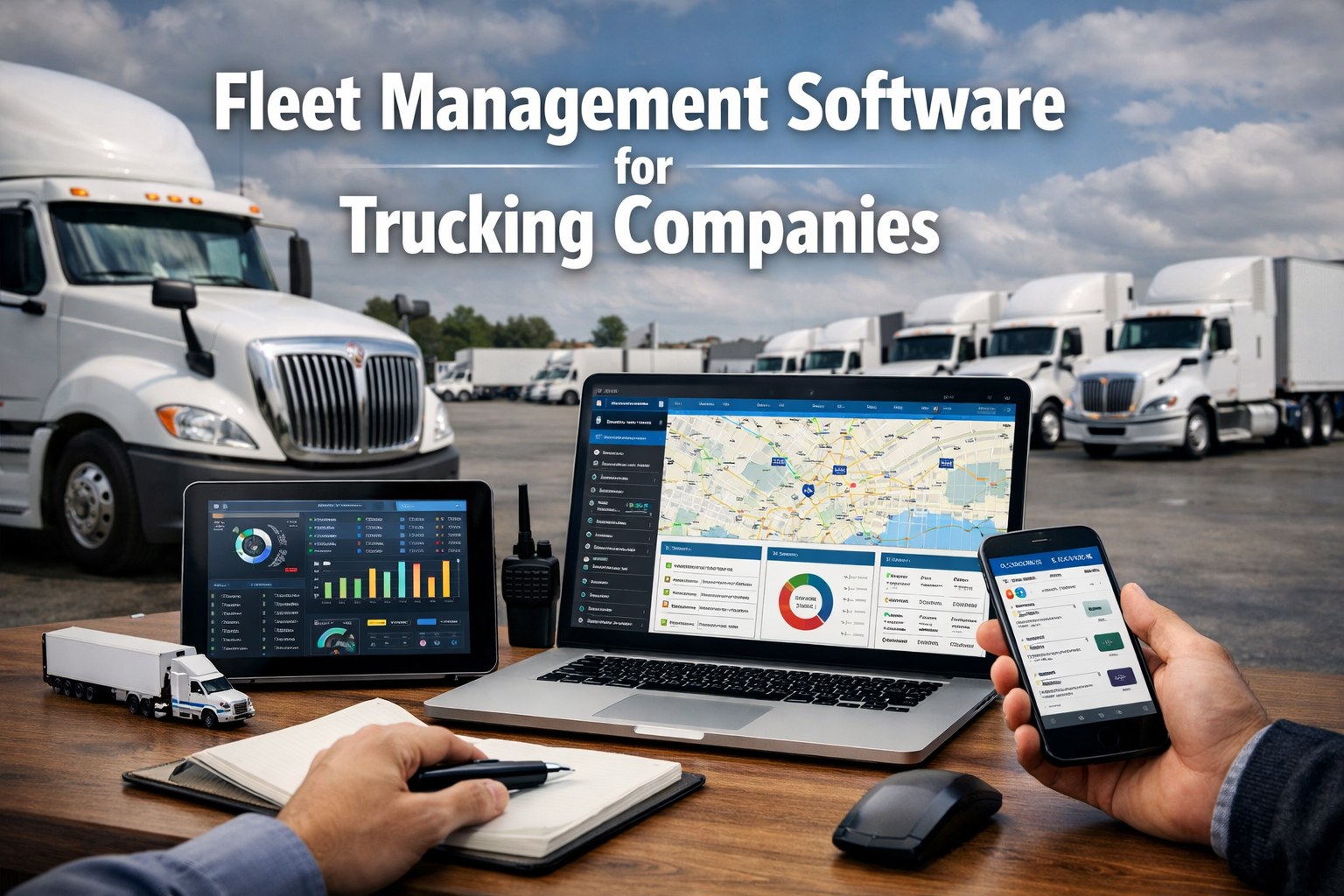
Fleet management software is a central hub where all information about your vehicles, maintenance, inspections, drivers, and costs lives together. Instead of hunting through filing cabinets for service records or calling drivers to check odometer readings, everything is accessible from any device, updated in real-time, and organized automatically.
Think of it as the difference between managing your personal finances with a shoebox full of receipts versus using a banking app. Both technically work, but one gives you clarity and control while the other guarantees confusion and missed opportunities.
What the Software Manages
Why Manual Fleet Management Fails
Manual processes don't fail because fleet managers are careless—they fail because tracking dozens of vehicles, hundreds of service intervals, and thousands of data points is beyond what humans and spreadsheets can handle reliably. See how automation solves these problems →
Scattered Information
Vehicle data lives in multiple places—registration docs in one folder, maintenance in a spreadsheet, inspection records with the safety manager. Finding anything requires hunting through multiple systems or asking multiple people.
Missed Maintenance
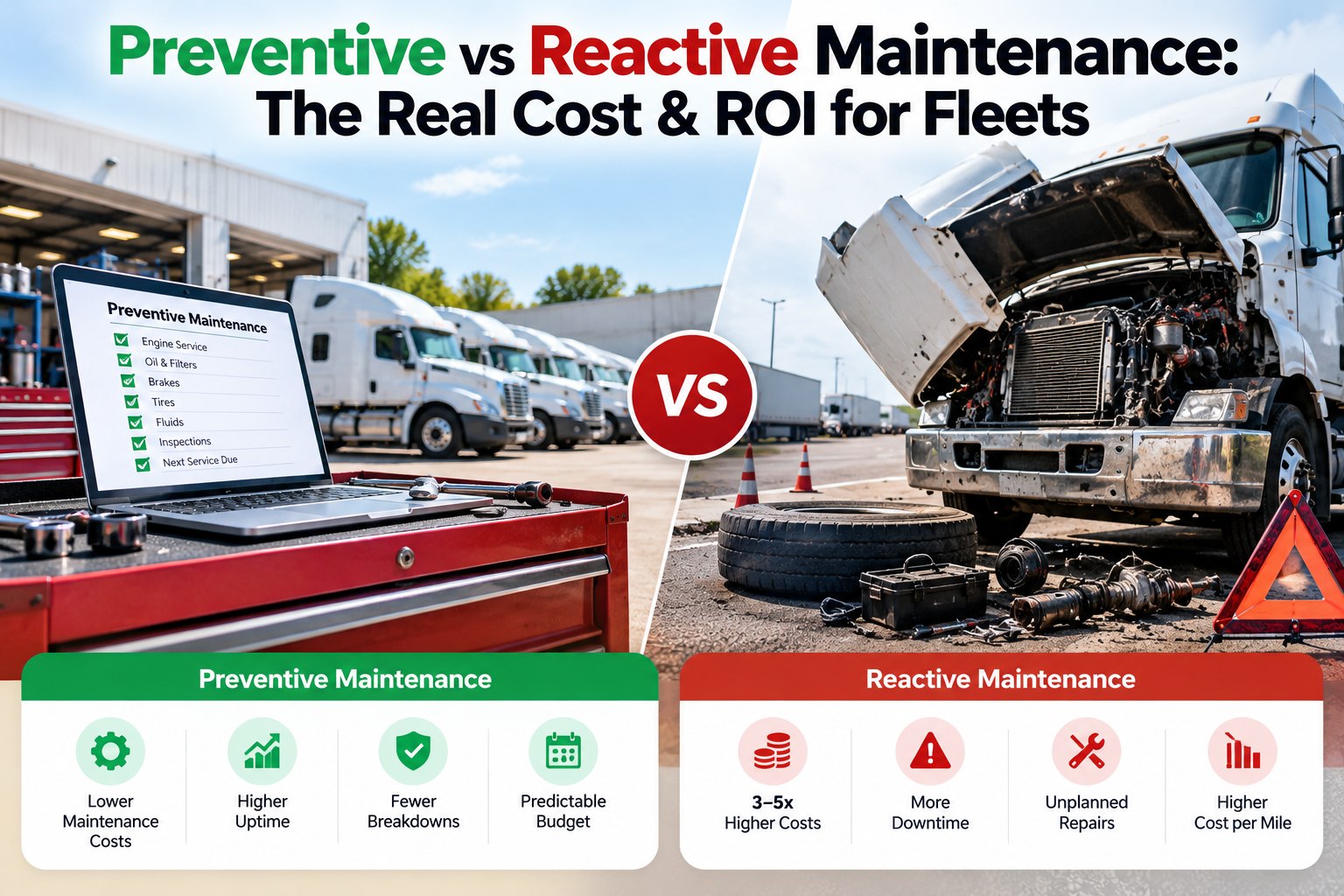
Without automated tracking, services get forgotten. By the time anyone notices the oil change is 5,000 miles overdue, engine wear has already accelerated. The $80 service becomes a $3,000 repair.
Compliance Gaps
Annual inspections, driver certifications, registration renewals—all have deadlines. Manual tracking means some slip through. One missed inspection becomes a DOT violation; one expired license becomes a liability nightmare.
No Real Visibility
Which trucks cost the most? Which need replacing? Where does money actually go? Without integrated data and analysis, these questions get answered with guesses instead of facts.
Key Features That Matter
Not all fleet software is equal. These capabilities separate useful tools from digital paperweights. See these features in a live demo →
Preventive Maintenance Automation
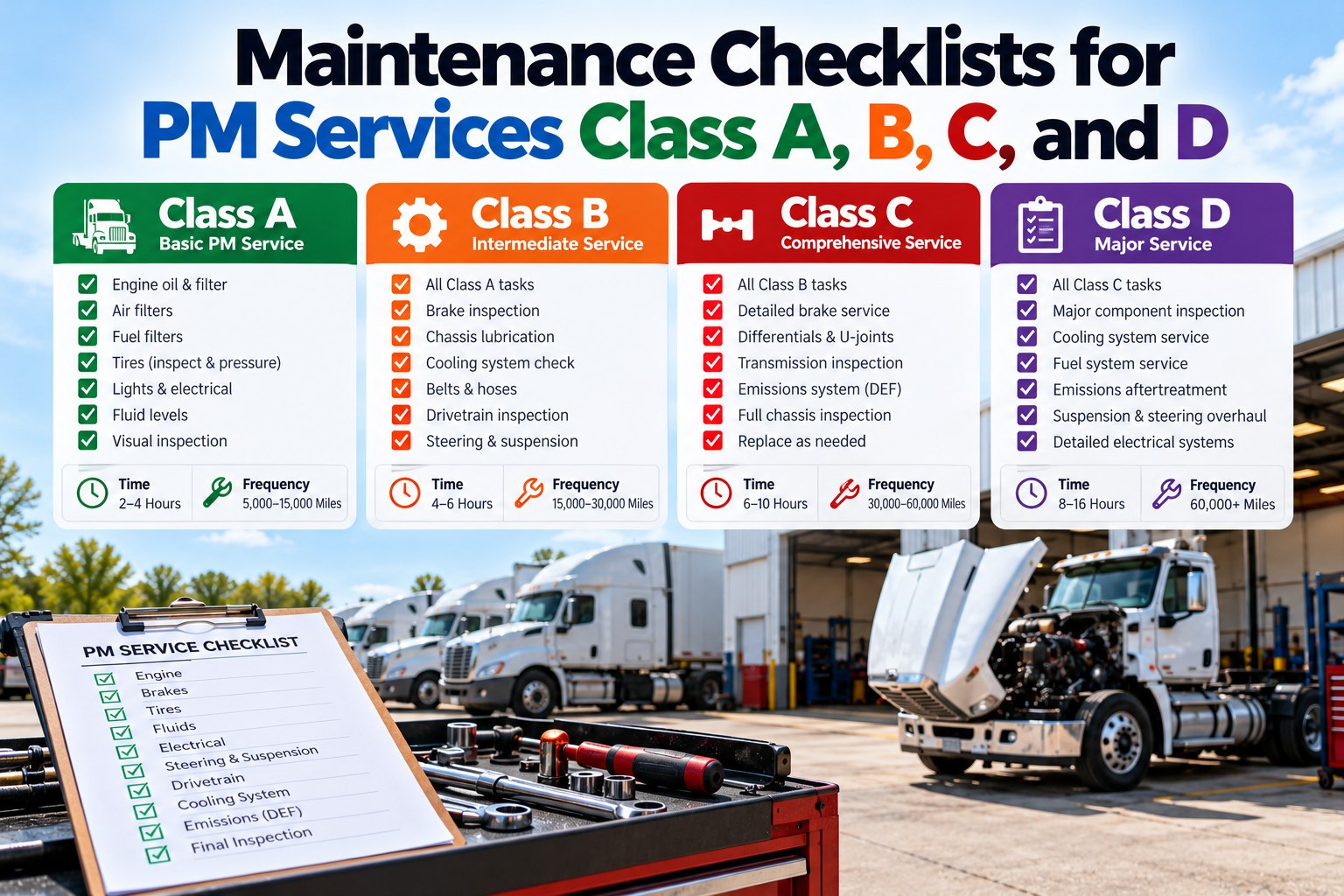
The most valuable feature for any trucking fleet. Set up service schedules once—oil changes every 25,000 miles, brake inspections every 50,000—and the system tracks every vehicle automatically. Alerts fire before services are due, not after problems occur.
Digital Inspections
Replace paper DVIRs with mobile app inspections. Drivers follow guided checklists, capture defect photos, and submit instantly. Records are searchable, audit-ready, and never lost.
Work Order Management
Track repairs from request to completion. Assign work, document parts and labor, and build complete service history automatically. Know what was done, when, and at what cost.
Vehicle Tracking
GPS location, telematics integration, and real-time status. Know where every truck is, integrate with ELDs, and correlate location data with maintenance and fuel records.
Analytics Dashboards
Visual dashboards showing fleet health, costs per vehicle, and performance trends. Stop guessing which trucks cost the most—know with certainty based on real data.
Want to see how these features work together?
Schedule 30-Minute Demo →Real Benefits for Trucking Operations
Software delivers measurable improvements that show up in your bottom line. Start your free trial →
Best Practices for Implementation
Getting value from fleet software requires more than just buying it. These practices ensure success:
Start with Clean Vehicle Data
Enter complete information for every vehicle: VIN, specs, current mileage, purchase date, warranty details. Incomplete profiles lead to incomplete tracking. Take the time upfront to do it right.
Configure Maintenance for Your Operations
Don't just accept default schedules. Trucks running mountain routes need different intervals than flatland haulers. Set up preventive maintenance based on your actual operating conditions.
Get Driver Buy-In for Inspections
Digital inspections only work if drivers complete them properly. Train your team, explain the benefits, and make the mobile app part of daily routine. Resistance fades once they see it's easier than paper.
Review Data Weekly, Not Monthly
Software gives you real-time information—use it. Weekly reviews catch problems early, keep maintenance on track, and build the habit of data-driven decision making.
How FleetRabbit Helps Trucking Companies
FleetRabbit provides fleet management software built specifically for trucking operations—not adapted from generic tools or overcomplicated with features you'll never use. Book a demo to see it in action →
What You Get with FleetRabbit
Frequently Asked Questions
What is fleet management software?
Fleet management software is a digital platform that centralizes vehicle data, maintenance scheduling, inspections, compliance tracking, and operational analytics in one system. It replaces scattered spreadsheets, paper files, and manual processes with organized, automated, accessible information.
How does fleet software improve efficiency?
Fleet software improves efficiency by automating repetitive tasks (scheduling, reminders, reports), providing instant access to information (no hunting through files), catching problems early (before breakdowns), and enabling data-driven decisions (based on real costs and performance, not guesses).
Can fleet management software handle inspections and maintenance?
Yes. Comprehensive fleet management software includes digital inspection tools (drivers complete DVIRs on mobile apps with photo documentation) and maintenance management (automated scheduling, work order tracking, service history). These features work together—inspection defects can automatically generate maintenance work orders.
How can trucking companies reduce costs using fleet software?
Fleet software reduces costs through preventive maintenance (fixing $200 problems before they become $2,000 repairs), compliance management (avoiding violation fines), operational visibility (identifying waste and inefficiency), and reduced admin time (automated processes replace manual work). Most trucking companies see 20-40% reduction in fleet-related costs within the first year.
Ready to Get Your Fleet Organized?
See how FleetRabbit helps trucking companies manage vehicles, maintenance, inspections, and operations—all from one simple platform.