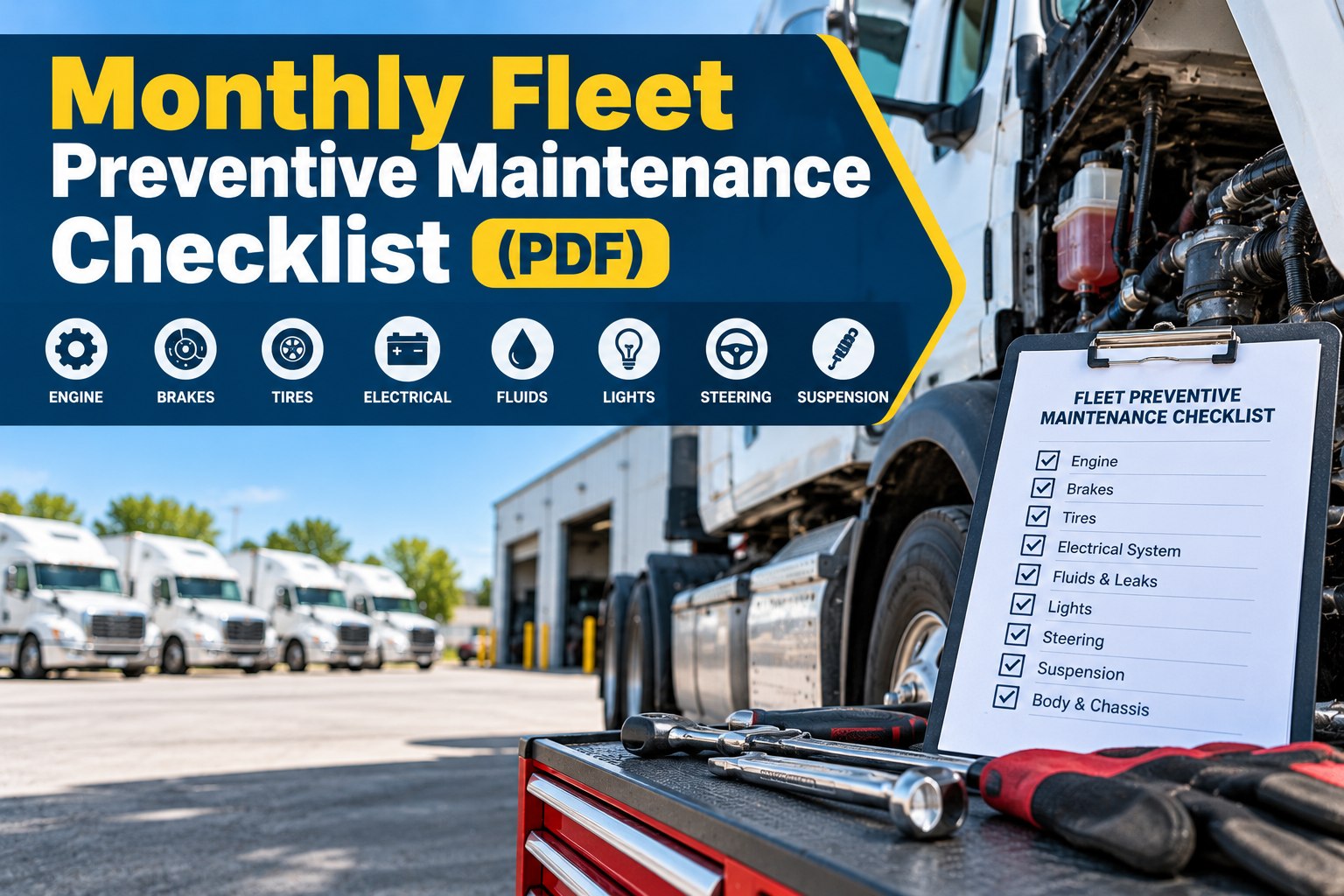
For decades, fleet vehicle inspections ran on clipboards, carbon copies, and handwritten DVIRs. A driver checks 11 components, scrawls a signature, hands a form to the depot office, and the day begins. It worked — until the enforcement environment changed. On February 19, 2026, FMCSA published final rule FMCSA-2025-0115 explicitly authorizing electronic DVIRs under 49 CFR 396.11 and 396.13. The 2026 CSA methodology update split Vehicle Maintenance into "Driver Observed" and "Inspector Detected" categories — and paper-based fleets can't document driver-level defect detection automatically. Major shippers like Amazon now include violation metrics in carrier screening. The gap between digital and paper inspection programs is no longer a technology preference. It's a compliance divide. See FleetRabbit's digital inspection system in action — book a free demo →
2026 Snapshot
The AI vehicle inspection market was valued at $1.9 billion in 2024 and is projected to reach $6.9 billion by 2033 — growing at 15.8% annually. In 2026, digital inspection adopters are completing inspections 67% faster, catching 40% more defects, and achieving a 96% audit pass rate. Only 32% of fleets have partially implemented AI inspections, but 65% of maintenance teams plan to by end of 2026. The window for early-adopter advantage is closing.
Why 2026 Is the Inflection Point for Fleet Inspection Digitalization
Three forces have converged in 2026 to make digital fleet inspections a survival requirement — not a productivity upgrade. Understanding them is the starting point for building a compliance program that keeps pace with the enforcement environment.
01
FMCSA eDVIR Rule — Effective March 23, 2026
Digital signatures now fully replace wet ink requirements. FMCSA explicitly authorizes electronic DVIRs under 49 CFR 396.11 and 396.13. Paper DVIRs remain legal but are increasingly disadvantaged during audits where digital records,produce in seconds what paper files take hours to find.
The 2026 CSA methodology update created a new "Driver Observed" category that tracks defects drivers should have caught during pre-trip inspections. Paper-based fleets can't automatically document driver-level defect detection. Digital platforms do it automatically — mapping every inspection finding to the correct CSA category in real time.
03
Shipper & Insurer Screening — Digital Documentation Required
Major shippers now include violation metrics in carrier screening. Insurance carriers request documented safety programs supported by data — not binders of paper. Fleets with digital inspection workflows, quality scoring, and trend data are winning contracts. Fleets without it are being filtered out before the conversation starts.
04
Only 7% of Carriers Pass DOT Audits Without Violations
The 2026 CVSA International Roadcheck (May 12–14) brings increased scrutiny on driver-side compliance. FMCSA advanced over 40 trucking-related rules in 2025 alone. The enforcement environment has shifted from "occasional checkpoints" to "continuous oversight" — and digital records are the only scalable foundation for continuous compliance.
The Digital Inspection Transformation — How FleetRabbit's 5-Stage System Works
FleetRabbit's digital inspection platform connects mobile app workflows, AI defect detection, automatic work order routing, and compliance documentation into a single closed-loop system. Here's exactly how each stage works — and what it replaces.
1
Mobile-First Guided Inspection — 5–12 Minutes on Any Smartphone
Drivers complete pre-trip and post-trip inspections on the FleetRabbit app using guided checklists specific to their vehicle type. Smart prompts prevent submission without required elements — eliminating pencil-whipping entirely. Photo capture with GPS coordinates is required for flagged items. Works fully offline; syncs automatically when signal returns.
Paper avg: 45 min → Digital avg: 5–12 min25-30 min driver training to full proficiency
2
AI Defect Detection — Catches What Human Eyes Miss
Computer vision trained on 30+ million real-world vehicle images analyzes inspection photos to identify defects with 95–99% accuracy across 163+ vehicle parts and 21+ damage types. AI validates photo quality — rejecting blurry, dark, or incorrectly framed images — and detects duplicate or digitally altered photos that indicate fraud. Tire tread depth estimated automatically from photos. Brake condition flagged from component images.
AI detects 40% more defects than manual inspection alone
3
Automatic Work Order Generation — Defect to Mechanic in Under 60 Seconds
When a defect is flagged — by the driver or AI — a prioritized maintenance work order generates automatically with the defect photo, severity classification, vehicle ID, GPS location, and repair recommendation. The work order routes to the assigned mechanic's mobile device within 60 seconds. Critical defects set the vehicle status to DO NOT DISPATCH until the work order closes. The paper lag that averaged 12–36 hours collapses to under one minute.
Zero defects silently dropped — every flag becomes a tracked, visible work order
4
IoT & Telematics Integration — Inspection Data Meets Vehicle Sensor Data
FleetRabbit integrates inspection findings with telematics data, engine fault codes, and IoT sensor readings to build predictive maintenance intelligence. AI analyzes patterns across the fleet to identify which vehicles are approaching failure thresholds 2–4 weeks before failure occurs. A vehicle's inspection defect history, combined with real-time sensor data, produces a risk score that drives proactive maintenance scheduling — not just reactive repairs after breakdowns.
Predicts failures 2–4 weeks in advance · Integrates with 200+ telematics providers
Every completed inspection automatically generates a fully FMCSA-compliant DVIR containing: timestamped photographs, GPS-verified location, digital driver signature, complete component checklist across all 11 FMCSA categories, defect descriptions with severity classification, and three-signature chain (driver → reviewer → mechanic). Stored securely in the cloud for 90+ days minimum — retrievable in 30 seconds for DOT audit presentation. The 2026 eDVIR rule explicitly authorizes this workflow.
Typical Results: 96% audit pass rate · 40% more defects caught · 67% faster inspection completion · 95%+ driver adoption within 30 days
FleetRabbit Digital Inspections · FMCSA-Compliant · Free for 3 Vehicles
From Paper Clipboard to AI-Powered Compliance in 14 Days
No hardware to install. No complex IT integration. Works with the smartphones your drivers already carry. Drivers trained and live in 25–30 minutes. eDVIR records FMCSA-compliant from day one.
IoT in Fleet Inspections — What Sensors Are Changing in 2026
IoT integration is pushing fleet inspections beyond what human walk-arounds can detect. Sensors embedded in brakes, tires, and engine components generate continuous data streams that intersect with inspection records to build a more complete vehicle health picture than any clipboard could produce.
TPMS Sensors
Real-Time Tire Pressure Monitoring
IoT tire pressure sensors transmit live PSI readings to the inspection platform. Under-inflation flags automatically before the driver's walk-around begins — a 1 PSI drop reduces fuel economy 0.2%. Inspections start with existing sensor data, not guesswork.
Brake Sensors
Brake Wear Continuous Tracking
Embedded brake pad sensors monitor wear thickness continuously. When brake wear approaches DOT minimum thresholds, the inspection system pre-populates a brake defect flag before the driver even opens the app — combining sensor intelligence with human verification.
Engine OBD-II
Fault Code Integration
OBD-II and J1939 fault codes from engine control units feed directly into the inspection platform. When a diagnostic code fires, the inspection checklist automatically highlights the affected system for driver attention — and routes a parallel maintenance alert to the mechanic.
AI Camera
Computer Vision Defect Detection
AI trained on 30+ million vehicle images analyzes inspection photos in real time — identifying defects across 163+ parts and 21+ damage types at 95–99% accuracy. Catches what human inspection misses 23% of the time during DOT checks, according to FMCSA data.
Measured Results — What Fleets Achieve With Digital Inspections
67%
Faster Inspection Completion vs. paper-based process
40%
More Defects Caught with photo-verified digital process
96%
Audit Pass Rate fleets using comprehensive digital documentation
35%
Lower Repair Costs through early defect detection
Digital Inspection ROI · Real Fleet Data
Most Fleets See Full ROI Within 60 Days
The first prevented breakdown — at an average cost of $8,500 in repairs, downtime, and driver idle — often pays for an entire year of FleetRabbit. Start free on 3 vehicles and measure the difference yourself.
"We went from 45-minute paper inspections with a 55% completion rate to 10-minute digital inspections with 97% completion across all three depots — in the first month. The first defect FleetRabbit caught that our paper process had missed paid for the platform for the rest of the year. That's not marketing. That's just what happened."
Fleet Operations Manager
Regional Transportation Carrier — Midwest US
Frequently Asked Questions
Q
Is digital DVIR actually accepted by FMCSA in 2026?
Yes — unambiguously. On February 19, 2026, FMCSA published final rule FMCSA-2025-0115 explicitly authorizing electronic DVIRs under 49 CFR 396.11 and 396.13, effective March 23, 2026. Digital signatures now fully replace wet ink requirements. FleetRabbit generates fully compliant eDVIR records with all required elements: timestamped photographs, GPS-verified location, digital driver signature, and complete component checklists. Start your free trial to see the compliant record format →
Q
Will drivers resist switching from paper to digital inspections?
Research shows zero correlation between driver age and digital adoption success when implementation is done correctly. Most drivers prefer digital inspections within days because they're faster — 5–12 minutes vs. 45 minutes for paper — and eliminate the end-of-shift paperwork burden. FleetRabbit's guided mobile workflow requires only 25–30 minutes of training. Fleets consistently report 95%+ driver adoption within 30 days with proper implementation. Book a demo to see the driver interface →
Q
Does FleetRabbit work without cellular signal?
Yes. FleetRabbit's inspection app works fully offline — drivers complete inspections, capture defect photos, and collect digital signatures without any internet connection. All data is stored locally on the device and syncs automatically when connectivity is restored. No inspection is lost due to connectivity gaps, whether on remote routes, underground facilities, or dead-zone corridors.
Q
How quickly can a fleet deploy FleetRabbit's digital inspection system?
Most fleets are fully live within 14 days. Account setup and vehicle import: 1–2 days. Inspection form configuration for your vehicle types: 1 day. Driver training sessions: 25–30 minutes per driver. No hardware installation required — FleetRabbit works with the smartphones drivers already carry. The phased rollout approach — pilot group first, full fleet second — ensures adoption issues are resolved before the full rollout begins. Start free on 3 vehicles today →
Make 2026 the Year Your Fleet Leaves Paper Inspections Behind
FleetRabbit's digital inspection platform delivers AI defect detection, automatic work order routing, DOT-compliant eDVIR records, and IoT integration — from the smartphones your drivers already carry. Free for up to 3 vehicles. Full deployment in 14 days. No hardware required.