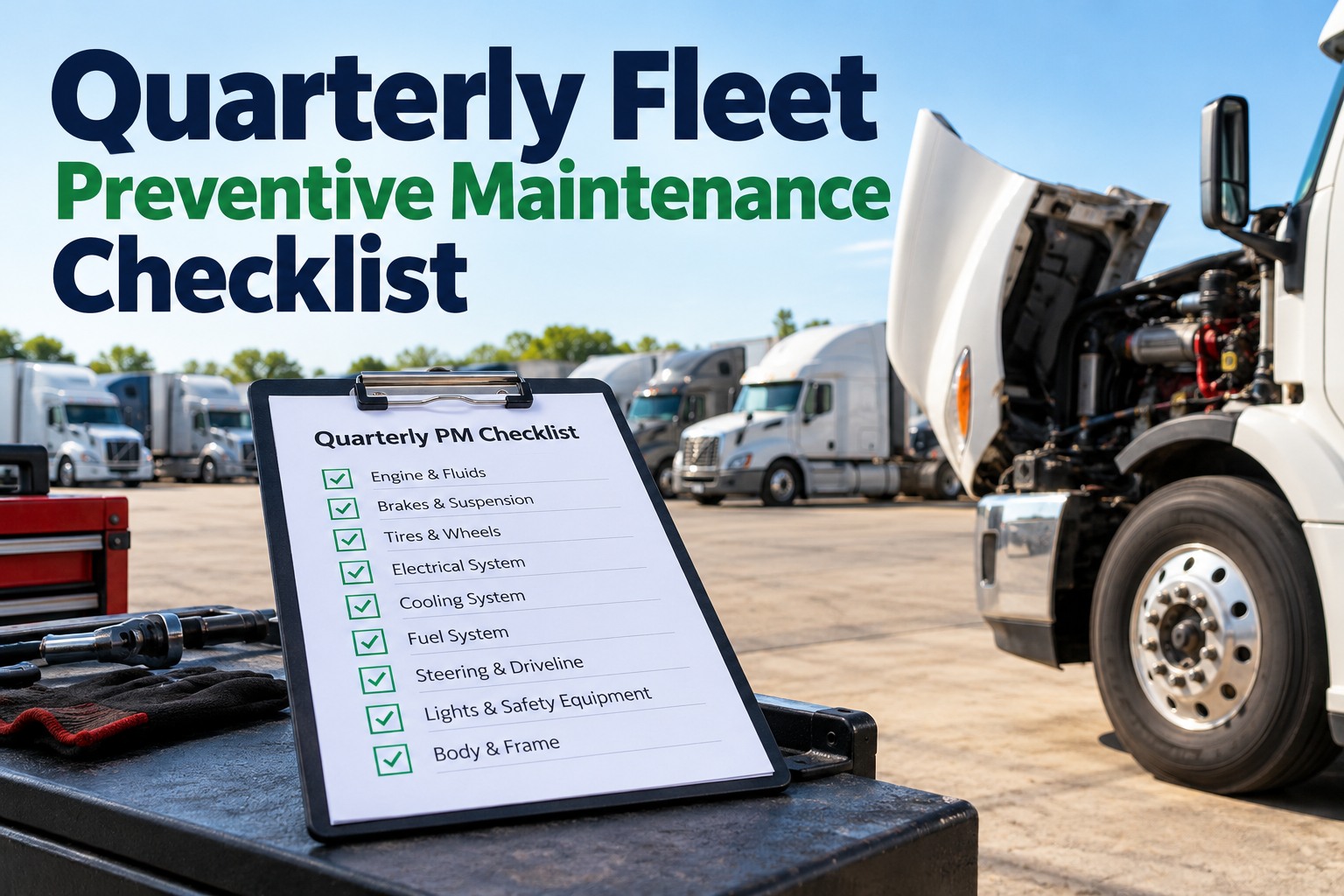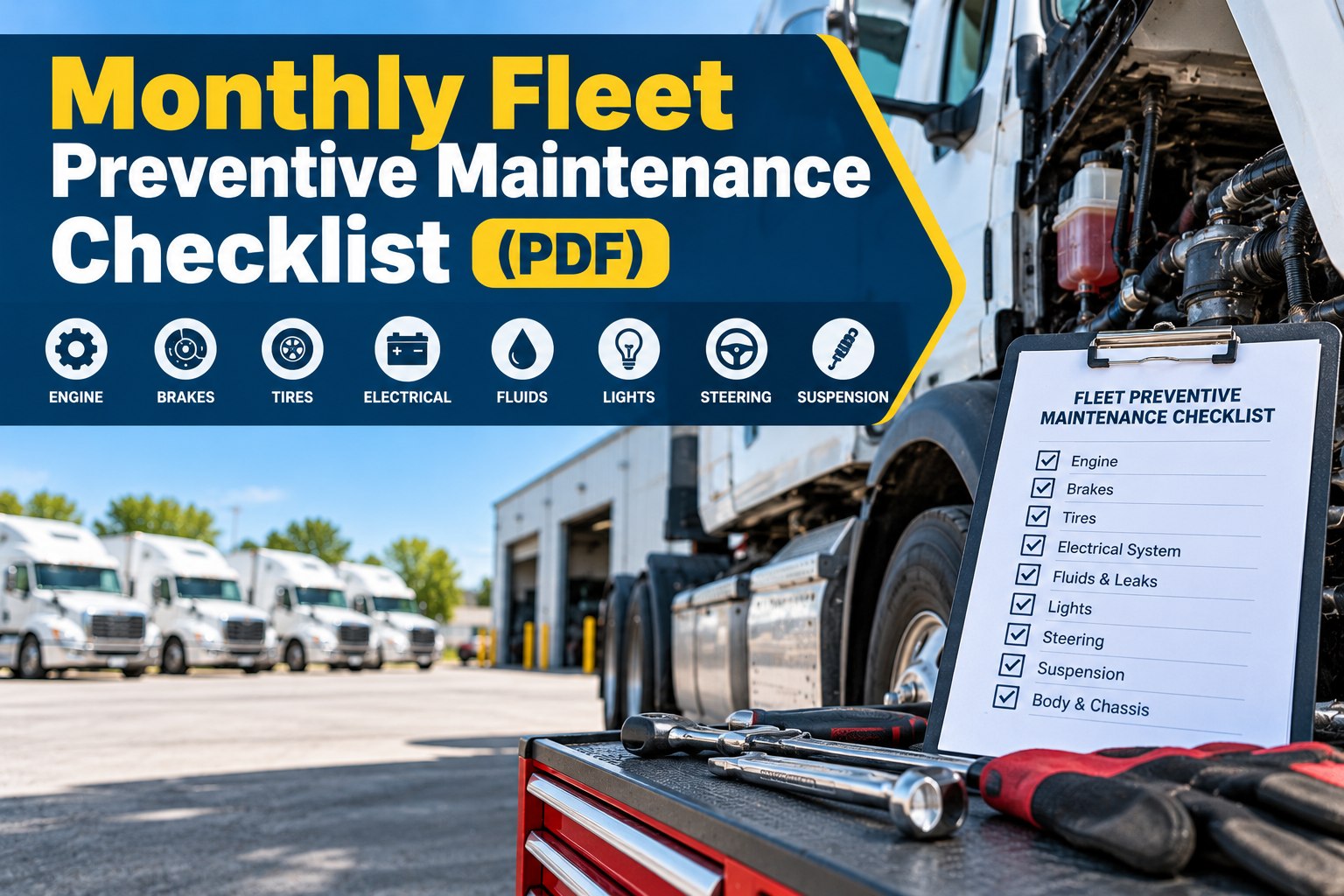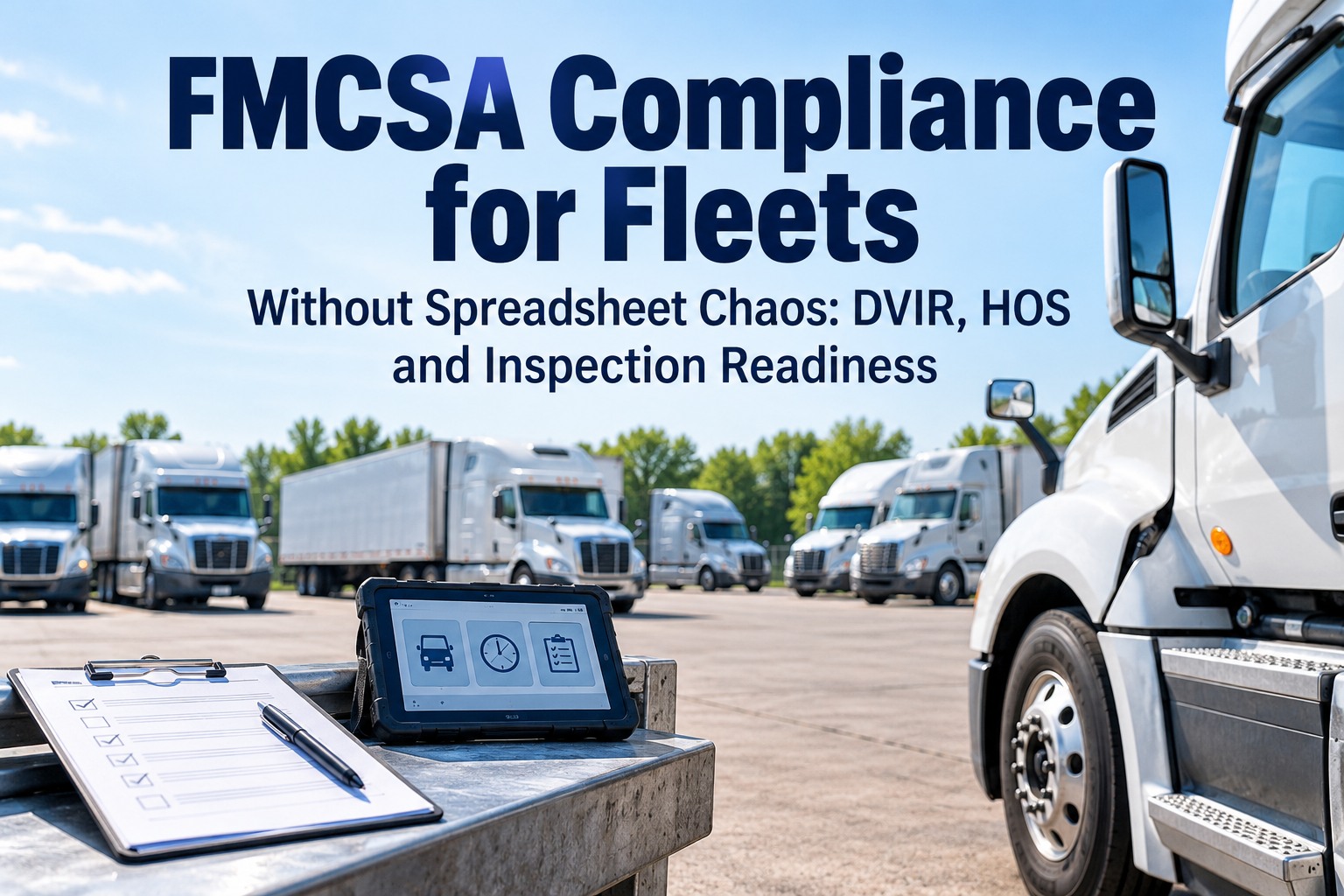
FMCSA compliance for a fleet comes down to four sets of records — DVIRs and defect repairs, hours of service, driver qualification files, and vehicle inspection and maintenance — plus the ability to produce any of them quickly when an inspector or auditor asks. Spreadsheets don't fail because the data is missing; they fail because the four sets live in four places with four owners and no shared due dates. At CVSA's 2025 International Roadcheck, 56,178 inspections placed 18.1% of vehicles and 5.9% of drivers out of service, with brakes and tires leading the vehicle violations and hours of service leading the driver side. This guide shows what inspectors are finding, how to run the four record sets as one operations layer, how long each record must be kept, the order a roadside inspection follows, what changed in 2026, and a 20-minute weekly routine that keeps you ready. Book a 30-minute demo to see your compliance records in one place, or create a free account and start with your own units.
Audits and Roadside Stops Don't Announce Themselves. Your Records Are Either Ready or They Aren't.
For safety directors, compliance managers and fleet managers: how to keep DVIRs, hours of service, driver files and vehicle inspections ready every week — not just the week before an audit.
What Roadside Inspectors Are Actually Placing Trucks and Drivers Out of Service For
The out-of-service data says exactly where fleets fall short: brakes and tires on the vehicle side, hours of service and credentials on the driver side. Those are the categories your weekly checks should mirror, because they are the ones an inspector reaches first. You can track these exact categories on your own units with a free account.
Top vehicle out-of-service violations, 2025 Roadcheck
Top driver out-of-service violations, 2025 Roadcheck
Share of out-of-service violations by category, 2025 International Roadcheck: 56,178 inspections, 18.1% of vehicles and 5.9% of drivers placed out of service. Source: CVSA.
Four Record Sets That Should Run as One Operations Layer, Not Four Spreadsheets
Each set has its own rule, owner and rhythm, but they all point at the same units and drivers — which is why running them in one system removes most of the chasing. FleetRabbit's compliance tools keep them together, and a demo walks through all four on your fleet.
How Long Each Compliance Record Must Be Kept Before You Can Let It Go
Retention runs from three months to years, and a single audit can ask for any of it, so each record needs its own expiry date rather than one blanket rule. Records generally must be produced within 48 hours of an official request. Keep every record with its retention date on a free account.
Maintenance records are kept one year where the vehicle is housed or maintained and six months after it leaves the carrier's control; the bar shows the combined window. Source: eCFR Title 49, Parts 390, 391, 395 and 396.
Could You Produce All Seven Record Types Within 48 Hours Today?
Bring one unit and one driver to a 30-minute demo. We'll pull every record type above from FleetRabbit, show where a gap would appear in your current setup, and leave you with the checklist either way.
The Order a Roadside Inspection Follows, and What Each Step Asks Your Records For
A full inspection moves from the driver's credentials to the logs and then to the vehicle, and each stop maps to one of your four record sets. Knowing the order tells you exactly what a driver must have ready before the truck leaves the yard; we can build that pre-departure check with you.
CDL, medical certificate and English language proficiency, now enforced as an out-of-service condition.
Driver filesThe ELD record of duty status for today and the previous seven days.
Hours of serviceThe last DVIR, open defects with proof of repair, and the annual inspection.
DVIRs and inspectionsBrakes, tires, lights and cargo securement — the top out-of-service items above.
MaintenanceThe 2026 Rule Changes Every Compliance Manager Should Have Already Absorbed
Two changes affect how fleets keep and present records this year, and both are easy to miss if compliance lives in a spreadsheet. Move DVIRs to electronic records free on 3 vehicles.
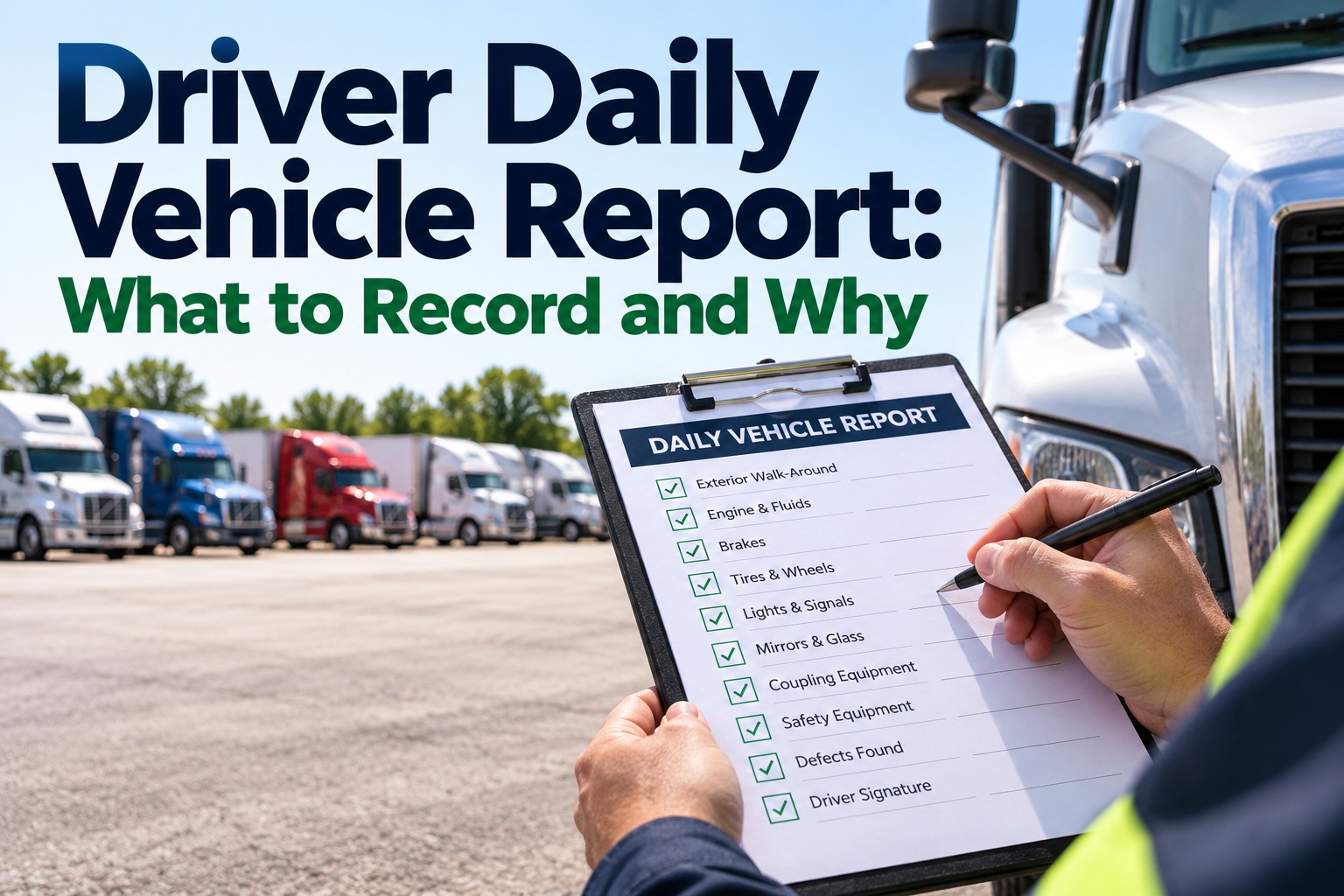
FMCSA's final rule under docket FMCSA-2025-0115 confirms driver vehicle inspection reports may be completed and maintained electronically, adding electronic DVIR language to 396.11 and 396.13.
CVSA added English language proficiency to the out-of-service criteria in June 2025, and FMCSA has proposed writing the enforcement standard into the regulations.
A 20-Minute Weekly Routine That Keeps All Four Record Sets Inspection-Ready
Readiness is a habit, not an audit-prep project, and 20 minutes a week covers all four sets when the data is already in one place. Pair it with HOS monitoring and DVIR records so each step is a screen rather than a search. Start the routine free this week.
Any unit dispatched with an uncertified safety defect? Fix that chain first.
Review log edits, unassigned driving and ELD malfunctions from the past week.
Medical certificates, licenses and annual reviews due in the next 30 days.
Annual inspections and preventive maintenance coming due; book them before they lapse.
Record that the check happened and what was fixed — that's what a systematic program looks like on paper.
FMCSA Compliance Questions Safety and Fleet Managers Ask Most
What records does FMCSA compliance require from a fleet?
DVIRs and defect repairs under 396.11 and 396.13, hours-of-service records under Part 395, driver qualification files under 391.51, and vehicle inspection and maintenance records under 396.3, 396.17 and 396.21. See all four in one view.
What do inspectors most often place trucks out of service for?
At the 2025 International Roadcheck, brake systems and tires led vehicle violations while hours of service led driver violations, followed by no CDL and no medical card. Track these categories free.
How long do we have to keep DVIRs and logs?
DVIRs three months, hours-of-service records with supporting documents six months, roadside inspection reports 12 months, annual inspection reports 14 months, and driver qualification files for employment plus three years. Review your retention setup with us.
Are electronic DVIRs accepted?
Yes. FMCSA's final rule effective March 23, 2026 made explicit that DVIRs may be completed and maintained electronically. Move DVIRs to electronic free.
Can one system replace our compliance spreadsheets?
Yes, if it holds all four record sets against the same units and drivers and shows due dates in one place. FleetRabbit connects to your existing ELD and telematics, so nothing is re-entered. See it replace your spreadsheets.
Does compliance software make us compliant?
No. It keeps records complete, retained and easy to produce, but drivers must still inspect and log accurately, and the carrier remains responsible for compliance. Start building ready records free.
Ready for the Stop. Ready for the Audit. Every Week, Not Just Before One.
One place for DVIRs, hours of service, driver files and vehicle inspections, with every due date and retention period tracked — and a 20-minute weekly routine that proves the program exists.
No credit card required. Bring one unit and one driver and we'll run the mock records request live.