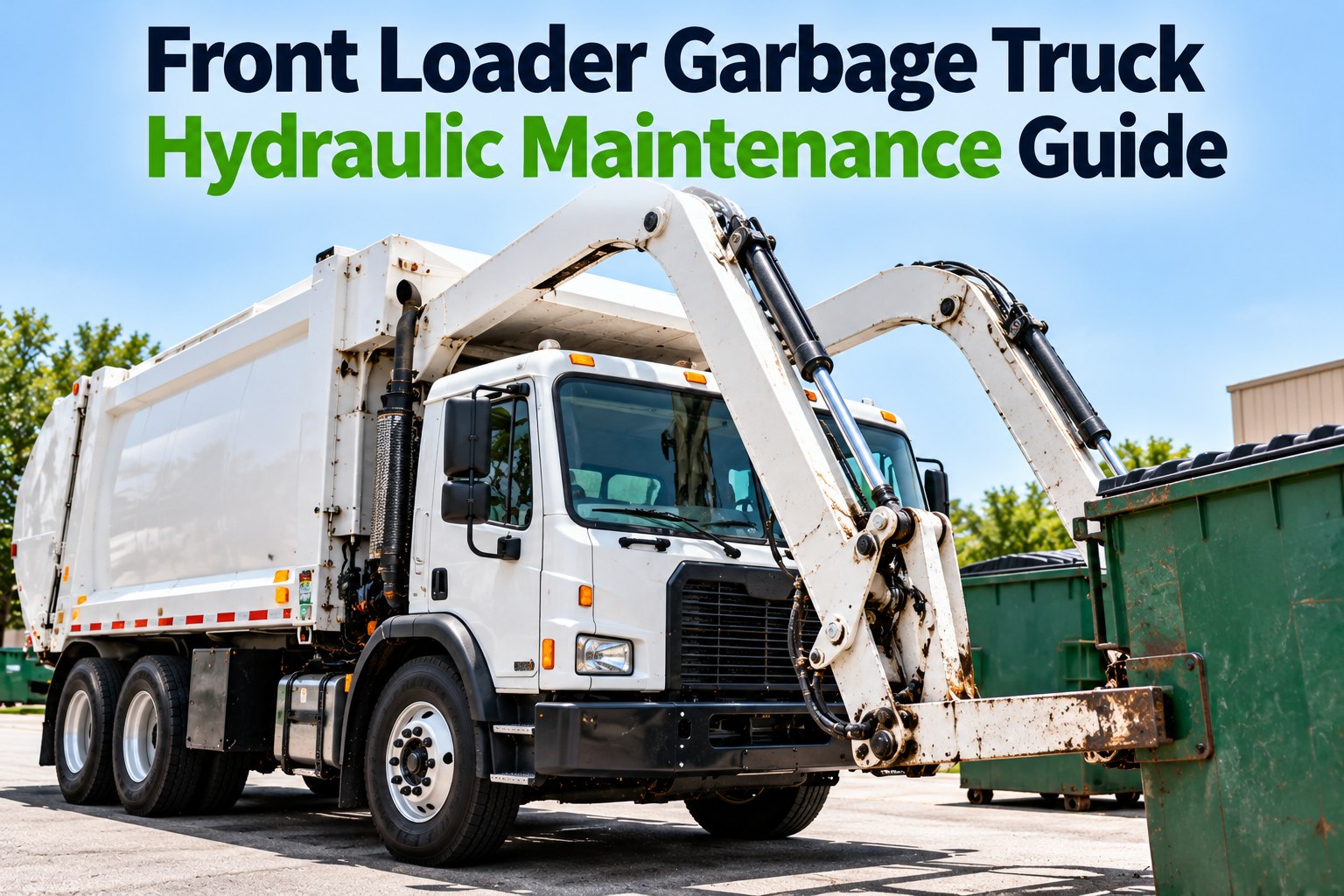
Front loader garbage truck maintenance lives or dies on the hydraulic system. Every container a commercial front loader dumps, about 100 a day on a typical Waste Management route, runs through the pump, the valves, the arm and fork cylinders and the packer. When the oil gets dirty or hot, or a hose wears through, the arms slow down, seals start to leak and the truck comes off the route. Here is how to keep front loader hydraulic maintenance ahead of failures, from daily fluid checks to cylinder care. Schedule a call to see front loader hydraulic PM tracked in FleetRabbit.
Commercial front loaders · Hydraulic system
Most hydraulic breakdowns start as dirty oil, heat or a weeping hose. Catch them in the yard.
Follow the oil around the circuit and you'll find where front loaders fail, and the check that stops each failure.
Filter
Clogged or bypassed
Valves & hoses
Heat, rub points
Cylinders
Scored rods, seals
Why Front Loader Garbage Truck Hydraulic Systems Fail: Contamination, Heat and Hose Damage
Ask a body maker what matters most and the answer is the same. McNeilus told Waste Today that keeping hydraulic oil clean is the most important factor in front loader PM, because dirty oil damages cylinder seal packs and starts leaks. Labrie added that contaminated fluid can point to a failing pump, and the particles it sheds damage everything downstream.
1
Contamination
Dirt, water and metal in the oil wear pumps, score cylinders and tear seals from the inside.
2
Heat
Worn seals that bypass oil, undersized cooling and wrong relief settings cook the fluid and harden seals.
3
Hose damage
Rub points, heat sources and loose clamps wear hoses until one bursts on the route.
Where the Dirt Gets In: The Packer Cylinders
Mailhot Industries' Dave Spadell told Waste Advantage that about three-quarters of the contamination a refuse truck takes in enters through the packer cylinders. The rest comes through worn seals, fittings and breathers, through refills, and through hoses cut and fitted in the field.
Seals, fittings, breathers, refills and field-made hoses
Estimate from Mailhot Industries USA, as reported by Waste Advantage Magazine.
Front Loader Hydraulic Maintenance Schedule: Daily, 40-Hour, 150-Hour and 600-Hour Tasks
Large haulers schedule front loader PM on engine hours, not miles. These are the intervals fleet and body-maker managers described to Waste Today and Waste Advantage. Use them to sense-check your own plan against your body maker's manual.
Daily
Walk-around leak check, reservoir level, listen to the pump, clear material behind the packer panel
Driver
About 40 hours
Body PM: grease arms, forks and pivots; inspect and replace worn hoses
USA Hauling & Recycling
150 hours
Full truck inspection and lubrication, about 1.5 to 2.5 technician hours
Waste Management, Republic
600 hours
Adds engine and hydraulic oil and filter changes, about 2.5 to 3.5 hours
Waste Management
Every 6 months
Full hydraulic oil change or a filter-cart cleaning of the system
McNeilus; Waste Advantage
Clearing Behind the Packer Panel Is a Hydraulic Task
Labrie's Pierre Lafond said material that builds up behind the packer panel can jam the body and keep it out of service for a full day. It also sits against the packer cylinders, the main route for dirt into the oil. Clearing it every day protects the whole circuit.
40 · 150 · 600 hours
Put Front Loader Hydraulic Maintenance on Engine Hours Automatically
Each truck's grease, hose, filter and oil tasks come due on the hour meter, with leaks from driver checks routed straight to the shop.
How to Check Hydraulic Fluid on a Front Loader Garbage Truck: Level, Color, Smell and Lab Samples
A level check takes seconds. Reading the oil itself takes a minute more and tells you far more. Experts interviewed by Fleet Maintenance in 2026 described what each warning sign means, and recommended lab sampling over looks alone.
Dark oil
Dirt in the system. Check filters and look for the leak that let it in.
Shiny specks
Metal from wearing parts. Sample the oil before the pump fails.
Milky oil
Water or air in the fluid. Look for cavitation and suction-side leaks.
Burnt smell
Overheating. Check the cooler, relief valve and worn seals.
Lab Samples Catch What Your Eyes Can't
Labrie says fluid samples are taken after a set number of hours. High brass in a sample can point to worn pump wear plates, according to the same Fleet Maintenance report. Keep oil below about 140°F to extend its life, and clean the top of the reservoir before you open it. Dirt brought in at refill is contamination the fleet causes itself.
Hydraulic Hose Inspection on Front Loaders: What to Look For Before a Hose Bursts
PIRTEK's Jamie Vokes advises Waste360 readers to inspect hoses on a schedule, use a checklist with photos, and replace a hose when a problem is found rather than wait for it to fail. Split the inspection into what you can see and what you can't.
Visible on the walk-around
Cuts in the outer cover
Kinks or exposed wire reinforcement
Missing clamps or clamps rubbing the hose
Rust or oxidation on fittings
Moisture at joints
Hoses routed near heat or rubbing the frame
Hidden until it fails
Internal abrasion from particles in the oil
Debris left inside hoses made in the field
Mixed hose and fitting brands never tested together
Heat damage that stiffens the inner tube before the cover shows it
Unknown age, because the assembly was never tagged
Tag Every Hose Assembly With a Date and Location
Vokes recommends vendors who tag hose assemblies so replacement dates and positions can be tracked. Once each hose has a recorded install date, you can spot the ones failing early and the positions that keep chafing.
Fork and Arm Cylinder Maintenance on Front Loaders: Rods, Seals, Pins and Packer Cylinders
Cylinders turn clean oil into lift and compaction, so they show the first signs of a neglected system. Four areas deserve attention at every body PM.
Rods
Scoring lets dirt past the wiper. Keep debris off exposed rods; rod wipers built to shave dirt off are the first line of defense.
Seal packs
Dirty oil wears them out and starts leaks. McNeilus samples the oil first when a cylinder fails, since old or contaminated oil voids the warranty.
Pins and bushings
Labrie says some customers hand-grease 150 points, though most prefer a centralized system that keeps workers off the body.
Heat and bypass
Worn piston seals bypass oil and build heat. A thermal imager shows which cylinder is running hot.
What internal scoring did to one packer cylinder
Example reported by Waste Advantage Magazine: a quarter of the rated compaction lost with no outside sign of damage.
Troubleshooting Refuse Truck Hydraulic Problems: Symptom, Likely Cause and First Fix
A slow arm or a noisy pump doesn't always mean a new pump. Fleet Maintenance's experts warn that a bad relief valve or a slipping PTO clutch can mimic pump failure, so check each part separately before ordering parts.
Symptom
Arms and forks run slow
Likely cause
Wrong-viscosity oil, overdue filters, or a relief valve or PTO problem that looks like a weak pump
Symptom
Pump sounds like marbles in a blender
Likely cause
Cavitation from air in the system or a wrongly sized filter, often with milky oil
Symptom
Cylinder clunks, pops or weeps
Likely cause
Hydraulic locking, internal bypass or worn seals from contaminated oil
What Dirty Hydraulic Oil and Refuse Truck Downtime Cost a Commercial Waste Fleet
Pumps are the most expensive hydraulic part to replace, and a failed one spreads metal through the rest of the system. The fleets Waste Advantage profiled in 2015 show what clean oil is worth.
50 gallons
of hydraulic oil in a typical truck, at up to $9 a gallon, according to Schroeder Industries
$35,000 a year
saved by a 42-truck fleet that cut a $70,000 annual oil bill with a high-performance filter cart
2 to 4 years
was Pride Disposal's hydraulic system life before its program; the fleet says it is now doubling that
How FleetRabbit Tracks Front Loader Hydraulic Maintenance From Leak Report to Repair
FleetRabbit keeps every hydraulic task, inspection and repair on each truck's record, so leaks get fixed before they turn into roadside breakdowns.
Hour-based PM
40, 150 and 600-hour tasks and six-month oil changes due on engine hours, days or both.
Leak checks in the DVIR
Drivers photograph a weep on their phone, and the failed item opens a work order.
Oil sample records
Attach each lab report to the truck, next to its repair history.
Hose history
Record the position and date of every hose replaced, so repeat failures stand out.
Parts on hand
Filters, hoses and seal kits tracked with reorder points.
Downtime by truck
See which trucks lose the most days to hydraulic repairs.
Front loader hydraulics
Stop Losing Routes to Hydraulic Leaks With Front Loader Garbage Truck Maintenance on Engine Hours
Daily leak checks with photos, hour-based filter and oil changes, and a hose and cylinder history for every truck.
Free for up to 3 assets · No credit card needed
Front Loader Hydraulic Maintenance: Questions Fleet Managers Ask
How often should hydraulic oil be changed on a front loader garbage truck?
McNeilus recommends a full change at least twice a year, or cleaning the system with a filter cart on a schedule set by engine hours. Waste Management changes hydraulic oil and filters at its 600-hour service. Oil analysis tells you whether your routes need shorter or longer intervals.
What causes hydraulic failures in garbage trucks?
Contamination is the leading cause, followed by heat and hose damage. Dirt, water and metal particles wear pumps and tear cylinder seals, while worn seals and wrong relief settings overheat the oil. On refuse trucks, about three-quarters of ingested dirt enters through the packer cylinders, according to Mailhot Industries.
How do you check hydraulic fluid on a garbage truck?
Check the reservoir level as your body manual specifies, usually with the arms and packer in their stowed position. Then look at the oil: dark means dirt, shiny specks mean metal wear, milky means water or air, and a burnt smell means heat. Send samples to a lab on a set hour interval.
How often should front loader hydraulic hoses be inspected?
Drivers should look for leaks and damage on every pre-trip, and technicians should inspect hoses closely at each body PM, about every 40 operating hours on some fleets. Replace any hose with cover cuts, exposed wire, kinks or wet fittings instead of waiting for it to burst.
What temperature should a refuse truck hydraulic system run at?
Many systems run around 150 to 160°F, but hydraulic specialists interviewed by Fleet Maintenance recommend keeping oil below about 140°F to extend its life. Oil that keeps running hot points to worn seals bypassing oil, a dirty cooler or a relief valve set above spec.
Schedule a call on heat tracking.
Can fleet software track front loader hydraulic maintenance?
Yes. FleetRabbit schedules hydraulic PM on engine hours, puts leak checks into drivers' DVIRs with photos, and keeps hose, oil sample and cylinder repairs on each truck's record. Failed inspection items open work orders automatically.
Schedule a call to see it set up for your front loaders.
October 26, 2026By Alex Rowan
All Blogs