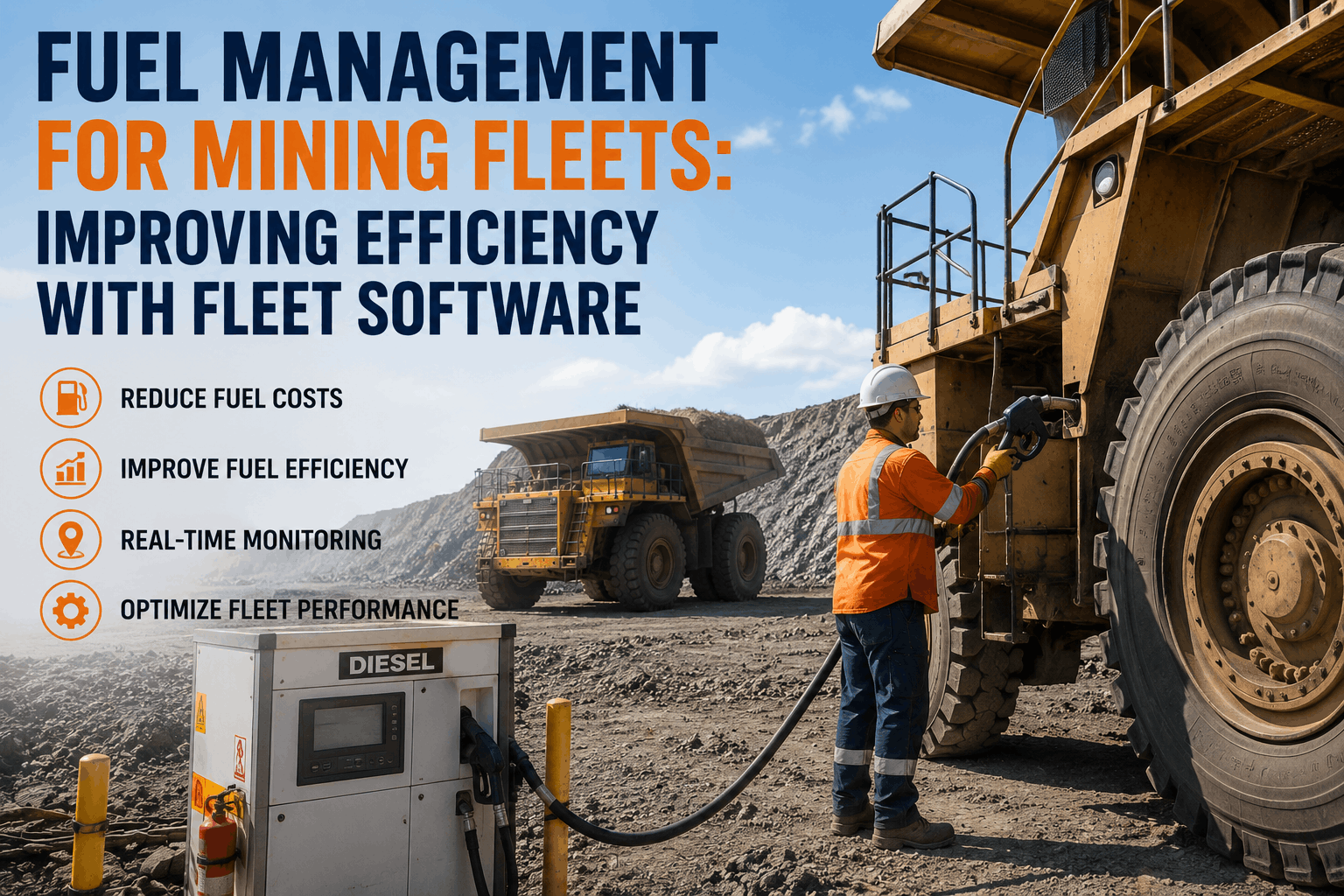
Fuel is the lifeblood of mining operations—and often the largest controllable cost. Fleet operations can account for 65 to 90 percent of a mine's total energy use, and diesel consumption alone represents approximately 30 to 50 percent of transportation costs in open-pit mining. Yet many mining fleets still rely on manual dipsticks, paper logs, and siloed tracking systems that are reactive, prone to manipulation, and blind to real-time losses. The shift from guesswork to intelligence is transforming how mining companies manage fuel, and the results are measurable: fuel consumption drops of 10 to 15 percent overnight after implementing access controls, and integrated fuel intelligence platforms deliver 15 to 25 percent cost reductions through optimized operations. This guide explores how modern fleet software is revolutionizing fuel management in mining operations.
Fuel Management for Mining Fleets: Improving Efficiency with Fleet Software
The Hidden Cost of Fuel Loss in Mining
Traditional fuel management in mining is fundamentally flawed. From haul trucks and excavators to generators and light vehicles, fuel flows continuously through operations—often across vast, unsecured distances. Traditional controls such as dipsticks, paper logs, and manual reconciliations are no longer sufficient. These methods are reactive, prone to manipulation, and blind to real-time losses.
The financial impact is staggering. Fuel theft, unauthorized siphoning, inaccurate refueling, short deliveries, and inefficient consumption patterns collectively cost mining operations millions each year. Worse still, these losses often go undetected for months—only surfacing during audits or after margins have already been eroded. In an industry where margins are under constant pressure, this level of exposure is no longer acceptable.
The solution lies in shifting from manual oversight to data-driven control. Modern mining operations require continuous, verifiable fuel visibility—not estimates, assumptions, or retrospective reporting. This shift transforms fuel from a loss risk into a measurable, manageable resource. Rather than asking "How much fuel did we lose last month?", mining teams can now ask "Why is this asset consuming more fuel today—and what do we do about it now?"
To start gaining this visibility for your mining fleet, book a demo with FleetRabbit and explore our fuel intelligence platform.
The Technology Stack: How Fuel Intelligence Works
Modern fuel management platforms capture detailed insights about fuel types, vehicle usage, and energy costs, providing a single source of truth across multiple fuel streams—from diesel to biodiesel, renewable diesel to electricity.
Real-Time Data Capture
Rugged, internet-enabled hardware integrates directly with fleet infrastructure, capturing granular data on fuel consumption, vehicle usage, and energy costs. Systems are remotely monitored to ensure uptime and data integrity.
Anomaly Detection
AI-powered platforms analyze consumption patterns to flag irregularities: refueling outside approved zones, fuel flow when engines are off, unexpected drops in tank levels, and consumption patterns that deviate from norms.
Predictive Analytics
Machine learning models predict equipment failures 2-4 weeks early with 85-90% accuracy, reducing maintenance costs by 36-42% across major equipment categories.
Integrated Platform
Advanced platforms integrate fuel tracking with broader fleet intelligence—vehicle tracking, engine diagnostics, and operational metrics—to provide a unified view of asset performance.
With a platform like FleetRabbit, mining operators can track fuel from delivery point to final burn, monitor live bowser activity and vehicle consumption, and reconcile fuel volumes automatically across sites. To see how this technology works in practice, sign up with FleetRabbit and access our real-time fuel monitoring tools.
Turning Data into Actionable Savings
Fuel intelligence delivers savings through multiple channels. Access controls are one of the most effective interventions. By implementing a swipe card system that makes fuel traceable to a person and a vehicle, some operations have seen fuel consumption drop 10 to 15 percent overnight.
Operational discipline is another key driver. Telematics data enables fleet managers to identify inefficient driving or idling behavior, optimize refueling schedules, and reduce mechanical wear linked to improper fuel use. For example, tracking idle time is a good starting point with telematics data. Addressing excessive idling can lead to significant cost savings.
The savings extend to procurement as well. By digitizing the fuel delivery process and automating reconciliation between delivery documentation and actual tank readings, fleets can shorten payment cycles and negotiate better rates. One advanced customer secured better supplier terms by paying within 10 days instead of 60—a benefit enabled by instant verification of fuel deliveries against bills of lading.
The Integration Advantage: Fuel Intelligence Meets Fleet Management
Fuel monitoring delivers maximum value when integrated with broader fleet intelligence. By linking fuel data with vehicle tracking, engine diagnostics, and operational metrics, mining companies gain a unified view of asset performance that enables smarter dispatch decisions, accurate cost-per-ton calculations, improved asset utilization, and enhanced safety oversight.
Leading industry platforms demonstrate this integrated approach. The fuel management app integrates directly with fleet management systems, using real-time data to ensure every truck is fueled or charged at the right time and place—whether managing diesel fleets today or transitioning to electric.
Modern platforms have evolved from fuel-tracking innovators into comprehensive platforms for ESG data, emissions transparency, and real-time fleet optimization. These platforms capture detailed insights about fuel types, vehicle usage, and energy costs, giving miners a single source of truth across multiple fuel streams—which is crucial in an era of blended energy strategies.
To integrate fuel intelligence with your existing fleet operations, book a demo with FleetRabbit and see how our platform unifies fuel and fleet data.
Take Control of Your Mining Fleet's Fuel Costs
FleetRabbit's fuel intelligence platform gives you real-time visibility, theft prevention, and predictive analytics—all in one integrated system.
From Visibility to Control: The Competitive Advantage
Real-time fuel intelligence is no longer optional—it's a competitive advantage. As mining operations compete for capital, contracts, and credibility, operational efficiency has become a key differentiator. Companies that can demonstrate tight cost control, reduced losses, data-driven decision-making, and transparent reporting are better positioned to scale sustainably and withstand market volatility.
The future of mining will be defined not only by what is extracted from the ground, but by how efficiently, responsibly, and intelligently operations are managed. Fuel intelligence represents a critical step in that evolution—turning one of mining's biggest cost centers into a source of measurable control and savings.
To position your mining fleet for this future, sign up with FleetRabbit and start transforming your fuel management today.
Frequently Asked Questions
Ready to Optimize Your Mining Fleet's Fuel Efficiency?
FleetRabbit's fuel management platform helps you track, analyze, and reduce fuel consumption across your entire mining operation. Sign up with FleetRabbit and start saving today.