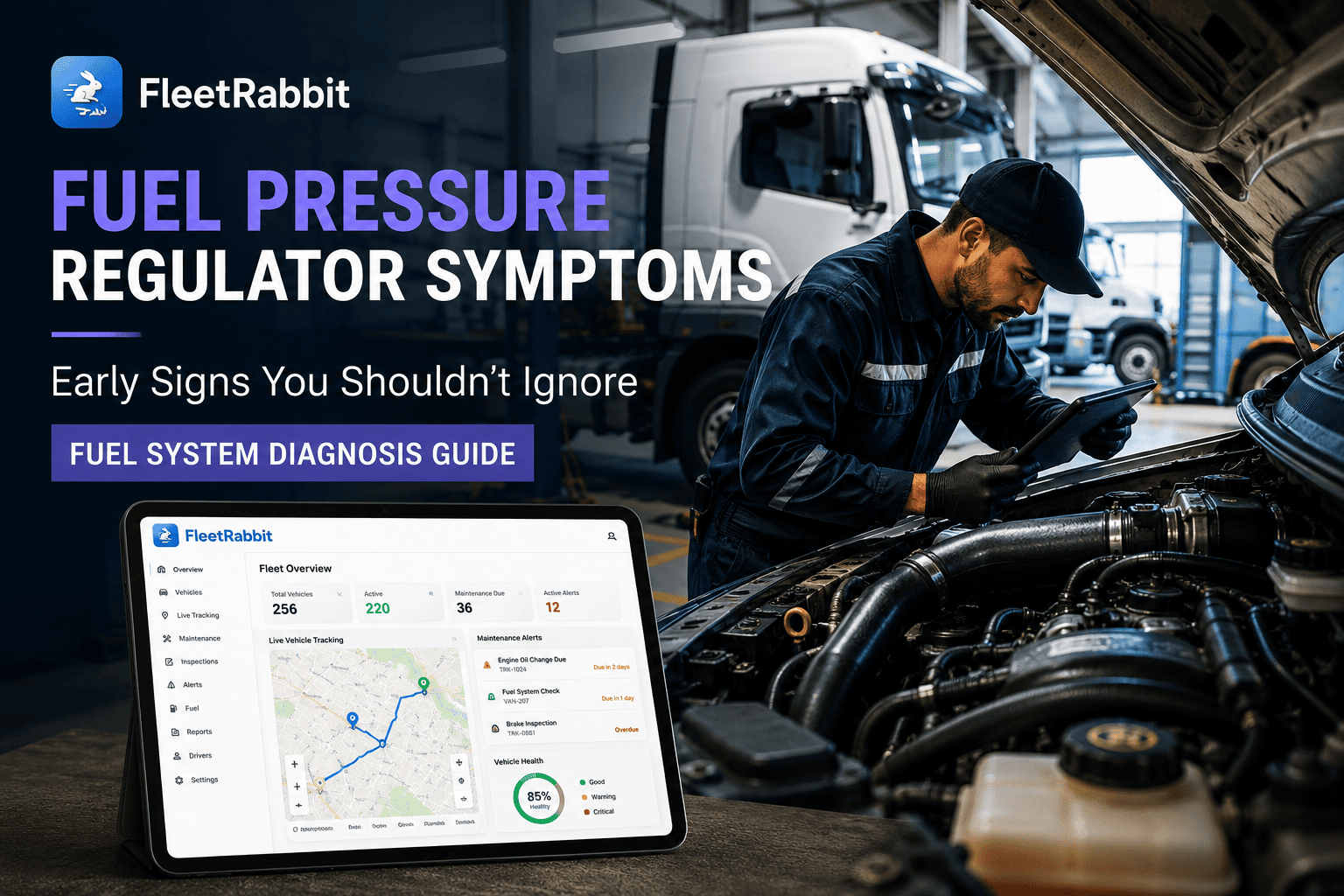
Equipment fuel pressure regulator failures are one of the most expensive maintenance surprises construction and fleet managers face. When a fuel pressure regulator begins to fail, it triggers a cascade of problems: rough idling, unexpected engine stalling, poor fuel economy, and complete equipment shutdown on the jobsite. Most fleet managers don't realize a fuel pressure regulator is failing until the equipment stops working mid-project, costing thousands in emergency repairs, crew downtime, and project delays. Fleet Rabbit detects fuel system anomalies and equipment health issues before they cause catastrophic failures, giving your maintenance team advance warning to schedule repairs during planned maintenance windows instead of emergencies. Book a Demo to see how predictive maintenance monitoring prevents fuel system failures.
67%
Unplanned downtime reduction across 200+ fleets using predictive maintenance
89%
Equipment failure prediction accuracy 5-10 days before breakdown
28-34%
Fuel cost reduction from consumption analytics
14 days
Full deployment timeline to production monitoring
Fuel Pressure Regulator Failures Are Detectable Early. AI Prevents Them Before Failure.
Fleet Rabbit captures real-time fuel consumption patterns, engine diagnostics, and performance data — with AI anomaly detection flagging regulator degradation 5-10 days before catastrophic failure occurs.
Why Fuel Pressure Regulator Failures Cost Contractors Thousands
Fuel pressure regulator problems develop silently. Equipment operates normally until suddenly it doesn't — causing catastrophic failures on jobsites, emergency repairs costing 4-10x normal service, and project delays that cascade across operations.
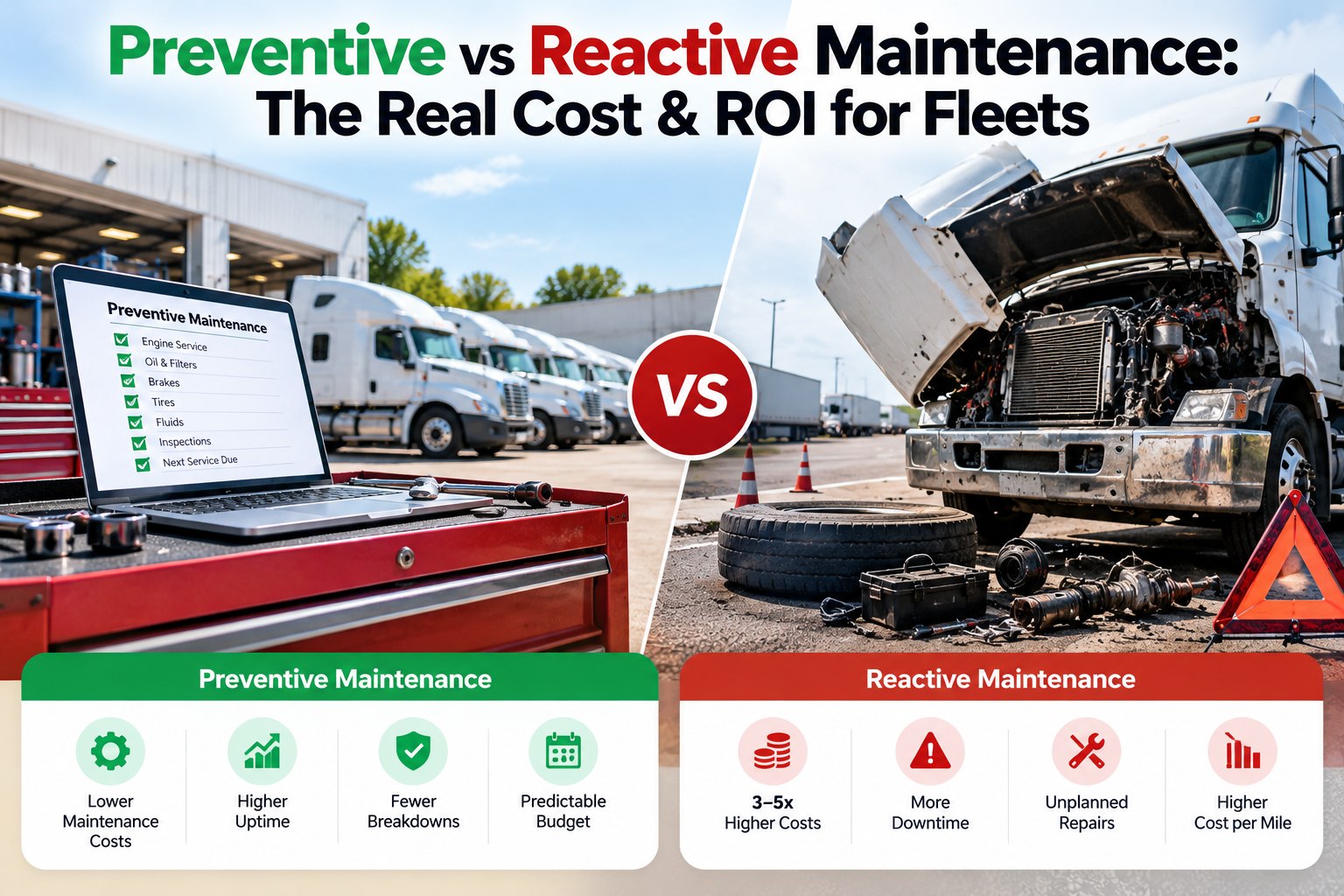
Reactive Repairs Cost 5-10x More Than Planned Service
Planned fuel pressure regulator replacement: $300-500. Emergency repair with labor premiums, expedited parts, and downtime: $2,000-5,000+.
8-12 Hours Downtime Per Equipment Failure
Single fuel system failure stops equipment on jobsite. Requires emergency equipment rental, crew reassignment, and project delays that multiply costs across operations.
Fuel Consumption Spikes 10-20% Without Visibility
Failing regulators cause rich fuel mixture without detection. Fleet managers see fuel costs climbing but cannot identify which equipment is causing the increase.
Maintenance Records Don't Predict Failures
Paper logs and scattered spreadsheets have no predictive capability. Each failure appears as a surprise instead of a preventable event with early warning signs.
Common Fuel Pressure Regulator Symptoms Fleet Managers Should Know
Early detection starts with understanding failure signals. Fleet Rabbit's AI catches these patterns automatically and flags issues 5-10 days before equipment fails.
Rough Idling and Unexpected Equipment Stalling
Inconsistent fuel delivery at idle speeds causes rough, shaky operation. Equipment may stall unexpectedly on jobsite or during idle periods, creating safety hazards and productivity losses.
Poor Fuel Economy and Excessive Fuel Consumption
Failing regulators cause fuel pressure to drop, triggering fuel systems to inject more fuel (rich mixture). Fleet managers notice fuel consumption increasing 10-20% without explanation.
Decreased Performance and Hesitation Under Load
When equipment accelerates or operates under heavy load, failing regulators cannot supply adequate fuel pressure. Equipment hesitates, feels sluggish, and lacks normal power during heavy construction operations.
Black Smoke from Exhaust and Fuel Smell
Excessive black smoke indicates a rich fuel mixture from too much fuel injection. Strong fuel odors around equipment signal unburned fuel exiting through exhaust system — a visible warning sign.
How Fleet Rabbit Prevents Fuel System Failures Before They Start
Instead of waiting for symptoms, Fleet Rabbit monitors fuel consumption patterns, engine performance, and operational efficiency in real time. AI detects degradation before failure occurs.
01
Real-Time Fuel Consumption Analytics
Tracks fuel consumption by equipment type and operating mode. Detects anomalies that indicate fuel system problems. Identifies inefficient fuel usage patterns and spots early signs of regulator failure.
02
AI-Powered Equipment Health Monitoring
ML models flag deviations in equipment performance 5-10 days before catastrophic failure. Monitors fuel pressure indicators, engine diagnostics, and performance metrics continuously.
03
Automated PM Scheduling Based on Condition
Condition-based triggers replace time/mileage schedules. Fuel pressure regulator replacement gets scheduled before failure occurs, slotting into planned maintenance windows.
04
Centralized Maintenance Records and Pattern Recognition
Complete maintenance history for every piece of equipment. Identify patterns in fuel system failures. Predict which equipment needs preventive maintenance before failure.
05
Multi-Location Fleet Visibility
See all equipment across all jobsites on one dashboard. Know which vehicles have fuel system problems before the crew discovers them mid-project.
06
Cost Analysis and Emergency Repair Prevention
Compare planned maintenance costs versus emergency repair expenses. Show ROI by tracking fuel pressure failures prevented. Demonstrate cost savings from eliminating emergency repairs.
Stop Replacing Equipment. Start Preventing Failures.
Fleet Rabbit detects fuel pressure regulator degradation through consumption patterns 5-10 days before failure. Schedule repairs during planned maintenance windows. Eliminate emergency repairs and unexpected downtime.
Deployment Roadmap: 14 Days to Full Fleet Intelligence
Fleet Rabbit follows a fixed deployment methodology designed for fleet operations — with pilot results in week one and full fleet rollout by day 14. No extended implementations. No operational disruption.
01
Fleet Audit
Map all assets & identify data gaps
→
02
System Integration
Connect telematics & fuel systems
→
03
AI Model Training
Train on your fleet history
→
04
Validation & Training
UAT & operator training
→
05
Full Production
Fleet intelligence go-live
ROI Plan: 14-Day Deployment with 3-Month Return
Every Fleet Rabbit engagement follows a structured program with defined deliverables per phase — and measurable ROI indicators beginning within the first 30 days of full production. Request the full deployment scope tailored to your fleet.
Days 1–3
Discovery & Integration
Full fleet asset audit and telematics assessment across all vehicle types
Fuel consumption system and OEM telematics API connection with zero hardware replacement
Historical fuel and maintenance data ingestion for baseline AI model training
Days 4–10
Model Training and Pilot
AI model trained on your fleet's equipment types, usage patterns, and failure history
Pilot monitoring activated on highest-risk assets, fuel system sensitivity alerts enabled
First predictive anomalies detected — fuel efficiency and maintenance cost evidence begins immediately
Days 11–14
Scale & Optimize
Expand to full fleet: all vehicles, all fuel parameters, 24/7 continuous monitoring
Automated maintenance scheduling activated for fuel system and equipment health
ROI baseline report delivered — maintenance savings and fuel reductions measured
MEASURED RESULTS: WEEK ONE THROUGH MONTH 3
Fleets completing the 14-day deployment report average $50,000+ in avoided fuel costs and emergency repairs within 90 days — with predictive alerts firing in week one of full production.
Real Fleet Results: How Contractors Prevented Fuel System Failures
These outcomes come from live Fleet Rabbit deployments. Each case reflects 6-month post-deployment performance data. Request the full case study for contractors like yours.
Equipment stalling unexpectedly, poor fuel economy without explanation, no way to predict failures. Fleet Rabbit detected fuel pressure regulator problems 7-10 days before failure through consumption anomalies.
Book a Demo
Fuel costs increasing 15-20% unexpectedly with no visibility into root cause. Fleet Rabbit identified fuel pressure regulator failures through per-vehicle consumption tracking and fuel data analysis.
Book a Demo
Equipment failing mid-rental, emergency repairs costing $2,000-5,000 each, scattered maintenance records. Condition monitoring flagged degrading fuel components before customer impact.
Book a Demo
Frequently Asked Questions
How early does Fleet Rabbit detect fuel pressure problems?
Fleet Rabbit detects fuel consumption anomalies and equipment health degradation 5-10 days before catastrophic failure. Early detection gives maintenance teams time to schedule repairs during planned windows instead of emergency situations.
Book a demo to see predictive detection in action.
What is the cost difference between planned and emergency fuel pressure repairs?
Planned fuel pressure regulator replacement costs $300-500. Emergency repairs cost $2,000-5,000 due to labor premiums, expedited parts, and downtime. ROI from preventing even one emergency repair pays for Fleet Rabbit for years.
How much does Fleet Rabbit cost?
$5 per vehicle per month or $49.80 annually (17% discount). A 30-unit fleet costs $150/month. Deployment takes 14 days with zero hardware required.
Start a free trial to calculate ROI.
Does Fleet Rabbit require new hardware?
No. Fleet Rabbit connects to existing OEM telematics and fuel systems via API. No new sensors, no new hardware, no installation. The system connects to Caterpillar, Volvo, Komatsu, John Deere, and other manufacturers.
How quickly do we see results?
Deployment takes 14 days. Most fleets see immediate fuel visibility. Equipment health problems detected within 7-10 days.
Book a demo to discuss your timeline.
Can Fleet Rabbit integrate with our existing systems?
Yes. Fleet Rabbit integrates with Samsara, Verizon, Geotab, and custom platforms via API. Fuel card support includes WEX and Fleetcor. Integration confirmed during Day 1 onboarding.
Prevent Fuel System Failures. Deploy Fleet Intelligence in 14 Days.
Fleet Rabbit gives operations teams real-time AI equipment monitoring, fuel analytics, automated maintenance scheduling, and proactive decision support — fully integrated in 14 days, at $5/vehicle/month, with zero new hardware required.
AI fuel anomaly detection 5-10 days before failure
Real-time fuel consumption analytics by equipment and route
Automated maintenance scheduling based on equipment condition
50+ telematics integrations in under 14 days
May 20, 2026By John Polus
All Blogs