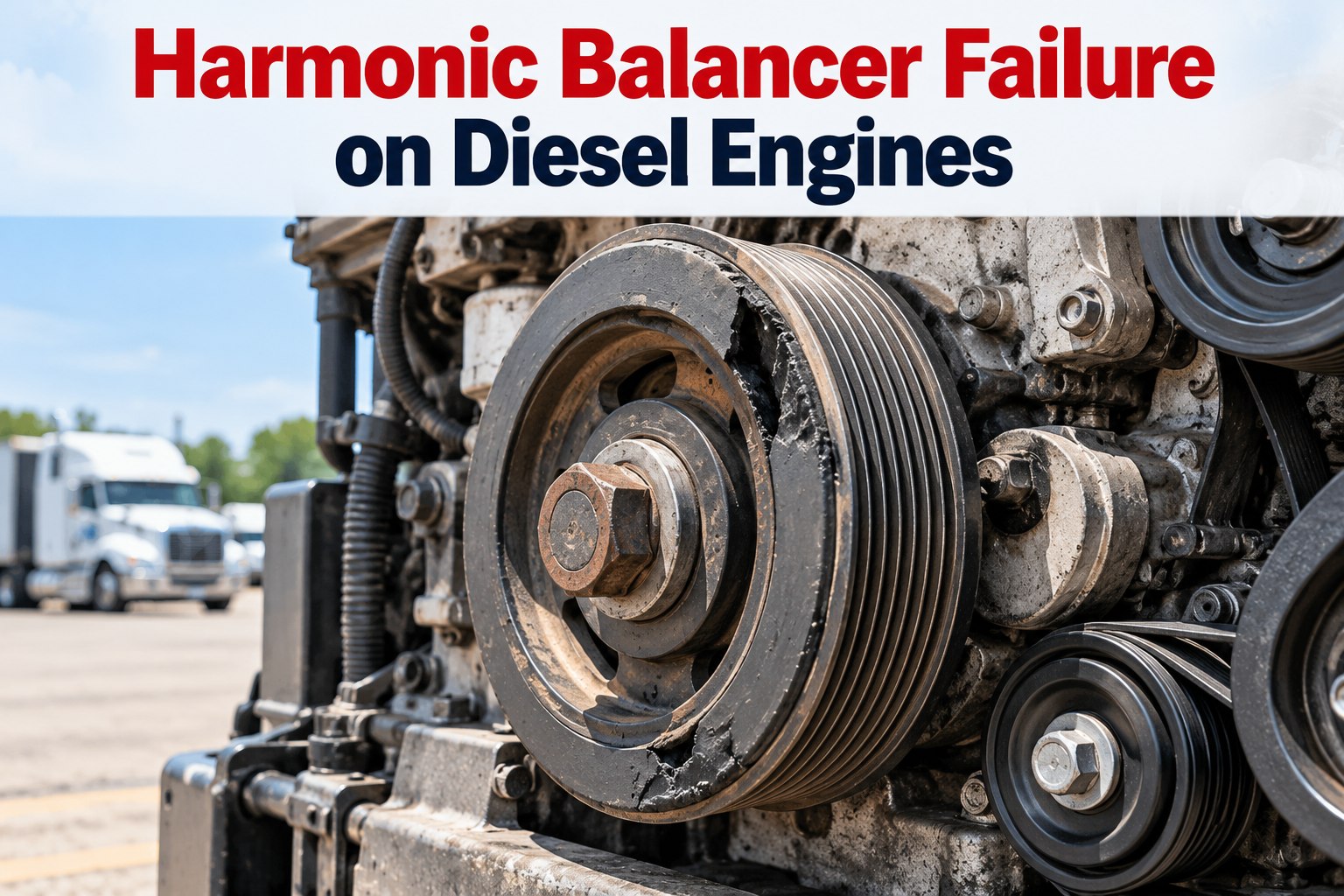
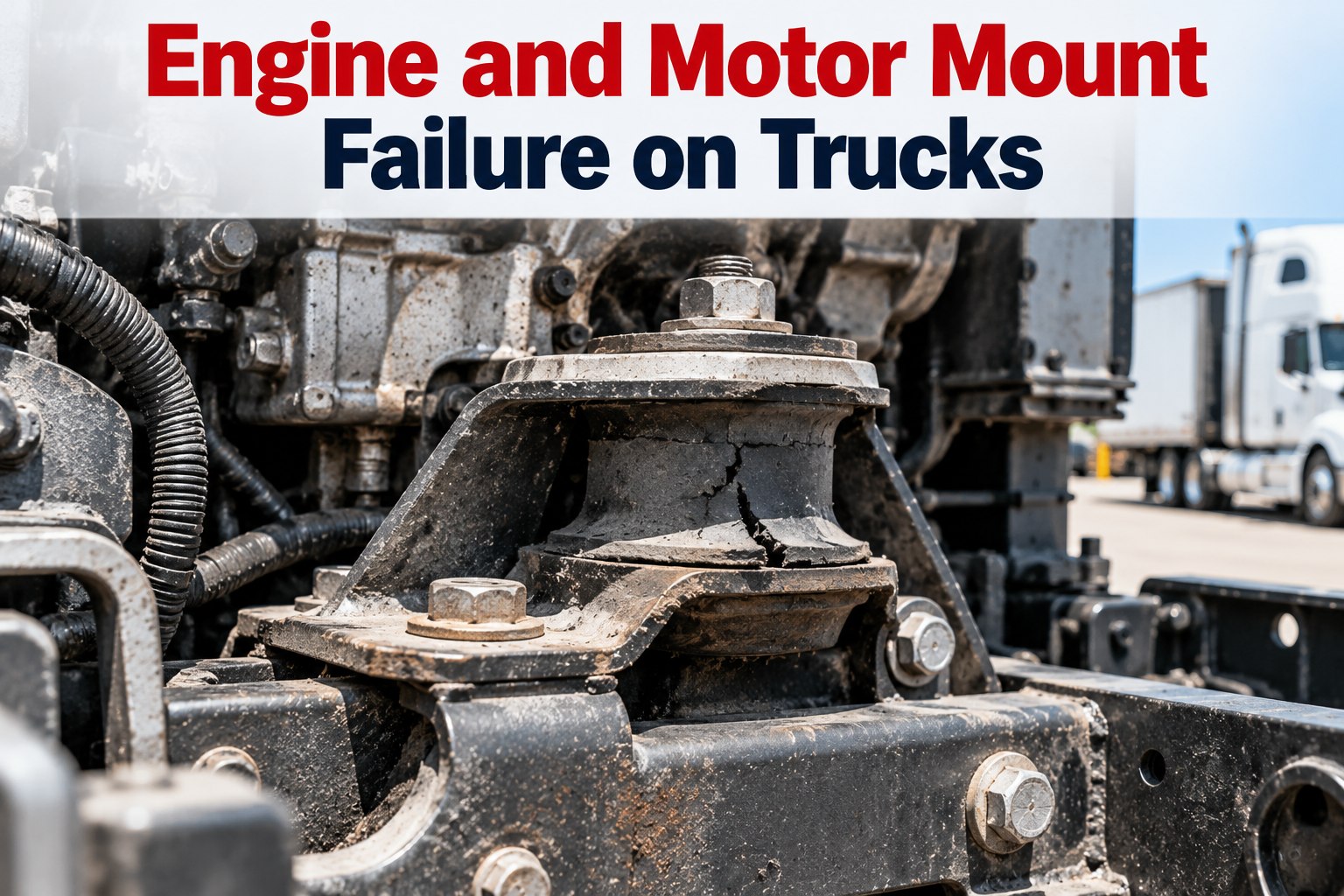
Harmonic balancer failure on a diesel means the damper on the front of the crankshaft has stopped absorbing the twisting vibration of the engine's firing pulses. The first signs are small, such as a drifting timing mark, belt slap or a vibration in the cab, but a damper that keeps failing can lead to a broken crankshaft. This page covers the two damper types, the warning signs you can see, hear and feel, the causes, a replacement timeline and the cost of the part and the job. Schedule a call to track harmonic balancer inspections and replacements for your fleet.
DIESEL ENGINE DIAGNOSTICS · TECHNICIANS AND FLEET MANAGERS
The Part That Protects the Crankshaft Is the One Nobody Inspects
A damper looks like a pulley, so it gets skipped. It is also the cheapest thing standing between engine vibration and a broken crank, and it wears out on a schedule.
Heavy-duty diesels usually use a viscous damper, and lighter engines often use rubber. Knowing which one you have tells you what to look for.
VISCOUS DAMPER
Silicone fluid and an inertia ring
Where
Heavy-duty diesels, as the OEM specifies
How it fails
The silicone slowly hardens and stops absorbing vibration
What shows
Dents, a bulged housing, leaked or darkened fluid, wobble
How to check
Visual check and wobble check. The fluid is hard to test.
RUBBER DAMPER
A rubber ring bonded to a hub
Where
Lighter-duty engines, and older designs
How it fails
Heat, age and oil crack the rubber or break its bond
What shows
Timing mark drift, cracked or bulging rubber, outer ring movement
How to check
Compare timing marks and inspect the rubber for cracks
Warning Signs: See, Hear, Feel
No single sign proves a damper has failed, and a visual check cannot show whether a viscous damper still works. A few signs together should send the truck to the shop.
SEE
Look first
Timing mark has drifted from its reference
Dents, leaks or a bulged housing
Cracked or shrunken rubber
Worn or polished belt grooves
HEAR
Listen at idle
A squeak that belt dressing does not stop
Knocking or rattling at the front of the engine
Belt slap from a fluttering tensioner
FEEL
Notice in the cab
Vibration with no misfire codes
Driver fatigue on long hauls
Rough or fluctuating idle
Lost power or fuel economy
Why Harmonic Balancers Fail
1
Age and heat
Silicone hardens and rubber breaks down. One source puts the silicone limit near 500,000 miles or 15,000 hours.
2
Oil and coolant leaks
Leaks from the crank seal or valve cover soften and weaken the rubber bond.
3
Bad installation
Hammering or pressing with the center bolt can damage the damper and strip threads.
4
Misfires and imbalance
Engine faults or a bad rotating assembly overload the damper.
5
Belt over-tension
An overtightened belt adds load the damper was not built for.
6
Reusing the old one
A worn damper left on a rebuilt engine can undo the rebuild within months.
Harmonic balancer replacement coming due? Get the reminder before the vibration starts.
Set mileage and engine-hour reminders per truck, so no damper stays on past its interval.
Replace a damper at once if you find dents or leaks, whatever the mileage. Otherwise one trade-press source suggests about 500,000 miles or 15,000 hours, and another suggests replacing it at every engine rebuild. Always follow the engine's service manual.
DAMPER LIFE, MILES SINCE NEW OR REBUILT
0
100k
200k
300k
400k
500k
Inspect at every PM, and replace at once for dents or leaks
Around 500,000 miles or 15,000 hours: plan the replacement
What Happens if It Is Ignored
1
Damper wears
Silicone hardens or rubber separates.
→
2
Vibration rises
Twisting forces are no longer absorbed.
→
3
Parts shake loose
Belts, brackets, accessory drives and gears wear.
→
4
Engine wear
Main bearings and camshafts take the load.
→
5
Crank damage
Fatigue can break the crankshaft or its nose.
What Replacement Costs
A trade-press source puts a typical replacement at about $700 to $1,000, and installing a new damper during an in-frame rebuild can save labor. The part alone is a fraction of that, as the listed prices below show. Prices move, so treat them as a guide.
LISTED DAMPER PRICES BY ENGINE, US DOLLARS
$493
Cat C15 / 3406E
$494
Cummins ISX
$497
Cummins N14
$646
Detroit Series 60
Prices are one retailer's listings for four heavy-duty applications, and they cover the part only. Replacement cost includes labor and varies by truck.
$700 – $1,000
typical replacement, part and labor
$493 – $646
listed part prices for four heavy-duty engines
1 – 2 degrees
normal movement between a damper's metal parts
The Replacement Checklist
Use this when a damper is replaced, so the new one lasts and the next one is scheduled.
Check the old damper for dents, leaks and cracks before disposing of it
Confirm the replacement matches the engine and the OEM specification
Fix any oil or coolant leak that contaminated the old damper
Use the proper installer, not a hammer, and torque the center bolt to spec
Replace the damper whenever the crankshaft or engine is rebuilt
Check belt grooves, tensioner and pulley alignment
Record the engine hours or mileage at replacement
Set the next inspection and replacement reminder
Stop Harmonic Balancer Failure Downtime: Track Every Damper Inspection and Replacement
FleetRabbit logs engine hours, inspections, repairs and parts against each truck, then reminds you when a damper, belt or other wear item is due. A driver's note about vibration or belt slap becomes a work order, and repeat engine problems show up as history instead of surprises.
What are the symptoms of harmonic balancer failure?
A drifting timing mark, dents, leaks or a bulged housing, belt slap or uneven belt wear, a squeak that belt dressing does not fix, vibration with no misfire codes, rough idle and, in bad cases, lost power or fuel economy.
What causes harmonic balancer failure?
Age and heat, oil or coolant contamination, improper installation, misfires or rotating-assembly faults, an overtightened belt, and reusing a worn damper on a rebuilt engine.
How long does a diesel harmonic balancer last?
Sources suggest replacement at around 500,000 miles or 15,000 hours, or at every rebuild, and sooner if you find dents or leaks. Follow the engine's service manual.
Can I drive with a bad harmonic balancer?
It is a risk. Uncontrolled vibration can damage the crankshaft, camshaft, bearings and accessory drives, and a failed damper can lead to crankshaft failure. Have it checked promptly.
How much does harmonic balancer replacement cost?
A trade-press source puts it at about $700 to $1,000. Listed parts for four heavy-duty engines run from about $493 to $646, with labor on top.
How do you test a harmonic balancer?
Compare its timing marks with the engine reference, look for dents, leaks and cracks, and check for wobble when turning the crank by hand. A visual check cannot prove a viscous damper still works.
Catch Harmonic Balancer Failure Before It Reaches the Crankshaft
A damper that is inspected, logged and replaced on schedule costs a few hundred dollars. One that is ignored can cost an engine. Put the interval on the record and let the reminder do the remembering.