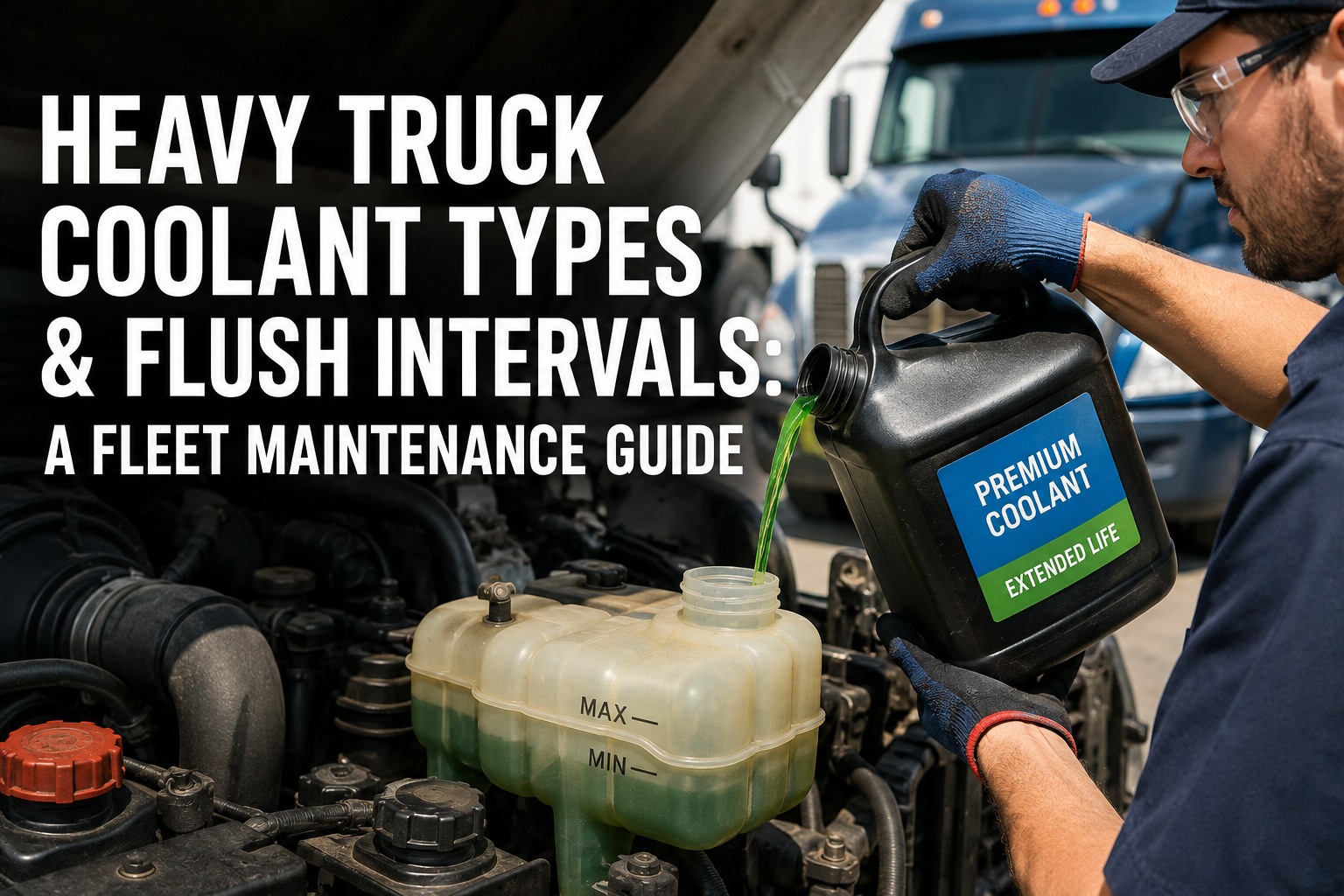
Almost every coolant mistake in a mixed fleet starts with someone reading the colour. It is an understandable error, because dye is the most visible property of the fluid — but dye exists for one reason only: both water and coolant are colourless, so manufacturers add colour to help you spot a leak and tell coolant apart from other under-hood fluids. It was never a specification. HOAT is commonly dyed yellow or orange, and so is plenty of OAT, which means two incompatible chemistries can sit in identical-looking jugs on the same shelf. Meanwhile the actual differences are chemical, invisible, and consequential: extended-life coolant runs to 600,000 miles or 12,000 engine hours, conventional coolant needs additive top-ups every 25,000, and mixing the wrong pair can gel the passages of an aluminium radiator. This is what separates the chemistries, why mixing matters, and how to schedule the whole thing so nobody has to guess at a fill point. Start a free trial to store coolant type on the asset record and schedule the intervals automatically.
PREVENTIVE MAINTENANCE · COOLING SYSTEM
Heavy Truck Coolant Types and Flush Intervals
ELC, OAT, NOAT, HOAT and IAT explained by chemistry rather than by colour — what can never be mixed, what each one needs and when, and how PM software keeps a mixed fleet from guessing.
?
?
?
?
?
Dye is added so you can spot a leak and tell coolant from other fluids. It is not a standard — the same colour appears across incompatible chemistries, and brands vary.
Five Chemistries, Plainly
The naming is unhelpful because ELC is a category rather than a chemistry — extended-life coolant is built on OAT or NOAT formulations. Work from the inhibitor package instead.
← Swipe to see all columns →
Why heavy-duty is different
Never put automotive-grade coolant in a heavy-duty engine. It lacks the corrosion inhibitors needed for the cast iron cylinder liners and wet sleeves common in diesel engines, and the failure mode it permits — cavitation erosion and liner pitting — is an engine repair rather than a cooling system one.
The Compatibility Matrix
Read across the row for what is in the system and down the column for what someone is about to add. Only the diagonal is safe without a flush.
← Swipe to see all columns →
Compatible
Degrades — inhibitor life shortened
Do not mix — precipitation and deposits
Two Different Failure Modes
Not all mixing is equally bad, and the distinction is worth understanding because one of them is immediate and one of them is silent.
Silicate precipitation
Mixing OAT or HOAT with IAT can cause silicate precipitation — gel-like deposits that block the narrow coolant passages in aluminium radiators and heater cores. Physical, visible on teardown, and expensive.
Recognise it asOverheating, restricted flow, heater output loss
Inhibitor degradation
Mixing OAT and HOAT causes no immediate visible damage — it degrades both inhibitor packages faster than either would alone, effectively cutting service life to that of the shorter-interval product. The truck runs fine and the coolant quietly stops protecting on schedule.
Recognise it asNothing, until a test strip or a corroded component says otherwise
There is a third case worth naming: OAT life can be drastically reduced if contaminated with nitrite-containing coolants, and ELC benefits are compromised if the fluid is diluted with water or conventional coolant. A half-gallon top-up from the wrong jug at a roadside is enough to shorten a 600,000-mile interval — and nothing on the dash will tell you it happened.
The fix is a record, not a rule nobody can see at the fill point.
Storing coolant type on the vehicle asset record and surfacing it on the work order is what stops a correct top-up procedure being applied to the wrong truck.
The Interval Map
Three separate schedules per truck, and most fleets track only the third. The first two are what actually protect the engine between flushes.
Schedule A
Additive service
IAT needs SCA roughly every 25,000 miles. HOAT needs SCA at service intervals, typically around 150,000 miles. NOAT and ELC need an extender — ELC not until 300,000 miles or 6,000 engine hours. OAT generally needs nothing.
Miss it andNitrite depletes, and wet-sleeve liners begin cavitation pitting
Schedule B
Testing
Test coolant condition at least twice a year — some fleets run every three to four months. Refractometer for concentration, test strips for pH and freeze point. Three-way or four-way strips depending on the chemistry. SCA concentration testing on nitrited coolants often runs at 15,000 to 25,000 mile intervals.
Miss it andYou find out the additive schedule failed at the same time you find the corrosion
Schedule C
Flush and refill
ELC can reach 600,000 miles or 12,000 engine hours with correct additive maintenance. Conventional coolants need far more frequent changes. Always follow the engine manufacturer's figure for the specific application rather than a generic interval.
Miss it andDegraded coolant corrodes internally — the dominant cause of radiator failure
Plus
Visual inspection
Hoses, belts and fluid levels checked roughly every 50,000 miles. Cheap, fast, and it catches the mechanical failures that no chemistry protects against — weeping water pump seals, hoses gone soft from heat cycling, radiator fins blocked with road debris.
Miss it andA five-dollar hose takes out a cooling system
Doing the Flush Properly
Eight steps. The two that get skipped are the ones that decide whether the new coolant performs to its rating.
1Confirm the specified coolant for that engine and application, from the manufacturer's requirement rather than from what is on the shelf.
2Test and record the old coolant before draining — concentration, pH and freeze point tell you whether the previous interval actually held.
3Drain fully, including the block, not just the radiator. Residual old fluid is what turns a chemistry change into a mixing incident.
4Flush thoroughly when switching types. Mixing different coolants reduces performance and causes sludge — a proper flush before a change is not optional.
5Inspect while it is empty: hoses, clamps, water pump weep hole, radiator fins, cap and thermostat.
6Refill with the correct water-to-coolant ratio. Extended-life benefits are compromised the moment the fluid is diluted with extra water.
7Bleed the system, run to temperature, re-check level and re-test concentration once it has circulated.
8Record the coolant type, date, mileage and hours against the unit — and update the asset record if the chemistry changed.
The aluminium question
Applications without aluminium heads or cores can still run nitrite-containing coolants. Where aluminium is present, nitrite-free chemistry is worth considering to avoid the nitrite reduction reaction — flux residue left in cores after construction is difficult for manufacturers to remove entirely. As always, the engine maker's requirement for the specific application settles it.
What PM Software Should Be Doing
Coolant is the maintenance item most likely to be handled correctly by a technician who was given the wrong information. Six things worth automating.
Coolant type on the asset recordStored per unit and displayed on every cooling-system work order, so the fill decision never depends on remembering which truck this is.
Three schedules, not oneAdditive service, testing and flush tracked separately with their own intervals — because they fall due at completely different points.
Miles and engine hours togetherELC intervals are quoted both ways, and for a truck that idles heavily the hour figure will come due long before the mileage does.
Test results logged, not just performedConcentration, pH and freeze point recorded against the unit so a trend is visible rather than a single pass or fail.
Chemistry changes flaggedA switch from one type to another recorded as an event, with the flush confirmed — this is the audit trail when something later goes wrong.
Cooling-system faults tied to the unitOverheat events, hose failures and radiator work in one history, so repeat offenders are identifiable rather than anecdotal.
Stop guessing at the fill point
Fleet Rabbit stores coolant type per vehicle, schedules additive, testing and flush intervals independently on both miles and engine hours, and keeps test results and cooling-system faults in one unit history.
Frequently Asked Questions
Can I identify coolant type by colour?
No, and this is the single most expensive misconception in mixed-fleet coolant management. Dye is added because both water and coolant are colourless — it helps you spot a leak and distinguish coolant from other under-hood fluids. It is not standardised across chemistries or brands. HOAT is commonly dyed yellow or orange, and so is a great deal of OAT, which are formulations that should not be mixed. Identify by the specification on the container and by the record on the vehicle.
What actually happens if coolants get mixed?
Two different things. Mixing OAT or HOAT with IAT can cause silicate precipitation — gel-like deposits that block the narrow passages in aluminium radiators and heater cores, which is a physical, expensive failure. Mixing OAT with HOAT causes no immediate visible damage but degrades both inhibitor packages faster than either would alone, effectively shortening service life to that of the shorter-interval product. The second one is more dangerous operationally, because nothing tells you it happened.
How long does extended-life coolant really last?
ELC typically delivers 600,000 miles or 12,000 engine hours with correct maintenance, and it does not need an extender until 300,000 miles or 6,000 engine hours. Some OAT formulations are rated to around 1,000,000 miles or 20,000 engine hours without SCAs. Those figures assume the fluid stays as specified — diluting with extra water or conventional coolant compromises the benefit, and contaminating a nitrite-free OAT with nitrite-containing coolant can reduce its life drastically.
Do I still need supplemental coolant additives?
It depends entirely on the chemistry. IAT requires SCA roughly every 25,000 miles or as the engine manufacturer specifies. HOAT needs SCA at service intervals, typically around 150,000 miles — less often than IAT but still a real schedule. NOAT and ELC use an extender rather than frequent SCA. OAT generally requires no supplementation at all, which is a large part of why fleets standardising on it report lower labour, parts and downtime.
How often should coolant be tested?
At least twice yearly, and every three to four months is common practice. Use a refractometer for concentration and test strips for pH and freeze point — three-way or four-way strips depending on the coolant type. On nitrited coolants, SCA concentration testing typically runs at 15,000 to 25,000 mile intervals. The point of testing is to catch additive depletion before it becomes liner pitting, which is why the test schedule matters as much as the flush schedule.
Can I use automotive coolant in a heavy-duty engine?
No. Automotive-grade coolant lacks the corrosion inhibitors needed for the cast iron cylinder liners and wet sleeves found in diesel engines, and the resulting cavitation erosion and liner pitting is an engine failure rather than a cooling-system one. Use only the coolant type specified for that engine and application — and where aluminium heads or cores are present, nitrite-free chemistry is worth considering to avoid the nitrite reduction reaction.
How do I manage this across a mixed fleet?
Document the exact coolant type for every vehicle and make that information visible at the point of service. That single practice prevents nearly all mixing incidents, because the technician at the fill point is almost always following a correct procedure — just for a different truck. Pair it with separate schedules for additive service, testing and flushing, tracked on both miles and engine hours.
Start a free trial to set it up against your own units.
Chemistry on the Record, Not on the Cap
Identify coolant by specification rather than colour, never mix without a full flush, run additive service and testing as their own schedules alongside the flush, and keep the type where the technician can see it.
Free tier available · No credit card required · Runs on devices you already have
August 19, 2026By Alex Rowan
All Blogs