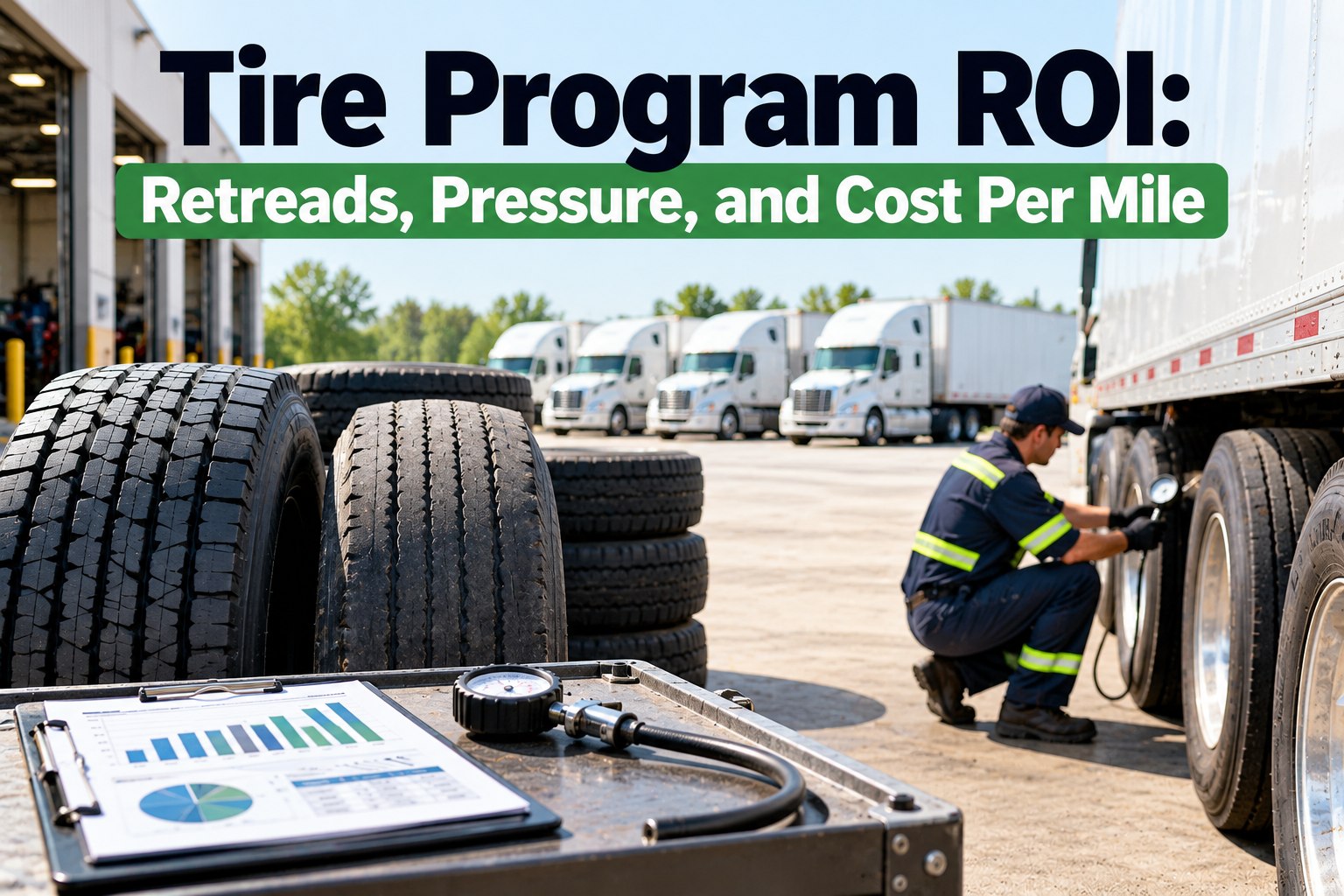
Proper tire maintenance isn't about following manufacturer recommendations—it's about preventing catastrophic blowouts, maximizing fuel efficiency, and protecting your fleet investment through systematic pressure monitoring and rotation protocols. While 64% of fleet managers treat tires as consumables, the top-performing 25% follow structured tire programs that reduce tire costs by 35% and extend tire life by 50%. The difference between reactive tire replacement and proactive tire management isn't just cost—it's the foundation of safe, efficient fleet operations.
The 2025 tire landscape demands precision monitoring, predictive maintenance, and data-driven rotation schedules from fleet operators who want to stay competitive. With tire costs rising 18% annually and supply chain delays becoming increasingly common, smart fleet managers are implementing comprehensive tire programs that prevent failures before they occur. This definitive guide reveals the exact tire maintenance protocols successful fleets use to achieve 40,000+ mile tire life while others struggle with constant replacements. Start your free tire optimization analysis in under 10 minutes, or schedule a personalized tire management demo.
2025 Tire Cost Reality Check
Industry Truth: Average fleets spend 8-12% of operating costs on tires, but top performers keep it under 6% through strategic tire programs. The difference isn't luck or premium tires—it's systematic pressure monitoring, predictive rotation schedules, and data-driven replacement timing. This guide shows you how to join the efficient minority by avoiding the reactive tire trap that destroys profitability.
Quick Tire Assessment
Before implementing advanced tire protocols, assess your current tire management effectiveness in 2 minutes. Understanding your starting position determines your path to optimal tire performance. (Try our tire assessment tool free)
5-Minute Tire Readiness Check:
- □ Do you check tire pressure weekly on all vehicles?
- □ Are you tracking tire costs per vehicle and per mile?
- □ Do you have documented rotation schedules for each vehicle?
- □ Can you predict when each tire needs replacement?
- □ Do you track tread depth measurements systematically?
If you answered "no" to any item, you need systematic tire management before blowouts destroy your profitability and safety record. (Book a free 30-minute tire consultation)
Tire optimization success comes from controlling what you can control: pressure, rotation, and replacement timing. While you can't prevent all tire failures, you can eliminate 80% of unexpected blowouts through proper tire protocols. (Start optimizing your tire program with FleetRabbit free for 30 days)
The Science Behind Tire Pressure
Tire pressure affects everything from fuel economy to tire life to vehicle safety. Understanding the science behind proper inflation reveals why successful fleets obsess over pressure monitoring while struggling operations treat it as an afterthought.
How to Check Tire Pressure Properly
Accurate pressure checking requires proper technique, quality equipment, and consistent timing. Most tire failures trace back to improper pressure monitoring that missed dangerous under-inflation before catastrophic failure occurred. Start your free tire pressure tracking in under 10 minutes, or schedule a personalized pressure monitoring demo.
Professional Tire Pressure Checking Protocol:
- Equipment Requirements:
- Digital tire pressure gauge (±1 PSI accuracy minimum)
- Dual-head chuck for easy valve access
- Portable air compressor with tank
- Valve stem caps and core tool
- Timing Considerations:
- Check pressure when tires are cold (before driving)
- Wait 3+ hours after driving for accurate readings
- Check weekly minimum, daily for high-mileage vehicles
- Record ambient temperature with readings
- Measurement Technique:
- Remove valve stem cap and store safely
- Press gauge firmly and quickly onto valve stem
- Read immediately—don't pump or adjust position
- Compare to manufacturer specification (door jamb)
- Documentation Process:
- Record pressure by tire position (LF, RF, LR, RR)
- Note any pressure deviations over 5 PSI
- Track pressure loss patterns by vehicle
- Schedule immediate service for rapid pressure loss
Understanding Tire Pressure Specifications
Different tire positions, load conditions, and vehicle types require different pressure specifications. Understanding these variables prevents under-inflation that destroys tires and over-inflation that reduces traction and ride quality.
Eliminate Tire Pressure Guesswork
Our intelligent tire management system stores specifications by vehicle, tracks pressure trends, and predicts maintenance needs. Keep every tire at optimal pressure automatically.
Professional Tire Rotation Techniques
Systematic tire rotation equalizes wear patterns, maximizes tire life, and maintains vehicle handling characteristics. Proper rotation requires understanding tire construction, vehicle drivetrain, and wear pattern analysis to optimize tire positioning for maximum life.
Tire Rotation Patterns by Vehicle Type:
- Front-Wheel Drive Vehicles:
- Forward Cross: Front tires to rear same side, rear tires cross to front
- Rotation interval: Every 5,000-7,500 miles
- Monitor front tire wear for alignment issues
- Consider directional tire limitations
- Rear-Wheel Drive Vehicles:
- Rearward Cross: Rear tires to front same side, front tires cross to rear
- Rotation interval: Every 6,000-8,000 miles
- Monitor rear tire wear for differential issues
- Check for power-induced wear patterns
- All-Wheel Drive Vehicles:
- X-Pattern: All tires cross to opposite corner
- Rotation interval: Every 3,000-5,000 miles
- Monitor for drivetrain-induced wear
- Maintain similar tread depths across all positions
- Commercial/Heavy-Duty Vehicles:
- Custom patterns based on axle configuration
- Rotation interval: Every 15,000-25,000 miles
- Consider retreading compatibility
- Account for load distribution effects
Rotation Safety and Quality Control
Professional tire rotation requires proper equipment, safety protocols, and quality verification. Improper rotation technique can cause tire damage, wheel imbalance, and safety hazards that exceed any potential tire life benefits.
Tire Tread Depth Monitoring
Tread depth directly impacts stopping distance, wet traction, and tire replacement timing. Systematic tread monitoring prevents dangerous tire operation while optimizing replacement timing for maximum tire investment return. Start your free tread depth tracking in under 10 minutes, or schedule a personalized tread monitoring demo.
Professional Tread Depth Measurement:
- Measurement Tools:
- Digital tread depth gauge (0.5mm/1/32" accuracy)
- Coin method for emergency assessment
- Tread wear indicator bars built into tires
- Electronic tread scanners for high-volume fleets
- Measurement Locations:
- Three points across tire width (inside, center, outside)
- Multiple locations around tire circumference
- Record deepest and shallowest measurements
- Document irregular wear patterns
- Replacement Thresholds:
- Legal minimum: 2/32" (1.6mm) for passenger vehicles
- Safety recommendation: 4/32" (3.2mm) for wet conditions
- Commercial vehicles: Follow DOT regulations by position
- Winter tires: Replace at 6/32" (4.8mm) minimum
- Wear Pattern Analysis:
- Center wear indicates over-inflation
- Edge wear suggests under-inflation
- One-sided wear reveals alignment problems
- Cupping patterns indicate suspension issues
Wheel Alignment and Balancing
Proper wheel alignment and balancing directly impact tire life, fuel economy, and vehicle handling. Understanding when alignment correction is needed prevents premature tire replacement while optimizing vehicle performance and safety.
Tire Life Impact: Proper vs. Poor Maintenance
| Maintenance Factor | Proper Management | Poor Management | Difference | Root Cause |
|---|---|---|---|---|
| Average Tire Life | 45,000 miles | 28,000 miles | +61% | Pressure and rotation |
| Fuel Economy Impact | 0% | -8% | +8% | Under-inflation rolling resistance |
| Tire Cost per Mile | $0.045 | $0.072 | +60% | Premature replacement |
| Blowout Risk | Low | High | 4x higher | Heat buildup from under-inflation |
| Replacement Planning | Predictable | Emergency | 25% cost premium | Rush orders and downtime |
| Vehicle Handling | Optimal | Degraded | Safety impact | Uneven tire wear |
Alignment Specifications and Adjustments
Wheel alignment involves three critical angles: camber, caster, and toe. Understanding these specifications and their impact on tire wear helps identify when professional alignment service is needed versus normal tire maintenance.
Maximize Every Tire Dollar
FleetRabbit's tire management system tracks pressure, rotation, tread depth, and replacement timing automatically. Turn tire maintenance from reactive crisis to predictive advantage.
Technology Integration for Modern Tire Management
Manual tire tracking belongs in the past. Modern fleet management requires integrated systems that automate pressure monitoring, track rotation schedules, predict replacement timing, and optimize tire purchasing based on actual performance data.
Tire Pressure Monitoring Systems (TPMS)
Advanced TPMS technology provides real-time pressure and temperature data, enabling proactive tire management that prevents failures before they occur. Understanding TPMS capabilities and limitations helps optimize tire monitoring strategies.
Building Your Tire Management Program
Successful tire management requires systematic planning, proper equipment, and consistent execution. Most fleets fail not because they don't understand tire importance, but because they lack structured implementation processes. Start your free tire program setup in under 10 minutes, or schedule a personalized tire strategy demo.
Phase 1: Assessment and Baseline (Week 1)
Inventory all tires with current condition and pressure status, establish baseline tire costs and replacement patterns, identify vehicles with chronic tire problems, assess current equipment and training needs, and document existing tire maintenance procedures.
Phase 2: System Implementation (Week 2-3)
Implement systematic pressure checking protocols, establish rotation schedules based on vehicle usage, train personnel on proper measurement techniques, acquire quality tire maintenance equipment, and integrate tire tracking with fleet management systems.
Phase 3: Optimization and Monitoring (Month 2+)
Track tire performance metrics and cost improvements, refine procedures based on real-world results, optimize rotation intervals for maximum tire life, analyze wear patterns to identify vehicle issues, and establish supplier relationships for predictable tire procurement.
Performance Metrics and Cost Optimization
What gets measured gets managed. Tracking the right tire metrics reveals program effectiveness and identifies optimization opportunities before they impact fleet performance. (Set up your tire KPI dashboard in 5 minutes)
Critical Tire KPIs to Track Weekly:
- Tire Cost per Mile: Target under $0.05 for optimal efficiency
- Average Tire Life: Track by vehicle type and usage
- Pressure Compliance Rate: Maintain 98%+ within spec
- Rotation Schedule Adherence: Track completion percentage
- Premature Replacement Rate: Keep under 5% of total
- Blowout Frequency: Target zero preventable failures
- Fuel Economy Impact: Monitor for pressure-related losses
- Tire Inventory Turnover: Optimize stock levels
Common Tire Management Failures
Even well-intentioned tire programs fail without proper execution. Understanding common failure modes helps prevent the mistakes that destroy tire life and waste resources.
Top 8 Tire Program Killers
- Inconsistent Pressure Checks: Skipping checks under time pressure
- Wrong Pressure Specifications: Using generic vs. load-specific PSI
- Delayed Rotation: Waiting too long between rotations
- Ignoring Wear Patterns: Not addressing underlying causes
- Emergency Replacements: No predictive replacement planning
- Poor Equipment: Inaccurate gauges and tools
- Inadequate Training: Staff don't understand proper technique
- No Data Analysis: Not learning from tire performance patterns
Successful programs address each failure mode systematically through proper planning, training, and technology. (Get a tire program assessment - schedule free consultation)
Seasonal Tire Considerations
Tire performance varies significantly with temperature, road conditions, and seasonal factors. Understanding these variations helps optimize tire management for year-round performance and safety.
Temperature Impact on Tire Pressure
Tire pressure changes approximately 1 PSI for every 10°F temperature change. This means tires properly inflated in summer may be significantly under-inflated in winter, requiring seasonal pressure adjustments to maintain optimal performance.
Conclusion: Your Path to Tire Excellence
Building an effective tire management program isn't about spending more money on premium tires—it's about maximizing the life and performance of every tire through systematic pressure monitoring, rotation scheduling, and replacement timing.
The difference between fleets that achieve 45,000+ mile tire life and those constantly replacing tires isn't luck or better roads—it's systematic execution of proven tire maintenance protocols. Those who treat tires as managed assets build profitable operations. Those who view them as consumables struggle with constant surprises. Start your free tire optimization assessment in under 10 minutes, or schedule a personalized tire strategy demo.
Remember, tire excellence is a choice backed by daily execution. Every pressure check you complete, every rotation you perform, and every wear pattern you analyze either builds tire life or invites failure. Make decisions based on data, not convenience. Focus on prevention, not reaction. Build systems, not just replace tires.
Stop Replacing, Start Optimizing
Join thousands of fleet managers who transformed their tire costs with FleetRabbit's tire management systems. Real monitoring, real rotation tracking, real tire life extension.
Frequently Asked Questions About Tire Pressure and Rotation
Q: How often should I really check tire pressure?
Check tire pressure weekly minimum for optimal performance and safety. Daily checks are recommended for high-mileage vehicles or extreme operating conditions. Always check when tires are cold (before driving or 3+ hours after driving) for accurate readings. Temperature changes of 10°F can change pressure by 1 PSI, so seasonal adjustments are critical. Modern TPMS systems help but shouldn't replace regular manual checks with quality gauges. Consistent pressure monitoring is the single most important factor in tire longevity and fuel efficiency.
Q: What's the correct tire rotation pattern for my vehicle?
Rotation pattern depends on drivetrain and tire type. Front-wheel drive: forward cross pattern every 5,000-7,500 miles. Rear-wheel drive: rearward cross pattern every 6,000-8,000 miles. All-wheel drive: X-pattern every 3,000-5,000 miles due to more complex wear patterns. Directional tires can only move front-to-back on same side. Always consult manufacturer recommendations and consider tire construction. Document rotation dates and monitor wear patterns to optimize intervals for your specific vehicles and operating conditions.
Q: When should I replace tires based on tread depth?
Legal minimum is 2/32" but safety experts recommend replacement at 4/32" for wet traction. Measure tread depth at multiple points across tire width and circumference. Replace when any measurement reaches threshold or wear becomes irregular. Commercial vehicles follow DOT regulations: 4/32" minimum for steer tires, 2/32" for other positions. Winter tires should be replaced at 6/32" minimum. Don't rely solely on wear indicator bars—they indicate legal minimums, not optimal replacement timing for safety and performance.
Q: How do I know if my wheels need alignment?
Signs include uneven tire wear patterns, vehicle pulling to one side, off-center steering wheel when driving straight, or rapid tire wear. Check alignment annually or after hitting potholes, curbs, or road debris. One-sided tire wear indicates alignment issues, while center or edge wear suggests pressure problems. Professional alignment typically costs $75-150 but can extend tire life by thousands of miles. Don't wait for obvious symptoms—preventive alignment based on mileage intervals often pays for itself in extended tire life.
Q: What tire pressure should I use for different loads?
Use manufacturer specifications found on door jamb sticker, not tire sidewall maximums. Load ratings determine pressure requirements: increase pressure for heavier loads per manufacturer guidelines. Commercial vehicles require load-specific pressure calculations based on actual weight distribution. Never exceed tire maximum pressure rating. Under heavy loads, check pressure more frequently as heat buildup accelerates pressure changes. Document load conditions with pressure readings to establish patterns and optimize inflation for your specific operating requirements.
Q: How can technology help optimize tire management?
Modern tire management combines TPMS sensors for real-time monitoring, fleet software for rotation scheduling, tread depth scanners for accurate measurement, and predictive analytics for replacement timing. TPMS alerts prevent catastrophic failures but requires manual validation. Software systems track costs, schedules, and performance patterns across entire fleets. Start with basic pressure monitoring and rotation tracking, then add advanced features as programs mature. Technology amplifies good processes but can't replace proper fundamentals and consistent execution.