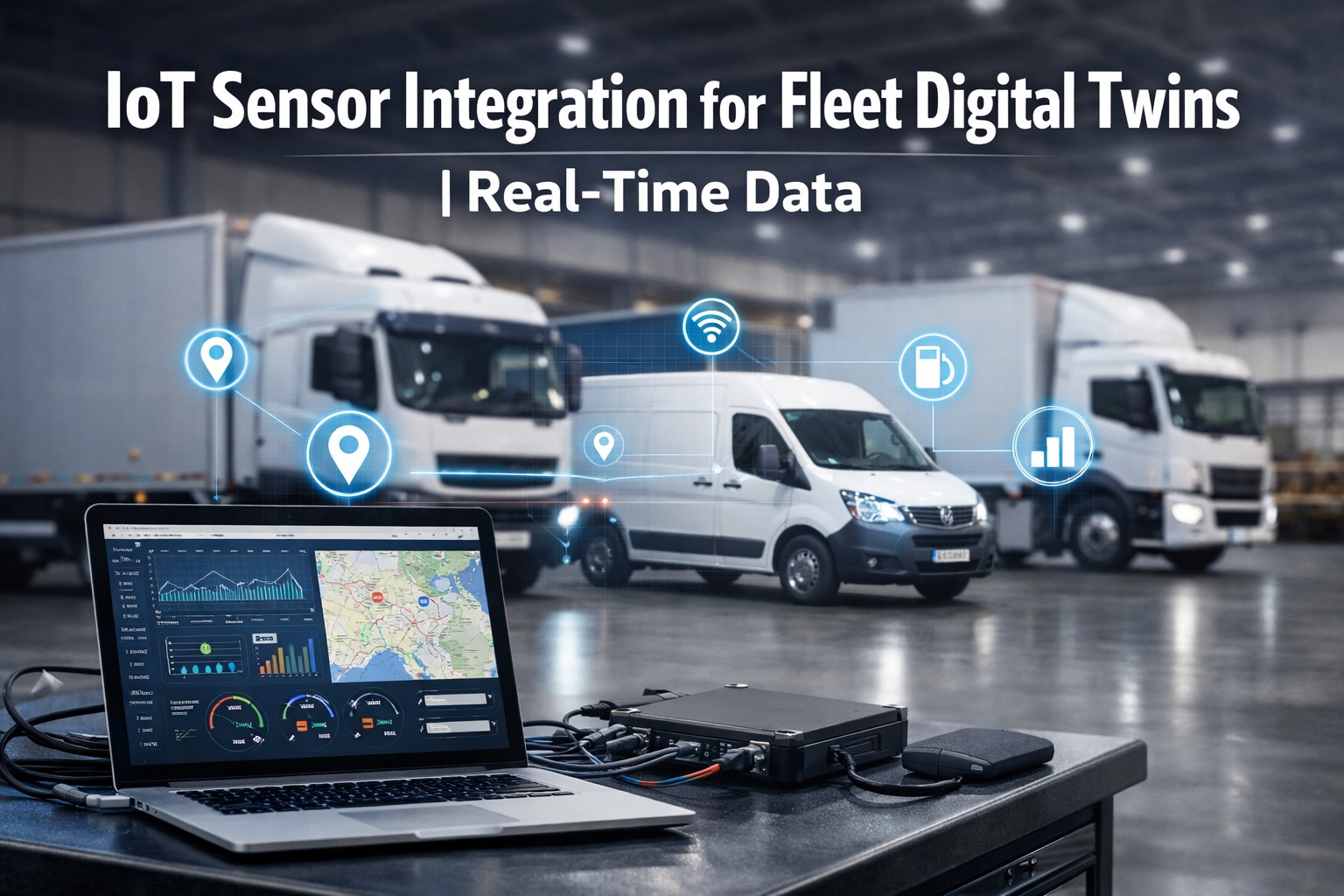
Building a fleet digital twin isn't just about creating a 3D model of your vehiclesit's about connecting real-time IoT sensor data that transforms static representations into living, breathing digital replicas that mirror every vibration, temperature fluctuation, and performance metric of your physical fleet. While 78% of fleet operators recognize digital twin potential, only 23% have successfully integrated the IoT sensor infrastructure required to make digital twins actually useful. Start your digital twin sensor integration in under 15 minutes, or schedule a personalized digital twin architecture demo.
Transform Your Fleet Into a Living Digital Replica
Connect vibration, temperature, pressure & OBD-II sensors to create real-time vehicle twins that predict failures, optimize performance, and deliver 300%+ ROI.
2026 Fleet Digital Twin Reality Check
Integration Truth: A digital twin without real-time sensor data is just an expensive 3D model. The value comes from continuous data streams—vibration signatures predicting bearing failure, temperature curves revealing cooling system degradation, pressure readings detecting air leaks before they strand drivers. Fleets that treat digital twins as visualization tools miss 90% of the value.
What Makes a Fleet Digital Twin "Live"
A true digital twin isn't a static model—it's a real-time replica updated continuously through IoT sensor data streams. Understanding the maturity levels determines your ROI potential.
Assess your digital twin maturity level — book free consultation →
Annual Value by Digital Twin Maturity (100-Vehicle Fleet)
- Maintenance: $12K
- Breakdown Prevention: $8K
- Fuel Optimization: $34K
- Asset Utilization: $18K
- Insurance: $6K
- Maintenance: $89K
- Breakdown Prevention: $124K
- Fuel Optimization: $67K
- Asset Utilization: $45K
- Insurance: $28K
- Maintenance: $156K
- Breakdown Prevention: $198K
- Fuel Optimization: $89K
- Asset Utilization: $72K
- Insurance: $42K
Ready to Build Your Digital Twin?
FleetRabbit's platform integrates with 200+ IoT sensor types, automatically mapping data streams to vehicle components.
Core IoT Sensor Categories for Fleet Digital Twins
Building a comprehensive digital twin requires sensor coverage across multiple vehicle systems. Each category feeds specific predictive capabilities.
OBD-II & J1939 Data
1-10 Hz- Engine RPM, load, coolant temp
- Transmission data & shift patterns
- Emissions & DPF status
- Active diagnostic codes
- Fuel system metrics
Vibration & Acoustic
1000+ Hz FFT- Bearing wear signatures
- Engine combustion balance
- Drivetrain analysis
- Suspension monitoring
- Brake system sounds
Temperature Sensors
0.1-1 Hz- Engine thermal mapping
- Transmission fluid temp
- Brake rotor temps
- Electrical system temps
- Cargo area monitoring
Pressure Sensors
1-10 Hz- Air brake system pressure
- Real-time tire TPMS
- Hydraulic systems
- Fuel rail pressure
- Turbo boost pressure
Position & Motion
10-100 Hz- GPS/GNSS positioning
- Accelerometer G-forces
- Gyroscope roll/pitch/yaw
- Wheel speed sensors
- Suspension position
Fluid Level Sensors
0.1 Hz- Fuel tank level
- DEF fluid monitoring
- Oil level detection
- Coolant level
- Washer fluid
Data Pipeline Architecture
Raw sensor data is useless without a pipeline that collects, processes, and delivers it to your digital twin. The architecture determines latency, reliability, and scalability.
Common Data Pipeline Failures
Architecture Pitfalls: 67% of digital twin projects fail due to data pipeline issues—not sensor problems. Common failures: cellular dead zones causing data gaps, edge processing bottlenecks, timestamp synchronization errors, and storage costs exploding from unfiltered high-frequency data. Design your pipeline before buying sensors.
Edge vs. Cloud Processing
Edge Processing
- ✓ <100ms latency
- ✓ Low bandwidth cost
- ✓ Works offline
- ✓ Real-time alerts
- ✗ Limited compute power
- ✗ Firmware updates needed
Cloud Processing
- ✓ Unlimited compute
- ✓ Instant algorithm updates
- ✓ Cross-fleet analytics
- ✓ ML model training
- ✗ 500ms-2s latency
- ✗ Requires connectivity
Best Practice: Hybrid architecture — edge for real-time filtering & alerts, cloud for ML models & historical analysis. Get architecture recommendations →
Sensor Investment by Fleet Type
Real-Time Intelligence Use Cases
Predictive Maintenance
Vibration + temp + pressure feeds ML models predicting failures 2-4 weeks ahead
Health Monitoring
Dashboard showing every vehicle's component-level status, color-coded by risk
Fuel Optimization
Engine data reveals inefficient patterns and maintenance needs affecting MPG
Load Optimization
Suspension sensors ensure compliance and optimal weight distribution
Route Intelligence
Combine GPS, traffic, vehicle health — assign right vehicle to right route
Driver Coaching
Correlate behavior sensors with wear patterns for targeted training
Implementation Roadmap
Start Building Your Fleet Digital Twin Today
Connect existing sensors or deploy new IoT infrastructure with FleetRabbit's digital twin platform. Real-time intelligence, predictive maintenance, and operational optimization.
Frequently Asked Questions
Q: What's the minimum sensor investment to make a digital twin useful?
Start with OBD-II/J1939 integration ($150-300/vehicle) providing 60+ data points. Add TPMS ($100-200) and you've covered the highest-ROI basics. Total minimum: $250-500/vehicle for meaningful digital twin capability.
Q: How much data bandwidth does sensor streaming require?
Raw data: 50-500 MB/vehicle/day. With edge filtering: 5-50 MB/day. A 100-vehicle fleet with edge processing uses 5-15 GB/month cellular. Design with edge filtering to control costs.
Q: Can I integrate existing telematics with a digital twin platform?
Yes. FleetRabbit integrates with 50+ telematics providers via API. Your existing GPS becomes the foundation, with additional sensors layered on top. No rip-and-replace needed.
Q: What ROI timeline should I expect?
Positive ROI within 4-6 months from maintenance savings. 100-vehicle fleet typically saves $15,000-30,000/month once predictive capabilities mature. Full ROI reaches 300-500% annually by Year 2.
Transform Your Fleet Into a Living Digital Twin
Join 2,000+ fleets using FleetRabbit's digital twin platform to predict failures, optimize performance, and reduce costs.