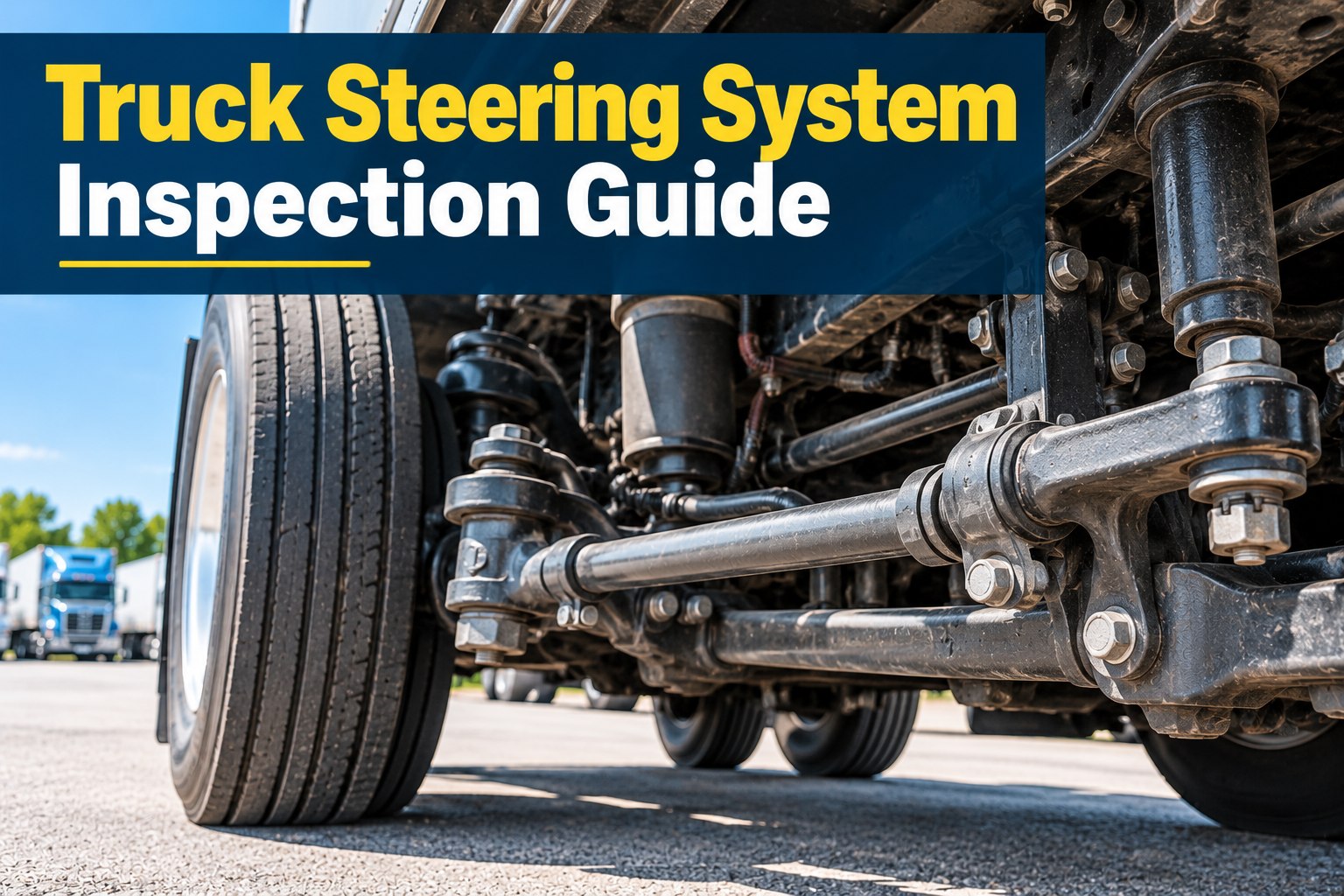
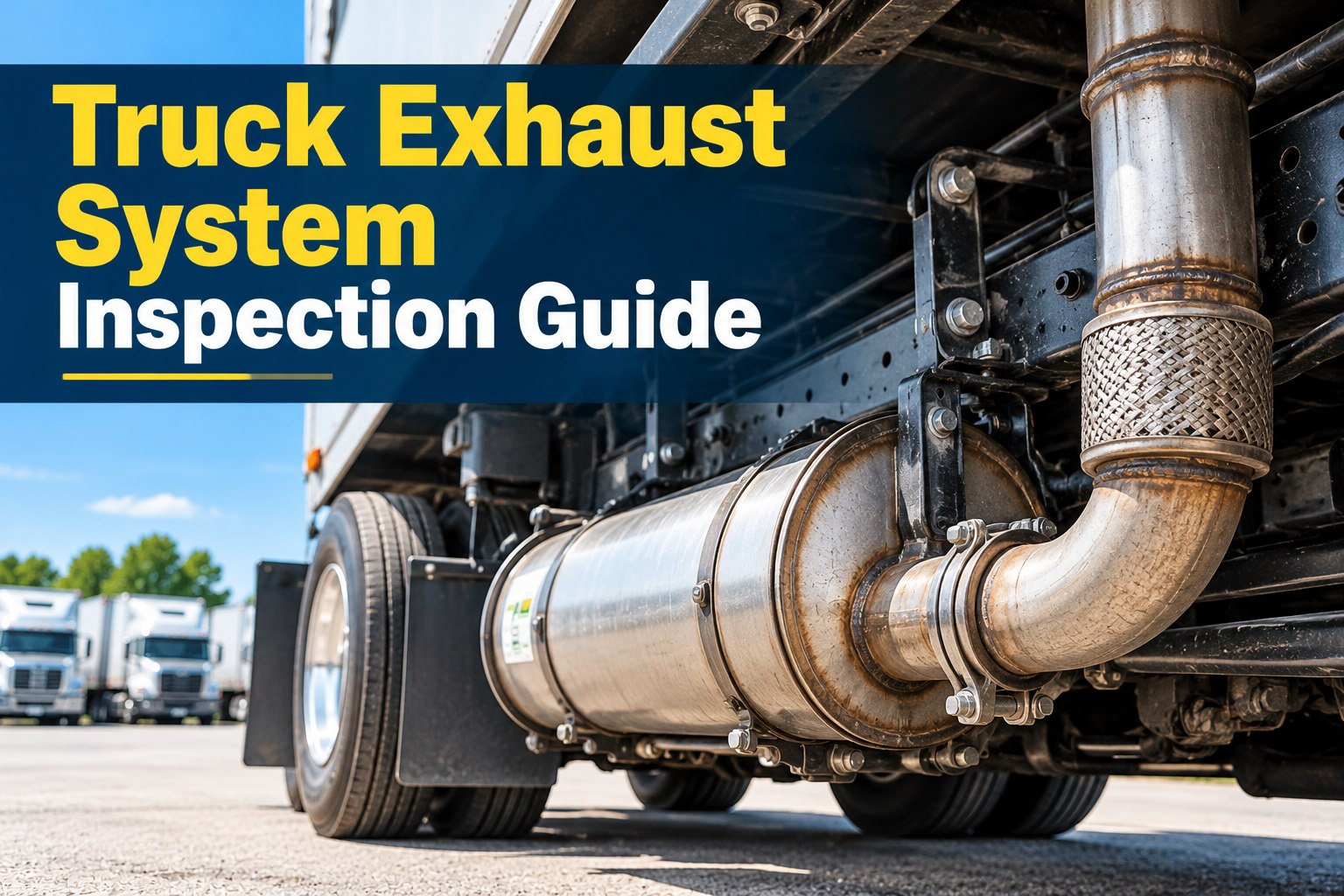
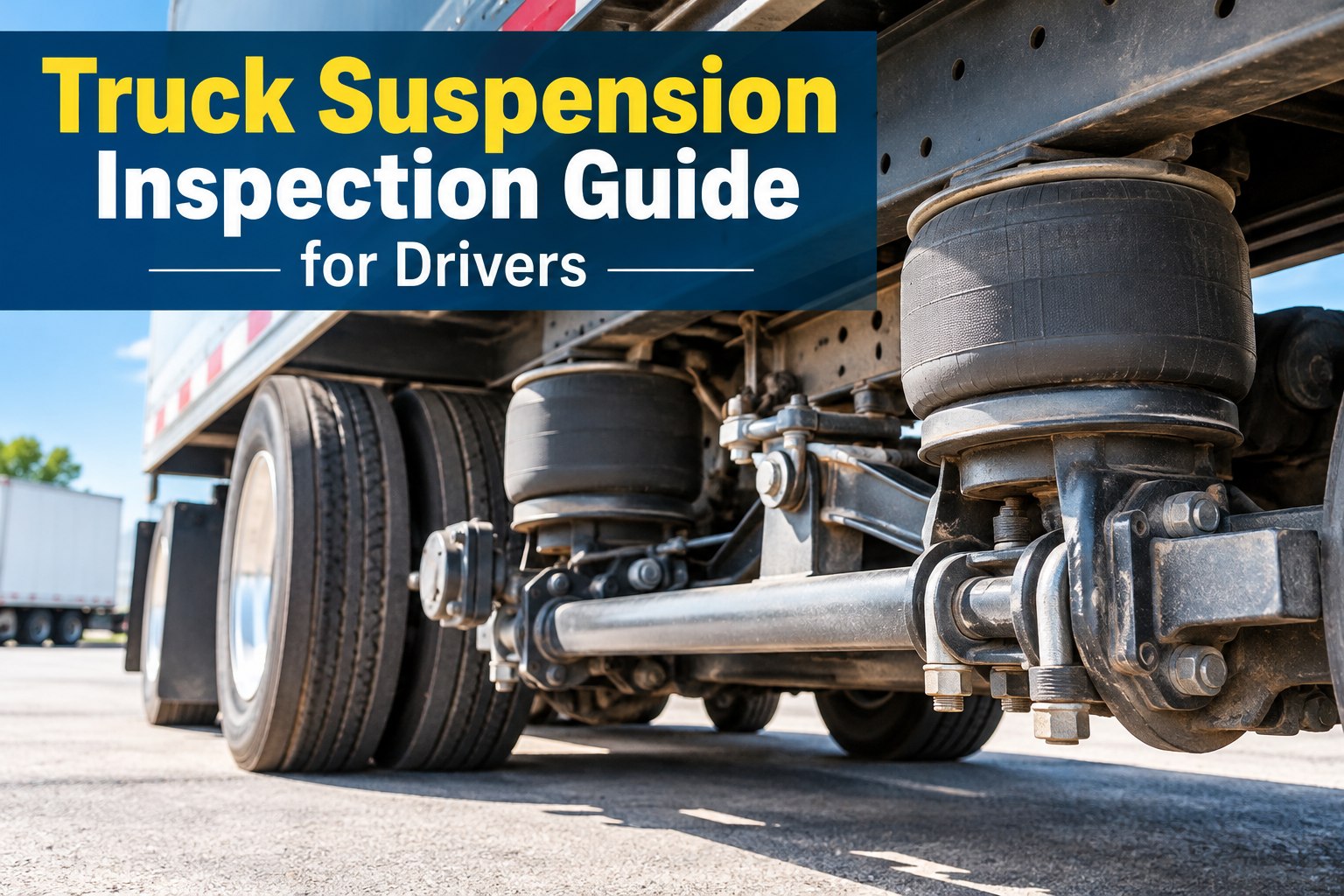
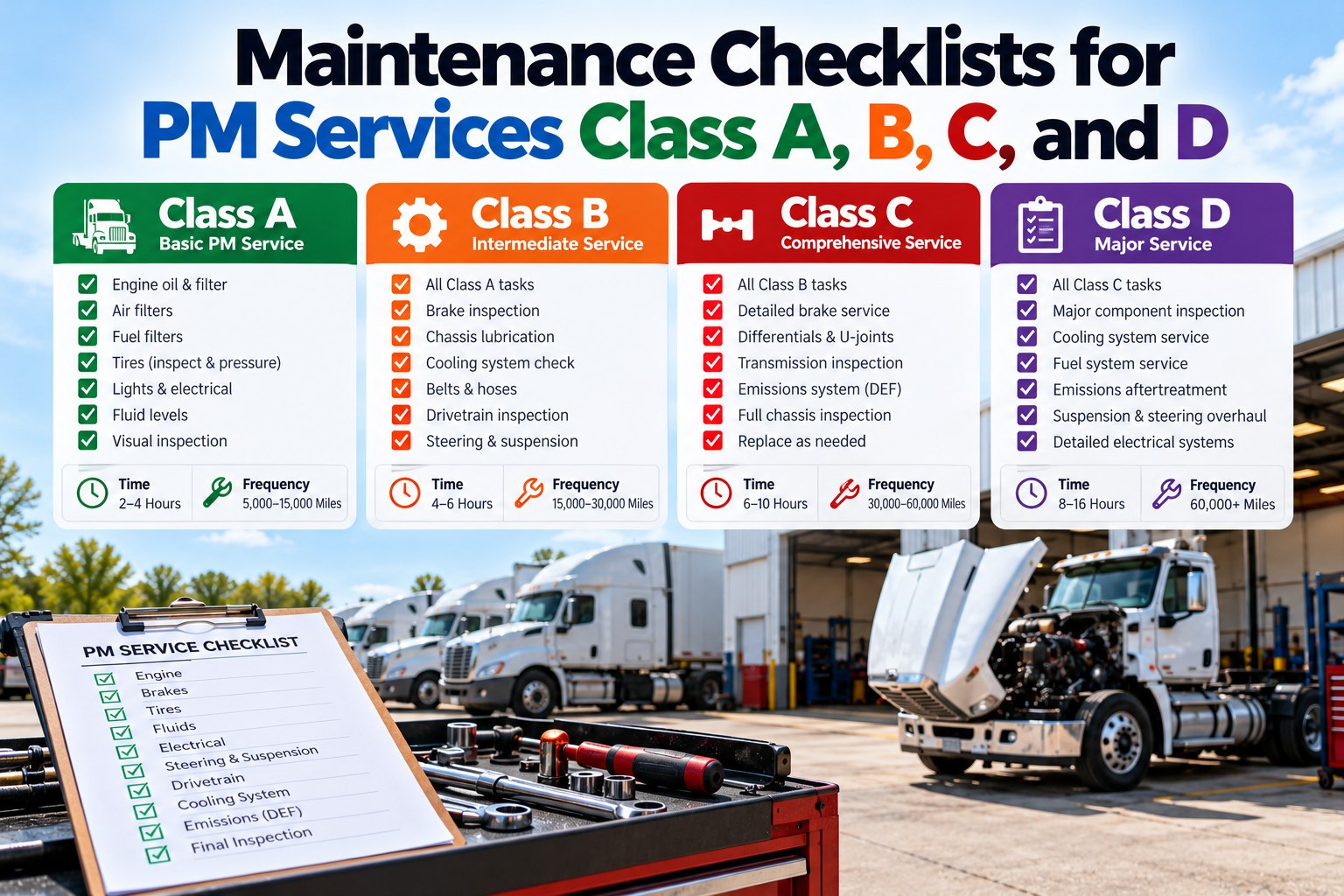
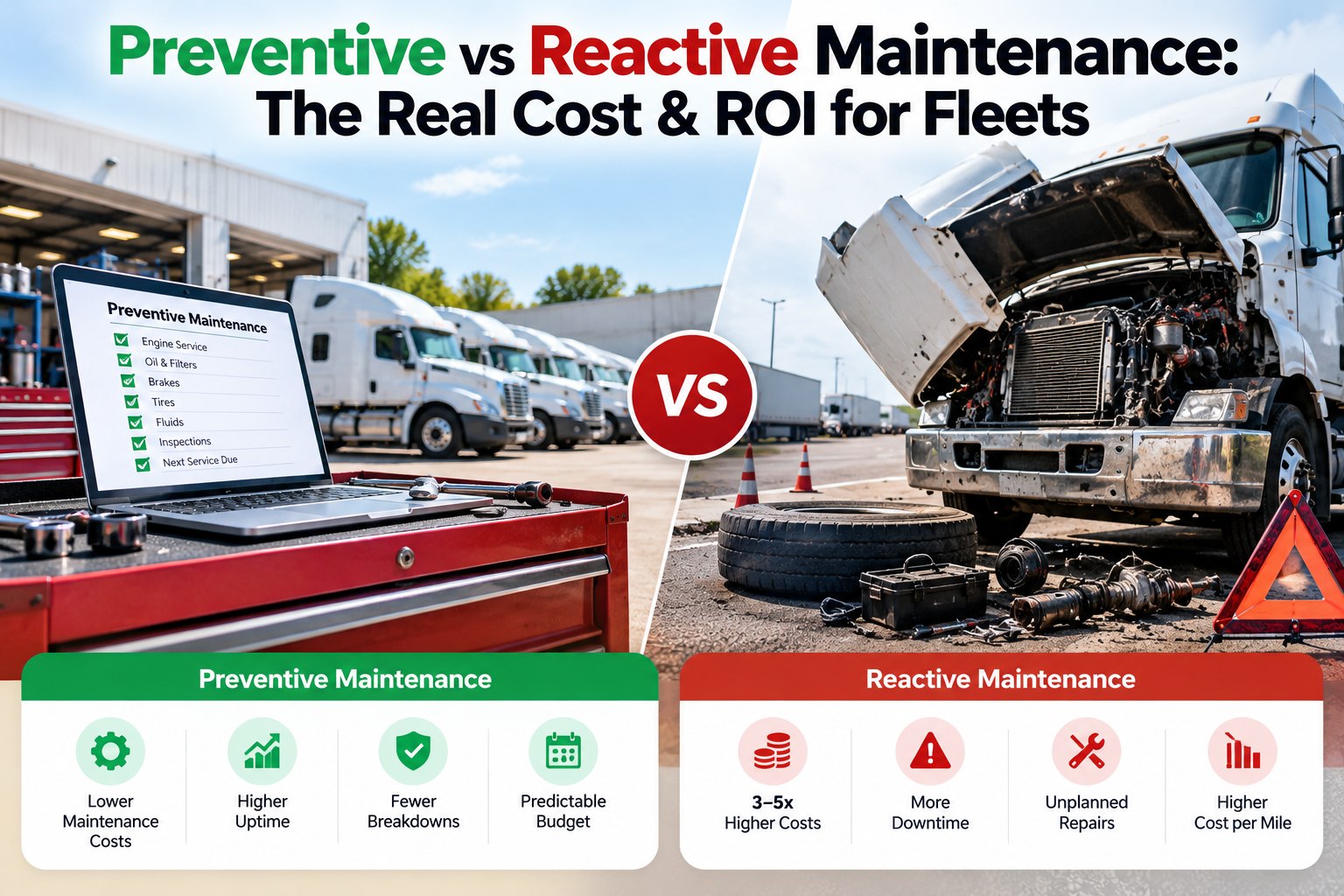
A monthly preventive maintenance check is the inspection that catches what daily walk-arounds miss and mileage-based services arrive too late for. It is long enough to get under the truck and short enough to do every month on every unit. Federal rules don't set a monthly interval, but 49 CFR 396.3 does require every carrier to inspect, repair and maintain its vehicles systematically and to keep records that show what was due and when it was done. This monthly PM checklist splits one month's work into four weekly blocks plus a records check, with clickable checkpoints you can tick on a phone or print as a template, and the measurements worth recording rather than just ticking. To see the same checklist scheduled and logged automatically, book a short demo with our team.
Monthly PM · 49 CFR 396.3
One month, four weekly blocks, and a checkpoint for every system that wears
Spread the monthly inspection across the weeks so no truck sits in the bay all day, and every checkpoint gets a real look.
Federal rules require a systematic program, and the records to prove it, not a fixed interval
Section 396.3 says carriers must "systematically inspect, repair, and maintain" every vehicle they control and keep its parts and accessories in safe and proper operating condition at all times. It doesn't say monthly, quarterly or every 15,000 miles; the carrier chooses. What it does specify is the record. For each vehicle a carrier controls for 30 consecutive days or more, the file has to hold four things.
Vehicle identity
Company unit number, make, serial number and year, plus the owner's name if the carrier doesn't own it.
What is due, and when
A way to show the nature and due date of each inspection and maintenance task. A monthly PM calendar does exactly this.
What was done
A record of inspections, repairs and maintenance, with the date and nature of each.
Bus emergency exits
For buses, tests of pushout windows, emergency doors and door marking lights, at least every 90 days.
1 year
Kept where the vehicle is housed or maintained
6 months
Kept after the vehicle leaves the carrier's control
Where the monthly PM sits between the daily DVIR and the annual inspection
A monthly check doesn't replace the other layers of a maintenance program; it links them. Drivers find problems daily, the monthly PM measures wear before it becomes a defect, mileage-based services replace fluids and parts, and the annual inspection under 396.17 confirms the whole truck against Appendix G. Each layer catches something the one below it can't.
Daily DVIR
Driver walk-around, 11 required items
Monthly PM
Measure wear, lubricate, close defects
PM by mileage or hours
Oil, filters and parts at the fleet interval
Annual inspection
396.17, by a qualified inspector
The monthly PM is also where daily defects get a second look. A driver who writes "pulls left" three times in a month is describing a pattern that a technician with a lift and a tread gauge can diagnose. Feeding DVIR results into the monthly check is how small reports turn into planned repairs instead of roadside breakdowns.
The monthly PM checklist: tick each checkpoint and watch the count update
Every line below is a clickable checkpoint. Tap it on a phone or tablet in the bay, and the counter under each block shows how many are done. Print the page and it works as a paper monthly PM checklist template. Run the weekly blocks in order, or all at once if the truck is in for the day.
Week 1
Fluids, filters and belts
Engine off, on level ground, cold where the spec says cold
Week 2
Brakes and air system
Wheels chocked, air system at full pressure
Halfway through the month and still on paper?
FleetRabbit puts each weekly block on the right truck's calendar, assigns it to a technician, and files the finished checklist against the unit automatically.
When a checkpoint fails: fix it today, schedule it, or park the truck
Every failed checkpoint needs a decision before the truck leaves the bay, and the decision belongs in the record. If the defect is one that would put the truck out of service at roadside, such as a broken main leaf, a pushrod beyond its limit or a steer tire below 4/32 inch, the repair happens before the next trip. If it's wear that is still within limits, like a belt starting to glaze or a bushing beginning to soften, it goes on the next PM or a scheduled work order with a due date. Either way, write down what was found, what was decided and who decided it. That one line is what turns a checklist into the "systematic" program 396.3 asks for.
Adjust the monthly checklist for how the truck actually works
The five blocks above suit a typical regional tractor. Duty cycle changes which checkpoints deserve extra time, so most fleets keep one base checklist and add a few lines per vocation.
Refuse and vocational
Constant stop-start and idling: brakes, aftertreatment, hydraulics and body hinges each month.
Long-haul
High mileage between visits: tires, wheel ends and fluid consumption trends matter most.
Winter operations
Batteries, block heaters, air dryer and fuel water separators before the first freeze.
Low-mileage units
Calendar time still ages rubber, fluids and batteries, so keep the monthly visit even when miles are low.
Running the monthly PM without losing a truck for a whole day
Splitting the month into weekly blocks is mostly a scheduling trick. Each block takes a fraction of the time a full inspection does, so it fits into a fuel stop at the yard, an overnight layover or the first hour of a shift. One technician can rotate through several trucks a day on the same block, and every unit still gets the full list by month's end. Drivers can take part too: fluid levels, lights and emergency equipment are pre-trip checks they already know, and logging them into the same record means the technician can spend the bay time on brakes, steering and the underside.
Five measurements worth writing down every month, not just ticking
A tick tells you a part passed today. A number tells you how fast it's wearing. These are the monthly readings where the trend matters as much as the pass mark.
Measurement
Limit or reference
What the trend tells you
Steer tire tread depth
At least 4/32 in (393.75)
Fast or uneven wear points to alignment, kingpin or suspension problems before the tire fails
Drive and trailer tread depth
At least 2/32 in (393.75)
Lets you plan tire replacement into the next PM instead of buying on the road
Brake pushrod stroke
Readjustment limit for the chamber type (393.47(e))
A stroke that grows month to month on an automatic adjuster means the adjuster or foundation brake needs work
Steering wheel lash
Limit for wheel size (393.209)
Rising lash shows wear building somewhere between the column and the tie rod ends
Fluid top-ups
Fleet specification
Repeated oil, coolant or power steering top-ups reveal slow leaks long before a puddle does
FleetRabbit preventive maintenance
FleetRabbit schedules every monthly block, logs every checkpoint and never loses the record
Paper monthly checklists go missing, get filled in from memory, and can't tell you that Unit 112's lash has been creeping up since spring. FleetRabbit replaces the clipboard with a preventive maintenance schedule that runs itself.
Calendar by unit
Weekly blocks scheduled per truck by date, miles or engine hours, whichever comes first
Mobile checklist
Technicians tick checkpoints and enter readings on a phone, with photos on any fail
Readings trended
Tread, stroke and lash plotted month over month for every unit
Defects to work orders
Fails and open DVIR defects become jobs in the shop queue
October · Unit 112
Mon
Tue
Wed
Thu
Fri
Wk 1 ✓
Wk 2 ✓
Wk 3 due
Wk 4
What the 20-minute demo covers
Loading this monthly checklist as your PM template
The monthly PM is only as useful as what happens to its findings. When a checkpoint fails, it should become a work order with parts and labour attached, and FleetRabbit's fleet maintenance tools keep that repair on the same unit history as the inspection that found it.
Monthly PM checklist questions
Does the DOT require monthly preventive maintenance?
No fixed interval is required. Section 396.3 requires systematic inspection, repair and maintenance and records showing what is due and what was done. A monthly checklist is one of the simplest ways to show a systematic program.
How long do PM records have to be kept?
One year where the vehicle is housed or maintained, and six months after the vehicle leaves the carrier's control, for vehicles controlled for 30 consecutive days or more.
What's the difference between a monthly PM and a DVIR?
The DVIR is the driver's daily report on 11 required items. The monthly PM is a technician-level check that measures wear, lubricates the chassis and closes open defects. One feeds the other.
Is there a monthly PM checklist PDF?
Print this page and the five checkpoint blocks become a paper template. To schedule the blocks and keep the records automatically, load the same list into FleetRabbit.
Who should sign off a monthly PM?
The technician who did the work, with the date and the unit number, and a supervisor where your program requires a second check. Federal rules don't name a signer for routine PM records, but a named person behind every entry is what makes the record believable in an audit or after a crash.
What should a monthly PM checklist include?
Fluids and filters, brakes and the air system, tires and wheel ends, steering, suspension and chassis lubrication, lights and emergency equipment, and a records check that closes open DVIR defects and confirms the annual inspection date.
Can a monthly PM replace the annual inspection?
No. The annual inspection under 396.17 must be done by a qualified inspector against Appendix G, and its report kept for 14 months. A monthly PM makes passing it routine.
W1
W2
W3
W4
Every truck, every month, every checkpoint on record
Turn this checklist into a monthly PM schedule your technicians run from their phones.