Food distribution is undergoing a fundamental shift. Consumer demand for variety, the rise of e-grocery, and the pressure to optimize costs are forcing distributors to rethink how they move products. One of the most significant strategies emerging is multi-temperature fleet management — the ability to transport frozen, chilled, and ambient goods in a single vehicle. This approach consolidates loads, reduces the number of trucks on the road, and cuts operational costs while meeting the strict temperature requirements of modern food safety regulations. However, multi-temperature operations introduce complexity that requires careful planning, advanced technology, and a strategic approach. This guide explores the key considerations for implementing and managing multi-temperature fleets in food distribution.
What is Multi-Temperature Fleet Management?
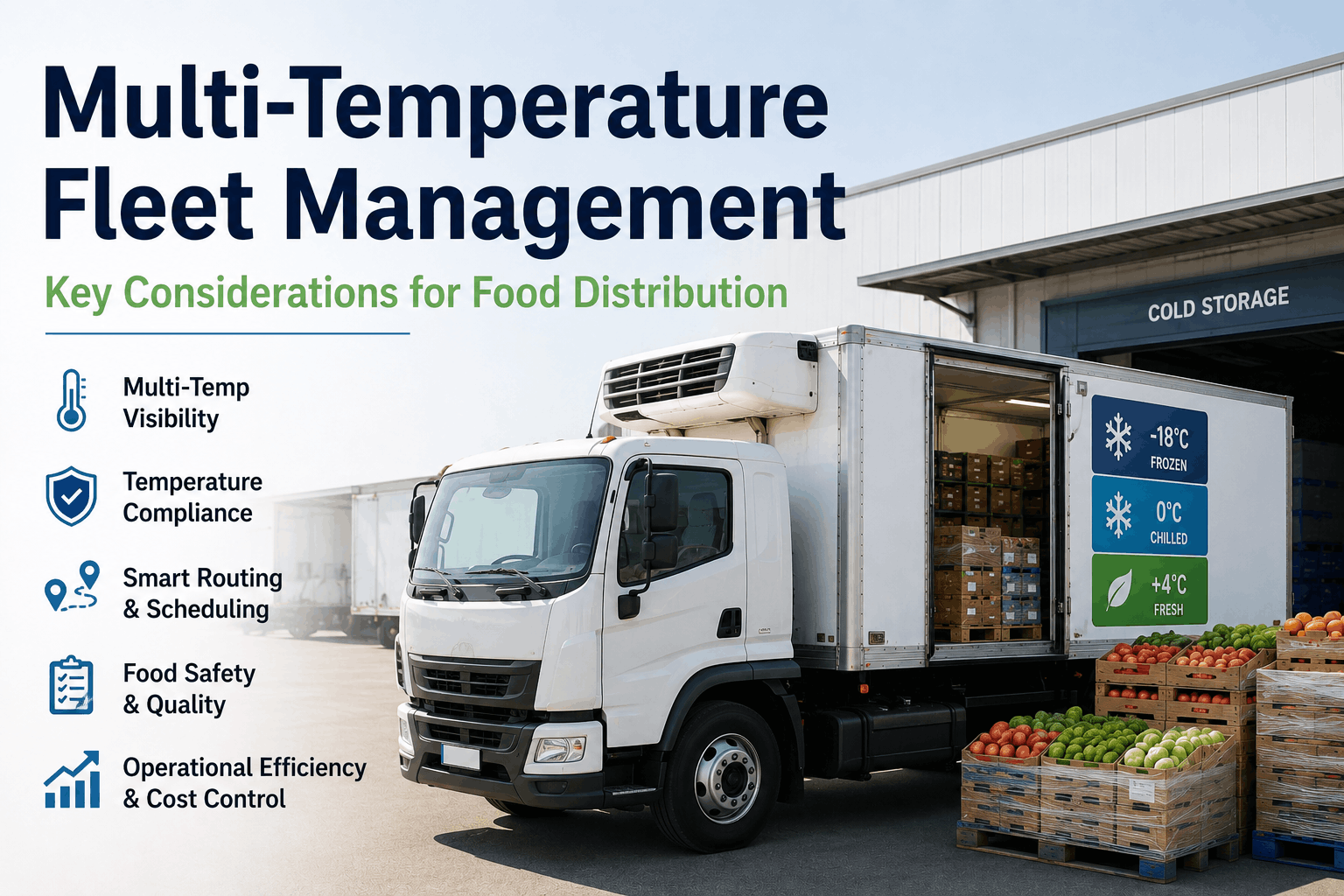
Multi-temperature fleet management involves operating vehicles with multiple independently controlled temperature zones. These vehicles, often called multi-compartment or multi-temperature trucks, are equipped with insulated partitions and independent refrigeration systems that maintain different temperature settings in separate sections of the same trailer. A single vehicle can carry frozen goods at -20°C, chilled produce at 2-4°C, and ambient dry goods simultaneously. This capability transforms food distribution by enabling mixed-load deliveries that were previously impossible with single-temperature vehicles.
The technology is rapidly advancing. Electric multi-temperature refrigeration units, for example, are now available, allowing zero-emission operations with independent temperature control across compartments. Modular containers, such as isothermal frigoboxes, enable standard vehicles to be reconfigured with temperature zones dynamically, offering flexibility for operators with varying demand patterns. Sign up to learn how FleetRabbit supports multi-temperature fleet operations.
Key Operational Considerations
Implementing multi-temperature fleet management requires attention to several operational factors that differ significantly from single-temperature operations. The most critical considerations include:
Vehicle Configuration and Compartment Design: The physical design of multi-temperature vehicles matters. Bulkhead configurations, double-decker arrangements, and modular container systems all impact how effectively the vehicle can maintain temperature integrity . Operators must consider the typical mix of products they transport and choose configurations that match their demand patterns. Some vehicles offer reconfigurable compartments that can be adjusted based on the day's load, providing flexibility for changing order profiles .
Route Optimization with Temperature Constraints: Multi-temperature routing is fundamentally different from standard route planning. Generic routing engines optimize for time and distance, but foodservice routing must optimize for time, distance, AND temperature integrity simultaneously. The delivery sequence must protect each compartment from excessive door openings, and the order of stops should minimize temperature exposure for the most sensitive products. Advanced routing solutions can sequence deliveries so that frozen products are delivered first, chilled goods next, and ambient items last, preserving cold chain integrity throughout the route.
Loading and Temperature Management: The loading process is critical in multi-temperature operations. Compartments must be loaded correctly to maintain airflow and temperature consistency. Door openings during loading and unloading must be minimized to prevent temperature loss. Pre-cooling compartments before loading and using thermal curtains can help maintain temperature stability. Real-time temperature monitoring is essential to detect excursions immediately and trigger corrective action . Book a demo to see how FleetRabbit provides real-time visibility into multi-temperature fleet operations.
Key Technologies for Multi-Temperature Fleet Management
Economic Benefits and Cost Considerations
Multi-temperature fleet management offers significant economic advantages. By consolidating multiple loads into a single vehicle, distributors can reduce the total number of trips, lowering fuel consumption, labor costs, and vehicle wear and tear. A fleet replacing three single-temperature trucks with one tri-temperature truck integrated with fleet software for mixed cargo can reduce fuel costs by 25%, labor costs by 20%, and increase asset utilization by up to 30% . Over a year, this can translate to tens of thousands of dollars in savings per vehicle.
Beyond direct cost savings, multi-temperature operations reduce capital expenditure on fleet size while maintaining or improving service coverage. Fewer vehicles are needed to serve the same area, reducing maintenance expenses and depreciation. The improved efficiency also supports sustainability goals, as fewer vehicles on the road means lower carbon emissions — a growing priority for food companies responding to consumer and retailer demands for greener supply chains . Sign up to discover how FleetRabbit helps you track and optimize multi-temperature fleet economics.
Regulatory and Compliance Considerations
Multi-temperature operations must comply with stringent food safety regulations, including the Food Safety Modernization Act and HACCP requirements. Each temperature zone must maintain its specified range throughout the journey, and accurate temperature logs must be maintained for audit purposes. This requires not only reliable equipment but also robust documentation systems. Automated temperature logging reduces the risk of human error and ensures that records are complete and accessible for regulatory inspections.
Additionally, environmental regulations are increasingly affecting multi-temperature operations. The European F-gas regulation, for example, targets refrigerants with high global warming potential, and operators must consider the environmental impact of their refrigeration systems. Electric multi-temperature refrigeration units offer a zero-emission alternative that helps fleets meet sustainability reporting requirements, such as CSRD Scope 3 transportation reporting .
Integrating Technology for Multi-Temperature Success
The complexity of multi-temperature operations makes technology integration essential. A unified fleet management platform should connect temperature monitoring, route optimization, driver communication, and compliance documentation into a single system. This integration eliminates data silos and enables real-time decision-making. When a temperature alert is triggered, the dispatcher should see the vehicle location, driver contact information, and the specific compartment affected — all on one screen.
Advanced platforms also incorporate predictive analytics to anticipate temperature issues before they occur. By analyzing historical data, these systems can identify patterns that lead to temperature excursions and recommend preventive actions. For example, if a particular route consistently causes temperature fluctuations, the system can suggest alternative routes or different loading sequences. Book a demo to see how FleetRabbit provides this integrated visibility for multi-temperature fleets.
Ready to Optimize Your Multi-Temperature Fleet?
From real-time temperature monitoring and AI route optimization to compliance automation and cost tracking — FleetRabbit delivers the integrated platform for modern food distribution.
Frequently Asked Questions
A multi-temperature delivery truck is a specialized vehicle with multiple independently controlled temperature zones, allowing it to transport frozen, chilled, and ambient goods simultaneously in a single trip.
Key benefits include reduced fuel costs, lower labor expenses, improved asset utilization, fewer vehicles needed, reduced spoilage, and support for sustainability goals through lower carbon emissions.
Generic routing optimizes for time and distance. Multi-temperature routing must also optimize for temperature integrity, sequencing deliveries to minimize door openings and protect temperature-sensitive products throughout the route.
Operations must comply with food safety regulations like FSMA and HACCP, which require accurate temperature documentation. Environmental regulations, such as the European F-gas regulation, also apply to refrigeration systems.
FleetRabbit provides real-time temperature monitoring, integrated route optimization, compliance documentation, and cost tracking — all in a unified platform. The system helps operators maintain cold chain integrity while improving operational efficiency.
Join 2,500+ Fleets Using FleetRabbit
From multi-temperature routing to compliance automation and cost optimization — FleetRabbit is the all-in-one platform for modern food distribution.