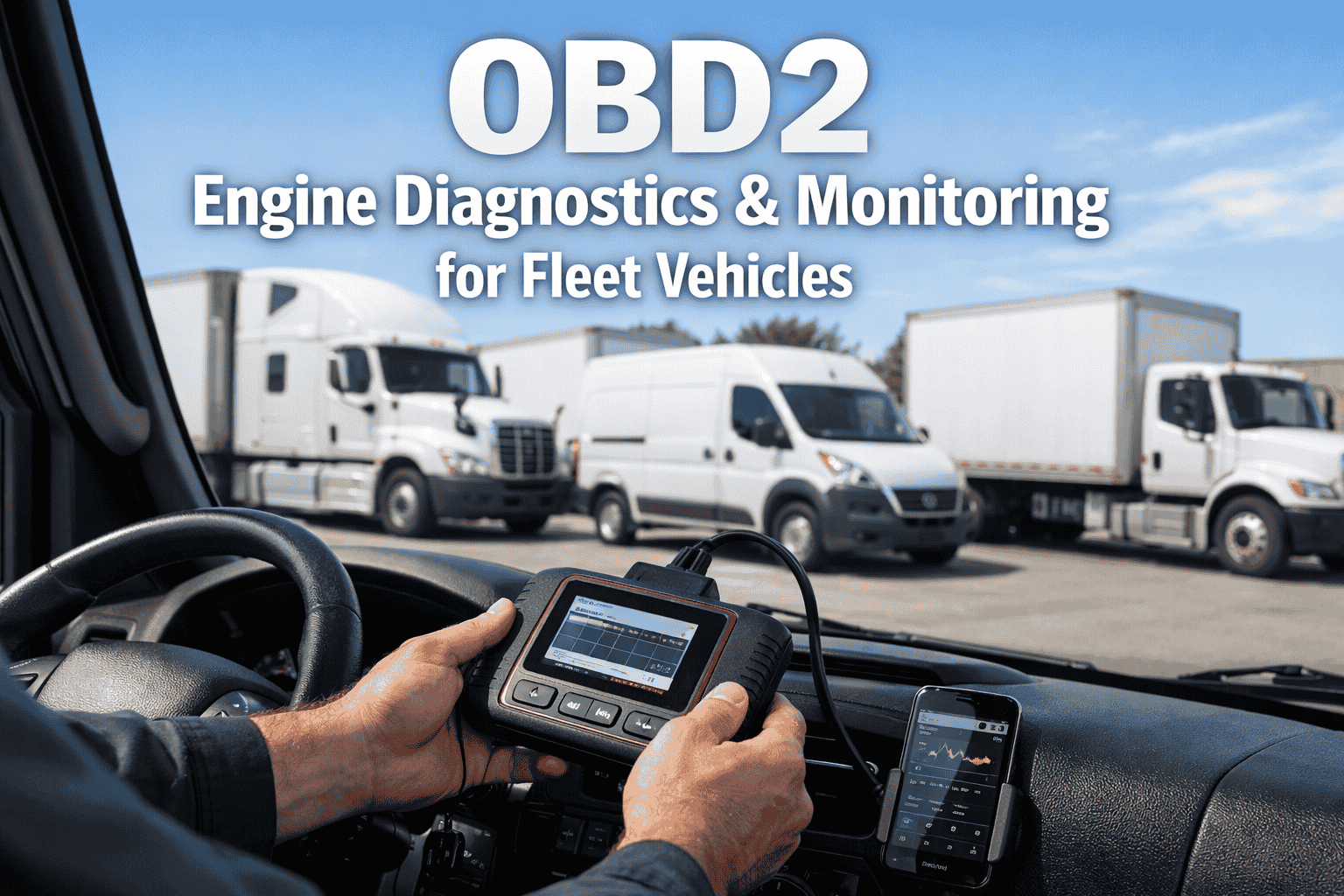
Every commercial vehicle manufactured after 1996 contains a diagnostic goldmine that most fleet operators barely tap. The 16-pin OBD-II port under your dashboard transmits over 300 real-time parameters engine RPM, coolant temperature, fuel trim values, oxygen sensor readings, and diagnostic trouble codes that reveal exactly what's happening inside your engines. Fleets using OBD2 engine diagnostics catch 70% of mechanical failures before they cause roadside breakdowns, cutting unplanned downtime by 25% and saving an average of $2,000 per vehicle annually. Book a demo to see real-time engine monitoring in action.
The global OBD aftermarket reached $6.84 billion in 2024 and is growing at 11.5% annually — driven largely by fleet operators who discovered that plug-and-play OBD2 devices deliver enterprise-grade vehicle engine health monitoring at a fraction of traditional telematics costs. Modern OBD2 vehicle monitoring platforms don't just read fault codes — they analyze trends, predict component failures, and automatically schedule maintenance before problems escalate. Start your free trial and connect your first vehicle in under 5 minutes.
Understanding OBD2 Engine Diagnostics
On-Board Diagnostics II (OBD-II) is the standardized vehicle diagnostic protocol mandated in all U.S. vehicles since 1996 and European vehicles since 2001. The system continuously monitors engine performance, emissions control, and drivetrain components through dozens of embedded sensors connected to the Engine Control Unit (ECU). Schedule a demo to see how FleetRabbit transforms this data into actionable insights.
The ECU acts as your vehicle's brain — collecting data from mass airflow sensors, oxygen sensors, throttle position sensors, and temperature probes hundreds of times per second. When any parameter falls outside normal operating ranges, the system generates a Diagnostic Trouble Code (DTC) and illuminates the check engine light. But the real power of OBD2 engine diagnostics lies in accessing this data stream continuously, not just when something breaks. Try it free with up to 3 vehicles.
How OBD2 Data Collection Works
Fleet monitoring platforms connect to the OBD-II port via cellular-enabled devices that transmit data to cloud dashboards in real time. The process works through standardized communication protocols — ISO 15765-4 (CAN), ISO 14230-4 (KWP2000), or SAE J1850 — that allow any compliant device to read data from any vehicle regardless of manufacturer.
- Data polling: Parameters sampled every 1-10 seconds depending on criticality
- Cellular transmission: 4G/5G connectivity sends data to cloud servers
- Cloud processing: Algorithms analyze trends and detect anomalies
- Alert generation: Notifications sent to fleet managers when thresholds exceeded
Key Engine Parameters Monitored via OBD2
Engine diagnostics for fleet vehicles depend on monitoring several critical parameters that reveal engine health in real time. Each data point tells a story about what's happening inside your powertrains — and understanding these parameters helps you catch problems before they strand drivers on the roadside. Book a demo to see live parameter tracking across your fleet.
Engine RPM
Revolutions per minute indicate engine speed and load conditions. Normal idle ranges from 600-1,000 RPM for most vehicles. Erratic RPM readings during idle suggest vacuum leaks, failing idle air control valves, or fuel delivery problems. Consistently high idle RPM wastes fuel and accelerates wear.
Coolant Temperature
Engine coolant temperature (ECT) should reach 195-220°F during normal operation. Readings below 180°F indicate a stuck-open thermostat or sensor failure. Temperatures exceeding 230°F signal overheating — which can cause catastrophic engine damage within minutes if not addressed.
Fuel Trim Values
Short-term (STFT) and long-term fuel trim (LTFT) measure how much the ECU adjusts fuel delivery to maintain optimal air-fuel ratios. Values between -10% and +10% are normal. Readings beyond ±15% indicate vacuum leaks, failing oxygen sensors, clogged fuel injectors, or exhaust leaks.
Oxygen Sensors
O2 sensors measure exhaust gas oxygen content to optimize combustion and emissions. A healthy sensor cycles between 0.1V and 0.9V multiple times per second. Slow response or stuck readings trigger codes like P0130-P0167 and indicate sensors that need replacement — typically every 60,000-100,000 miles.
Engine Load
Calculated engine load percentage (0-100%) indicates how hard the engine is working relative to maximum output. Sustained high loads (>80%) during normal driving suggest mechanical problems, transmission issues, or excessive cargo weight. Monitoring load patterns helps identify driver behavior problems and route optimization opportunities.
Diagnostic Trouble Codes
DTCs are standardized five-character codes (e.g., P0420) that identify specific faults. The first character indicates system category — P (powertrain), B (body), C (chassis), or U (network). Fleet platforms translate these codes into plain-language descriptions and severity ratings, helping technicians prioritize repairs.
Understanding these parameters is the foundation of proactive fleet maintenance. Start your free trial and see all engine parameters visualized in real-time across your entire fleet.
Real-Time Engine Monitoring Using OBD2
Static snapshots of engine health miss the problems that develop gradually. Real-time OBD2 engine monitoring system platforms track parameter trends continuously — detecting subtle changes that precede major failures. This is where engine fault detection via OBD2 transitions from reactive diagnostics to predictive engine maintenance strategies that prevent breakdowns entirely. Start your free trial and get your first failure prediction within 72 hours.
Overheating Engine Detection
Continuous coolant temperature monitoring catches rising temperatures before they reach critical levels. Modern platforms alert drivers and fleet managers when temperatures exceed 220°F, providing 5-15 minutes of warning before potential engine damage. Early detection prevents the $15,000-$25,000 cost of engine replacement.
Fuel System Problems
Fuel trim drift beyond normal ranges indicates developing injector clogs, fuel pump degradation, or vacuum leaks. Trending analysis identifies vehicles where fuel trims are gradually worsening — allowing scheduled repairs before misfires and poor fuel economy become noticeable to drivers.
Sensor Failures
When oxygen sensors, MAF sensors, or temperature sensors begin degrading, their readings become erratic before triggering fault codes. AI-powered analysis detects these pre-failure patterns — often 2-4 weeks before the check engine light activates — enabling proactive replacement during scheduled maintenance.
Abnormal Engine Load
Sustained high engine load during normal driving conditions points to mechanical drag, transmission problems, or brake system issues. Load pattern analysis also reveals driver behavior problems — aggressive acceleration habits that accelerate wear and waste 15-25% more fuel than efficient driving techniques.
See Real-Time Engine Health Across Your Fleet
Connect your vehicles in under 5 minutes. Get your first fault prediction within 72 hours.
Benefits of OBD2 Monitoring for Fleet Operators
The business case for truck engine diagnostics via OBD2 is straightforward: every prevented breakdown delivers immediate, measurable ROI. Research from Deloitte Analytics Institute found that predictive maintenance increases productivity by 25%, reduces breakdowns by 70%, and lowers maintenance costs by 25%. For fleet operators, that translates to real dollars. See ROI calculations for your fleet in a personalized demo.
Early fault detection catches problems during scheduled maintenance windows, not on the roadside.
Predictive scheduling ensures repairs happen during low-demand periods without disrupting operations.
Condition-based maintenance eliminates unnecessary part replacements and emergency repair premiums.
Optimal engine tuning and early detection of efficiency-robbing problems maximize miles per gallon.
These aren't projections — they're documented results from fleets that made the switch. Start free today and measure your own results within 30 days.
OBD2 Fleet Dashboard and Data Analytics
OBD2 data analytics platforms transform raw sensor data into actionable intelligence. Modern vehicle diagnostics dashboard interfaces provide fleet managers with real-time visibility into every vehicle's engine health — along with predictive insights that identify which vehicles need attention before problems occur. Book a demo to explore the FleetRabbit dashboard.
Engine Health Scoring
Aggregate vehicle sensor data into a single health score (0-100) that makes it easy to identify at-risk vehicles. Scores incorporate coolant temperature trends, fuel trim stability, DTC history, and maintenance compliance — giving fleet managers an instant snapshot of fleet-wide engine condition.
Intelligent Alert Systems
Configurable thresholds trigger alerts via SMS, email, or push notification when engine parameters exceed normal ranges. Multi-tier alert systems distinguish between informational warnings (schedule a check) and critical alerts (pull over immediately) — preventing alert fatigue while ensuring urgent issues get attention.
Predictive Analytics
Machine learning models trained on millions of miles of fleet data identify failure patterns before they manifest as DTCs. These algorithms predict component failures 2-4 weeks in advance with 90%+ accuracy — enabling maintenance teams to order parts and schedule repairs during optimal windows.
Trend Reporting
Historical analysis reveals patterns invisible in real-time data — which vehicle models have recurring issues, which drivers are hardest on equipment, and which maintenance practices deliver the best outcomes. Data-driven insights improve procurement decisions, driver coaching, and shop productivity.
FleetRabbit's dashboard delivers all these analytics capabilities out of the box. Book a demo to see the full analytics suite in action.
Integration with Fleet Maintenance Software
Standalone OBD2 engine diagnostics provide value, but integration with fleet vehicle diagnostics software and maintenance management systems multiplies that value. When engine health data flows directly into work order systems, the entire maintenance workflow becomes more efficient. Start free and connect your existing systems in minutes.
Fleet Management Systems
OBD2 data integrates with platforms like Samsara, Geotab, and FleetRabbit to provide unified dashboards combining GPS tracking, driver behavior, and engine diagnostics in a single interface.
Maintenance Scheduling Tools
Automatic work order generation based on DTC triggers, mileage thresholds, or predictive maintenance alerts. Parts can be pre-ordered before vehicles arrive at the shop — eliminating wait times and maximizing technician productivity.
Predictive Maintenance Platforms
AI-powered platforms like Pitstop and Uptake connect to OBD2 data streams to deliver failure predictions at the component level — identifying not just that a vehicle needs attention, but specifically which part is likely to fail.
FleetRabbit integrates with your existing tools via API. Talk to our integration team about connecting your fleet systems.
Best Practices for OBD2 Engine Monitoring
Implementing an engine performance monitoring system effectively requires more than just plugging in devices. These best practices help fleet operators maximize the value of their OBD2 monitoring investments. Schedule a consultation to discuss implementation strategies for your fleet.
Start with Your Highest-Risk Vehicles
Deploy OBD2 monitoring first on older vehicles, high-mileage units, and those with breakdown histories. Quick wins from prevented failures build organizational momentum for fleet-wide rollout.
Configure Meaningful Alert Thresholds
Default alert settings often trigger too many notifications. Calibrate thresholds based on your fleet's specific operating conditions to prevent alert fatigue while ensuring critical issues get attention.
Train Technicians on DTC Interpretation
OBD2 codes identify symptoms, not always root causes. Ensure your maintenance team understands how to use diagnostic data alongside traditional troubleshooting to avoid unnecessary part replacements.
Document Everything for Pattern Analysis
Link repair records to the DTCs and sensor data that triggered them. Over time, this creates a knowledge base that helps identify recurring problems across your specific fleet composition.
Review Analytics Monthly
Set a regular cadence to review fleet-wide health trends, identify vehicles with degrading scores, and adjust maintenance schedules based on actual condition data rather than arbitrary mileage intervals.
Frequently Asked Questions
Transform Engine Data into Operational Advantage
OBD2 engine diagnostics have evolved from mechanic shop tools into strategic fleet assets. The same data that once required expensive scans now streams continuously to cloud platforms that predict failures, schedule maintenance, and keep your vehicles earning revenue instead of sitting in repair bays. Fleets using comprehensive vehicle engine health monitoring report 70% fewer breakdowns, 25% lower maintenance costs, and dramatic improvements in vehicle availability.
The technology is proven. The ROI is documented. The only question is whether your fleet will adopt predictive engine monitoring now — or continue paying the premium for reactive maintenance until a competitor forces your hand. Book a demo and see how real-time engine diagnostics can transform your fleet operations, or start your free trial today.
Start Monitoring Engine Health Today
Free for up to 3 vehicles. Plug-and-play installation. First failure prediction in 72 hours.
No credit card required • Works with any OBD2 vehicle • 5-minute setup