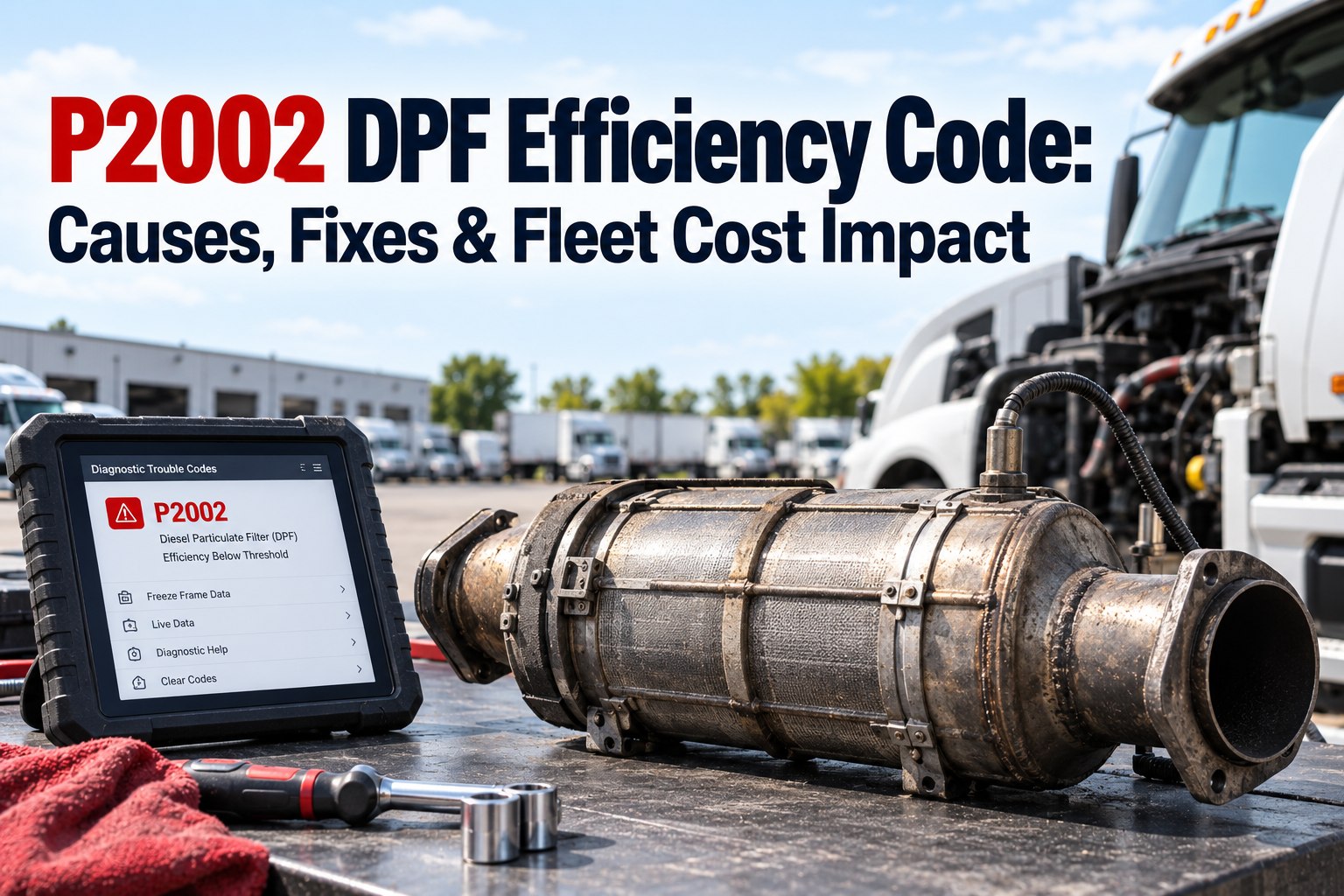
P2002 means the engine computer has decided the diesel particulate filter is no longer filtering as well as it should — "particulate filter efficiency below threshold, bank 1." It is not the same as a full or restricted filter. Manufacturer service documents are explicit about what the monitor is looking for: a General Motors bulletin says P2002 sets when a properly functioning system detects a cracked or broken filter, and a Volvo bulletin for US10+OBD2013 chassis says the routine is meant to detect potential damage to the DPF or an incorrect DOC or DPF installed on the vehicle. Add failed sensors and blocked pressure tubes, and you have the short list of real causes. This guide covers what the code means, how it differs from restriction codes, the symptoms, the causes, a diagnosis order that doesn't start with a new filter, when to clean or replace, the cost and how to prevent it. Book a demo to see aftertreatment codes tracked to the repair, or create a free account to start with your own trucks.
Fault code reference · Aftertreatment
P2002 Doesn't Say the Filter Is Full. It Says the Filter Isn't Filtering.
For fleet mechanics, shop leads and maintenance managers: what the P2002 monitor actually tests, why a new filter is often the wrong first move, and how to find the real cause.
What the P2002 Code Actually Tells You About a Diesel Particulate Filter
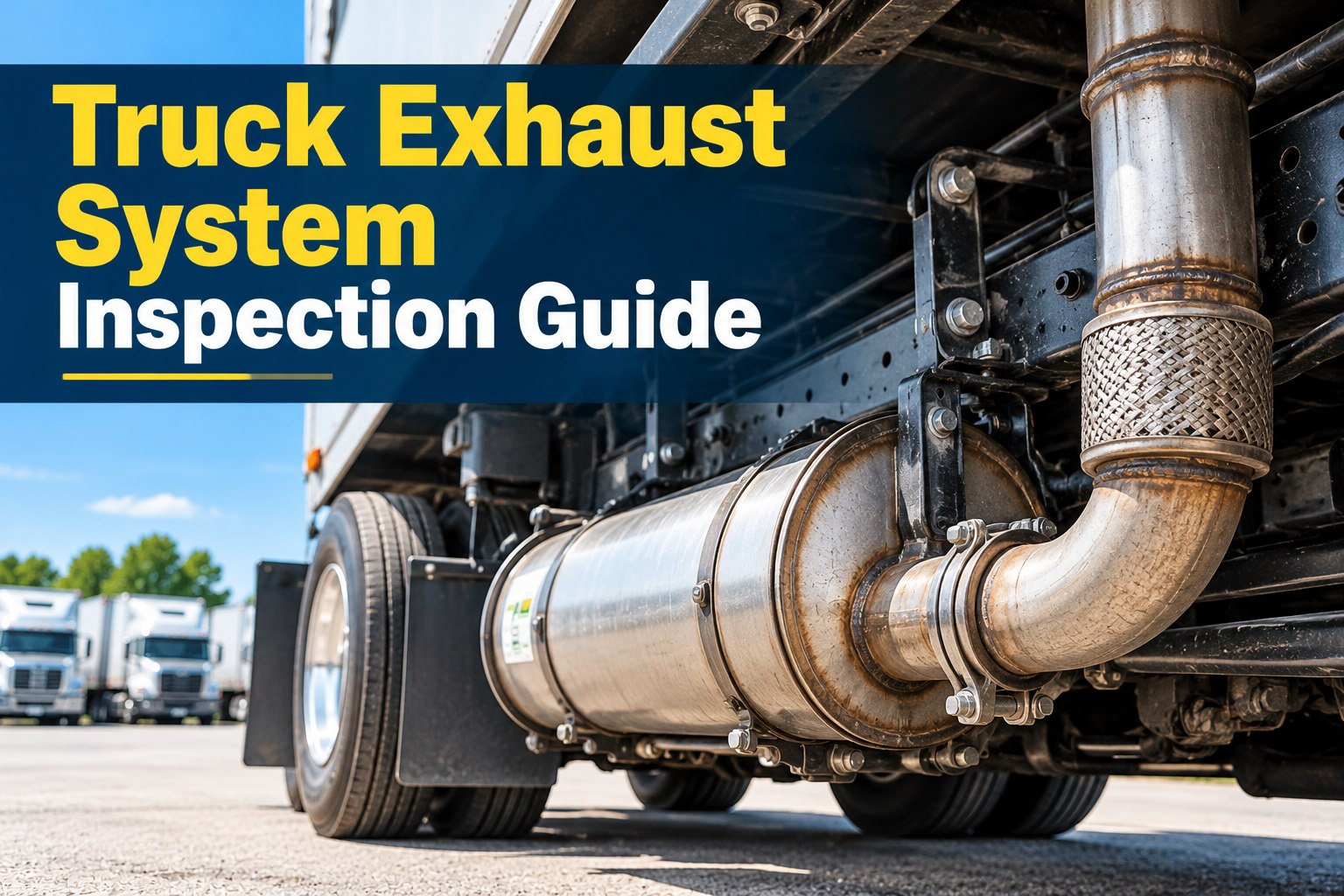
A diesel particulate filter (DPF) traps soot from the exhaust and burns it off during regeneration. The P2002 monitor doesn't check how loaded the filter is; it checks how well it is still capturing particulate. General Motors service information states that P2002 sets when a properly functioning system detects a cracked or broken filter, using the exhaust particulate sensor, once the filter has degraded beyond a calibrated threshold. On Volvo US10+OBD2013 chassis, the same code is described as detecting potential damage to the DPF or an incorrect DOC or DPF installed on the vehicle. You can keep each truck's aftertreatment codes and repairs in one record on a free account.
What sets the code
- Filtering performance below a calibrated threshold
- Confirmed over repeated monitor runs, not a single reading
- On Volvo chassis: active and confirmed, or inactive with more than three counts and confirmed
What the monitor uses
- An exhaust particulate sensor downstream of the filter on many systems
- Differential pressure across the filter
- Exhaust temperature and regeneration history as supporting data
Sources: General Motors service bulletin on particulate filter diagnostics and Volvo Trucks bulletin for DTC P2002-00 on US10+OBD13 chassis, both filed with NHTSA.
Why P2002 Is Not the Same as a Full, Restricted or Ash-Loaded DPF
Aftertreatment codes divide neatly into "the filter isn't working," "the filter is blocked" and "the sensors watching it are wrong." Reading P2002 as a plugged filter sends shops toward cleaning services or a replacement that won't clear the code. We can sort your aftertreatment codes into these groups in a demo. Swipe the table on mobile.
| Code | What it means | What the truck is telling you | First move |
|---|---|---|---|
| P2002 | Particulate filter efficiency below threshold, bank 1 | The filter isn't trapping soot as it should — damage, degradation or the wrong part | Inspect the filter and confirm the correct DOC and DPF are fitted |
| P226D | Particulate filter missing | Pressure across the filter is lower than any real filter would produce | Check that a filter is actually installed and intact |
| P244A | Differential pressure too low | Sensor lines disconnected or blocked | Inspect and clear the pressure tubes |
| P2452 / P2453 / P2454 | Differential pressure sensor circuit, range or low | The sensor or its wiring has failed | Test the sensor; moisture ingress has caused failures on some designs |
| P242F | Filter restriction, ash accumulation | Ash has built up over normal service life | Schedule a filter cleaning service |
| P2459 | Regeneration frequency | Regens are happening too often | Look upstream: duty cycle, injectors, EGR, turbo |
| P2463 | Soot accumulation | Soot load is above threshold | Run a parked regen, then find why soot is building |
Code behaviors for P2002, P226D and P244A from a General Motors particulate filter diagnostic bulletin filed with NHTSA; other definitions follow the generic SAE meanings.
Symptoms Fleets Notice When a P2002 Code Sets on a Diesel Truck
P2002 often arrives quietly, with the lamp long before any driveability complaint, which is why code reading at every service matters. When symptoms do appear, they look like a general aftertreatment problem. Log symptoms with every aftertreatment code free.
Check engine light with no obvious change in the truck
The most common first sign; the monitor has confirmed the fault over several runs.
More frequent or failed regenerations
A damaged filter or mismatched parts upset the whole regeneration strategy.
Other aftertreatment codes alongside it
Pressure sensor, temperature or NOx codes often set with it and point to the cause.
Reduced power or a derate on some platforms
Emissions faults can limit power until the repair is confirmed.
The Real Causes Behind a P2002 Code, From Cracked Filters to Wrong Parts
Five groups cover almost every P2002. Two of them — damaged filters and incorrect replacement parts — are exactly what the monitor was designed to catch, and both are common after a previous aftertreatment repair. We can review your aftertreatment repair history for these patterns in a demo.
A cracked, melted or broken filter substrate
Soot passes through instead of being trapped. Often follows an uncontrolled regeneration or a thermal event.
An incorrect or non-matching DOC or DPF
Volvo's bulletin names this outright: the routine also detects an incorrect DOC or DPF installed on the vehicle. Aftermarket or mismatched parts set the code even when they look fine.
Failed differential pressure sensors and blocked tubes
An Audi bulletin traced P2002 with pressure sensor codes to moisture getting inside the sensor. Plugged or cracked tubes do the same thing.
Exhaust leaks around the filter or sensors
A leak upstream or across the filter changes the readings the monitor relies on.
Upstream problems that flood the filter with soot
Injectors, EGR faults, turbo problems, low-quality fuel or the wrong engine oil age a filter quickly and can damage it.
How to Diagnose a P2002 Code Without Replacing the Filter First
Work from data and sensors toward the filter, not the other way round. A replacement filter fitted to a truck with a failed sensor, a leak or a mismatched catalyst repeats the code — and on the Volvo procedure, the code's status and count matter before any repair begins. Record each result on the work order. Add this order to your aftertreatment template free.
Stop repeat P2002 codes after aftertreatment repairs
In 30 minutes we'll show how FleetRabbit keeps the part numbers, sensor tests and regen history from the last repair on the truck's record, so the next technician can see whether the right filter went on.
Clean, Repair or Replace: What to Do Once the Cause Is Confirmed
P2002 rarely ends in a cleaning service, because cleaning restores flow through a loaded filter but doesn't repair a cracked one. Match the repair to the finding. Walk through these options on your own trucks with us.
When pressure sensor codes, wet sensors or blocked tubes are found. Clear and verify before touching the filter.
When part numbers don't match the engine specification. The filter may be undamaged but still wrong for the system.
When the substrate is cracked, melted or letting soot through. Cleaning cannot repair damage.
When injectors, EGR or turbo faults have been loading the filter with soot; otherwise the new filter fails the same way.
What a P2002 Code Costs a Fleet, and Where the Money Actually Goes
The parts price for an aftertreatment repair varies enormously, but the two costs fleets underestimate are diagnosis time and downtime. Industry benchmarking by FleetNet America and ATA's Technology & Maintenance Council puts unplanned downtime at about $448 to $760 per truck per day before towing and repair, and ATRI puts 2025 average repair and maintenance cost at $0.215 per mile. Track aftertreatment cost per truck free.
Relative cost by repair type, illustrative — not prices. Downtime benchmark: FleetNet America and TMC via industry reporting.
Preventing the Next P2002 Code Across Your Fleet
Most P2002 codes trace back to something that damaged or confused the filter, so prevention is really aftertreatment discipline. Put these into your preventive maintenance program and have drivers report regen warnings on the DVIR. See these checks scheduled automatically in a demo.
P2002 Code Questions Fleet Mechanics and Managers Ask Most
What does the P2002 code mean?
Particulate filter efficiency below threshold, bank 1: the system has decided the filter is not trapping soot as it should. Manufacturer documents describe it as detecting a cracked or broken filter, or an incorrect DOC or DPF fitted. See it in your own fault history.
Does P2002 mean the DPF is full?
No. Restriction and soot loading set different codes, such as ash accumulation, regeneration frequency and soot accumulation codes. P2002 is about filtering performance, not blockage. Group your codes correctly free.
Can a bad sensor cause P2002?
Yes. A failed differential pressure sensor or blocked sensor tubes can set it; one manufacturer bulletin traced P2002 with pressure sensor codes to moisture inside the sensor. Check sensors and tubes before the filter. Review sensor-related codes with us.
Will cleaning the DPF clear a P2002 code?
Only if the filter is intact and the cause was soot loading. Cleaning cannot repair a cracked substrate, and it won't fix a mismatched DOC or DPF. Log cleaning results per truck free.
Can I keep driving with a P2002 code?
Usually for a short time, but the code is an emissions fault that can lead to reduced power, and a damaged filter will keep letting soot through. Schedule the diagnosis promptly. Set severity rules with our team.
Why did P2002 come back after we replaced the DPF?
The usual reasons are a mismatched replacement part, a sensor or tube fault that was never fixed, an exhaust leak, or an upstream engine problem still loading the filter. Track repeats per truck free.
Keep the Part Numbers, Sensor Tests and Regen History Behind Every P2002
FleetRabbit records each aftertreatment code, what was tested, which parts went on and whether the code returned — so a repeat P2002 points to the gap instead of another filter.