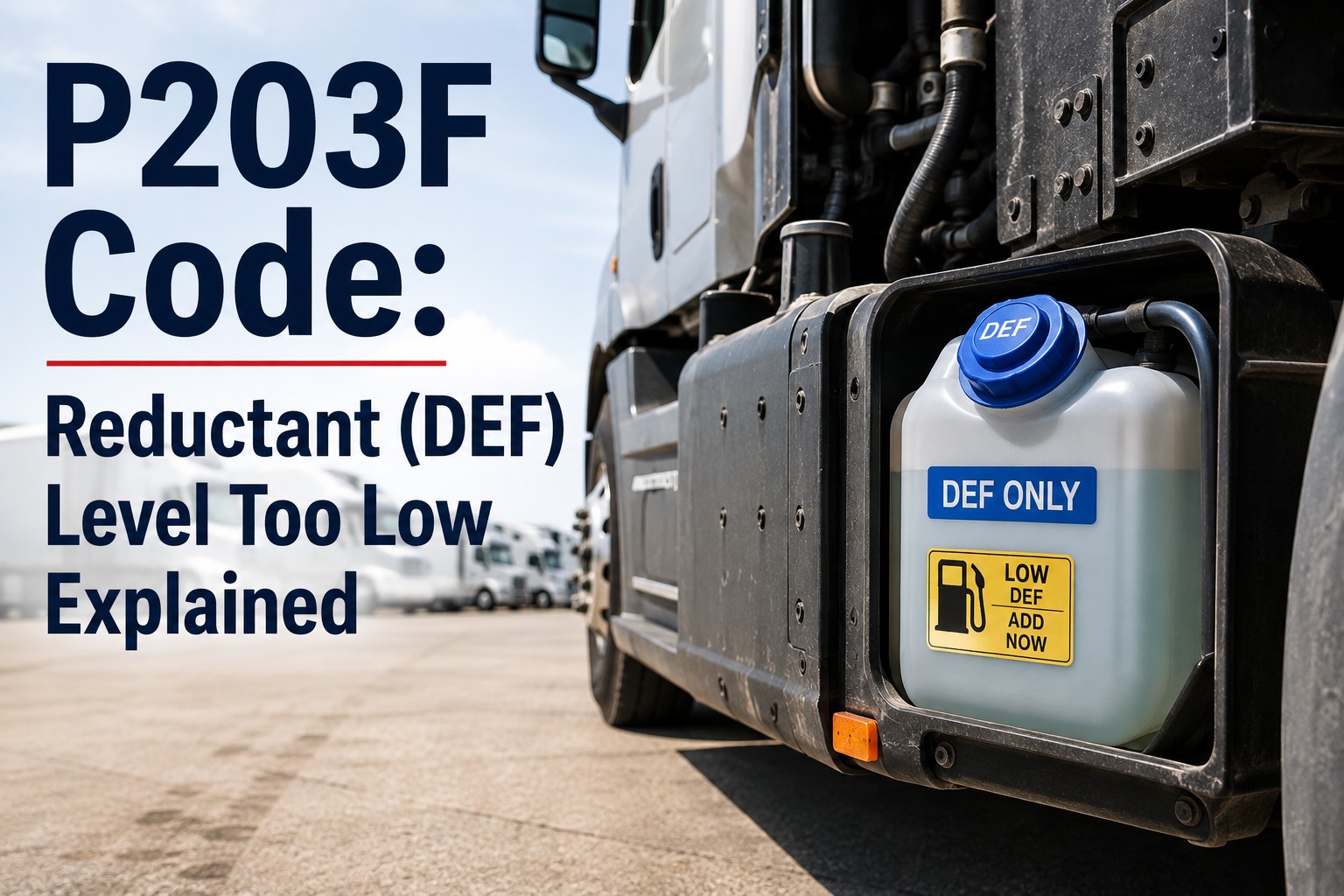
P203F is the code with a countdown attached. It means the control module has determined the diesel exhaust fluid level is too low — and on many trucks that starts a defined escalation ending in a five mile per hour speed limit, or on some vehicles a no-start condition. The escalation is not gradual or negotiable, and the countdown cannot be cleared with a scan tool alone. What makes the code interesting rather than trivial is that roughly half the time the tank is not actually low. The truck only thinks it is, because a level sensor is reading erratically, a float has crystallised, or a harness is sending impossible values. Those two situations look identical on the dash and cost very different amounts to resolve. Book a demo to see fault codes arrive as work orders with the unit's fluid history already attached.
P203F
Reductant (DEF) Level Too Low
~2 galChime and a refill-soon message
~1.5 galThe countdown starts — speed limited in XXX miles
~0.7 gal5 mph maximum. The truck is finished for the day.
One Question Splits the Whole Diagnosis
Everything downstream depends on the answer, and it takes two minutes to establish.
The tank really is low
Refill with approved fluid and the condition resolves. On the trucks with a published schedule, a minimum of two and a half gallons of approved fluid is required to eliminate the five mile per hour derate — topping up a gallon is not enough, and this is the detail that sends people back to the shop a second time.
Cheap · minutes
The truck only thinks it is
A level sensor reading erratically, a crystallised float, or a harness sending impossible values. The fluid is there; the module cannot see it. No amount of refilling fixes this, and the inducement runs regardless of what is actually in the tank.
Diagnosis required
The quickest test costs nothing: if you know the tank is full and the reading disagrees, the level sensor is the prime suspect. That single observation redirects the entire job away from fluid and toward the sensor circuit, and it is available to anyone standing next to the truck with a scan tool.
What a Faulty Level Reading Looks Like
Where the naming includes range or performance, the module is objecting to the shape of the data rather than the value. Three signatures.
Erratic
Readings that move around without the tank changing. A service bulletin exists for exactly this on some current trucks — gauge fluctuation with this code setting in the module.
Physically impossible
Values jumping from empty to full and back. Fluid does not behave that way, so the module concludes the sensor is not reporting the fluid.
Stuck
A reading that never changes regardless of consumption or refill. Crystallisation around the float is a documented cause, and it is mechanical rather than electrical.
Causes, Shortest List on This Site
Six, and the first two account for most of what walks into a shop.
1Genuinely low fluidThe tank is low. Refill with approved fluid to the threshold that clears the derate rather than to whatever fits.
2A faulty level sensorReporting a level that is not there. Suspect it immediately where the tank is known to be full — and check the harness before condemning the sensor.
3Wiring, connectors and harness routingDamage, exposed wire or corrosion producing erratic values. Repairing these first prevents a great many unnecessary sensor replacements.
4Incorrect or contaminated fluidThe wrong product in the tank, or contamination affecting both the fluid and what the sensor reads through it.
5Tank heater failureNamed as a cause on several platforms, and worth checking anywhere the fluid may have frozen.
6Module faultRare, reached by elimination, and increasingly worth checking against published software updates before replacing anything.
XXX
miles
then 5 mph
Nobody wants to discover this from the dash at a customer site.
Fleet Rabbit pushes fault codes from your telematics straight to the driver's app and raises a work order with the unit's history, severity and previous fluid records already attached — so a level warning becomes a scheduled top-up rather than a countdown somebody noticed too late.
The Fast Path
Five steps in order, and the last one is the step most people skip.
01Verify level and quality physicallyNot from the gauge — from the tank. Establish whether the fluid is actually there and whether it is the correct product, because that determines which of the two branches you are on.
02Check connectors and harness routingDamage, exposed wire, corrosion, and whether the harness is secured away from moving parts. Repair anything found here before ordering a sensor.
03Confirm the sensor reading against realityScan data against the known contents of the tank. A full tank reading empty is a defective sensor; matching readings send you elsewhere.
04Repair the root causeFluid, wiring or sensor — whichever the first three steps identified, rather than whichever is easiest to reach.
05Clear the fault and confirm the inducement resetsA repair is not complete until the derate has actually lifted. Some scan tools provide a reductant system reset that forces a self-test after repairs; without confirming this, the truck can be fixed and still limited.
Check for a bulletin before condemning a part
This code carries an unusual volume of published guidance — dozens of related bulletins across more than twenty manufacturers, appearing most frequently on certain heavy-duty and European platforms. One current example covers erratic fluid gauge readings setting this code on recent heavy-duty pickups, addressed by a control module software update. A ten-minute check for an applicable bulletin can replace a sensor you were about to buy, and on a fleet running a common platform it can explain several trucks at once.
Severity and What It Costs You
The code itself is minor. The consequences of leaving it are not, and they are unusually well defined.
Escalation is scheduled, not gradual
Warnings, then a mileage countdown, then a speed limit — with the published schedule on some platforms tied to falling below defined percentage thresholds. On some vehicles the outcome is a no-start rather than a derate.
You cannot buy your way past the countdown
There is no clearing it without factory-level tooling or resolving the underlying cause. Once it reaches zero the vehicle is limited until repaired and reset — which turns a two-gallon problem into a recovery.
The real cost is the position
A refill costs very little and a sensor is a modest repair. What costs money is a loaded truck at five miles per hour a long way from anywhere, and that outcome is entirely a function of how early the warning was acted on rather than of what was wrong.
Prevention is correspondingly simple: treat fluid level as a scheduled item rather than a warning-driven one, buy and store to the approved specification, and log which of the two branches each occurrence turned out to be. A unit that has produced this code twice with a full tank has a sensor or harness problem, and that pattern is only visible if somebody recorded the first one properly.
A fluid warning is a scheduling problem until it becomes a recovery
Fleet Rabbit turns telematics fault codes into work orders automatically, alongside driver inspection defects and preventive schedules in one queue — with severity, the asset's full service history and previous occurrences of the same code attached. Free for three vehicles, no credit card.
Frequently Asked Questions
What does P203F mean?
Reductant level too low — the control module has determined there is insufficient diesel exhaust fluid in the tank. Depending on the platform it may be named as a level sensor circuit fault instead, but the meaning is the same: either the fluid is genuinely low or the module cannot see it correctly. The code sets when the dosing control unit detects the tank is low, and on most vehicles it starts a defined inducement sequence rather than simply illuminating a lamp.
How much fluid do we need to add to clear the derate?
More than people expect. On platforms with a published schedule, a minimum of two and a half gallons of approved fluid is required to eliminate the five mile per hour derate — a partial top-up will not lift it. That schedule also explains what the driver saw beforehand: a refill-soon warning at around two gallons, a mileage countdown beginning at roughly one and a half, and the speed limit arriving with about seven tenths of a gallon left.
The tank is full. Why do we have this code?
Because the module is not seeing the fluid. If the tank is known to be full and the reading disagrees, the level sensor is the prime suspect — but check the wiring harness first for damage, exposed wire or corrosion, since those produce erratic values and cause a great many unnecessary sensor replacements. Crystallisation around the float is another documented cause, producing a reading that sticks regardless of what the tank actually contains.
Can we just clear the code and keep going?
No. The countdown cannot be eliminated without factory-level tooling or resolving the underlying issue, and once it reaches zero the vehicle is restricted until repaired and reset. On some vehicles the result is a no-start condition rather than a speed limit. Treat the first warning as the deadline rather than the notification — everything after it gets progressively more expensive and less within your control.
What is the fastest way to diagnose it?
Verify fluid level and quality physically, check connectors and harness routing, confirm the sensor reading against what is actually in the tank, repair whatever those three steps identified, then clear the fault and confirm the inducement has reset. That last step matters — a truck can be genuinely repaired and still limited if the derate was never lifted. Some scan tools include a reductant system reset that forces a self-test after repairs.
Is there a known fix for our platform?
Possibly, and it is worth ten minutes before buying anything. This code carries dozens of related service bulletins across more than twenty manufacturers, and it appears most often on particular heavy-duty and European platforms. One current bulletin addresses erratic fluid gauge readings setting this code on recent heavy-duty pickups, resolved through a control module software update rather than a part. On a fleet running one platform, that can explain several trucks simultaneously.
How do we stop it recurring?
Put fluid level on a schedule rather than waiting for the warning, buy and store only approved fluid, and record which branch each occurrence turned out to be — genuinely low, or a sensor reading it wrongly. A unit producing this code twice with a full tank has a sensor or harness fault, and that pattern only exists if the first occurrence was logged against the vehicle properly.
Start free with three vehicles and keep the two apart.
EF
Two Gallons of Warning, Two Branches of Cause
Establish whether the tank is low or only appears to be, check the harness before the sensor, add enough fluid to actually clear the derate, look for a bulletin before buying a part — and confirm the inducement has reset before calling the job done.
Warning thresholds and derate schedules vary by manufacturer and platform — confirm the sequence applicable to your own vehicles
September 2, 2026By Alex Rowan
All Blogs