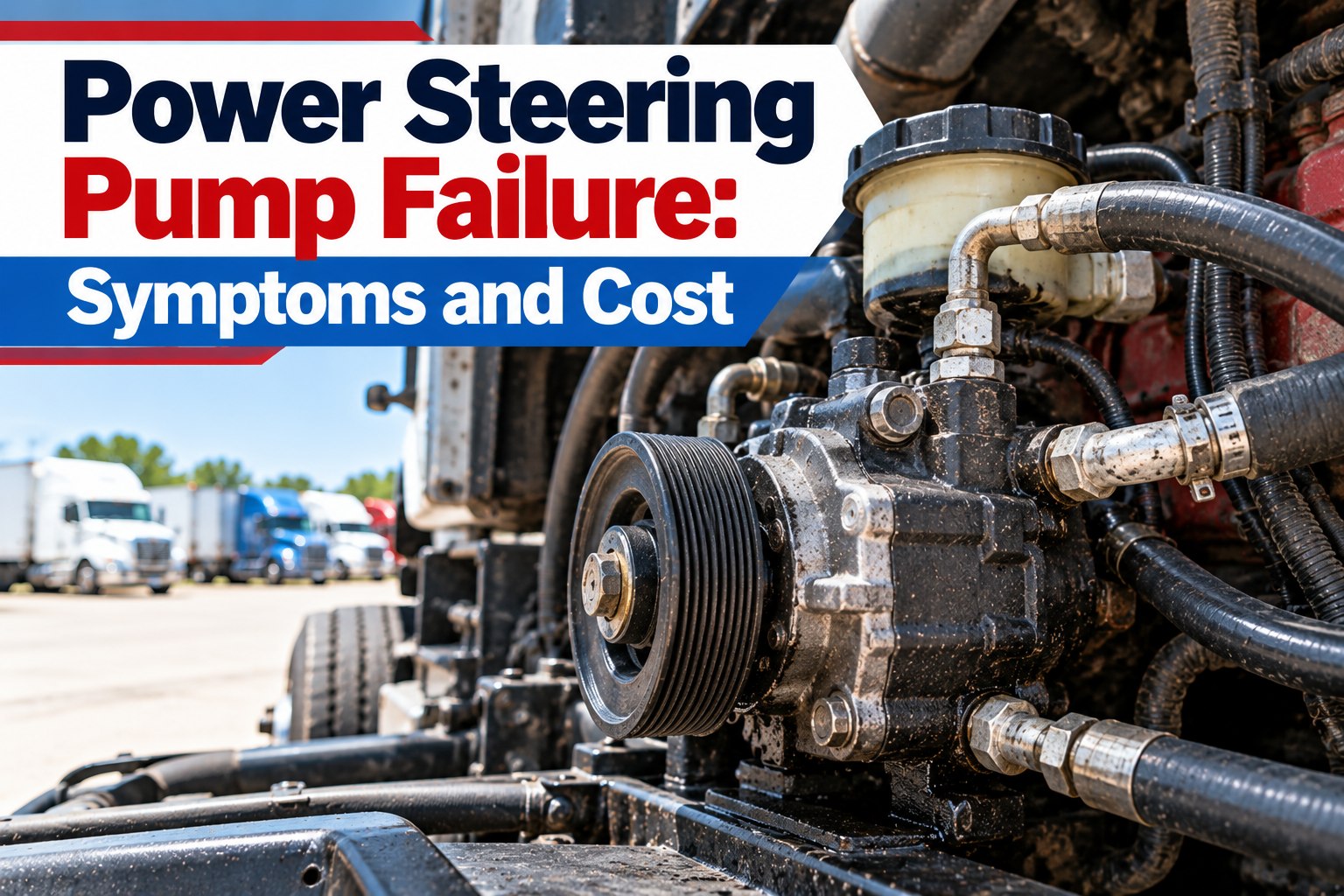
Power steering pump failure on a truck means the pump that builds hydraulic pressure for the steering has worn out, starved or lost its drive, so the driver does all the work. The first signs are a whine, a heavier wheel when parking and a fluid stain under the front, and the last sign is steering that is unsafe to drive. This page covers how the pump circuit works, the symptoms, the causes, how to diagnose the pump before replacing it, the fix, the cost and a PM checklist. Schedule a call to put steering fluid and belt checks on a PM schedule.
STEERING DIAGNOSTICS · SHOPS AND FLEET MANAGERS
When the Wheel Gets Heavy, the Pump Is Often the Last Thing That Went Wrong
Low fluid, trapped air and a slipping belt can all kill a pump, or fake a dead one. Find out which before you order a part.
WHICH WAY DOES THE WHEEL FIGHT YOU?
Heavy in both directions
Points to the pump or the belt.
Heavy in one direction
More likely the steering box.
Squeal on a cold start that fades
Often a slipping drive belt.
How a Power Steering Pump Works and Why It Fails in a Heavy Truck
The pump turns engine rotation into the hydraulic pressure that does the steering work
The pump pushes fluid from the reservoir through high-pressure hoses to the steering gear and takes it back again. One Freightliner guide lists about 2,683 psi and 4.23 gallons per minute for its pump, which shows how much work the pump does and why contaminated fluid wears it quickly.
Four parts sit in one fluid loop, and a fault in any of them can mimic a failed pump
Reservoir
Holds the fluid and the filter
→
→
Hoses
Carry it under pressure
→
Steering gear
Does the steering work
Fluid returns to the reservoir and the loop repeats. The drive belt or gear drive turns the pump.
Power Steering Pump Failure Symptoms: What the Driver Hears and Feels
Symptoms get louder and heavier as the pump wears, so catch the early ones
EARLY
Whine or groan when turning, a squeak on cold starts that fades, a reddish or brown stain under the front
WARNING
Heavy steering at low speed or when parking, assist that fades after a few turns and returns, foamy fluid
SEVERE
Burning smell, metal flakes in the reservoir, very heavy steering with a loud pump
Heavy in both directions points to the pump or belt, and heavy in one direction points to the gear
BOTH DIRECTIONS
- Whine or groan when turning
- Heavy at low speed and when parking
- Assist that varies unpredictably
- Foamy, dark or burnt-smelling fluid
VS
ONE DIRECTION
- Steering heavier one way than the other
- Often no whine
- More likely the steering box
- Check the gear and linkage first
Power Steering Pump Failure Causes: Fluid, Air, Belts and Habits
Low and contaminated fluid are leading causes, so the pump often pays for another fault
Fluid problems
A common route to a worn pump
- Low fluid, usually from a slow leak at a seal, fitting or hose
- Air in the circuit, which makes the pump cavitate
- Overheated or contaminated fluid
- Wrong fluid type, which can damage internal seals
- A clogged reservoir filter that starves the pump
Mechanical and habit problems
They overload the pump or fake its failure
- A cracked, loose or slipping drive belt
- Holding the wheel at full lock, which forces peak pressure
- A sticking flow control valve inside the pump
- Internal gear or drag link problems that mimic a pump fault
Power steering fluid and belt check overdue? Schedule it before the pump starts to whine.
Set fluid, filter and belt reminders per truck, and log every driver complaint about whine or heavy steering against the unit.
How to Diagnose a Power Steering Pump Before Replacing It
Work through five checks from cheapest to most conclusive
1
Check fluid
Level, color, foam and smell. Look for metal particles in the reservoir.
→
2
Inspect the belt
Check condition and tension. Belt slip can mimic a failed pump.
→
3
Pressure test
Confirm the pump delivers the expected pressure for assist.
→
4
Check hoses and seals
Look at hoses, fittings and seals for leaks.
→
5
Road test twice
Test before the repair and again after it.
Rule out air, the belt and the steering gear, because each can mimic a failed pump
Three look-alikes. Air in the circuit can mimic a failing pump, belt slip can mimic pump failure, and internal bypass in the steering gear can mimic a pump fault. Fix the cheap causes first, and inspect the gear if the old fluid holds heavy metal.
Power Steering Pump Failure Fix: Replace, Flush, Bleed and Change the Filter
Replacing the pump alone is not enough, because debris and air bring the failure back
1
Replace the pump
Match the part number exactly, and choose a new or remanufactured unit that fits the truck.
2
Flush and change the filter
Flush the circuit to remove debris, and replace the in-reservoir filter with the pump.
3
Use the right fluid
Use the fluid the reservoir cap specifies. One Freightliner guide calls for DEXRON-III ATF.
4
Bleed the system fully
Turn lock to lock about 15 to 20 times with the engine off, then again with it running.
Expect about 2.5 hours of work, and do not skip the bleed
One Freightliner guide estimates about 2.5 hours, with the pump held by two bolts and the bleed as the hardest part, and quotes shop labor at 2 to 4 hours. Another source warns that noise often returns if the replacement does not include a full bleed.
Power Steering Pump Failure Cost: Pump, Belt, Hose and Labor Ranges
A pump replacement job typically runs $600 to $1,400, and the part is a fraction of it
Purple bars are typical service jobs from one heavy-truck guide. Amber bars are part and labor prices from one Freightliner guide, so the two sets are not the same truck. Prices vary by truck and shop.
POWER STEERING REPAIR PRICE RANGES, US DOLLARS. PURPLE IS SERVICE JOBS, AMBER IS PARTS AND LABOR
Pump replacement, service job
$600 – $1,400
Drive belt replacement
$150 – $300
Leaking hose or fitting
$200 – $500
Full hydraulic bleed
$100 – $200
New OEM pump, Freightliner part
$400 – $650
New aftermarket pump
$150 – $300
Remanufactured pump
$200 – $350
Shop labor, 2 to 4 hours
$300 – $600
A neglected leak can end in a failed pump, so fix leaks first
Neglected leaks can lead to outright pump failure, and persistent air or contaminated fluid accelerates wear. With scheduled fluid maintenance a pump can last several hundred thousand kilometers, and a neglected one can fail much sooner.
$600 – $1,400
typical pump replacement job
$125 – $650+
listed pump price, used to new OEM, one guide
50,000 – 60,000 km
one fleet's fluid flush example
Power Steering Pump Service Checks and Fleet PM Checklist
Check fluid and belt at every PM, and complete a full reset after any pump replacement
At every walkaround and PM
- Check fluid level, color, foam and smell
- Look for reddish or brown stains under the front of the truck
- Check the belt for cracks, glazing and tension
- Check hoses and fittings for leaks
- Log any driver report of whine or heavy steering
After a pump replacement or fluid change
- Replace the in-reservoir filter
- Use the specified fluid and fill to the right level
- Bleed the system fully, then road test
- Check the steering gear for metal in the old fluid
- Record the repair and set the next fluid and belt check
Prevent Power Steering Pump Failure Downtime: Schedule Fluid and Belt Checks and Track Every Repair
FleetRabbit turns a driver's note about whine or heavy steering into a work order, then keeps the fluid check, the belt and the pump repair on that truck's record. PM reminders bring the next fluid and belt check up on time, and repeat steering faults show up as history before they become a tow.
Fluid and belt reminders
Whine reports to work orders
Steering history per truck
Repair cost per unit
Frequently Asked Questions
Quick answers on power steering pump symptoms, causes, fixes and cost
What are the symptoms of power steering pump failure?
A whine or groan when turning, heavy steering at low speed or when parking, assist that fades or varies, reddish or brown fluid stains, and foamy, dark or burnt-smelling fluid.
What causes power steering pump failure?
Low or contaminated fluid, air in the circuit, wrong fluid, a clogged filter, a slipping belt, holding the wheel at full lock, and a sticking flow control valve.
How do you fix a failed power steering pump?
Confirm the pump with a pressure test, then replace it, flush the circuit, change the filter, use the correct fluid and bleed the system fully.
How much does power steering pump replacement cost?
One heavy-truck guide puts a replacement job at $600 to $1,400. A Freightliner guide lists pumps from about $125 used to $650 or more for new OEM, plus $300 to $600 of shop labor.
How can I tell if it is the pump or the steering gear?
Heavy steering in both directions points to the pump or belt, and heavy steering in one direction points to the gear. A pressure test settles it, because internal gear bypass can mimic a pump fault.
Can I drive with a failing power steering pump?
It is a safety risk, because turning a heavy truck without assist takes major effort, especially in tight maneuvers or emergencies. If steering becomes unsafe, stop safely and arrange a tow.
What does FleetRabbit cost?
Catch Power Steering Pump Failure Early: Keep Every Fluid, Belt and Pump Repair on Record
A pump with clean fluid, a good belt and a logged history can last hundreds of thousands of kilometers. One that is ignored can leave a driver fighting a loaded truck. Put the check on the record and let the reminder do the remembering.
Free tier for up to 3 vehicles · No credit card required · Inspections and repairs stored per unit
October 10, 2026By Emily Parker
All Blogs