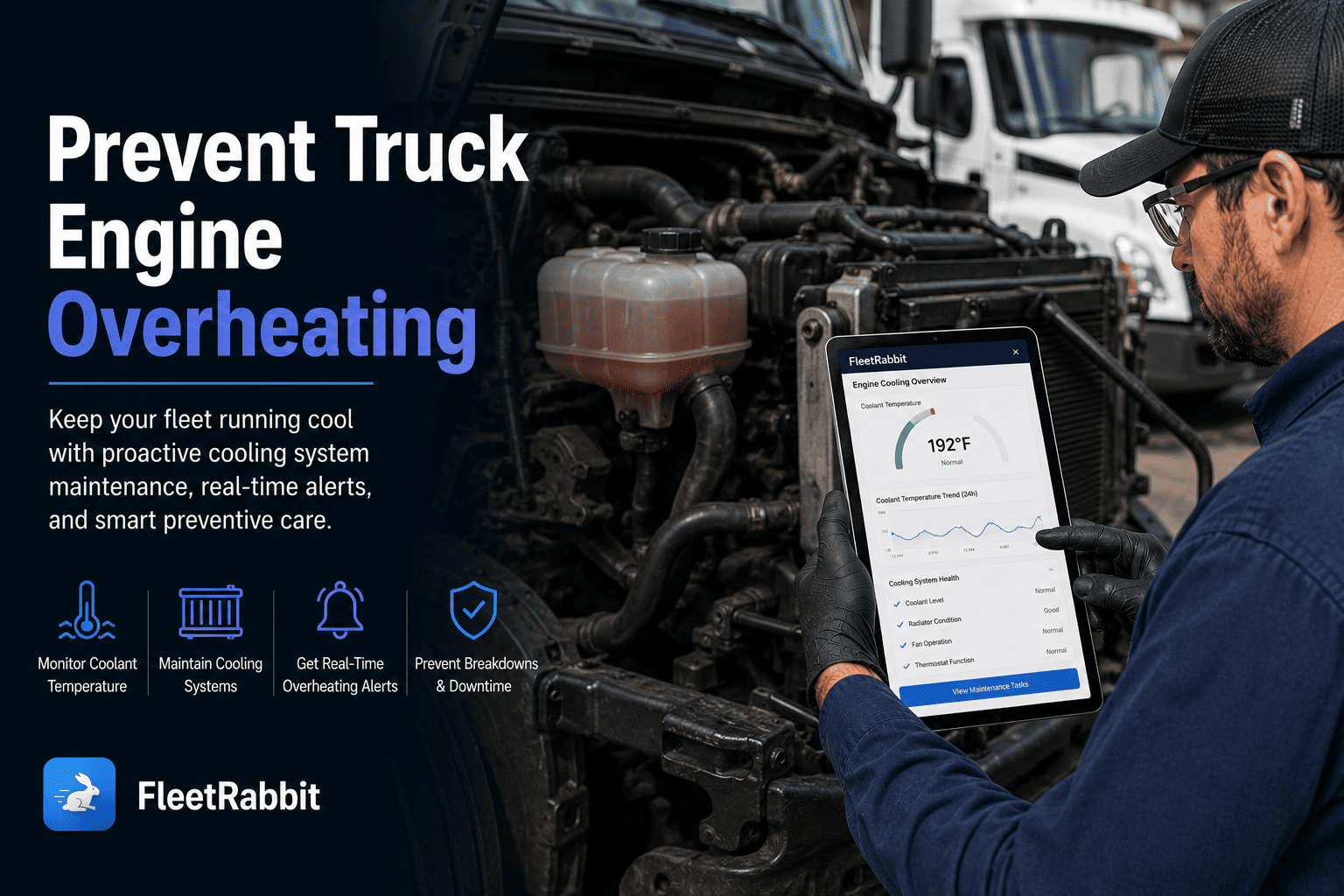
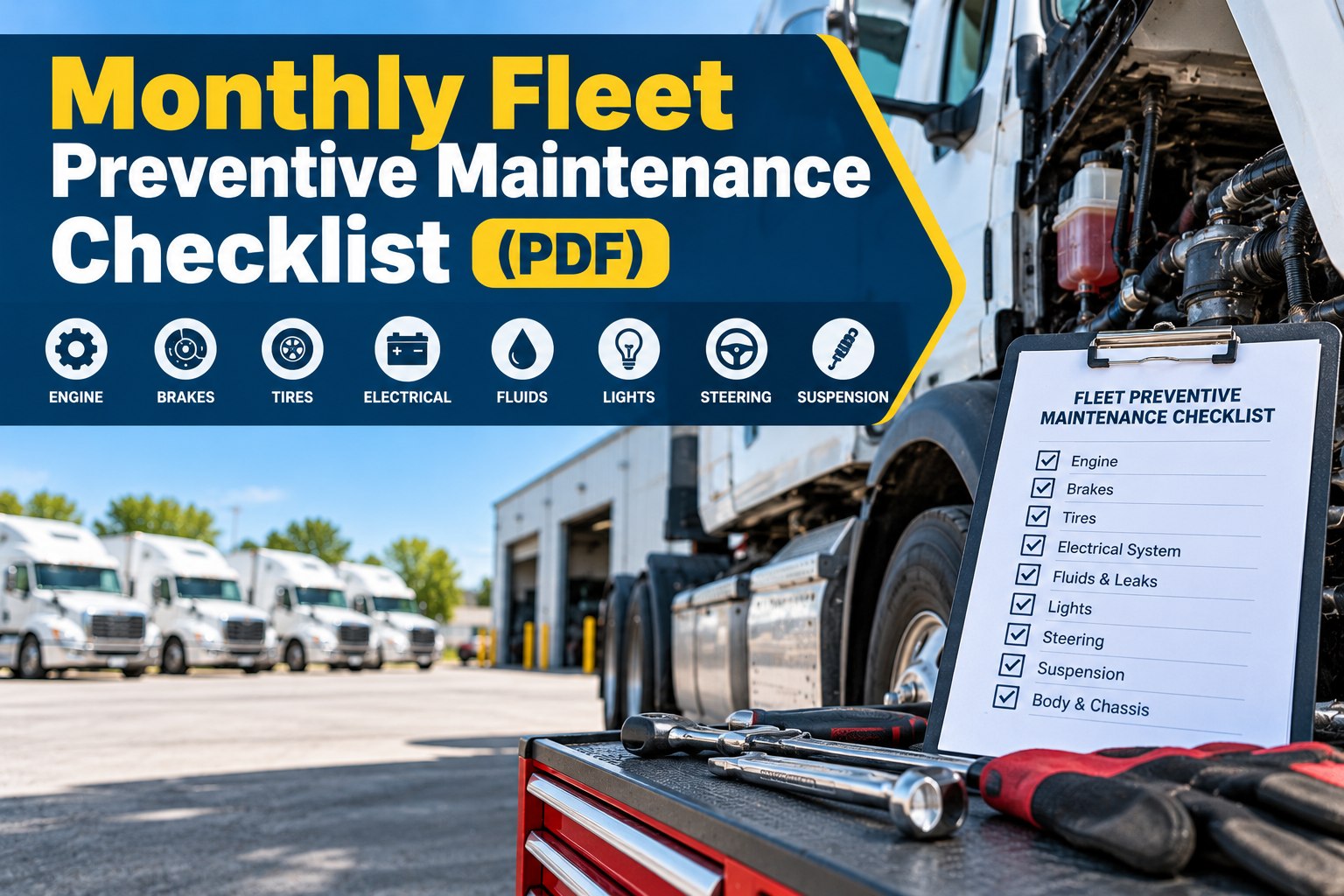
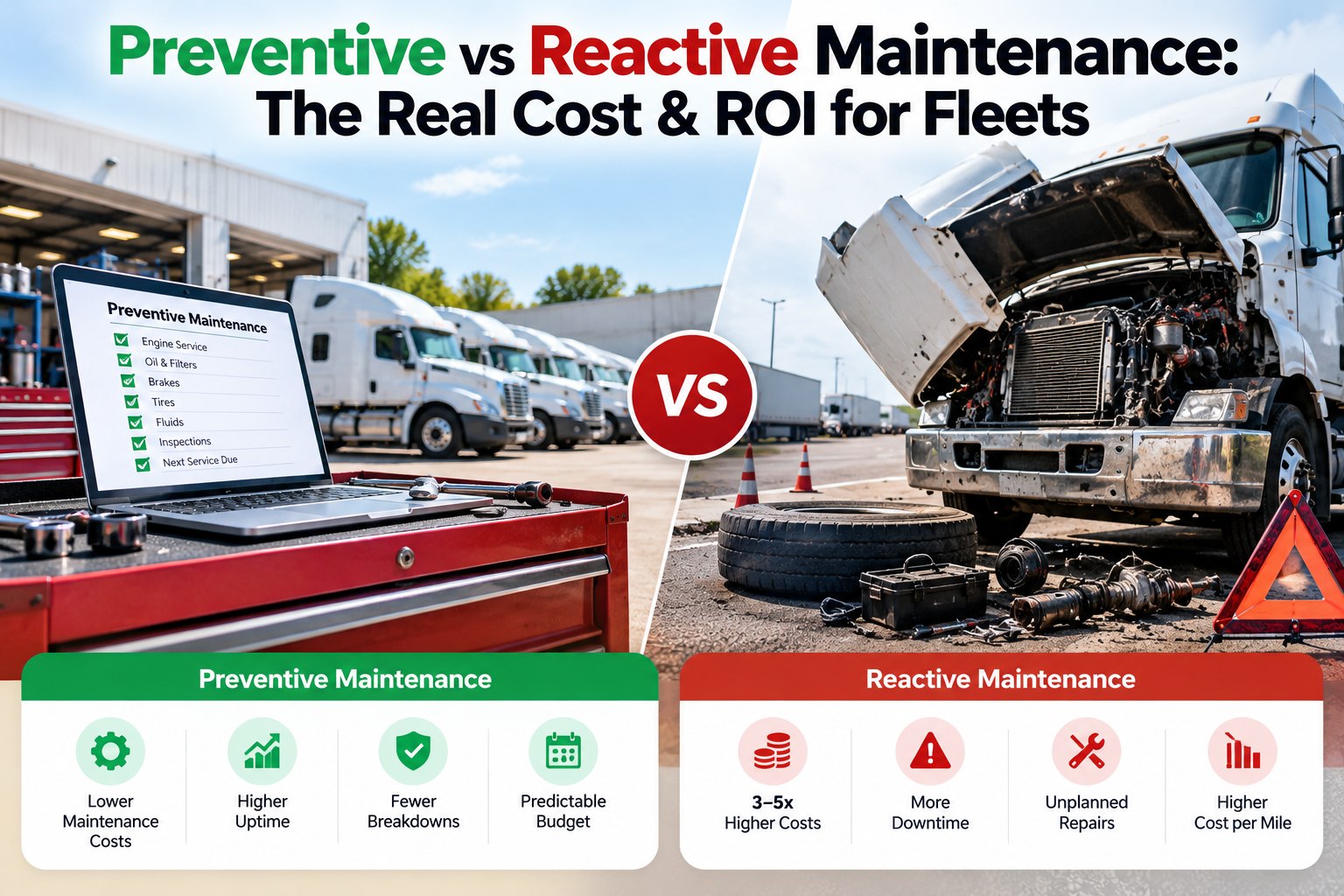
Commercial delivery fleet operators managing urban last-mile operations face critical cooling system challenges: stop-and-go traffic patterns, high ambient temperatures, and extended idle periods during parcel delivery create unique overheating risks. Maintaining optimal engine temperature requires proactive radiator maintenance, coolant specification compliance, and real-time temperature monitoring across mixed-age vehicle portfolios. Fleet Rabbit helps fleets track cooling system service schedules, monitor temperature anomaly alerts, and maintain compliance with OEM specifications—ensuring optimal engine protection regardless of delivery route density or operating conditions. Book a Demo to see cooling system maintenance tracking in action.
30–45%
Reduction in overheating-related breakdowns with proactive cooling system maintenance
$1,800–$4,200
Average cost savings per vehicle by preventing overheating-induced engine damage
85%+
Improvement in early overheating detection with digital temperature monitoring
4–7 hrs
Monthly admin time saved through automated cooling system service logging
Engine Overheating Impacts Delivery Reliability, Repair Costs, and Driver Safety. Fleet Rabbit Helps You Prevent All Three.
Whether your fleet operates cargo vans, box trucks, or step vans in dense urban environments, Fleet Rabbit centralizes cooling system tracking, temperature anomaly monitoring, and compliance documentation—reducing engine stress and keeping your delivery vehicles operational without replacing existing maintenance workflows.
Common Cooling System Challenges in Delivery Fleets
Before optimizing cooling system maintenance protocols, fleet operators must address operational gaps that impact engine reliability and delivery schedule adherence. Inconsistent service schedules, manual tracking, and reactive maintenance create preventable risks.
Missed Coolant Flush Intervals Leading to Corrosion
Paper logs or spreadsheet-based tracking result in overdue coolant changes, increased radiator corrosion, and higher risk of overheating during peak summer delivery operations in urban heat island zones.
Radiator Blockage from Urban Debris and Dust
Frequent operation in construction zones, high-pollen areas, or dusty delivery routes accelerates radiator fin clogging, reducing cooling efficiency and increasing engine temperature under load.
Lack of Real-Time Temperature Anomaly Detection
Without digital monitoring or alert systems, gradual temperature increases or intermittent overheating events go undetected until significant engine damage occurs requiring expensive repairs.
Inconsistent Cooling System Documentation Across Mixed Fleet
Decentralized maintenance records make it difficult to validate warranty claims, track coolant service history per vehicle, or demonstrate compliance during manufacturer audits or resale evaluations.
How Fleet Rabbit Supports Cooling System Maintenance
Fleet Rabbit integrates with existing maintenance workflows to provide structured cooling system tracking, temperature analytics, and compliance automation. See a live demo focused on cooling system maintenance, temperature monitoring, and compliance reporting.
01
OEM Cooling System Specification Database
Pre-loaded manufacturer coolant requirements for major diesel and gasoline engines with automatic validation against selected coolant types and service intervals.
02
Automated Coolant Service Scheduling
Mileage, hours, or time-based triggers with customizable intervals per engine type, duty cycle, or operating severity to prevent missed coolant flushes and radiator maintenance.
03
Digital Cooling System Service Records
Timestamped documentation of coolant type, volume, radiator cleaning, thermostat replacements, and technician notes for warranty validation and audit-ready compliance reporting.
04
Temperature Anomaly Alerts
Monitor engine temperature patterns, cooling fan activation frequency, and abnormal heat signatures that may signal developing issues requiring preventive diagnostic attention.
05
Urban Route Heat Load Analysis
Correlate delivery route density, stop frequency, and ambient temperature data to identify high-risk vehicles requiring enhanced cooling system monitoring or maintenance prioritization.
06
Mobile-First Technician Workflow
Offline-capable mobile app for field technicians to log cooling system services, capture radiator photos, and sync specification data when connectivity is restored at delivery hubs.
Regulatory Framework Support for Cooling System Compliance
Fleet Rabbit supports documentation requirements for cooling system-related regulatory and manufacturer standards across key operating regions.
OEM Warranty Compliance
Digital records of OEM-approved coolant specifications, service intervals, and technician certification formatted for cooling system warranty claim validation and manufacturer audits.
UK DVSA Maintenance Standards
Supports operator licensing requirements with exportable cooling system maintenance logs and temperature compliance reports for annual vehicle inspections.
Canada CVSA Inspection Criteria
Aligns with Commercial Vehicle Safety Alliance maintenance documentation standards, with digital coolant service records and cooling system specification validation.
UAE Federal Transport Requirements
Generates maintenance documentation meeting UAE commercial vehicle standards, including cooling system certification and periodic service records for high-temperature operations.
Deployment Approach for Cooling System Optimization
Fleet Rabbit follows a structured onboarding process designed for delivery fleet maintenance—delivering initial cooling system tracking within the first week and full feature activation within two weeks. No hardware installation required.
01
Cooling System Audit
Map vehicle engine types, current coolant specs, and manufacturer requirements
02
Specification Configuration
Load OEM coolant requirements and urban route heat load parameters
03
Alert Setup
Define service intervals and temperature anomaly monitoring triggers
04
Team Training
Onboard technicians and dispatchers on digital cooling system workflows
05
Go-Live and Review
Activate monitoring and schedule 30-day cooling system compliance review
Typical Timeline and Expected Outcomes
Every Fleet Rabbit engagement follows a defined onboarding sequence with measurable milestones. Results vary by fleet size, vehicle diversity, and maintenance discipline. Request the full onboarding scope document tailored to your cooling system maintenance profile.
Days 1–3
Integration and Baseline
Import vehicle cooling system data and historical maintenance records
Configure OEM specification rules and urban route heat load parameters
Set service interval alerts based on mileage, hours, or time thresholds
Days 4–10
Pilot Monitoring
Activate cooling system tracking on highest-mileage or urban delivery vehicles
Review initial specification compliance and temperature anomaly reports
Identify quick-win opportunities such as overdue coolant changes or radiator cleaning
Days 11–14
Full Activation
Expand cooling system tracking to full delivery fleet with all configured parameters
Enable automated OEM compliance reporting for cooling system specifications
Schedule 30-day review to assess reduction in overheating-related maintenance issues
REALISTIC EXPECTATIONS: MEASURABLE IMPROVEMENTS WITH CONSISTENT USE
Fleets that systematically track cooling system specifications, act on temperature anomaly alerts, and maintain digital compliance records typically see reductions in overheating incidents and engine damage claims within the first 60–90 days. Results depend on operational follow-through and baseline maintenance practices.
30–45%
Reduction in overheating breakdowns
25–40%
Lower cooling system repair costs
4–7 hrs
Monthly admin time saved
Stop Reacting to Overheating. Start Preventing It Systematically.
Fleet Rabbit's fixed-scope onboarding means no open timelines, no hardware installation, and no months of customization before you gain visibility into cooling system compliance. Deploy at $5/vehicle/month and begin tracking within 72 hours.
Use Cases from Fleet Cooling System Deployments
These examples reflect common scenarios where Fleet Rabbit has supported cooling system optimization for delivery fleets. Outcomes depend on fleet size, operating conditions, and maintenance discipline. Request additional details for the use case most relevant to your operations.
A last-mile delivery fleet operating in high-density urban zones struggled with inconsistent coolant maintenance scheduling. Fleet Rabbit's OEM specification database ensured correct coolant type selection per engine model. Digital records streamlined warranty claim submissions to engine manufacturers.
38%
Fewer overheating incidents
91%
Warranty claim approval
Book a Demo
A regional delivery operator sought to reduce summer overheating events in high-temperature corridors. Fleet Rabbit's urban route heat load analysis identified high-risk vehicles and supported proactive radiator cleaning schedules. Preventive maintenance prevented four potential engine damage incidents.
$14,500
Repair costs avoided
Book a Demo
An operator managing both diesel and gasoline delivery vehicles needed unified cooling system maintenance protocols. Fleet Rabbit's customizable scheduling ensured consistent service tracking across engine types, with automated compliance reporting for UAE transport authorities in extreme heat conditions.
100%
Protocol standardization
5 hrs/wk
Reporting time saved
Book a Demo
What Fleet Maintenance Teams Say About Fleet Rabbit
Fleet Rabbit transformed how we manage cooling system maintenance across a mixed delivery fleet of vans and box trucks. The OEM database ensured we always used the right coolant, and temperature alerts helped us catch developing issues before they became breakdowns. It is a practical tool for day-to-day cooling system compliance.
Delivery Fleet Maintenance Manager
Regional Last-Mile Carrier, US
Frequently Asked Questions
Does Fleet Rabbit support multiple coolant types per fleet?
Yes. Fleet Rabbit allows configuration of multiple coolant specifications (OAT, HOAT, conventional ethylene glycol, etc.) with vehicle-specific assignment based on engine type, model year, or manufacturer requirements.
Can Fleet Rabbit validate coolant specifications against OEM requirements?
Yes. The platform includes a pre-loaded OEM specification database for major engine manufacturers that automatically validates selected coolant products against manufacturer requirements for specification codes and service standards.
How does temperature anomaly detection work?
Fleet Rabbit analyzes engine temperature patterns relative to ambient conditions, route density, and vehicle load to identify abnormal heat signatures that may signal developing cooling system issues requiring preventive attention.
What compliance reports can Fleet Rabbit generate for cooling system maintenance?
Automated OEM compliance logs, coolant service completion reports, specification validation records, and audit-ready documentation with timestamped, tamper-evident records exportable in PDF or CSV formats.
Can technicians log cooling services offline at delivery hubs?
Yes. The mobile app supports offline cooling system service logging with component photo capture and specification entry. Data syncs automatically when connectivity is restored, ensuring no maintenance data is lost at remote delivery locations.
Track Cooling Systems. Prevent Overheating. Optimize Delivery Reliability in Two Weeks.
Fleet Rabbit provides commercial delivery fleet teams with OEM specification validation, temperature anomaly analytics, automated cooling system service scheduling, and compliance documentation—integrated with existing workflows in 5–7 working days, at $5/vehicle/month, with no new hardware required.
OEM coolant specification database integration
Temperature anomaly and urban heat load analytics
Automated cooling system service scheduling and alerts
Offline-capable mobile app for field technicians
May 23, 2026By John Polus
All Blogs