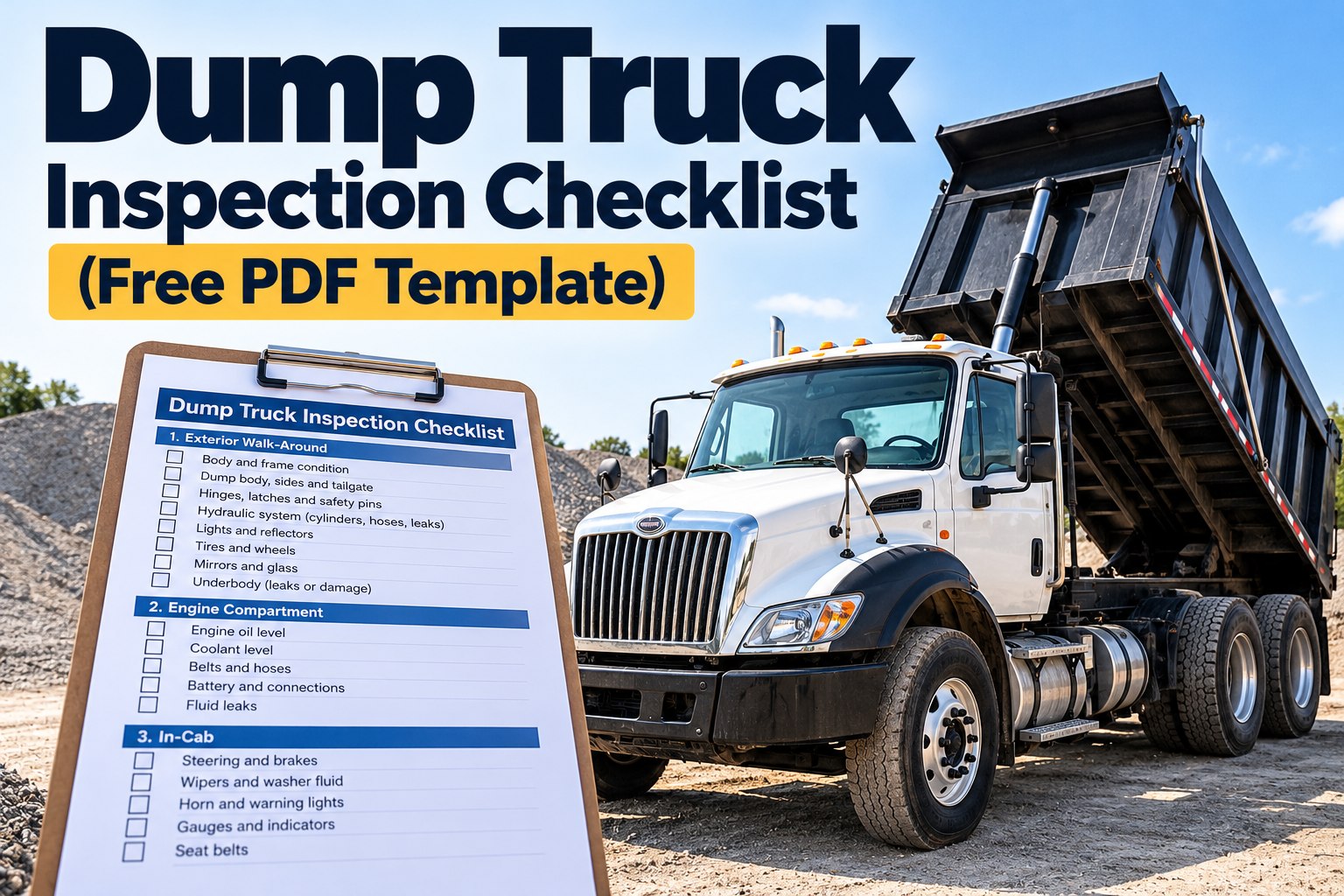
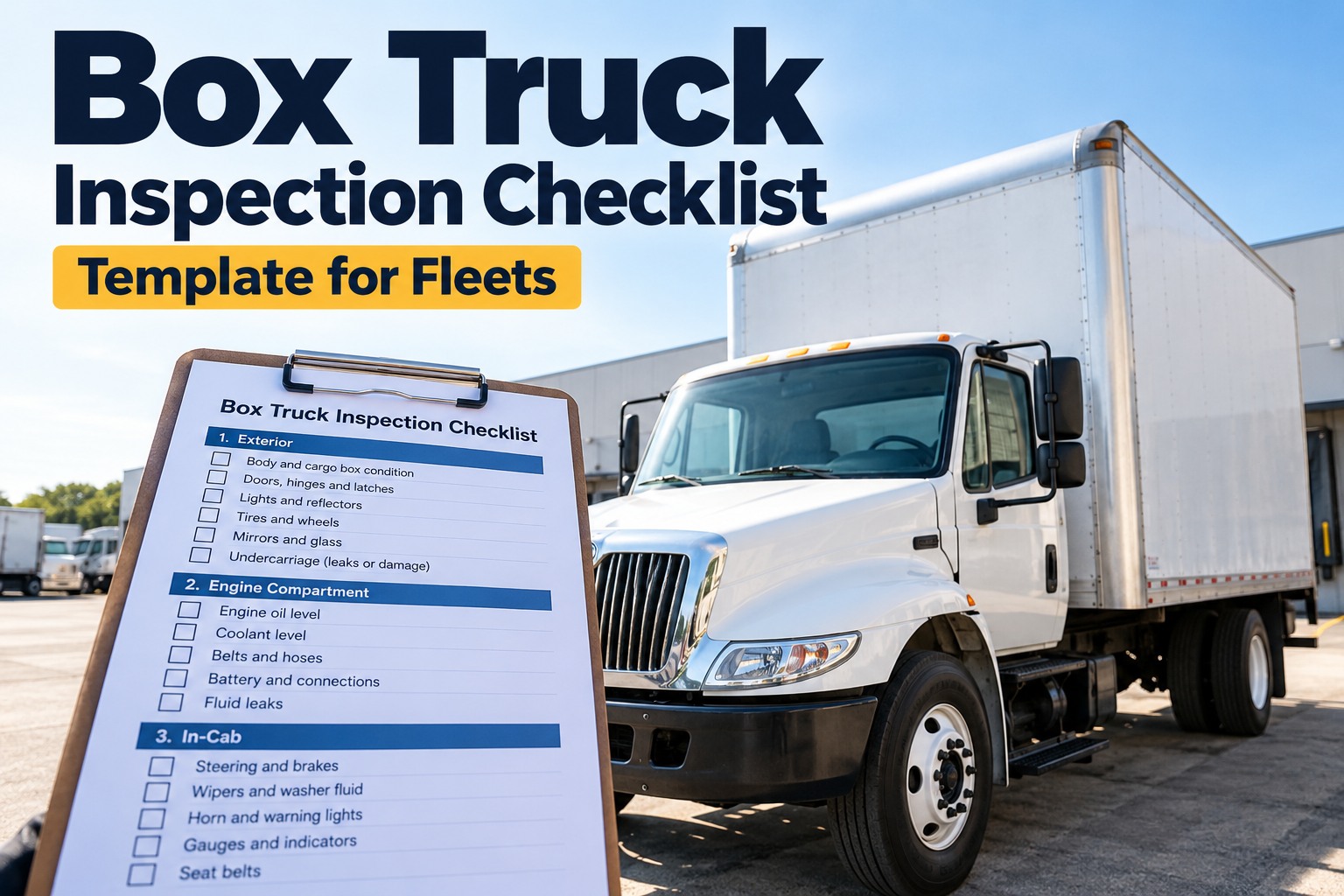
A systematic preventive maintenance checklist isn't just paperwork—it's the difference between profitable fleet operations and catastrophic breakdowns that destroy budgets. While 70% of fleet managers rely on reactive maintenance, the successful 30% use proven checklists that prevent 85% of breakdowns, reduce maintenance costs by 40%, and extend vehicle life by 30%. The difference between fleet success and failure isn't luck; it's having systematic processes that catch problems before they become disasters.
The 2025 fleet maintenance landscape demands more than basic oil changes and tire rotations. Advanced preventive maintenance programs using comprehensive checklists are generating $25,000-50,000 annual savings per vehicle while ensuring 98%+ uptime rates. This complete guide reveals the exact checklist systems successful fleet managers use to build bulletproof maintenance programs while others struggle with constant breakdowns. Start your maintenance checklist builder in under 15 minutes, or schedule a personalized maintenance strategy demo.
2025 Fleet Maintenance Reality Check
Industry Truth: Average fleets spend 15-20% of their operating budget on maintenance, but top-performing fleets with systematic checklists spend only 8-12% while achieving superior reliability. The difference isn't better vehicles or easier routes—it's disciplined preventive maintenance systems that identify and fix issues before they cause expensive failures.
Quick Maintenance Program Assessment
Before building your checklist system, assess your current maintenance approach in 2 minutes. Understanding your starting point determines your path to reliability. (Try our maintenance assessment tool free)
5-Minute Maintenance Readiness Check:
- □ Do you have standardized inspection procedures for all vehicle types?
- □ Can you predict when components will need replacement?
- □ Do you track maintenance costs per mile for each vehicle?
- □ Are your drivers trained to identify potential issues?
- □ Do you have systems for scheduling and tracking all maintenance?
If you answered "no" to any item, you need systematic checklist implementation before breakdowns destroy your budget. (Book a free 30-minute maintenance strategy consultation)
Preventive maintenance success comes from consistent execution of proven checklists, not hoping problems won't occur. While you can't prevent all failures, you can systematically catch 85% of issues before they cause downtime, safety risks, or major repair bills. (Start building your systematic checklist with FleetRabbit free for 30 days)
The Real Impact: Systematic vs. Random Maintenance
Annual Maintenance Performance: Top 20% vs. Bottom 50% of Fleets
| Performance Metric | Systematic Checklist Users | Reactive Maintenance | Difference | Key Factor |
|---|---|---|---|---|
| Vehicle Uptime | 98.5% | 89.2% | +9.3% | Early problem detection |
| Maintenance Cost/Mile | $0.12 | $0.22 | -45% | Preventive vs reactive |
| Emergency Repairs | 2 per year | 12 per year | -83% | Issue prevention |
| Vehicle Lifespan | 850,000 miles | 650,000 miles | +200,000 | Proper care |
| Safety Violations | 0.3 per year | 3.2 per year | -91% | Compliance focus |
| Driver Satisfaction | 92% | 74% | +18% | Reliable equipment |
Understanding Your Checklist Foundation
Effective maintenance checklists aren't generic forms—they're customized systems based on your specific vehicle types, operating conditions, and regulatory requirements. Building the right foundation prevents the scattered approach that leaves critical items unchecked.
Build Your Custom Maintenance Checklists
Our checklist builder creates vehicle-specific inspection forms based on your fleet composition, routes, and compliance needs. Get comprehensive checklists in minutes, not months.
Create My Checklists Review With ExpertEssential Checklist Categories
Comprehensive fleet maintenance requires multiple checklist types, each serving specific purposes in your overall reliability strategy. Understanding when and how to use each type maximizes effectiveness.
Daily Pre-Trip Inspection Checklist
Every profitable day starts with a systematic pre-trip inspection that catches safety issues and developing problems before they cause breakdowns or violations. This isn't just regulatory compliance—it's your first line of defense against costly surprises. Start your pre-trip checklist system in under 10 minutes, or schedule a personalized inspection process demo.
Streamline Daily Inspections
Our mobile inspection app guides drivers through systematic checks, automatically flags issues, and integrates with your maintenance scheduling. Turn compliance into competitive advantage.
DOT Pre-Trip Inspection Requirements
Federal Motor Carrier Safety Regulations (FMCSR) Requirements:
- Engine Compartment: Fluid levels, belt condition, hoses, wiring
- Engine oil level and leaks
- Coolant level and condition
- Power steering fluid
- Windshield washer fluid
- Vehicle Exterior: Lights, reflectors, mirrors, tires
- Cab Interior: Gauges, warning lights, safety equipment
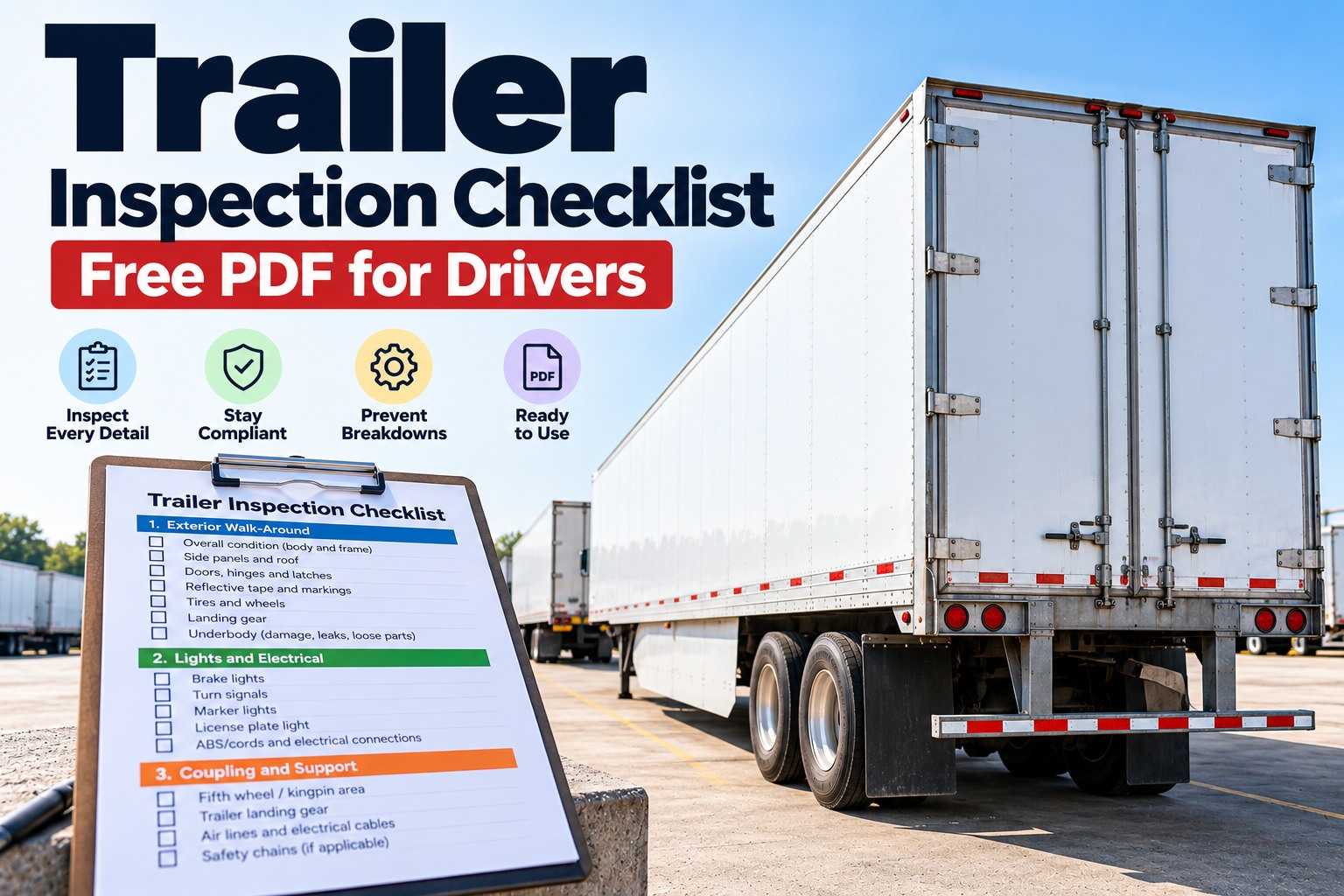
- Coupling System: Fifth wheel, air lines, electrical connections
- Brake System: Air pressure, brake adjustment, warning systems
- Suspension: Springs, shocks, mounting hardware
- Steering: Play, leaks, mounting integrity
Periodic Maintenance Checklists
Scheduled maintenance checklists ensure critical services happen on time, every time. These systematic inspections catch developing problems during routine service intervals, preventing emergency repairs and extending component life.
Weekly Service Checklist
Weekly inspections bridge the gap between daily checks and major services, focusing on items that change gradually but can cause significant problems if ignored. Smart fleet managers use weekly checklists to catch 60% of issues before they reach crisis stage. Start your weekly inspection system in under 10 minutes, or schedule a personalized service planning demo.
Optimize Weekly Inspections
Our service scheduling system automatically generates weekly checklists based on vehicle usage, tracks completion rates, and flags overdue items. Never miss critical inspections again.
Set Up Service Tracking Weekly Service DemoMajor Service Interval Checklists
Comprehensive service checklists ensure nothing gets overlooked during major maintenance intervals. These detailed inspections often reveal multiple developing issues that can be addressed efficiently during scheduled downtime. Start your service interval tracking in under 10 minutes, or schedule a personalized service optimization demo.
Master Service Interval Planning
Our maintenance scheduling system tracks multiple intervals simultaneously, optimizes service timing to reduce downtime, and ensures all manufacturers' requirements are met for warranty protection.
A-Service (Basic) Checklist - Every 15,000-25,000 Miles
Essential A-Service Items:
- Fluids and Filters: Oil change, fuel filter, air filter inspection
- Safety Systems: Lights, reflectors, mirrors, horn
- Tire Inspection: Pressure, tread depth, irregular wear patterns
- Belt and Hose Check: Cracking, fraying, proper tension
- Battery Service: Connections, electrolyte levels, load test
- Brake Inspection: Pad thickness, rotor condition, brake fluid
- Suspension Check: Shock absorbers, springs, bushings
- Documentation: Update service records and schedule next service
B-Service (Comprehensive) Checklist - Every 45,000-50,000 Miles
Comprehensive B-Service Components:
- Engine Systems: Compression test, valve adjustment, timing verification
- Transmission Service: Fluid change, filter replacement, leak inspection
- Differential Service: Gear oil change, seal inspection, play measurement
- Cooling System: Radiator service, thermostat test, hose replacement
- Air System: Compressor service, tank drainage, line inspection
- Electrical System: Alternator test, starter inspection, wiring check
- Exhaust System: Component inspection, emissions compliance check
- Frame and Body: Structural integrity, corrosion assessment, door operation
Specialized Inspection Checklists
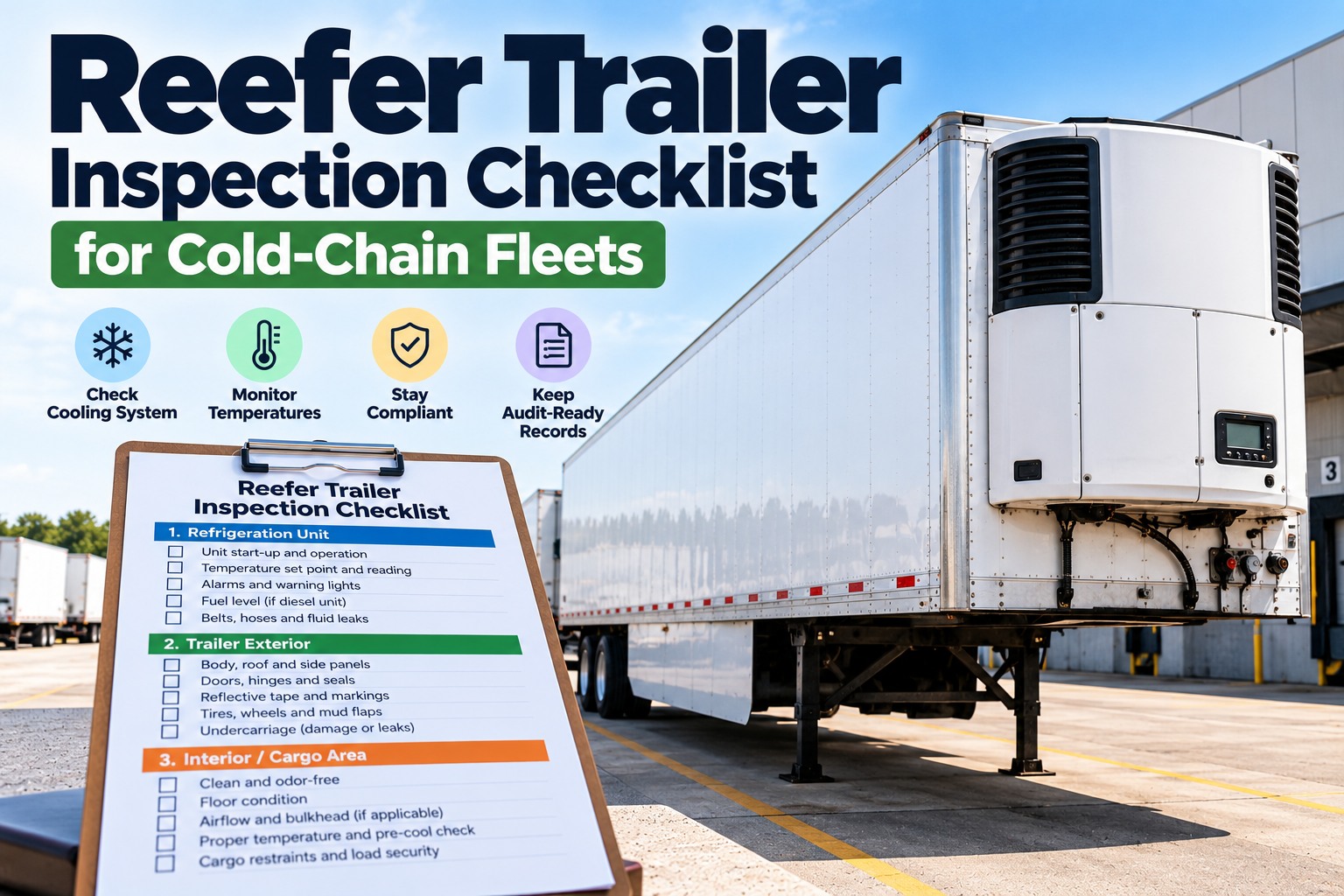
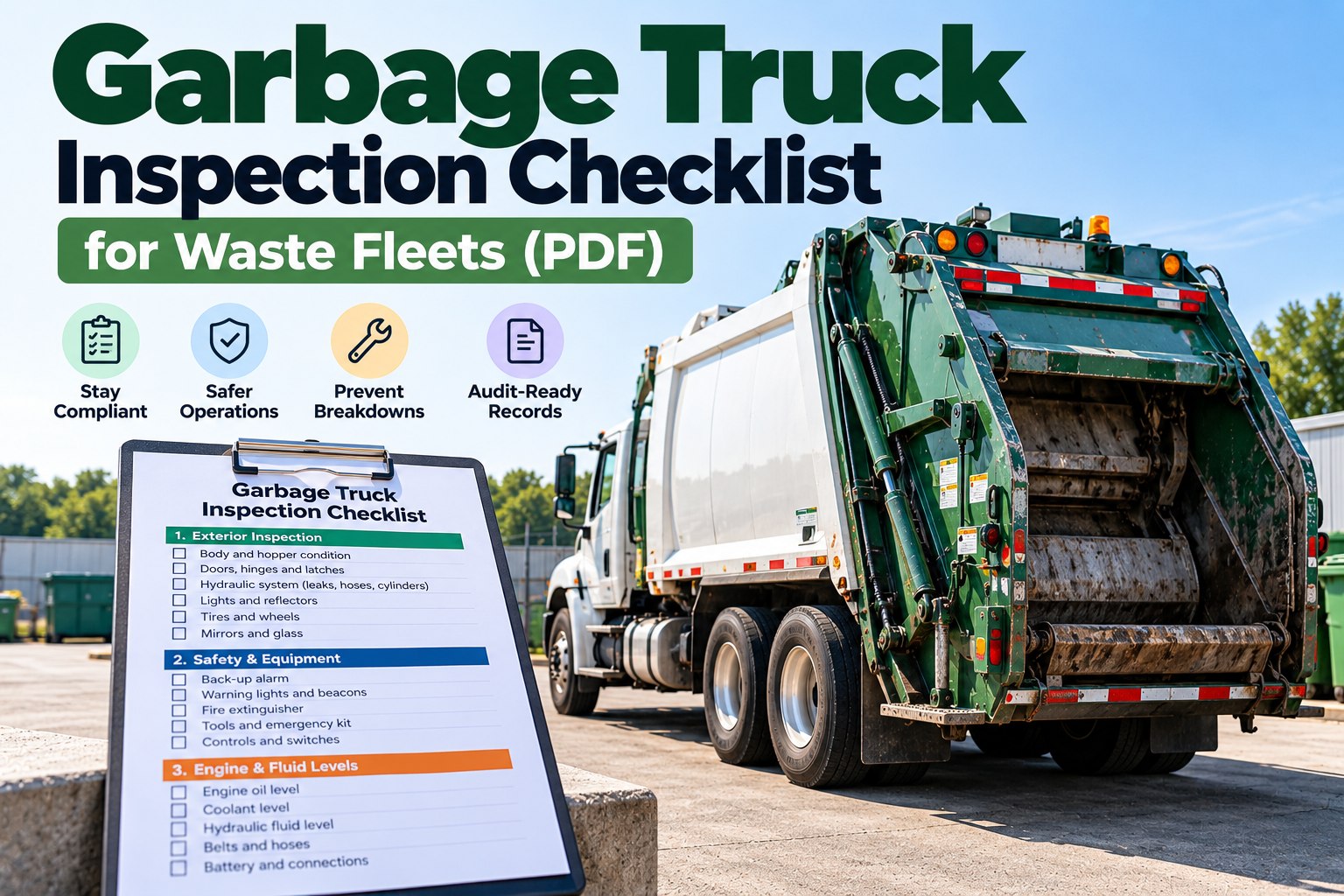
Different operating conditions and vehicle types require specialized checklists that address unique challenges and regulatory requirements. Smart fleet managers customize their approach based on specific operational demands.
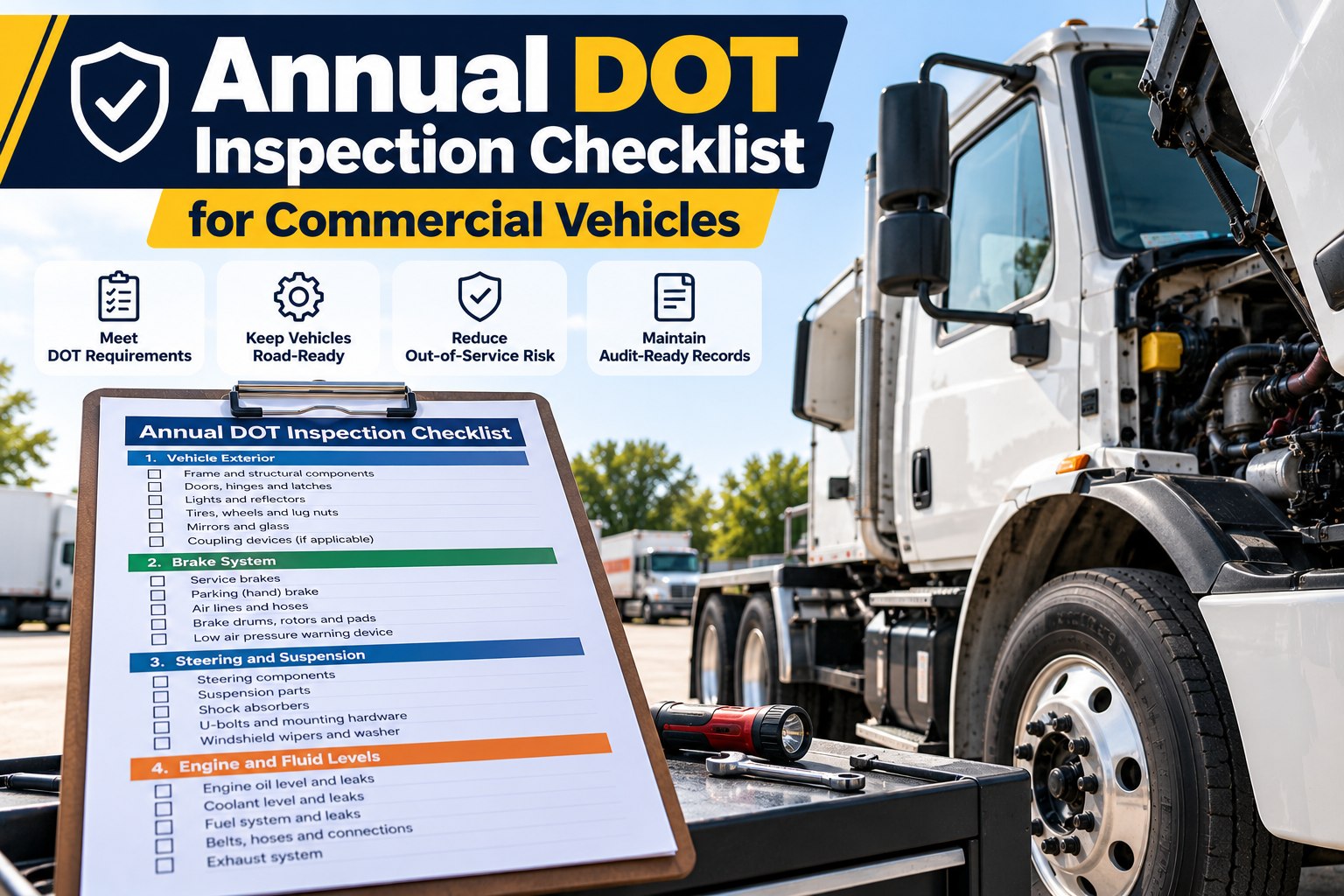
DOT Annual Inspection Checklist
Federal regulations require annual inspections for commercial vehicles, and failing to maintain inspection-ready equipment results in costly violations, downtime, and potential liability. Systematic preparation prevents inspection failures that sideline vehicles and damage safety ratings. (Set up your DOT compliance tracking in 5 minutes)
Ensure DOT Compliance
Our compliance dashboard tracks inspection dates, identifies potential violations before inspections, and maintains all required documentation. Never fail an inspection due to oversight again.
Start Compliance Tracking Compliance TrainingCritical DOT Inspection Categories
High-Risk Inspection Items (Common Violations):
- Brake Systems: 23% of violations - brake adjustment, air leaks, worn components
- Lighting: 19% of violations - non-functional lights, damaged lenses
- Tires: 18% of violations - tread depth, sidewall damage, mismatched sizes
- Load Securement: 15% of violations - improper tie-downs, shifted loads
- Driver Issues: 12% of violations - logbook violations, medical certification
- Vehicle Maintenance: 13% of violations - oil leaks, exhaust systems, frame damage
These six categories account for 90% of DOT violations. Focus your checklist systems on these high-risk areas. (Get a violation prevention assessment - schedule free consultation)
Digital vs. Paper Checklists
The choice between digital and paper checklists significantly impacts compliance, efficiency, and data analysis capabilities. Understanding the advantages and limitations of each approach helps you make the right decision for your operation.
Checklist System Comparison: Digital vs. Paper
| Feature | Digital Checklists | Paper Checklists | Winner |
|---|---|---|---|
| Initial Cost | $50-200/month | $5-15/month | Paper |
| Time Efficiency | 30% faster completion | Baseline | Digital |
| Data Analysis | Real-time analytics | Manual compilation | Digital |
| Compliance Tracking | Automatic alerts | Manual monitoring | Digital |
| Storage & Retrieval | Instant searchable | Physical filing | Digital |
| Integration | Fleet management systems | Manual data entry | Digital |
Implementation Best Practices
Successful checklist implementation requires systematic rollout, proper training, and consistent execution. Understanding common pitfalls helps you avoid the mistakes that cause checklist programs to fail.
The Implementation Truth: Why 60% of Checklist Programs Fail
- Inadequate Training: Drivers and technicians don't understand procedures
- Overly Complex Systems: Checklists too detailed for practical use
- Poor Follow-Through: Issues identified but not resolved promptly
- Lack of Accountability: No consequences for incomplete inspections
- Insufficient Technology: Paper systems can't handle fleet complexity
- Management Support: Leadership doesn't enforce consistent use
- No Feedback Loop: No system to improve checklists based on results
Success requires addressing all these factors systematically. (Get an implementation success assessment - schedule free consultation)
Your Checklist Implementation Action Plan
Building an effective preventive maintenance checklist system requires systematic implementation of proven processes, not hoping for compliance through good intentions.
Start Your Systematic Approach
Our complete checklist implementation system guides you step-by-step from basic inspections through advanced maintenance planning. Join successful fleets who eliminated 85% of breakdowns.
Get Started Free Book Implementation CallConclusion: Your Path to Maintenance Excellence
Building effective preventive maintenance checklists isn't about bureaucracy, paperwork, or slowing down operations. It's about creating systematic processes that prevent the breakdowns, violations, and safety risks that destroy fleet profitability and reputation.
The difference between the reliable 20% and the struggling 80% isn't better vehicles or easier routes—it's disciplined preventive maintenance systems that catch problems before they become disasters. Those who treat maintenance as a systematic business process build profitable, safe, compliant operations. Those who just fix things when they break barely survive. Start your systematic maintenance approach in under 15 minutes, or schedule a personalized maintenance excellence demo.
Remember, reliability is a choice backed by daily execution. Every inspection you complete, every issue you identify, and every repair you schedule either builds or destroys fleet profitability. Make decisions based on systematic checklists, not hope. Focus on prevention, not reaction. Build maintenance systems, not just fix trucks.
Stop Reacting, Start Preventing
Join thousands of fleet managers who transformed their maintenance operations with FleetRabbit's systematic checklist systems. Real tools, real compliance, real results.
Frequently Asked Questions About Fleet Maintenance Checklists
Q: How detailed should my maintenance checklists be?
Checklists should be comprehensive enough to catch critical issues without being so detailed that they become impractical. Focus on high-risk components that commonly cause failures: brakes, tires, lights, fluid levels, and safety equipment. A good rule: 15-25 items per checklist, prioritized by safety and breakdown risk. Too few items miss problems; too many items overwhelm users and reduce compliance. Start simple and add detail based on your specific failure patterns and operational experience.
Q: How do I get drivers to actually use the checklists?
Driver compliance requires clear expectations, proper training, and accountability systems. Make checklists part of daily routine, not extra work. Use mobile apps that are faster than paper, provide immediate feedback when issues are found, and recognize drivers who identify problems early. Enforce consequences for incomplete inspections—safety violations affect everyone. Most importantly, show drivers that their reports lead to action. Nothing kills compliance faster than ignored defect reports.
Q: What's the ROI of implementing systematic maintenance checklists?
Well-implemented checklist systems typically return $3-5 for every dollar invested. A fleet spending $100,000 annually on maintenance can expect $25,000-40,000 in savings through breakdown prevention, extended component life, and reduced labor costs. Additional benefits include fewer DOT violations (average $1,000+ each), reduced insurance costs through improved safety scores, and increased vehicle availability. Most fleets see positive ROI within 6-12 months of proper implementation.
Q: Should I customize checklists for different vehicle types?
Absolutely. Generic checklists miss vehicle-specific issues that cause failures. A day cab tractor has different inspection points than a long-haul sleeper or straight truck. Customize based on: vehicle configuration, typical operating conditions, historical failure patterns, and regulatory requirements. However, maintain consistency in core safety items (brakes, tires, lights) across all checklists. Use 70% standard items and 30% vehicle-specific items for optimal effectiveness.
Q: How do I handle issues found during inspections?
Establish clear escalation procedures before problems occur. Minor issues (low fluid levels, burned-out bulbs) can often be resolved immediately. Safety-critical issues (brake problems, structural damage, lighting failures) must ground the vehicle immediately. Develop priority classifications: immediate (stop operation), urgent (repair within 24 hours), routine (address at next service). Most importantly, create a feedback loop so drivers know their reports resulted in action. This maintains engagement and compliance.
Q: What technology do I need for effective checklist management?
Start with basics: mobile devices for data entry, cloud storage for accessibility, and automated scheduling for compliance. Essential features include: offline capability (inspections happen everywhere), photo capture for defects, automatic alerts for overdue items, and integration with your fleet management system. Advanced features like predictive analytics and parts ordering integration add value but aren't required initially. Choose systems that grow with your needs rather than overwhelming current capabilities.