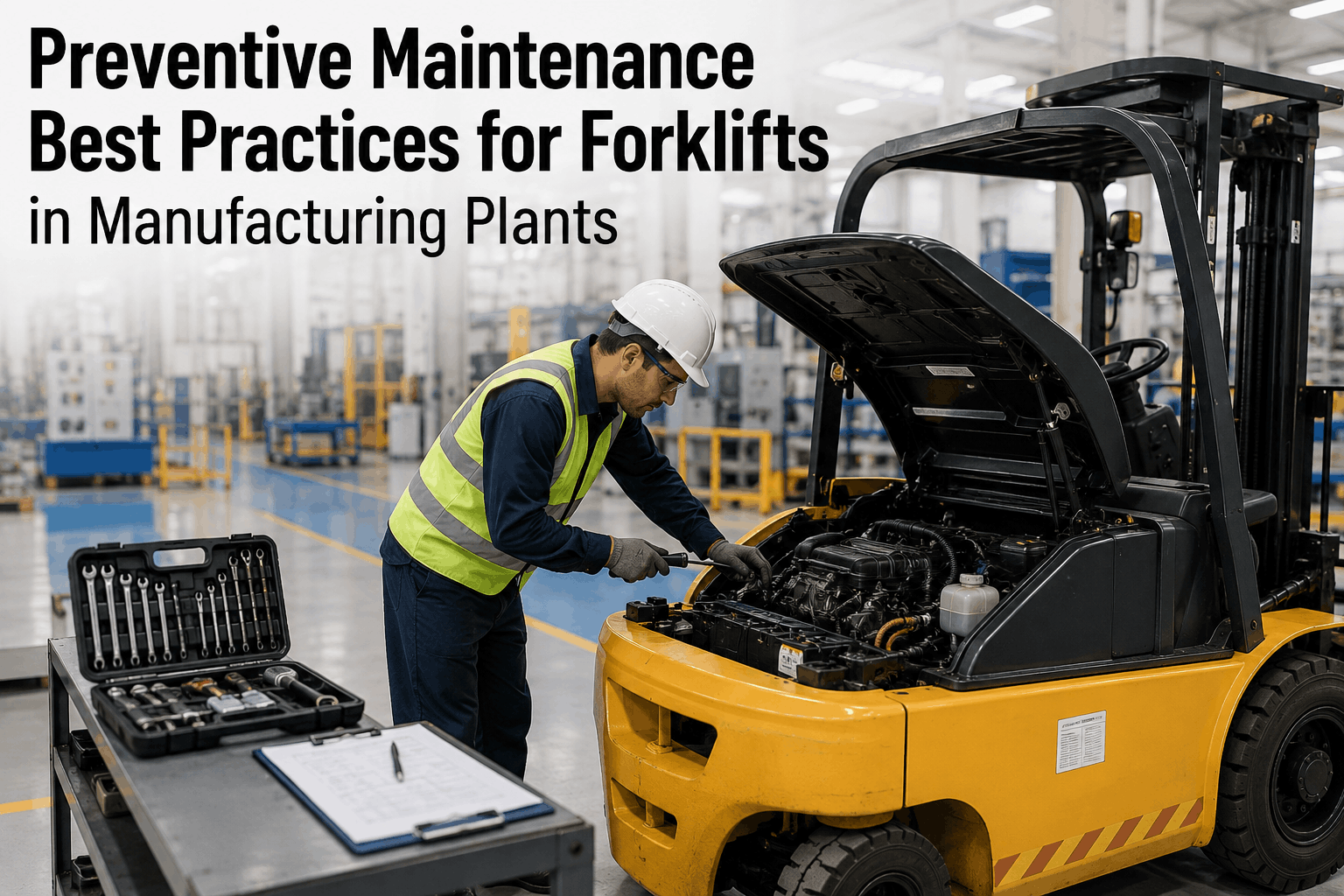
In the fast-paced world of manufacturing, forklifts are theunsung heroes of material handling, moving thousands of pounds of inventory daily across production floors and warehouses. But when a forklift unexpectedly breaks down, the ripple effects are immediate: production stalls, shipping backs up, and costs spike. Industry studies suggest that for every hour a forklift sits idle due to mechanical failure, companies can lose between $50 and $250 in productivity, not including emergency repair fees. The good news is that with a structured preventive maintenance program, you can avoid up to 75% of these unexpected breakdowns. This guide walks you through the essential best practices for forklift preventive maintenance in manufacturing plants, helping you keep your fleet running reliably and your production lines moving.
The True Cost of Forklift Downtime
When a forklift breaks down, the consequences extend far beyond the repair bill. You face immediate productivity losses as materials remain unmoved, backups in shipping and receiving, potential delays to customer deliveries, and overtime costs to catch up on missed work. Over time, reactive maintenance also leads to premature equipment replacement and higher total cost of ownership. A proactive approach, on the other hand, transforms maintenance from a cost center into a strategic investment in operational excellence. Sign up to see how digital tools can help you track and reduce downtime.
Essential Components of a Preventive Maintenance Program
An effective preventive maintenance program for forklifts rests on several key pillars. The first line of defense is daily operator inspections, which OSHA requires before each shift. These checks are crucial for catching issues before they escalate. Operators should be trained to inspect tire condition and pressure, fork condition, fluid levels (hydraulic, brake, engine oil), hoses and chains for damage, brakes and steering, and warning lights. Providing a standardized digital checklist and requiring documentation creates accountability and ensures consistency across shifts.
Beyond daily checks, professional service intervals at regular operating hour milestones address deeper mechanical needs. For internal combustion forklifts, this typically includes oil and filter changes every 200 hours, cooling system service every 500 hours, hydraulic system inspection every 1,000 hours, and a complete system overhaul every 2,000 hours. For electric forklifts, weekly battery watering and cleaning, monthly terminal inspection, quarterly motor inspection, and annual electrical system testing are essential.
Building a Maintenance Management System
A systematic approach to tracking maintenance is essential for success. This includes digital record-keeping for each forklift, documenting maintenance history, parts replaced, operator notes, and service costs. Hour meter tracking allows you to schedule maintenance based on actual usage rather than calendar time, which is more accurate for equipment that may not be used uniformly . Performance metrics like frequency of breakdowns, mean time between failures, repair costs as a percentage of replacement value, and downtime hours should be tracked to identify trends and areas for improvement.
Training is another critical component. Operators need thorough training on daily inspections and basic troubleshooting. Supervisors should be trained to identify warning signs of equipment issues. Internal maintenance staff require certification and continuing education. Clear communication protocols for reporting problems ensure that issues are escalated and addressed promptly. Book a demo to learn how FleetRabbit can streamline your maintenance management.
Preventive Maintenance Checklist by Component
Maintenance Best Practices by Forklift Type
Different types of forklifts have unique maintenance needs. For electric forklifts, battery maintenance is critical. This includes implementing proper charging protocols to prevent memory effect, keeping batteries clean to prevent electrical shorts, maintaining proper water levels in cells, and testing battery capacity quarterly. For propane forklifts, regularly inspect fuel lines and connections for leaks, clean or replace air filters more frequently in dusty environments, and check emission components. Diesel forklifts require more frequent fuel filter changes, water separator inspection, and more rigorous cold weather preparation.
Regular maintenance is more effective than reactive repairs for two key reasons: a forklift never breaks down when you're not using it, and by anticipating wear and tear, you can plan for downtime and minimize business disruption. This proactive approach also supports lean manufacturing by reducing unplanned stops and ensuring continuous production flow. Sign up for FleetRabbit to automate your maintenance scheduling and tracking.
The Economics of Preventive Maintenance
The financial case for preventive maintenance is compelling. Well-maintained forklifts typically last 10,000 to 20,000 hours, while neglected equipment may fail at just 5,000 to 8,000 hours . Forklifts with documented maintenance histories command 15% to 30% higher resale prices . Preventive maintenance typically costs 25% to 30% less than reactive maintenance on a per-year basis . Equipment failures also contribute to workplace accidents, with associated costs of worker compensation, increased insurance, and potential regulatory fines .
Structured service agreements provide a safety net from a compliance perspective and a blueprint for financial control . By knowing what the wearable components are and stocking spare parts proactively, you can provide expert feedback on when repairs will be required, book them in advance, and work with your team to ensure maximum uptime. Book a demo to see how FleetRabbit can help you build a cost-effective maintenance strategy.
Creating a comprehensive maintenance calendar is essential. This should include daily operator inspections (15-30 minutes), weekly quick-service items, monthly professional inspections (2-4 hours of downtime), quarterly major service (4-8 hours), and an annual comprehensive overhaul (1-2 days) . Planning these interventions during natural operational downtime minimizes disruption to production. Digital tools like FleetRabbit can help you schedule and track these intervals automatically, ensuring no service is missed. Sign up today to take control of your forklift maintenance.
Ready to Transform Your Forklift Maintenance?
Reduce downtime, extend equipment life, and support lean manufacturing with FleetRabbit's preventive maintenance tools.
Frequently Asked Questions
Maintenance frequency depends on usage and environment. Daily pre-shift inspections are mandated by OSHA. Full service is typically recommended every 200 to 250 operational hours or every 6 weeks, whichever comes first . High-utilization equipment in harsh conditions requires more frequent attention.
Preventive maintenance is scheduled proactively based on time or usage to prevent failures. Reactive maintenance is performed after a breakdown occurs. Preventive maintenance costs 25-30% less annually and extends equipment life significantly .
Digital tools like FleetRabbit automate inspection checklists, track hour meters, schedule service intervals, and create audit-ready documentation. They eliminate paper-based inefficiencies, reduce human error, and provide real-time visibility into fleet health .
Common mistakes include skipping daily inspections, relying on calendar-based instead of hour-based scheduling, neglecting battery maintenance on electric forklifts, ignoring fluid analysis results, and failing to keep detailed maintenance records .
Preventive maintenance reduces unplanned downtime, ensuring continuous material flow and production. It also enables predictable maintenance scheduling that can be integrated into production planning, minimizing disruption to just-in-time workflows.
Join 800+ Operations Using FleetRabbit
From daily inspections to predictive maintenance — FleetRabbit helps you keep your forklift fleet running at peak performance.