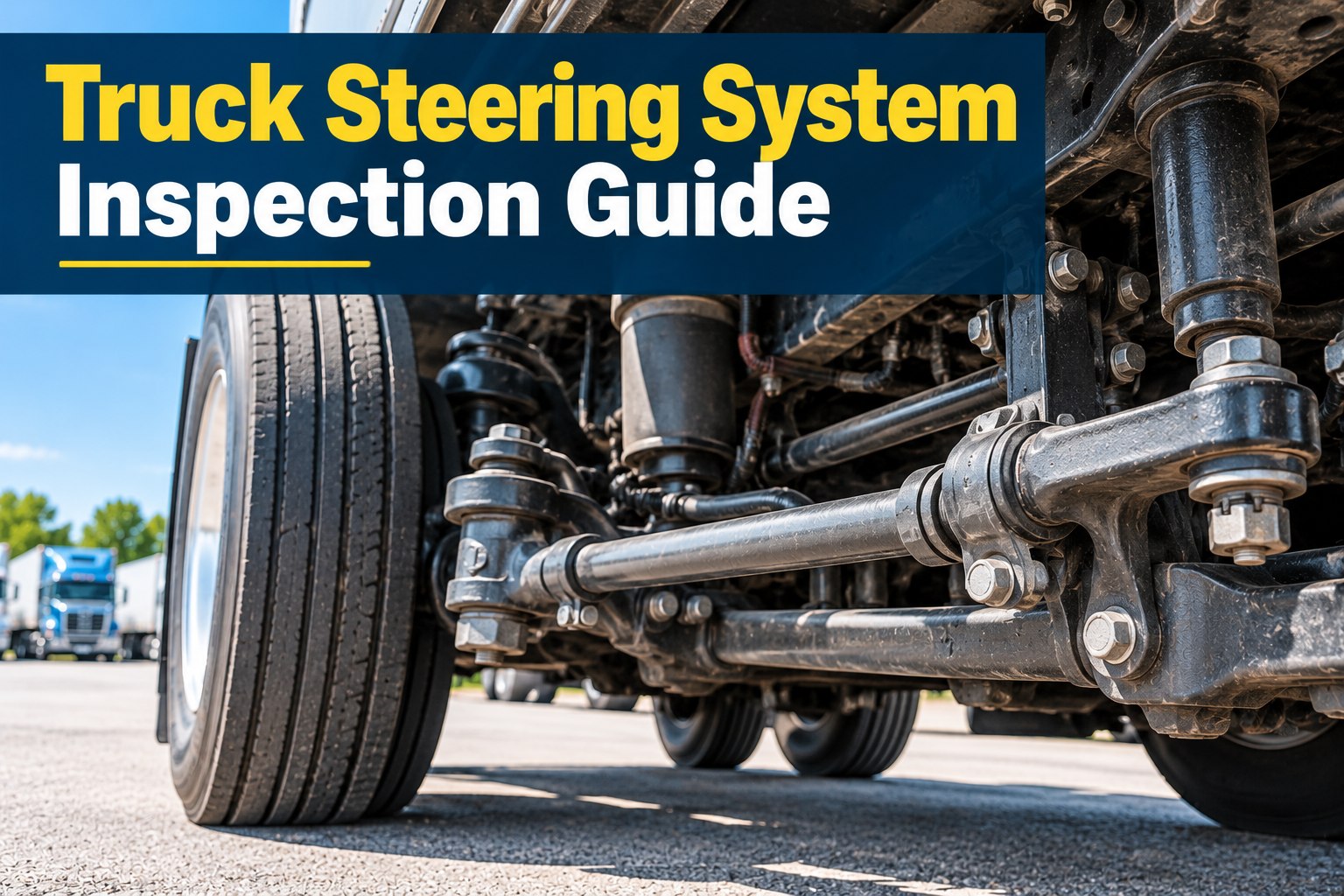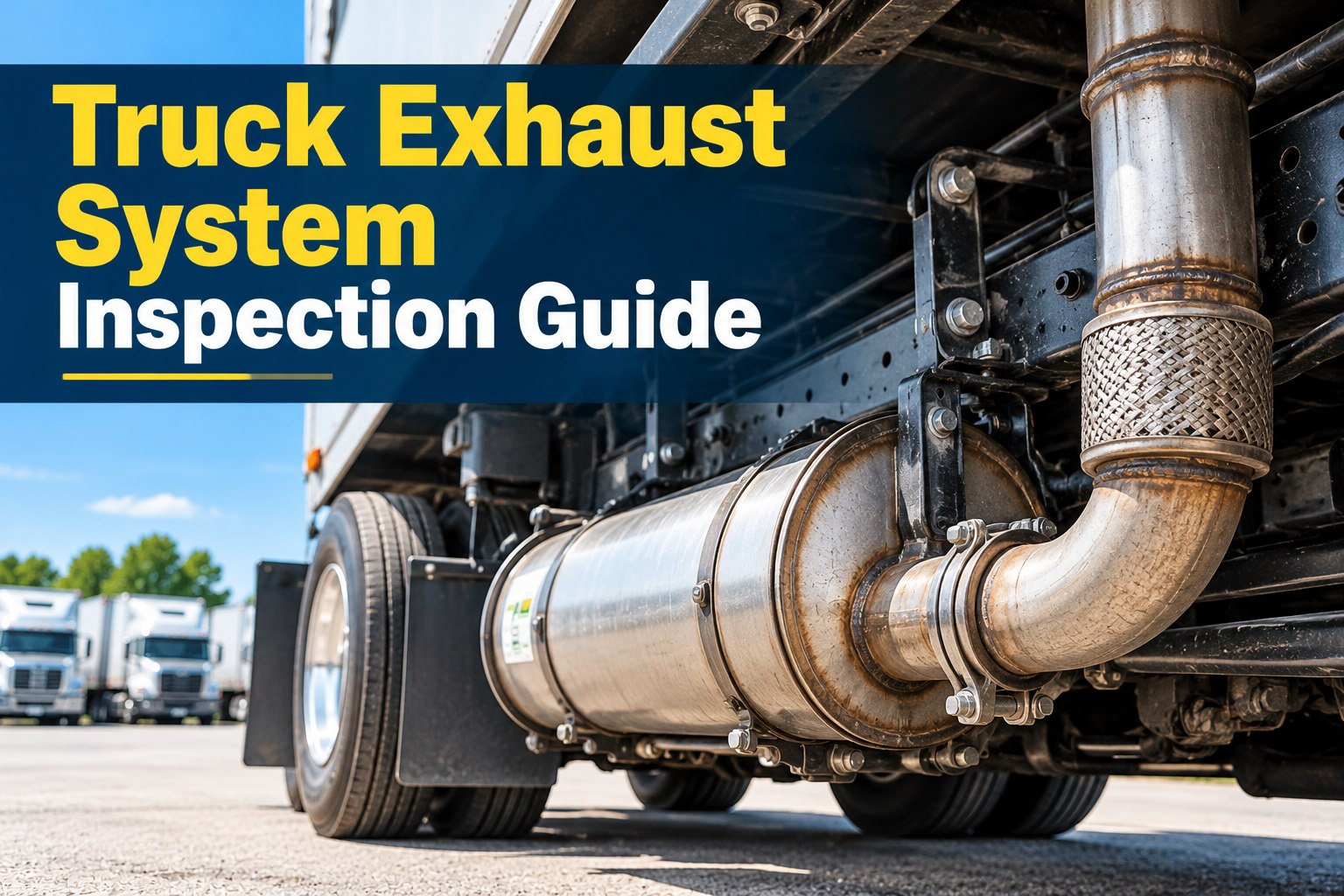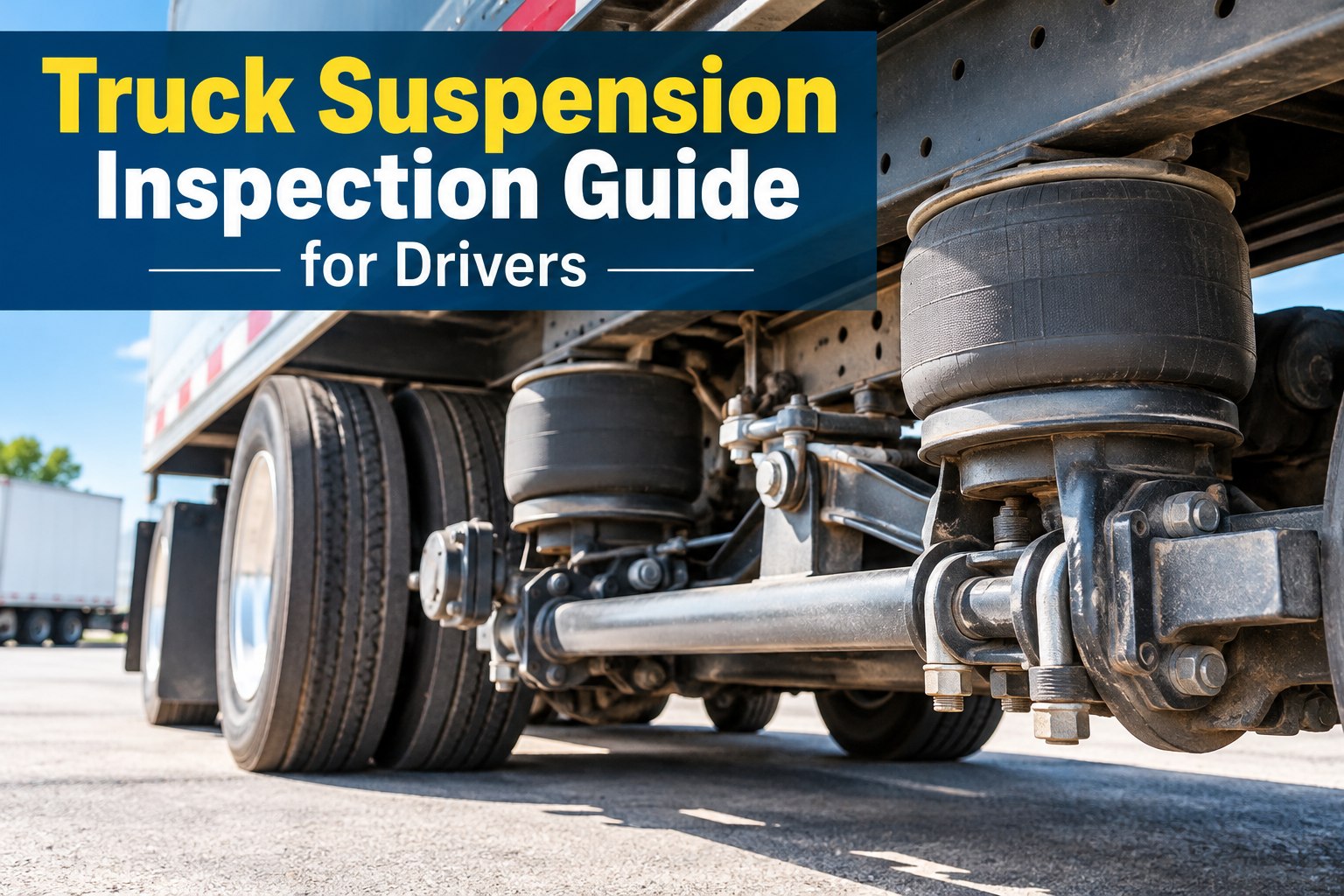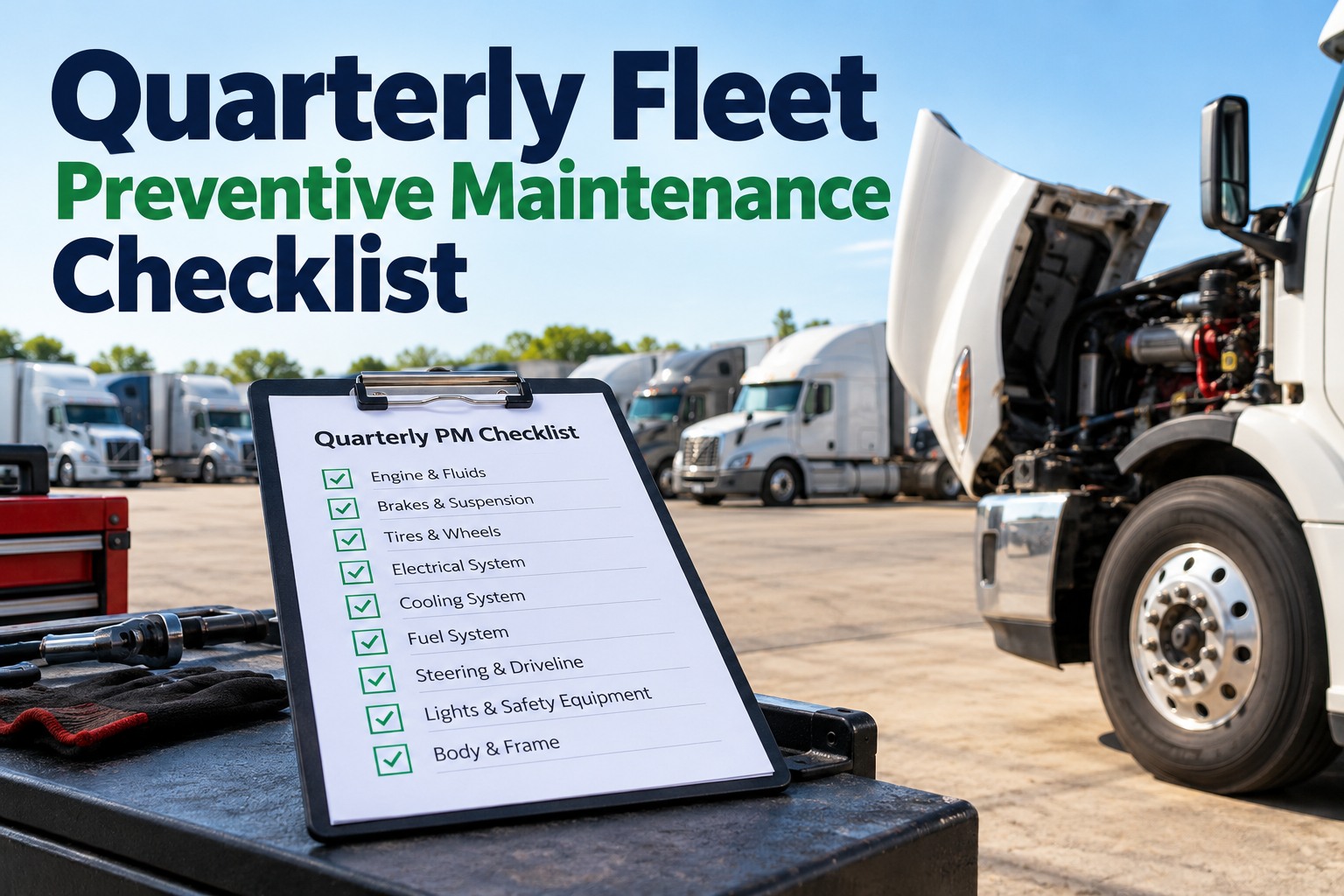
A quarterly preventive maintenance check is where measurement replaces observation. The monthly walk-through confirms things look right; once a quarter, a technician measures brake linings, tests coolant and batteries, checks wheel bearings and pulls fault codes, so wear shows up as a trend before it shows up as a roadside violation. The timing matters too: the biggest enforcement events of the year fall inside predictable quarters, and brakes and tires caused almost half of all vehicle out-of-service violations at the 2025 International Roadcheck. This quarterly PM checklist gives you clickable checkpoints by system, a seasonal add-on for each quarter, and the data behind why each block is there. You can run it paperless on three vehicles at no cost.
Brakes and tires caused almost half of the out-of-service violations at Roadcheck 2025
CVSA's 2025 International Roadcheck ran from May 13 to 15 and completed 56,178 inspections across North America. Inspectors placed 10,148 vehicles out of service and recorded 13,553 vehicle out-of-service violations. Three categories dominated, and every one of them is something a quarterly PM measures directly.
Brake problems are getting more visible, not less. At CVSA's unannounced Brake Safety Day on April 14, 2026, inspectors completed 4,021 inspections and put 574 vehicles out of service for brakes, a 14.3% rate compared with 8.7% the year before. The largest groups were vehicles meeting the 20% defective brakes criterion, followed by brake hose and tubing defects, and the next Brake Safety Week is scheduled for August 23 to 29.
What the quarterly PM adds on top of the monthly check
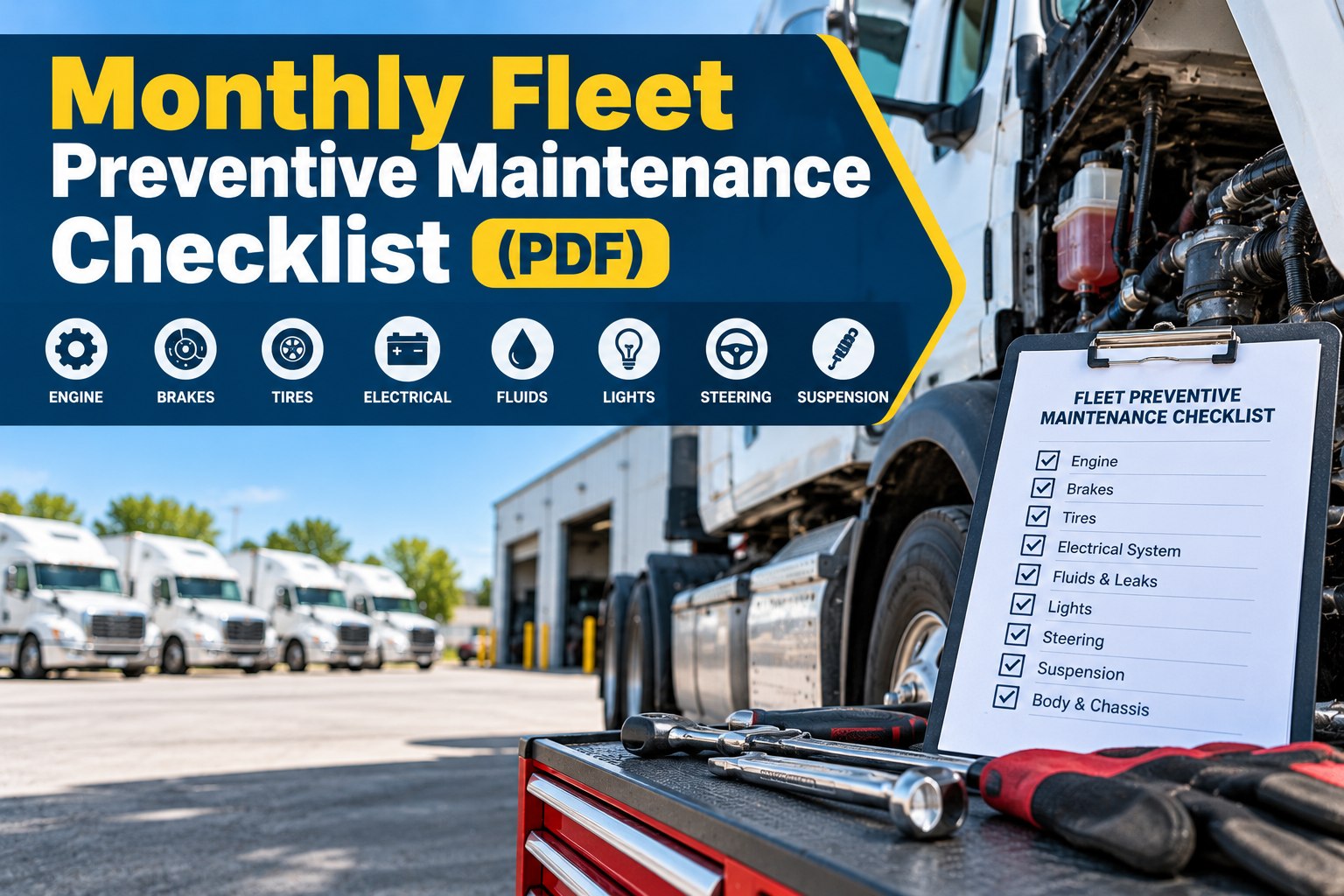
A quarterly visit isn't a longer monthly visit. It changes the verb. Where the monthly check looks, the quarterly check measures, tests and records, which is what turns maintenance into the systematic program 49 CFR 396.3 requires. If you run a preventive maintenance schedule by mileage, the quarterly check usually lines up with the deeper service tier.
The quarterly PM checklist: clickable checkpoints with a live count per system
Tap each checkpoint as you go. The pill beside each heading counts how many are done, so a supervisor can see at a glance which system is still open. Print the page and it works as a paper quarterly PM checklist template.
Seasonal add-on: pick the quarter you're in
Each quarter brings its own risks. Choose the current quarter below and add its four checkpoints to the core list.
Plan the year around the enforcement calendar
National enforcement events land in the same part of the year every year. Scheduling the deepest quarterly checks before them means inspectors find the truck you've already measured.
| Quarter | Enforcement in 2026 | Inspection emphasis | Quarterly PM priority |
|---|---|---|---|
| Q1 | No national blitz | Routine roadside inspections | Corrosion and battery damage from winter |
| Q2 | Brake Safety Day, April 14 (unannounced); International Roadcheck, May 12–14 | Brakes; Roadcheck focus on cargo securement and ELD tampering | Full brake measurement, tires, lights and cargo securement gear before April |
| Q3 | Brake Safety Week, August 23–29 | Brake systems and components | Second full brake inspection by early August |
| Q4 | No national blitz | Routine roadside inspections | Air system, coolant and heaters winterized |
When a quarterly reading is close to the limit
A quarterly PM often finds parts that pass today but won't last until the next visit. A lining with only a little left above the minimum, a steer tire at 5/32 inch, a battery that barely passed its load test: each is legal now and likely to fail within three months. The useful rule is to ask whether the part will still pass at the next quarterly check. If the answer is no, replace it now or book the repair with a date, because the next time anyone measures it may be an inspector. Recording the reading is what makes that call possible, and it gives the shop a reason on file for every early replacement.
Quarterly findings should also feed back into the daily routine. If one truck keeps showing brake hose chafing, add a hose check to its driver's DVIR and DOT inspection until the routing is fixed.
Don't skip the trailers: they carry the same brakes and tires
Roadcheck counts every unit in the combination, and a trailer's brakes, tires and lights count against the carrier just like the tractor's. Trailers also tend to get the least attention, because they don't have a driver assigned and they move between tractors. Give each trailer its own quarterly PM record with the brake, wheel-end, tire and lighting blocks from the checklist above, plus the landing gear, kingpin and upper coupler, and the suspension and slider locking pins. A trailer that sits in a drop yard for weeks still ages: seals dry out, air lines crack and tires lose pressure, so the calendar quarter still applies even when the miles don't.
Building the quarterly schedule for a mixed fleet
Most fleets trigger the quarterly PM on whichever comes first: three months on the calendar, a mileage figure, or engine hours for units that idle or run PTO equipment. High-mileage tractors will hit the mileage trigger first; yard trucks, refuse units and spare tractors will hit the calendar or hours trigger. Stagger the due dates across the 13 weeks of the quarter rather than bunching them in the first week, so the shop carries an even load and no single week leaves the fleet short of trucks. Then move the brake-heavy quarterly checks for as many units as possible into March and early August, ahead of the spring and late-summer enforcement events.
FleetRabbit spreads quarterly PMs across 13 weeks so no two trucks are due on the same day
Quarterly PMs generate the repairs that keep a fleet out of the out-of-service numbers, and FleetRabbit's fleet maintenance tools track those repairs from the failed checkpoint to the signed-off job.