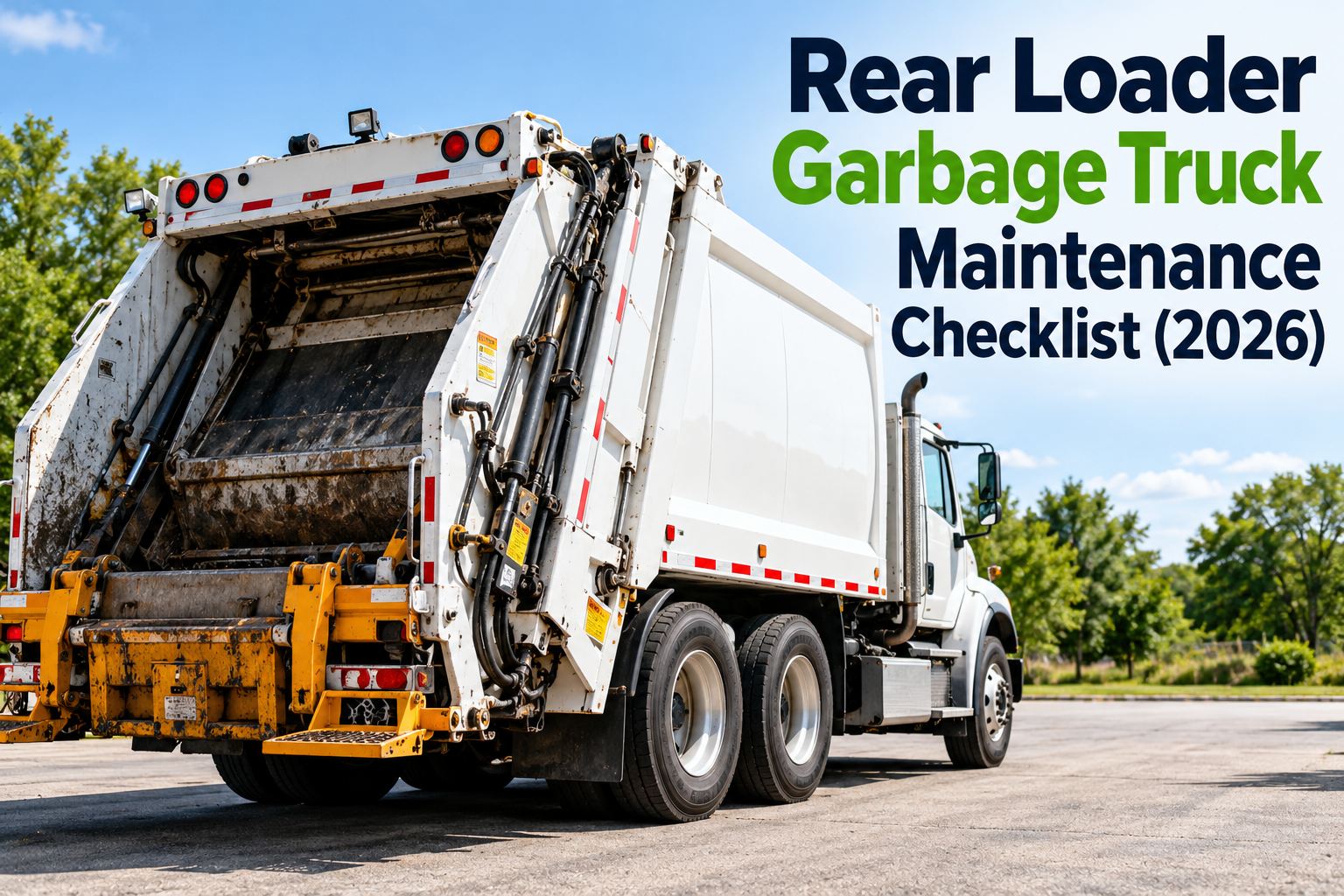
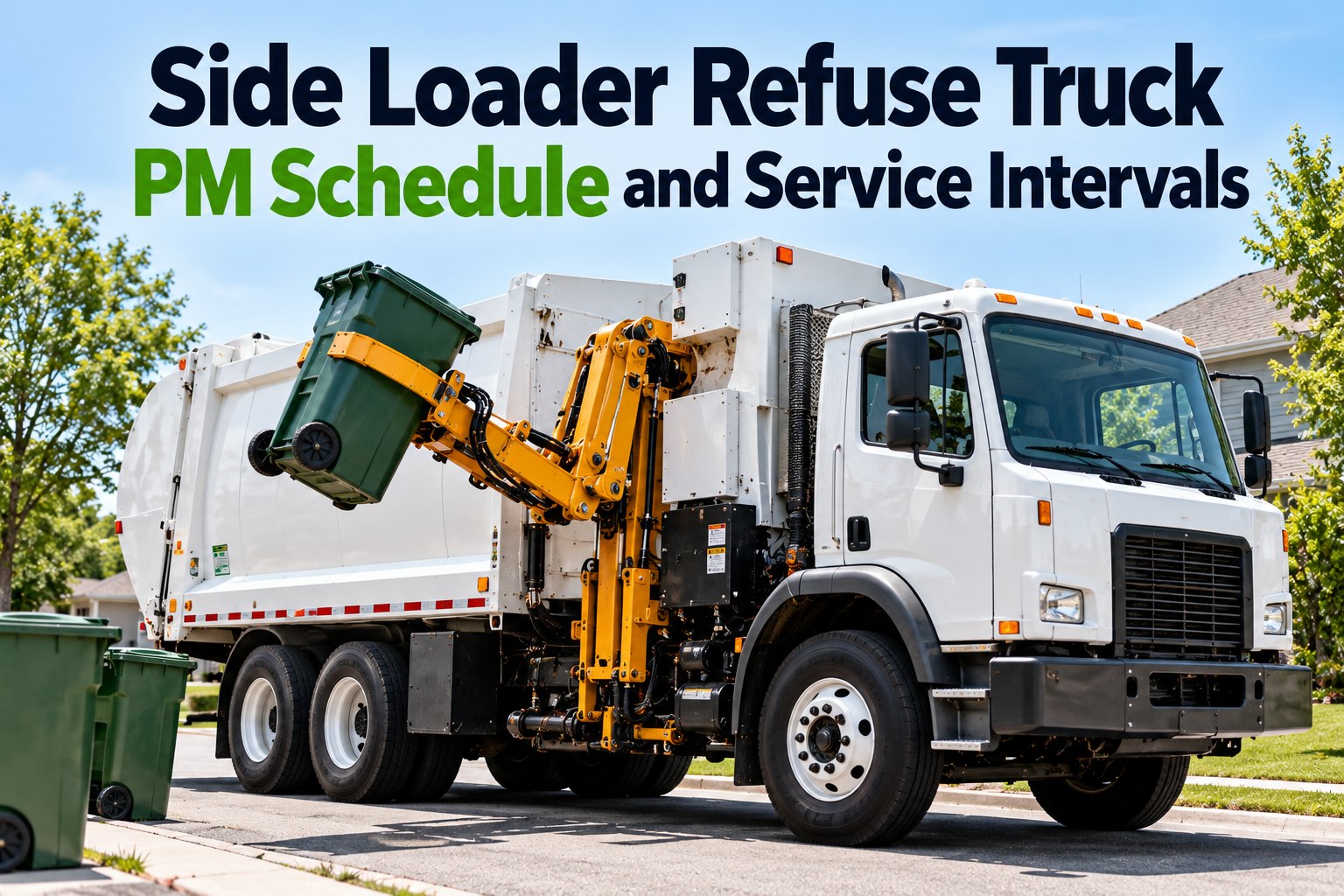
A rear loader garbage truck maintenance checklist has to cover two machines at once: a heavy truck that must pass a DOT roadside inspection, and a packer body that cycles hundreds of times a shift. Most failures that stop a route start as something a driver could have spotted at 5 a.m. — a weeping hose, a loose blade pin, a torn tailgate seal. This page gives you the daily, weekly, monthly and PM checks for rear loaders, grouped by system, plus clear rules for when a defect takes the truck off the route. Schedule a call to see this rear loader checklist running in FleetRabbit.
Waste & recycling fleets · Rear loaders
Find the leak, the loose pin and the torn seal in the yard, before they find you on the route.
Tick-box checks by cadence and system, built for drivers, shop leads and safety directors running rear loader packer trucks.
Monthly
Chassis and pivots
Daily Rear Loader Garbage Truck Maintenance Checklist: Pre-Trip Checks Grouped by System
The daily check is the driver's job, and it splits cleanly into four systems. The chassis items are the ones FMCSA expects every commercial truck driver to confirm before driving. The packer, hydraulic and crew-safety items are what keep a rear loader on its route. Tick them in order and the walk-around takes minutes, not a quarter-hour.
Tap any box to tick it. Use the order above as a walk-around: cab and chassis first, then the rear of the truck with the body running.
Why the Packer Blades Come First at the Rear of the Truck
Cleaning packer blades takes about five minutes if it's done daily, E-Z Pack's Carroll told Waste Today. Left for a week, packed refuse hides cracked welds and loose bolts, and the first sign of trouble becomes a blade that binds on the route.
Weekly and Monthly Rear Loader Maintenance Checks the Shop Owns
Once a week, and again once a month, the checks move from the driver to the shop. These are the items a pre-trip can't catch because they need a grease gun, a measuring tool or the truck on a lift.
Dry Grease Points Tell You Which Checks Were Skipped
A grease point that's dry or rusty means lubrication was missed, Carroll noted in the same Waste Today feature. That makes the monthly walk-around a check on the weekly one, which only works if both are recorded against the truck.
Daily · weekly · monthly
Run This Rear Loader Maintenance Checklist on Every Driver's Phone
Every tick time-stamped, every failed item sent straight to the shop.
Rear Loader PM Intervals: The Mileage and Hour Schedule Municipal Fleets Actually Use
Your truck and body makers set the official intervals. For a reference point, here is how two municipal fleets described their schedules to Waste Today, alongside a body maker's view of the longer service cycle.
Swipe sideways to see every column
Interval
What gets done
Reported by
Engine oil and filter, hydraulic filters, hydraulic oil sample, top off all fluids, grease all zerks, lube chassis and PTO linkages, air filter
City of Phoenix
Grease, oil and filter, PTO shaft and drive shafts
North Tonawanda, NY
Intermediate service on wear items: packer blades, tailgate seals and cylinders; rear loaders mostly need inspection here
E-Z Pack
122-point inspection; hydraulic hoses replaced when trend reports flag them
City of Phoenix
Pull wheels; check walking beams and springs; transmission filter and fluid; check brake S-cams
North Tonawanda, NY
As reported in Waste Today, "Making Time for Maintenance." Use these as a comparison, not a substitute for your manufacturers' schedules.
Why Hydraulic Hoses Belong on a Count, Not Just a Calendar
North Tonawanda's fleet manager put it plainly: a tailgate cylinder that cycles 100,000 times a year gets about two years out of its hoses. Collection trucks cover few miles but cycle the body constantly, so hour meters or cycle counts track packer wear far better than the odometer.
Out of Service or Log and Fix? Defect Severity Levels for Rear Loader Inspections
A checklist is only useful if everyone agrees what a failed box means. Federal rules set the floor: a motor carrier may not let a truck be driven in a condition likely to cause an accident or breakdown (49 CFR 396.7), and defects listed on a driver's report that are likely to affect safety must be repaired before the truck runs again (396.11). A three-level rule turns that into a call every driver can make.
The truck does not leave the yard until repaired.
Brakes, steering or major air leaks
Flat or unsafe tires
Burst hose or steady hydraulic leak
Tailgate won't lock or hold up
Emergency stop not working
Broken riding step or grab handle
Safe to finish today, booked into the shop tonight.
Slight weep at a fitting, level holding
One marker lamp out, others working
Tailgate seal torn but closing
Blade noisy but cycling normally
Add to the next PM visit and watch the trend.
Wear plates thinning
Blade edge wear within limits
Cosmetic body damage
Decals fading
Your shop lead and safety director should set the final list; the point is that the driver doesn't have to decide alone at the tailgate.
What Puts Garbage Trucks Out of Service Most: Brakes, Tires and Lights at Roadside
A packer body can be perfect and the truck still gets parked at the roadside. In CVSA's 2025 International Roadcheck, these five categories made up most vehicle out-of-service violations across all commercial trucks. Every one of them is on the daily chassis checklist above.
Brakes out of adjustment
16.7%
Share of vehicle out-of-service violations, CVSA 2025 International Roadcheck (all commercial vehicles).
Brakes Work Harder on a Rear Loader Than on Almost Any Other Truck
Stop-start collection routes are brutal on brakes. A severe-duty brake supplier quoted by Waste Today put refuse truck brake shoe temperatures above 400°F on an average day, with peaks over 600°F. That's why brake adjustment and air checks belong on every pre-trip, not just the PM.
Paper vs Digital Rear Loader Checklists: Three Problems a Clipboard Can't Solve
Paper checklists work until someone needs to find one. These are the three gaps fleets hit most, and what a digital checklist does about each.
Problem
The leak was noted, but nobody fixed it
The driver wrote "hose weeping" on Tuesday. The form stayed in the cab until Friday.
Problem
Grease days slip when routes run long
Weekly greasing gets pushed, and nobody can prove which pivots were done.
Problem
An auditor asks for last quarter's DVIRs
The forms are in three binders and a drawer, some unsigned.
Paper checklist
Digital checklist
Proof of time
Handwritten, easy to back-fill
Time-stamped automatically
Defect evidence
A note in the margin
Photo attached to the item
Reaching the shop
When the form is handed in
Instantly, as a work order
Weekly and monthly tasks
A whiteboard or memory
Due dates on each truck
Finding records later
Binder search
Search by truck, date or defect
How FleetRabbit Runs Your Rear Loader Maintenance Checklist From Pre-Trip to Repair
FleetRabbit puts this checklist on drivers' phones and connects every result to the truck's maintenance plan, so nothing found at the tailgate gets lost.
1
Inspect
Drivers complete the daily rear loader checklist and DVIR on a phone, with photos, even offline.
2
Flag
Out-of-service items park the truck; minor defects queue for tonight's shift.
3
Repair
Work orders carry the photo, the truck's history and the parts it needs.
4
Schedule
Weekly, monthly and PM tasks come due on dates, miles or engine hours.
5
Prove
Checks, repairs and sign-offs stay on one record, ready for DOT or council review.
What you'll see on the call
This rear loader checklist loaded for your trucks
A failed hose check turning into a work order
Grease and blade checks scheduled per truck
Severity rules that park unsafe trucks
Cut Rear Loader Breakdowns With a Garbage Truck Maintenance Checklist That Reaches the Shop
Daily checks by system, weekly and monthly tasks that come due on their own, clear out-of-service rules and a record for every truck.
Free for up to 3 assets · No credit card needed
Rear Loader Garbage Truck Maintenance: Questions Fleet Managers Ask
What should be on a rear loader garbage truck daily checklist?
Cover four systems: chassis items such as brakes, air, tires, lights, steering and mirrors; the packer body, including blades, pins, hopper and tailgate seal; the hydraulic system, from oil level to hoses and cylinders; and crew safety items like riding steps, handholds, emergency stops and the backup alarm.
How often should a rear loader packer body be greased?
Follow the body maker's chart, but most fleets grease packer, tailgate and cylinder pivots at least weekly, plus at each PM service. One municipal fleet greases all zerks every 4,000 miles. A dry or rusty grease point during a monthly check is a sign lubrication was missed.
How often should hydraulic filters be changed on a garbage truck?
Use your body maker's interval. As a reference, the City of Phoenix told Waste Today it replaces hydraulic filters and samples hydraulic oil every 4,000 miles. Because packers cycle constantly on low-mileage routes, many fleets also track engine hours so filter changes follow actual body work.
When should a garbage truck be taken out of service?
Whenever a defect is likely to affect safety: brake, steering or major air problems, unsafe tires, a burst hose or steady hydraulic leak, a tailgate that won't lock, a failed emergency stop or a broken riding step. Federal rules require safety-related defects to be repaired before the truck operates again.
How long do rear loader hydraulic hoses last?
It depends on how often the body cycles. One municipal fleet manager told Waste Today that a tailgate cylinder cycling about 100,000 times a year gets roughly two years from its hoses. Inspect hoses daily for chafing and weeping, and replace them on condition or trend.
Is a digital checklist accepted for garbage truck DVIRs?
Yes. FMCSA's final rule effective March 23, 2026 confirms driver vehicle inspection reports may be completed and kept electronically. A digital checklist also adds time stamps, photos and instant work orders that paper forms can't. You can
schedule a call to see one.
October 26, 2026By Emily Parker
All Blogs