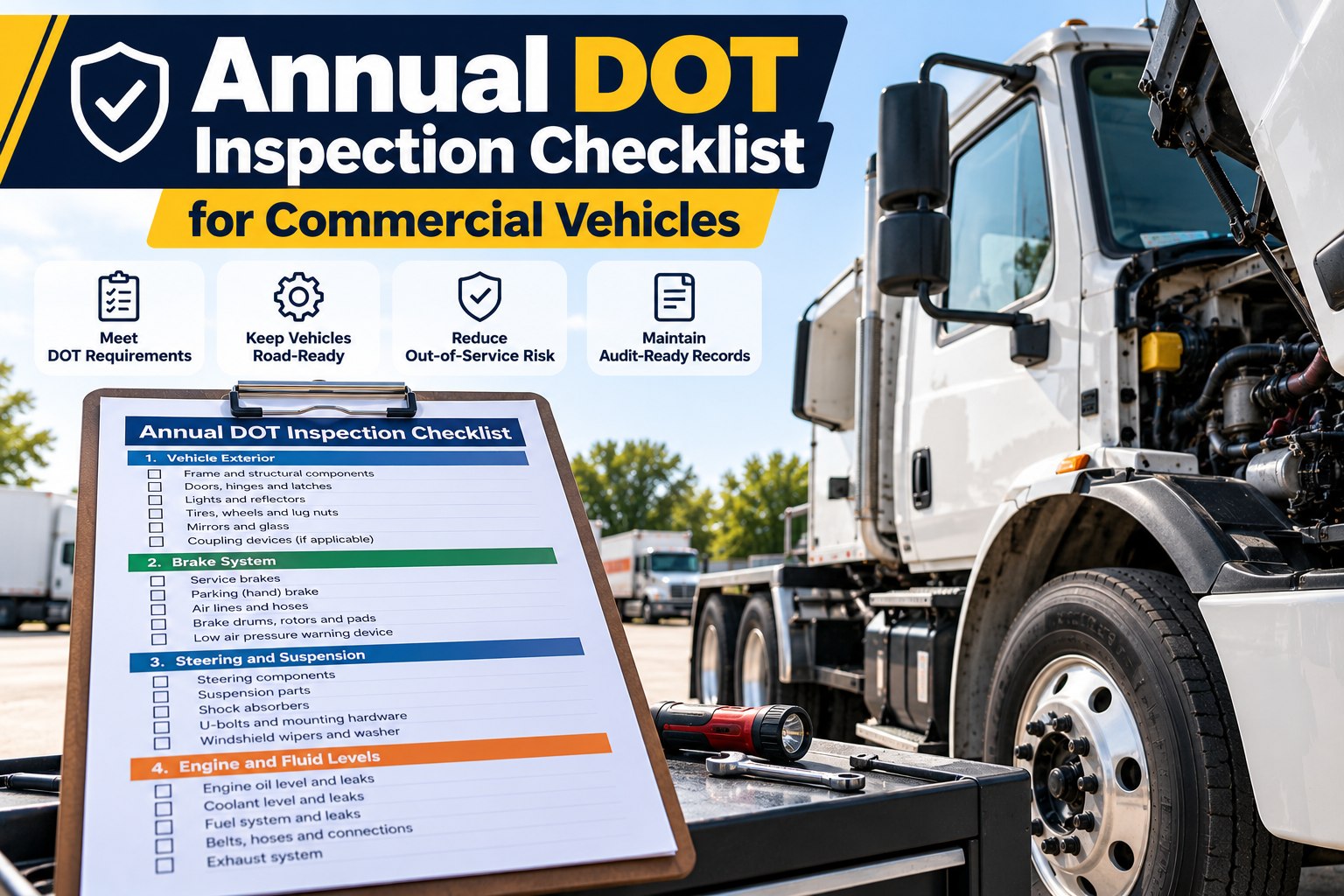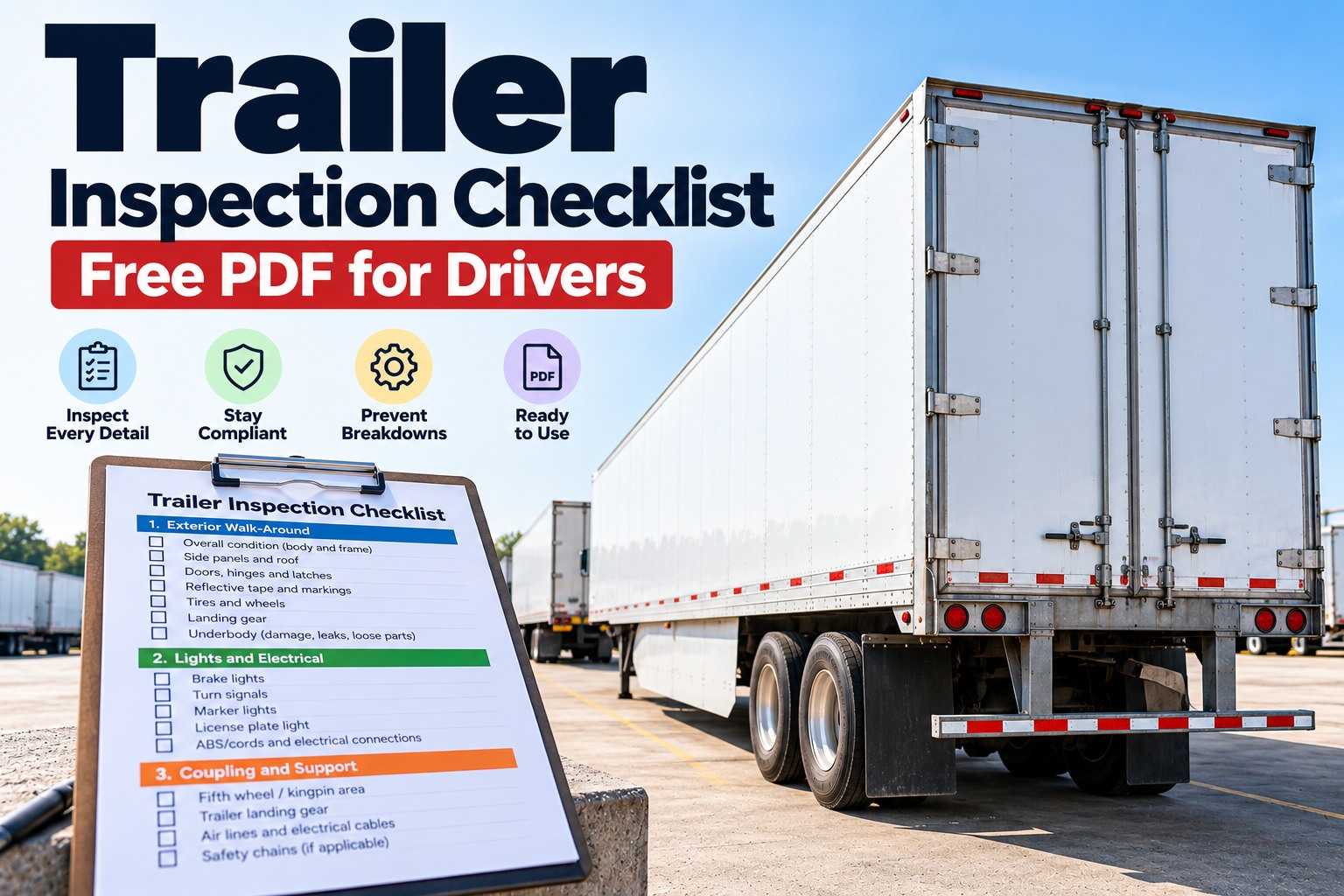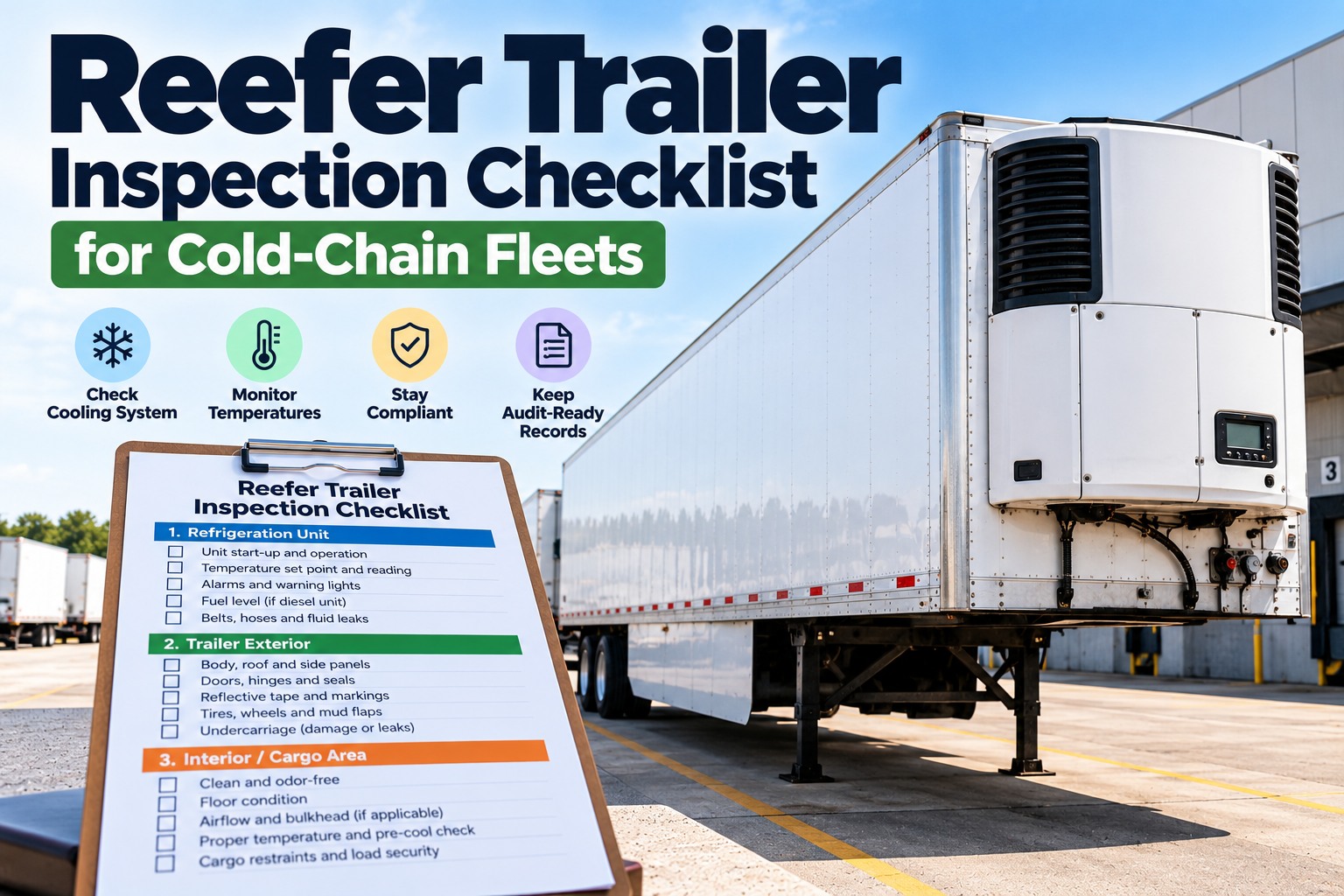
A reefer trailer inspection checklist covers two jobs at once: the roadworthiness checks every trailer needs, and the cold-chain checks that decide whether the load arrives at temperature. The first set keeps the truck legal. The second keeps the cargo sellable, and the records from both are what shippers and the FDA ask to see. This page has 31 tick boxes arranged by the clock of a load, from pre-cooling to delivery, plus a unit and box walkaround. Schedule a call to set up your reefer fleet's checklist, or start with the standard DOT pre-trip checklist for the chassis items.
The Load Clock: Five Moments, Fifteen Checks
Each moment has three checks. Tick a box only after you have looked at the reading or the part, and note the time.
- Reefer fuel level checked and water-free
- Setpoint matches the shipper's instruction
- Trailer reached setpoint before the doors open
- Interior clean, dry and odor-free
- Floor drains clear, T-floor and air chute intact
- Door seals continuous with no gaps
- Probe readings checked and logged at loading
- Load kept off the air chute and bulkhead
- Seal applied and number recorded
- Controller shows no active alarms
- Return and discharge temperatures in range
- Fuel and temperature checked at each stop
- Temperature recorded before the doors open
- Any excursion noted with time and action
- Report and temperature log saved
What a Healthy Temperature Log Looks Like
Auditors and shippers read the log as a shape. These four parts are the ones to look for, and the same shape tells a driver when something is wrong. The chart is an illustration, not real data.
The Unit and Box Walkaround
Do this before the pre-cool starts, and record the hour meter reading so service is scheduled from run time, not miles.
- Reefer fuel level (separate from tractor tank)
- Fuel free of water
- Drive belts free of fraying or glazing
- Engine oil and coolant levels
- Battery terminals tight and charged
- No oil, fuel or coolant leaks
- Controller alarms cleared, no active codes
- Hour meter reading recorded
- Air chute intact along the full length
- T-floor return path unblocked
- Door seals and gaskets continuous
- Floor drains clear, floor dry
- Bulkhead and curtains undamaged
- Interior walls and roof free of holes
- Evaporator free of ice build-up
- Temperature probes read true
What to Do When a Check Fails
Decide the rule in advance so a driver does not have to guess at 4 a.m. Swipe the table horizontally on mobile.
| Finding | Why it matters | Action | Level |
|---|---|---|---|
| Trailer above setpoint at loading | Load starts warm | Hold the load | Hold |
| Door seal torn or gapped | Warm air leaks in, ice forms | Repair or swap the trailer | Hold |
| Reefer fuel low or water in fuel | Unit can stall en route | Fuel or drain before dispatch | Fix first |
| Active controller alarm | Unit may not hold temperature | Clear it or send to the shop | Fix first |
| Air chute torn or blocked by cargo | Uneven cooling in the box | Repair it or reload the cargo | Fix first |
| Drain clogged or floor wet | Contamination and odor risk | Clean and clear before loading | Report |
| Faded reflective tape | Roadside defect, not a cold-chain risk | Replace at next service | Monitor |
What the FDA Expects for Food Loads
The FSMA sanitary transportation rule applies to carriers and loaders moving food. It does not replace the DVIR, but it adds three expectations that the reefer checklist should support. Read the FDA summary.