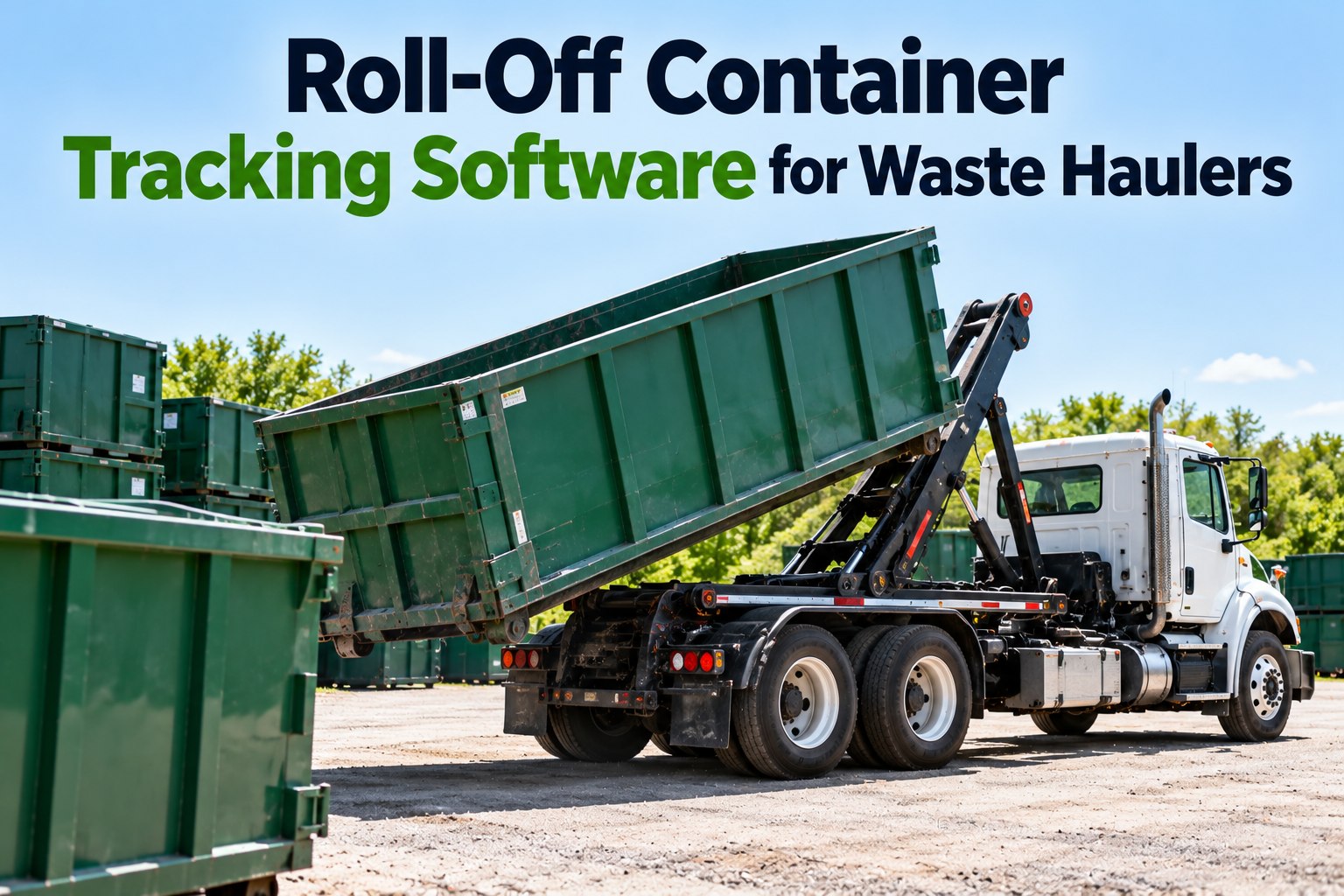
Roll-off container tracking is how a hauler knows where every box is, which customer has it, how long it has been on site and whether it is fit to go out again. Without it, containers drift: a 30-yard sits at a finished job for weeks, a swap gets missed, and a box with a broken latch goes back out on the next delivery. Roll-off container tracking software puts every container on one record next to the trucks that move it. Schedule a call to see roll-off container tracking in FleetRabbit.
For roll-off & dumpster rental haulers
Know where every box is, who has it, and whether it's fit to go back out.
One record per container: location, customer, days on site, condition and repairs, next to the truck that moved it.
Box RO-30-118
30 yd open top
Site
Renovation job, delivered by Truck 12
Last move
GPS-stamped delivery photo
Condition
Tailgate latch worn · work order open
Sample record for illustration
What Lost Containers, Missed Swaps and Unbilled Days Cost a Roll-Off Hauler
Every container is a revenue line. When one goes missing, overstays or goes out damaged, the cost lands in four places, and most haulers only see the first.
01
Missed hauls
A swap nobody scheduled is a haul nobody billed. In Columbus, Georgia's 2023 roll-off contract, bids ran from $475 to $597 per haul for 20 and 30-yard boxes.
02
Unbilled rental days
A box left at a finished job earns nothing and is unavailable for the next order.
03
Lost or stray boxes
Containers moved without a record have to be found, recovered or written off and replaced.
04
Shorter container life
Roll-offParts.com's Bryan Beers told Waste Advantage that many owners scrap boxes around year four. Untracked repairs make that sooner.
How Roll-Off Container Tracking Software Follows a Box Through Every Move
Each container moves through the same cycle. Tracking software records every step against the box, the customer and the truck, so the yard, dispatch and billing see the same status.
1
In the yard
Ready, or held for repair
2
Delivered
Truck, time, GPS photo
3
On site
Days counted per customer
4
Swap or pull
Condition checked at pickup
5
Dumped and returned
Back to yard or shop
The cycle repeats from step 1. A damaged box goes to the shop instead of back into service.
Get Roll-Off Container Tracking and Truck Maintenance in One System
Boxes, trucks, inspections and repairs on one screen, without a second app to keep in sync.
Dumpster Tracking Methods Compared: Spreadsheets, Barcodes, RFID and Container GPS
There are five common ways to track container inventory. A 2017 Waste360 overview from container-monitoring firm Compology priced them as below. Costs have shifted since, but the trade-offs still hold.
Swipe sideways to see every column
Method
How it works
Reported cost (2017)
Main limit
Manual count
Yard counts logged in a spreadsheet
Staff time only
Out of date the moment a truck leaves
Barcode or QR
Driver scans a label at each move
About $0.15 a label; scanners $40 to $500
Only as good as the driver's scan
RFID
Tags read by handheld or fixed readers
Tags $0.10 to $20; readers $1,000 to $20,000
Reader hardware cost
Truck GPS
Truck location matched to work orders
$40 to $300 a unit, plus $15 to $45 a month
Tracks the truck, not the box
Container GPS
Tracker mounted on each box
From about $7 per box a month
Per-box subscription and battery upkeep
Most Haulers Combine a Scan or Photo With Truck GPS
A driver confirming each delivery and pull with a GPS-stamped photo ties the box to a place and a time without fitting a tracker to every container. Haulers with high-value or high-theft boxes can add trackers to those units alone.
Core Features of Roll-Off Container Tracking Software for Waste Haulers
Whatever system you choose, these are the features that close the gaps between the yard, dispatch, the shop and billing.
Container register
Every box with its ID, size, type and status: in yard, on site, in repair or retired.
Customer and site assignment
Who has each box, at which address, since when.
Proof of each move
Delivery, swap and pull confirmed with a time, a location and a photo.
Days on site
Boxes sitting past their expected pickup flagged before they turn into lost rental.
Condition and repairs
Damage logged at pickup, repair work orders and a history for each box.
Trucks and boxes together
The roll-off trucks and the containers they carry in the same maintenance system.
Container Maintenance Tracking: What to Check on a Roll-Off Box at Every Pull
A tracked container is only useful if it is safe to send out again. Deist Industries' guidance in Waste Advantage lists the parts that wear first. Drivers can check most of them in the time it takes to load.
Tailgate
Latch post sound, latch ears locking, hinge pins straight; seals and ratchet binders on sealed boxes
Hookup
Nose rollers, brackets and cable hook on cable boxes; hooklift pin on hooklift boxes
Body
Bent or rusted side posts, weakened crossmembers, holes from rust
Wheels and rollers
Wheels that drag instead of roll, worn ground and nose rollers
Safety items
Loose or broken ladder rungs, decals that can't be read
Grease
Hinges, wheels and nose rollers every one to three months, per Deist
Salt and Wet Weather Shorten Container Life
Beers calls salt "a huge enemy to steel containers." Boxes working winter roads or coastal sites need more frequent cleaning and paint touch-ups, which only happens if their history shows where they've been.
Three Roll-Off Container Problems Tracking Solves, and How
"We can't find box 118."
With no record of the last move, someone drives the route looking for it.
Every delivery and pull carries a GPS-stamped photo, so the last known site is one search away.
Find lost containers faster, free
"That job finished three weeks ago."
The box is still there, unbilled and unavailable for the next order.
Days on site are counted per box, and long stays are flagged for a pickup or a call to the customer.
Schedule a call on long-stay boxes
"It went out with a broken latch."
A damaged box goes straight back into service because nobody logged the damage.
Damage reported at pickup opens a work order and holds the box in the yard until it's fixed.
Schedule a call on container repairs
Who Needs Roll-Off Container Tracking Software
Roll-off and dumpster rental haulers
Dozens to hundreds of boxes on rental across many job sites.
Municipal solid waste fleets
City-owned containers at facilities, parks and public collection sites.
Construction and demolition haulers
Boxes moving between contractors, job sites and disposal facilities.
Scrap and recycling operators
Containers placed at industrial customers and swapped on schedule.
How FleetRabbit Handles Roll-Off Container Tracking Alongside Your Trucks
FleetRabbit tracks roll-off containers, dumpsters, recycling bins and compactors with location, customer assignment, condition and service history, in the same system as the trucks that haul them.
Container records
Each box with its size, customer, site and status.
Driver app proof
Deliveries and pulls confirmed with GPS timestamps and photos.
Condition to work order
Damage found at pickup goes straight to the shop.
Truck maintenance too
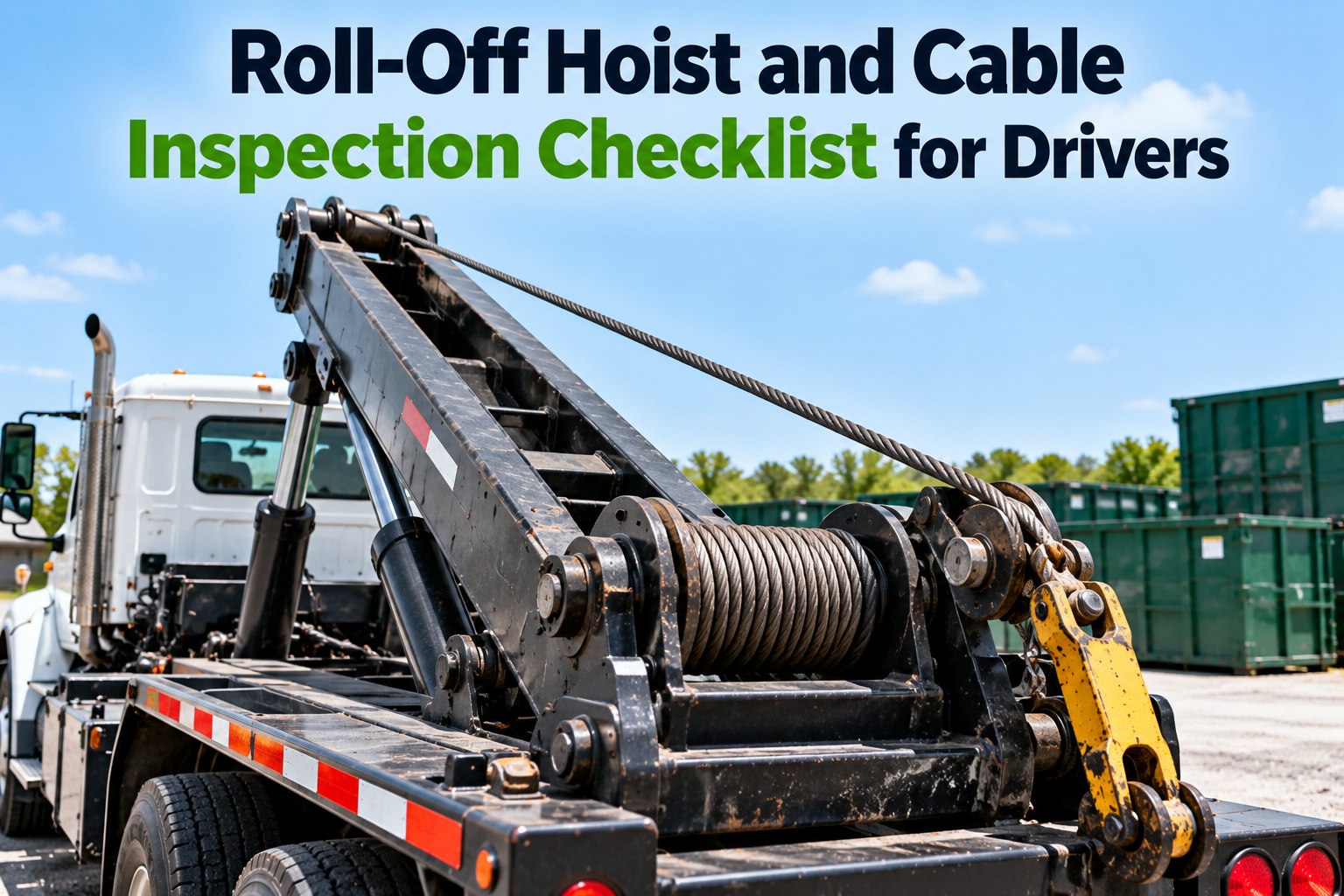
Hoist, cable and chassis PM on the roll-off trucks, with DVIRs.
What you'll see on the call
Your container list loaded by size and status
A delivery logged with a GPS-stamped photo
A damaged box held in the yard with a work order
Service history and customer assignments per box
Walk Me Through Container Tracking
Stop Losing Boxes and Billable Days With Roll-Off Container Tracking Software
Every container's location, customer, days on site and condition, next to the trucks that move them.
Free for up to 3 assets · No credit card needed
Roll-Off Container Tracking: Questions Haulers Ask
What is roll-off container tracking software?
It is software that keeps a record for every roll-off box: where it is, which customer has it, how long it has been on site and what condition it is in. Moves are logged by driver scans, photos or GPS, so dispatch, the yard and billing share one status.
Schedule a call to see it.
Do I need a GPS tracker on every dumpster?
Not always. Many haulers confirm each delivery and pull with a GPS-stamped photo from the driver's phone, which records where the box was left and when. Per-container trackers add live location, at a monthly cost per box, and suit high-value or theft-prone units best.
How do haulers stop losing roll-off containers?
Record every move. When each delivery, swap and pull is logged against the box with a time, site and photo, the last known location is always on file. Regular yard counts checked against the system, plus alerts for boxes on site too long, catch strays early.
How long does a roll-off container last?
It depends on use, climate and care. A Roll-offParts.com specialist told Waste Advantage that many owners scrap boxes around their fourth year. Greasing hinges, wheels and rollers, repairing rust early and tracking damage at each pull can stretch service life well beyond that.
What should drivers check on a roll-off container?
At each pull, check the tailgate latch, ears and hinge pins, the hookup (nose rollers and cable hook, or hooklift pin), side posts and crossmembers, wheels, ladder rungs and safety decals. Damage found should be logged with a photo so the box is repaired before it goes back out.
Can one system track roll-off trucks and containers?
Yes. FleetRabbit tracks containers, dumpsters, bins and compactors alongside the roll-off trucks, with inspections, work orders and PM for both. Container condition issues and truck defects reach the same shop queue.
Schedule a call to see trucks and boxes together.
October 26, 2026By Sam Parker
All Blogs