Roll-Off Hoist and Cable Inspection Checklist for Drivers
By Emily Parker on October 26, 2026
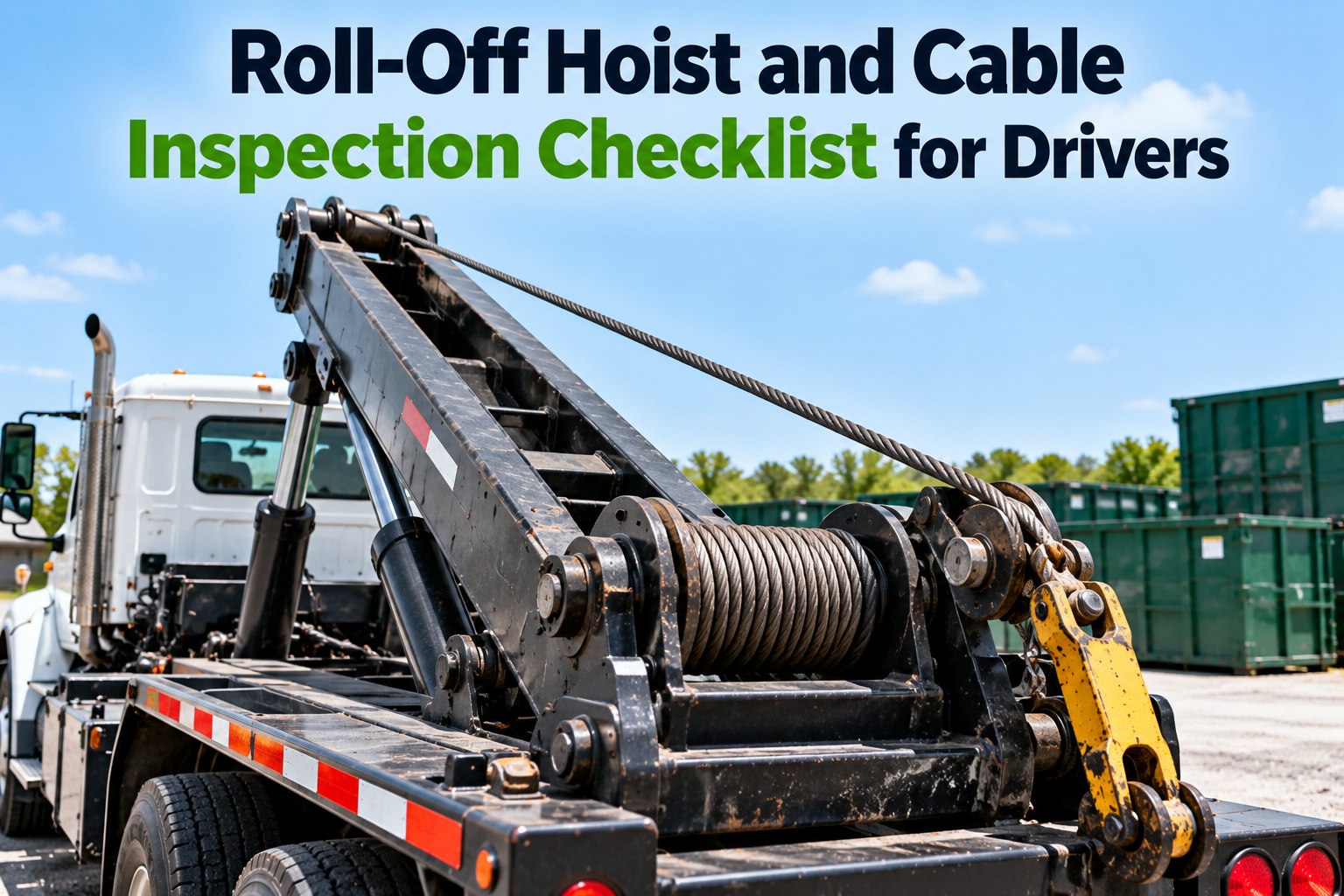
A roll-off hoist inspection is the few minutes each morning that decide whether the cable, sheaves, locks and hydraulics make it through the day. Roll-off cable inspection matters most: a broken cable takes the truck out of service until it's replaced, and a container that isn't locked down is a roadside violation. Below is a driver-ready daily checklist grouped by where each part sits on the truck, plus weekly and monthly checks, cable replacement criteria and clear out-of-service rules. Schedule a call to put this roll-off checklist on your drivers' phones.
Roll-off drivers · Cable hoists
Five stops on one walk-around, and every defect reaches the shop before the first container.
Work front to back: cab and alarms, PTO and hydraulics, the wire rope, the sheaves and rollers, then the container locks.
Daily Roll-Off Hoist Inspection Checklist: Cable, Sheaves, Hydraulics and Locks
PALFINGER's Erik Beecher, writing in Waste Advantage in 2024, called drivers "the first line of defense against equipment failure." This sheet follows the numbered stops above. Tick each line. Anything under "fail if" is a defect to report before the first pull.
Check
Fail if
1
Cab, alarms and lights
2
PTO, pump and hydraulics
3
Wire rope
4
Sheaves and rollers
5
Container locks
Tap a box to tick it. Hoist checks are done with the body down and the PTO off, except where a check needs the hoist running.
Watch for Slack When Unloading a Container
Beecher warns that slack in the cable while unloading can shock-load it and snap it. Drivers who see the cable go loose mid-cycle should stop, take up the slack and report it, even if nothing has broken yet.
Weekly and Monthly Roll-Off Cable Hoist Maintenance Checks
PALFINGER recommends greasing the hoist at least once a week or every 40 operating hours, typically on top of the shoe, the pins and the side rollers. The monthly list goes deeper and belongs to a technician.
Every week or 40 hours
Driver or yard tech
Every month
Technician
Why a Rev Limiter Is on a Hoist Checklist
Beecher names early pump and PTO burnout as a common failure, often from overloading or high engine speed. A rev limiter caps RPM while the hoist works, so checking that it's still set is a cheap way to protect two expensive parts.
Turn Every Failed Roll-Off Hoist Inspection Into a Same-Day Work Order
Drivers tick the checklist on their phone, attach a photo of the frayed cable or stuck sheave, and the shop sees it before the truck leaves.
When to Replace a Roll-Off Hoist Cable: Wire Rope Inspection Criteria
Your hoist maker's manual sets the final rule. Where it's silent, many shops borrow the wire rope removal criteria in the ASME B30 crane standards. For running ropes on mobile cranes (B30.5), these are the signs that call for replacement or a closer look.
6
randomly distributed broken wires in one rope lay
3
broken wires in one strand within one lay
1/3
of the original outside-wire diameter worn away
Any
kinking, crushing, birdcaging or heat damage
Criteria as summarized by Hanes Supply from ASME B30.5. Rotation-resistant ropes use tighter limits. A rope lay is the length along the rope in which one strand makes a full turn.
Check the Ends, Not Just the Length
Corroded, cracked, bent or worn end connections are reason enough to replace a cable, and they hide under clamps. Replacement cable should match or beat the original's strength rating, per the same standards.
Out of Service or Log and Fix? Defect Severity Levels for Roll-Off Hoist Inspections
Federal rules require defects likely to affect safety to be repaired before the vehicle runs again (49 CFR 396.11). A three-level rule tells drivers which side of that line a failed box falls on.
Out of service now
Truck stays in the yard
Cable past removal criteria, kinked or birdcaged · frozen sheave · locks won't engage · burst hose · dead backup or body-up alarm · brake or air fault
Fix before next shift
Finish today, shop tonight
Weeping fitting with oil level holding · one stiff side roller · worn but tight cable clamp · marker lamp out
Log and schedule
Next PM visit
Surface rust on rails · faded decals · minor body damage that doesn't affect the hoist
Your shop lead sets the final list. The point is that a driver never has to guess at the tailgate.
What Fails Most on Roll-Off Trucks: Cables, Sheaves, Pumps and Roadside Brake Checks
Hoist failures and roadside violations come from different places, and the daily checklist has to cover both.
Most common hoist failures
1
Frozen or rusty sheave blocks and side rollers
Overlooked until they seize
2
Early pump and PTO burnout
Overloading and high RPM
3
Cable breakage
Truck down until the cable is replaced
As named by PALFINGER North America's hoist service manager, Waste Advantage, 2024.
Top roadside out-of-service causes
24.4%
Brake systems
21.4%
Tires
16.7%
Brake adjustment
12.8%
Lights
11.4%
Cargo securement
Share of vehicle out-of-service violations, CVSA 2025 International Roadcheck, all commercial vehicles.
Container Securement Is a Federal Rule, Not Just a Lock Check
Cargo securement made CVSA's top five. For roll-off and hook-lift containers on trucks without an integral securement system, 49 CFR 393.134 requires the container to be blocked against forward movement and held at the front, then secured at the rear by a tiedown or two hooks, within about two meters of the rear. A worn hold-down lock is a compliance problem, not just a maintenance one.
Paper vs Digital Roll-Off Driver Checklists: Three Defects That Slip Through on Paper
Paper checklist
Ticks can be filled in later
A frayed cable is a word in a margin
The shop sees it when the form is handed in
Grease days live on a whiteboard
vs
Digital checklist
Each check time-stamped as it's done
A photo of the cable on the failed line
A work order opens when the check is submitted
40-hour grease tasks come due on each truck
Problem
The frayed cable was noted, then forgotten
A photo on the failed line opens a work order and holds the truck until the cable is checked.
Roll-Off Hoist and Cable Inspection: Questions Drivers and Fleet Managers Ask
What should a roll-off driver check on the hoist every day?
Check backup and body-up alarms and lights, hydraulic oil level and leaks, PTO engagement and controls, the visible cable for broken wires, kinks or flat spots, cable ends and clamps, sheaves and rollers turning freely, and hold-down locks engaging. Report any failed item before the first pull.
How often should a roll-off hoist be greased?
PALFINGER recommends greasing at least once a week or every 40 operating hours, whichever comes first. Grease points are typically on top of the shoe, the pins and the side rollers. Frozen or rusty sheaves and rollers are among the most common hoist failures, so don't let grease days slip.
When should a roll-off hoist cable be replaced?
Follow the hoist maker's manual first. Many shops also use ASME B30 crane criteria: replace a running rope with six broken wires in one lay or three in one strand, one-third of outer-wire diameter worn, or any kinking, crushing, birdcaging or heat damage. Damaged end connections also mean replacement.
What causes roll-off cables to break?
Common causes are shock loads from slack in the cable while unloading, wear from seized sheaves and rollers, overloading, and broken wires or flat spots missed on inspection. Keeping sheaves greased, clamps tight and the cable taut through each cycle prevents most breaks. Schedule a call on cable tracking.
How must a roll-off container be secured for transport?
Under 49 CFR 393.134, a container on a truck without an integral securement system must be blocked against forward movement, held at the front by the lifting device or another restraint, and secured at the rear with a tiedown or two hooks within about two meters of the container's rear.
Can drivers complete a roll-off hoist inspection on a phone?
Yes. FleetRabbit puts the daily hoist checklist and DVIR on drivers' phones with photos. Failed items open work orders the same day, and grease and monthly checks come due automatically on each truck. Schedule a call to see the checklist on your trucks.