Roll-off trucks haul the heaviest loads in waste management — 20, 30, and 40-yard containers packed with construction debris, demolition waste, and industrial scrap that can exceed 25,000 pounds per pull. The hoist system cycles thousands of times per year, cables endure constant tension and abrasion, and hydraulics operate under extreme pressure on every pickup and drop-off. Without a systematic maintenance schedule tailored to roll-off operations, these trucks break down in the field — stranding containers, delaying jobs, and costing haulers $800-1,500 per emergency repair plus $2,000+ daily in lost route revenue. This complete roll-off truck PM guide covers every system unique to roll-off operations: hoist maintenance, cable inspection schedules, PTO service intervals, hydraulic system care, and chassis maintenance optimized for heavy hauling duty cycles.
Roll-off operations face maintenance challenges that standard trucking PM schedules don't address. Cable hoists experience stress patterns that mileage-based schedules completely miss. A truck hauling 15 containers per day in construction zones needs different maintenance intervals than one doing 8 pulls on paved routes. This guide provides the specific schedules and inspection criteria that keep roll-off fleets running reliably. Book a free FleetRabbit demo to see how automated PM scheduling works for roll-off operations.
Roll-Off Truck Maintenance Schedule & Service Intervals
Complete preventive maintenance guide for cable hoist and hook-lift roll-off trucks. Covers hoist systems, wire rope inspection, PTO maintenance, hydraulics, and chassis service — with printable checklists used by 1,000+ waste haulers nationwide.
Why Roll-Off Trucks Need Specialized PM Schedules
Standard trucking PM schedules are based on mileage — but roll-off trucks accumulate most of their wear through hoist cycles, not miles driven. A roll-off truck averaging 12 container pulls per day experiences 3,000+ hoist cycles annually, each one stressing cables, hydraulics, pivot points, and the PTO system. Mileage-based maintenance misses this critical wear pattern entirely.
The cost difference is dramatic. Roll-off fleets using specialized PM schedules report 40% fewer unplanned breakdowns and 25% longer component life compared to those using generic trucking maintenance intervals.
Complete Roll-Off Maintenance Schedule
This schedule covers all roll-off-specific systems plus standard chassis maintenance. Intervals are based on operating hours for hoist-related systems and the shorter of time/mileage for chassis components. Adjust intervals based on operating conditions — severe duty (construction sites, demolition work) may require more frequent service.
Track all service intervals automatically with FleetRabbit's PM scheduling. Never miss a service window — get alerts based on hours, mileage, or calendar time. Start your free trial today and set up your first roll-off PM schedule in under 10 minutes.
Automate Your Roll-Off PM Schedule
FleetRabbit tracks hoist cycles, operating hours, and mileage — triggering service alerts for every system on your schedule. See it work with your actual fleet data.
Wire Rope (Cable) Inspection Guide
Wire rope failure is the number one cause of roll-off truck downtime. OSHA requires monthly documented inspection of all wire ropes, with immediate replacement if certain conditions are found. A broken cable in the field means a stranded container, emergency repair costs, and potential safety incidents.
Run the cable slowly through a folded cloth or leather pad to detect broken wires by feel. Broken wire ends will snag the material. This catches breaks that visual inspection misses, especially on dirty or greased cables.
PTO & Hydraulic System Maintenance
The PTO (Power Take-Off) transfers engine power to the hydraulic pump that operates the hoist system. Roll-off trucks typically run 4-8 hours of PTO engagement daily — far more than most hydraulic applications. This heavy duty cycle requires more frequent maintenance than standard intervals suggest.
Contaminated hydraulic fluid causes 85% of hydraulic pump failures. Regular oil analysis can detect contamination, water intrusion, and wear particles before they cause expensive failures. Consider sampling hydraulic oil every 500 hours for proactive maintenance.
For complete maintenance cost visibility, use FleetRabbit Cost Tracking (https://fleetrabbit.com/fleet-maintenance-cost-tracking) to track parts, labor, and vendor expenses by vehicle, system, or cost center.
Chassis & Drivetrain Maintenance
Roll-off trucks operate under severe duty conditions: heavy payloads, frequent stops, low-speed maneuvering under load, and operation on rough construction sites. Standard chassis maintenance intervals should be shortened by 20-30% for roll-off applications.
Digital pre-trip inspections catch developing issues before they become roadside breakdowns. FleetRabbit Digital DVIR (https://fleetrabbit.com/digital-dvir-app) lets drivers complete inspections on mobile devices with photo documentation — defects route automatically to maintenance. Schedule a demo to see digital DVIR for roll-off trucks.
Annual Inspection & DOT Requirements
Beyond the DOT annual inspection required for all commercial vehicles, roll-off trucks need annual thorough inspection of wire rope and hoist systems. OSHA requires annual wire rope inspection by a qualified person, documented with the date, inspector signature, and rope identifier.
Schedule annual inspections proactively with FleetRabbit PM Scheduling (https://fleetrabbit.com/preventive-maintenance-scheduling-software). Set calendar-based alerts for DOT inspections and OSHA-required wire rope documentation. Start free — 3 vehicles, no credit card required.
Common Roll-Off Truck Failures & Prevention
Understanding the most common failure modes helps focus maintenance efforts where they matter most. These are the top roll-off-specific failures based on industry data and fleet maintenance records.
Track all repairs by vehicle and failure type. FleetRabbit Service History (https://fleetrabbit.com/fleet-service-history) identifies patterns — if one truck repeatedly needs hydraulic hose replacements, you can investigate root cause rather than just replacing hoses repeatedly.
Frequently Asked Questions
There's no fixed replacement interval — cables should be replaced when inspection criteria are met (6+ broken wires per lay, significant diameter reduction, or any critical damage). Average cable life ranges from 12-36 months depending on usage intensity, load weights, and maintenance practices. Keep detailed inspection records to establish replacement patterns for your specific operation.
Use operating hours for hoist-related systems (PTO, hydraulics, cable) since that's where wear accumulates. Use whichever comes first (hours OR mileage) for chassis components like engine oil. A roll-off truck averaging 10 containers per day in local hauls accumulates far more PTO hours relative to miles than a long-haul application.
Use the hydraulic oil specified by your hoist manufacturer — typically AW46 or AW68 anti-wear hydraulic fluid. Never mix oil types. In cold climates, multi-viscosity hydraulic oil may be recommended. Check your hoist manual for specific requirements and approved alternatives.
Most modern roll-off trucks have PTO hour meters separate from the engine hour meter. If yours doesn't, install an aftermarket PTO hour meter on the hydraulic pump circuit. Without accurate PTO hours, you're guessing at maintenance intervals for your most critical systems.
Hook-lift systems eliminate wire rope maintenance entirely — there's no cable to inspect or replace. However, hook-lifts have more complex hydraulic systems with additional cylinders and pivot points requiring lubrication. Overall maintenance is similar in scope but focuses on different components.
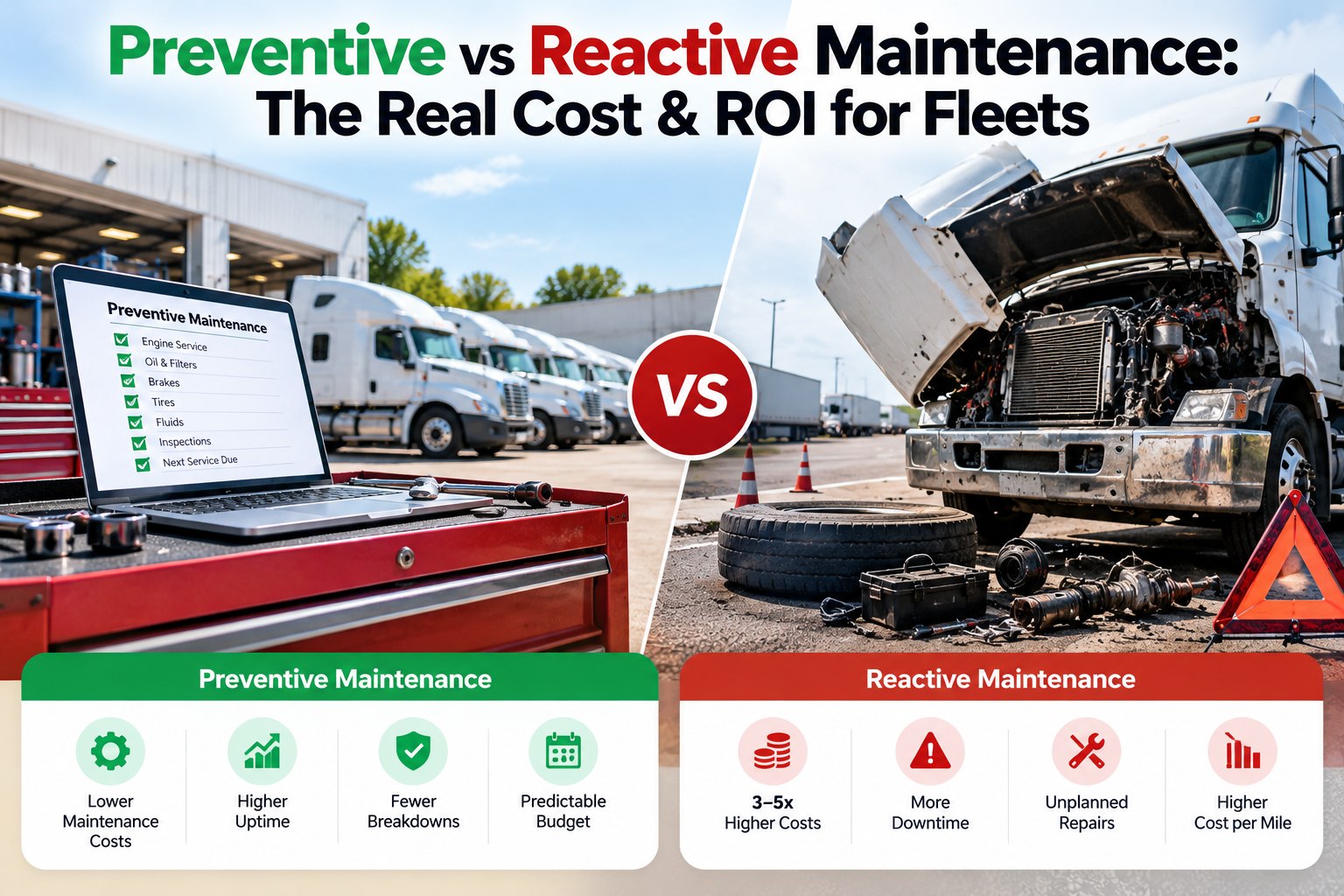
Consistent preventive maintenance reduces costs by 40-60% compared to reactive repair. Key strategies: train operators on proper hoist operation, keep cables lubricated, maintain clean hydraulic fluid, and address small issues before they become major failures. Tracking maintenance data helps identify problem trucks and optimize intervals. Book a free demo to see how FleetRabbit automates roll-off fleet maintenance tracking.
Automate Your Roll-Off Fleet Maintenance
FleetRabbit tracks service intervals by operating hours, mileage, and calendar time. Get alerts before services are due, document inspections digitally, and keep your roll-off fleet running reliably.