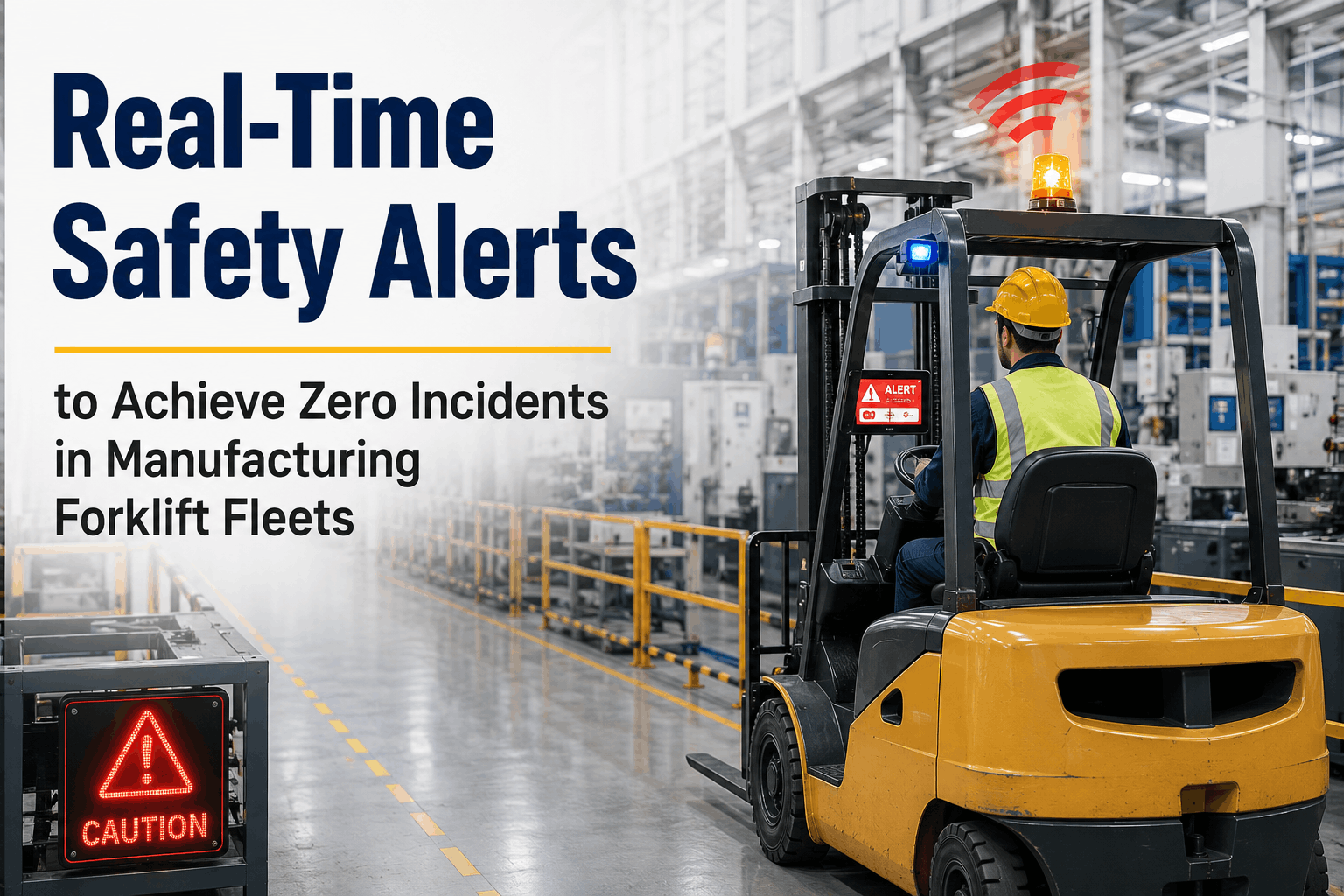
In manufacturing, the operation of forklifts and other material handling equipment presents one of the most significant safety challenges. Every shift, operators navigate busy aisles, tight corners, and loading docks, often carrying heavy or unstable loads. The consequences of a single incident can be severe: worker injuries, equipment damage, production stoppages, regulatory fines, and reputational harm. Achieving a zero-incident environment may seem like an ambitious goal, but with modern real-time safety alert systems, it is increasingly attainable. By leveraging instant alerts, automated incident tracking, and comprehensive reporting, manufacturers can proactively address risks and create a culture of safety that protects both people and productivity.
From Reactive to Real-Time Safety
Traditional safety management often relies on after-the-fact reporting, which limits the ability to prevent incidents. Real-time safety alerts shift the paradigm by enabling immediate intervention. These systems continuously monitor equipment and operator behavior, detecting anomalies such as sudden impacts, tip-overs, unauthorized zone entry, or operator fatigue patterns. When an event occurs, an instant alert is triggered, enabling supervisors to respond in seconds, not hours. This speed of response is critical for preventing a minor issue from escalating into a major incident.
Components of an Effective Safety Alert System
A comprehensive safety alert system for manufacturing fleets integrates several key technologies and workflows:
- Impact and Tip-Over Detection: Sensors on forklifts detect sudden impacts or tilt angles that exceed safe thresholds. Instant alerts notify supervisors and safety teams, enabling rapid response and immediate assessment of equipment integrity and operator well-being.
- Pedestrian and Zone Awareness: Proximity sensors and geo-fencing technology alert operators when they approach pedestrian zones, blind spots, or restricted areas. This reduces the risk of collisions between forklifts and workers on foot.
- Operator Behavior Monitoring: Telematics data combined with artificial intelligence can identify unsafe patterns such as harsh braking, rapid acceleration, or erratic steering. Real-time feedback via in-cab alerts helps operators correct their behavior immediately.
- Automated Reporting and Documentation: Every safety event is automatically logged, creating a detailed record that supports incident investigation, trend analysis, and OSHA reporting. This eliminates manual paperwork and ensures compliance documentation is always audit-ready.
Incident Tracking and Investigation
When an incident does occur, having detailed, accurate data is essential for understanding what happened and preventing recurrence. A modern safety system tracks not only the event itself but also the preceding conditions: equipment speed, load weight, operator actions, environmental factors, and maintenance status. This comprehensive view helps investigators identify root causes, whether they are related to operator error, equipment malfunction, or workplace layout. The ability to quickly access this information streamlines the investigative process and supports the development of effective corrective actions.
Beyond individual incidents, tracking aggregate data over time reveals patterns that may indicate systemic risks. For example, if multiple impact events occur in the same aisle or at the same time of day, that points to a specific hazard that can be addressed through engineering controls, additional signage, or revised procedures. This data-driven approach turns safety management into a proactive, continuous improvement process. Sign up to see how FleetRabbit can transform your safety tracking.
Real-Time Safety Alert Workflow
Supporting OSHA Goals and Compliance
OSHA standards require rigorous safety practices in industrial environments, particularly for powered industrial trucks. A robust real-time safety alert system directly supports compliance by providing documented evidence of safety monitoring, incident management, and corrective actions. Automated reporting ensures that all incidents are recorded with the necessary detail for OSHA 300 logs and other regulatory submissions. This not only reduces administrative burden but also demonstrates a proactive commitment to worker safety during inspections. Book a demo to learn how FleetRabbit helps with compliance reporting.
Building a Zero-Incident Safety Culture
Achieving zero incidents requires more than just technology—it demands a cultural shift where safety is everyone's priority. Real-time alert systems support this by making safety visible and actionable at every level. When operators know that their behavior is monitored and that immediate feedback is available, they are more likely to adopt safe practices. When supervisors have access to real-time data, they can provide coaching in the moment, rather than relying on periodic reviews. And when management sees clear metrics on safety performance, they can allocate resources effectively to address the most significant risks.
Integrating safety alerts with your broader fleet management platform creates a single source of truth for equipment performance, maintenance, and safety. This holistic view is essential for understanding the interconnections between equipment condition, operator behavior, and incident risk. For example, if a particular forklift shows a pattern of near-miss events, it may indicate that its controls or visibility need attention, or that the operator requires additional training. Sign up to integrate safety alerts with your full fleet management system.
Implementation Considerations
When implementing a real-time safety alert system, consider the following best practices:
- Operator Training: Ensure all operators understand the purpose of the system and how it works. Emphasize that the goal is to support their safety, not to monitor them punitively.
- Calibration and Maintenance: Sensors and alert systems must be regularly calibrated and maintained to ensure accuracy and reliability.
- Response Protocols: Define clear protocols for responding to different types of alerts, including escalation paths and corrective action procedures.
- Continuous Improvement: Use the data generated by the system to regularly review safety performance, identify improvement opportunities, and update training and procedures accordingly.
A well-executed implementation turns real-time safety alerts into a powerful tool for cultural transformation and operational excellence. Book a demo to discuss how FleetRabbit can be tailored to your manufacturing environment.
CTA section 1Ready to Achieve Zero Incidents?
Real-time safety alerts, incident tracking, and automated reporting — all integrated with your fleet management platform.
Frequently Asked Questions
Systems can provide real-time alerts for impacts, tip-overs, proximity to pedestrians or zones, harsh braking, rapid acceleration, erratic steering, and operator fatigue indicators. Alerts can be sent to operators, supervisors, and safety teams via mobile apps, desktop dashboards, or integrated messaging systems.
Real-time alerting enables immediate intervention by supervisors and safety teams, preventing minor issues from escalating. It also provides immediate feedback to operators, encouraging safer behavior. Over time, data analysis helps identify and address systemic risks.
FleetRabbit automates incident logging and generates OSHA-ready reports, including OSHA 300 logs and detailed incident investigations. This ensures accurate documentation, supports timely reporting, and provides evidence of proactive safety management during inspections.
ROI is realized through reduced worker injuries, lower workers' compensation costs, decreased equipment damage, fewer production stoppages, and improved safety performance metrics. Many operations see payback within the first year, along with long-term cultural benefits.
Yes, modern platforms like FleetRabbit integrate safety alerts with maintenance tracking, utilization analytics, and operator management. This provides a comprehensive view of fleet health and performance, supporting data-driven decision-making across safety and operations.
Join 800+ Operations Using FleetRabbit
From real-time safety alerts to comprehensive fleet management — FleetRabbit helps you protect your people and your productivity.