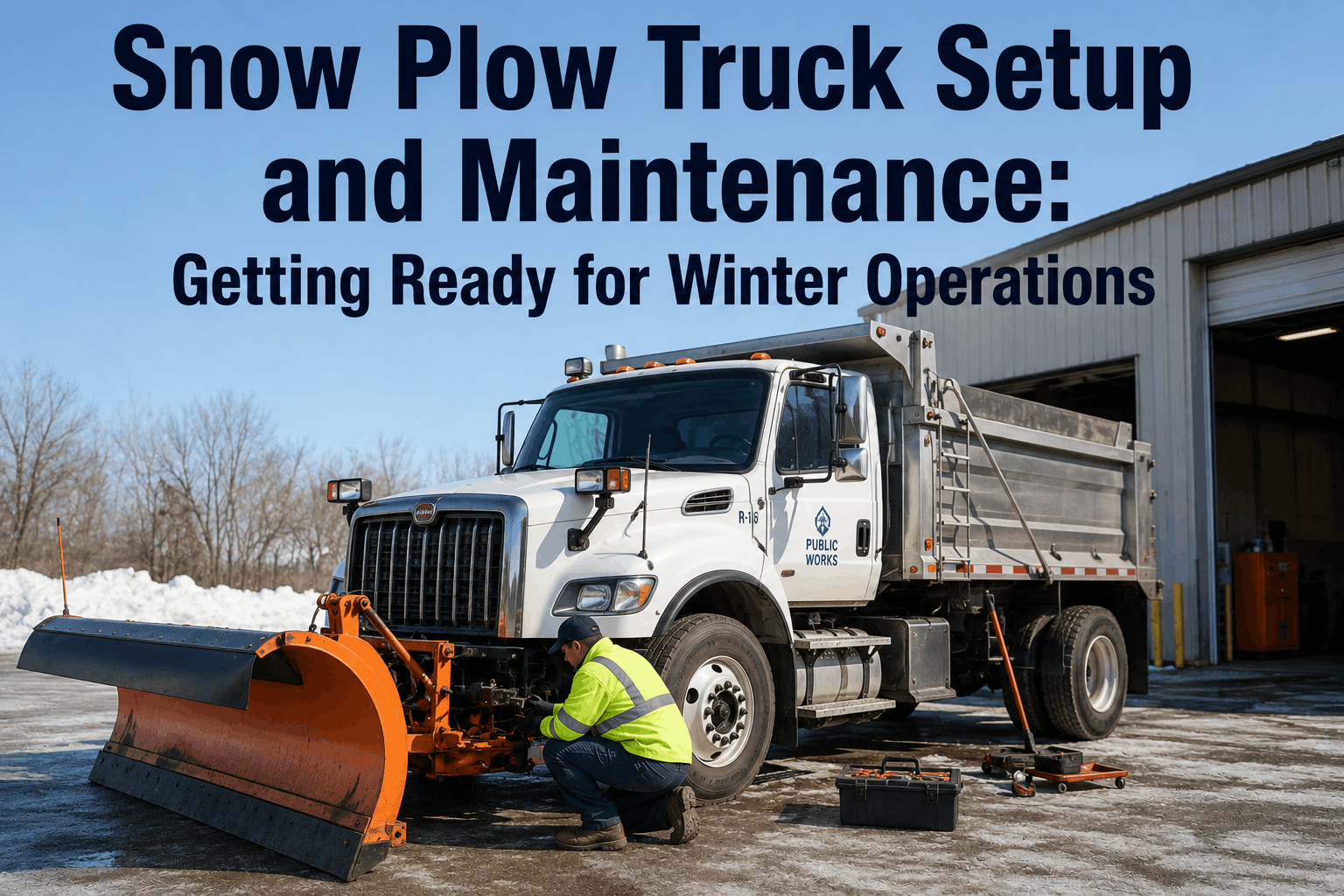
Winter operations push snow plow trucks to their mechanical limits. Sub-zero temperatures, road salt corrosion, hydraulic stress, and 24/7 duty cycles expose every weak point. Industry data shows that fleets with a formal pre-winter maintenance program reduce breakdowns by 54% and lower repair costs by an average of $3,200 per truck per season. From plow attachment calibration to spreader chain adjustments and undercarriage rust prevention, getting your snow removal fleet ready requires systematic preparation. This guide provides a complete winter readiness framework — including a 30-point pre-season checklist, hydraulic system maintenance, lighting and electrical prep, and driver safety protocols. Sign up for FleetRabbit's winter maintenance scheduler or book a demo to automate your seasonal fleet preparation.
Complete chassis inspection: coolant freeze point (-35°F minimum), battery load test, alternator output, block heater function. Inspect all belts and hoses for cracks.
Check plow cutting edge wear, hydraulic fluid (use winter-grade), cylinder leaks, and controller function. Grease all pivot points and trip springs.
Test conveyor chain, spinner disk, and auger. Calibrate salt/sand application rates. Inspect electric or hydraulic motors for corrosion.
Verify all amber strobes, LED light bars, reverse alarms, and plow lights function. Ensure reflective markings are visible.
Complete pre-winter maintenance checklist for snow plow trucks
The difference between a smooth snow season and constant downtime is a thorough pre-winter inspection. Start with engine cooling system: test antifreeze concentration using a refractometer — target -35°F protection. Replace worn serpentine belts and inspect coolant hoses for soft spots. Batteries lose 35% of their cranking power at 32°F, so load test each battery and clean terminals. Upgrade to a heavy-duty alternator (150+ amps) to handle extra lighting and plow hydraulics. Install winter front or radiator cover to maintain operating temperature. Sign up for FleetRabbit's digital inspection templates that include all winter-specific checkpoints.
Advanced hydraulic system diagnostics for extreme cold
Hydraulic systems are the most failure-prone component on snow plows. Standard AW32 or AW46 hydraulic fluid thickens in extreme cold, causing slow blade response, cavitation, and pump seizure. Switch to cold-weather hydraulic fluid (ISO 15 or 22) or synthetic multi-grade (e.g., Mobil SHC 500 series) rated to -40°F. Inspect all hoses for chafing and replace any with swollen or cracked covers. Common leak points: cylinder rod seals, quick-connect couplers, and control valve spools. After every storm, clean hydraulic components to prevent salt corrosion. FleetRabbit's maintenance scheduler includes hourly-based hydraulic oil change reminders. Book a demo to see how automated PM schedules reduce component failures.
Install tank heaters or circulating heaters to maintain fluid viscosity before startup. Reduces pump wear by 60% in sub-zero starts.
Prevent moisture ingress that forms ice crystals in hydraulic reservoirs. Replace annually before first snowfall.
Use wire-braided hoses rated for -60°F. Standard rubber hoses become brittle and crack at -20°F.
Spreader and salt handling equipment setup
Salt spreaders face extreme corrosion and mechanical stress. Before winter, disassemble and clean the conveyor chain, then lubricate with penetrating oil. Inspect spinner disc for bent fins; replace worn spinner bearings. Calibrate the gate opening to ensure consistent application rates (typically 200-800 lbs per lane mile). For electric spreaders, check motor brushes and wiring harness for rodent damage. For hydraulic spreaders, test the flow control valve. Always run a test pattern on dry pavement to verify spread width. Stock spare parts: shear pins, chain links, and motor controllers. Sign up for FleetRabbit's parts inventory module to track spare spreader components across your fleet.
Undercarriage corrosion prevention: the silent fleet killer
Road salt causes $5,000+ in premature corrosion damage per truck over five years. Proactive undercoating with lanolin-based products (Fluid Film, WoolWax) creates a self-healing barrier. Pay special attention to: hydraulic line brackets, plow mounting frame welds, suspension components, and electrical ground points. Install dielectric grease on all electrical connectors. Schedule weekly undercarriage wash using heated pressure washers during active salt events. Fleets using automated wash tracking reduce rust-related repairs by 47%. Book a demo to implement wash cycle reminders in FleetRabbit.
FleetRabbit's winterization templates, automated reminders, and technician checklists reduce prep time by 60%. Used by municipal and commercial snow removal fleets nationwide.
Plow attachment and mounting system inspection
The plow mounting frame (push beam, A-frame, and quick-attach system) endures tremendous stress. Check for cracks at weld points, bent push plates, and worn pivot pins. Verify that the trip edge mechanism moves freely — stuck trip edges cause blade damage and road surface gouging. For V-plows, test the wing cylinders and ensure the center hinge pin is lubricated. For reversible plows, inspect the rotation gearbox and limit switches. Tighten all mounting bolts to manufacturer torque specs. A loose plow can detach during transport, causing severe accidents. Book a demo to see how FleetRabbit's equipment inspection forms document mounting system integrity.
Electrical and lighting systems for overnight plowing
Snow plows operate in low visibility, making lighting critical. Inspect all strobe beacons, LED light bars, and headlights. Use magnetic mount or permanently wired strobes; replace any cracked lenses. Check the plow headlight harness — corrosion at connector plugs is common. Install backup alarms and camera systems for safer maneuvering. Verify that the vehicle's alternator can handle the extra electrical load (a full lighting package draws 30-50 amps). Add a battery isolator if using auxiliary batteries. Sign up for FleetRabbit's pre-trip inspection app that includes a mandatory lighting check before each shift.
Tire chains and winter traction management
Tire chains are mandatory in many mountainous and northern jurisdictions. Select the correct chain size for your tire dimensions (e.g., 11R22.5 or 295/75R22.5). Practice installation before snow flies — every driver should be able to mount chains within 15 minutes. Carry at least two extra cross chains and a repair kit. For fleets running in severe conditions, consider automatic chain systems (Onspot) that deploy with a dashboard switch. Check tire tread depth: winter tires with 12/32+ tread perform significantly better than worn tires. FleetRabbit's tire tracking module records tread depth and chain inventory per vehicle.
Fuel system winterization: preventing gelling and water contamination
Diesel fuel gels at low temperatures, stranding trucks mid-storm. Use winter blend diesel (#1 diesel blend) or add anti-gel additives at every fill-up below 20°F. Install heated fuel filters and water separators. Drain water from fuel tanks weekly — frozen water crystals clog injectors and damage high-pressure pumps. For gasoline plow trucks, add dry gas (isopropyl alcohol) to prevent fuel line ice. Store equipment indoors whenever possible. Fleets using fuel additive tracking via FleetRabbit report 78% fewer cold-start failures. Sign up for automated fuel additive reminders.
Cab comfort and defrosting systems for driver efficiency
Operator fatigue increases accident risk by 40% in freezing cabs. Test cab heater performance: should achieve 70°F cabin temperature within 30 minutes at 0°F ambient. Replace cabin air filters and inspect heater core for blockages. Ensure defroster vents direct air to the full windshield width — add auxiliary fans if needed. Install heated mirrors and steering wheel for longer shifts. Provide emergency thermal blankets and hand warmers in every truck. FleetRabbit's driver feedback module includes winter comfort surveys to identify underperforming cabs. Book a demo to track cab heater performance data.
Driver winter readiness and post-storm procedures
Operator training is as vital as equipment prep. Review winter driving techniques: reduced speed with plow down, safe following distances, and backing protocols. Provide emergency kits: flashlight, extra winter clothing, jumper cables, and a bag of sand. Establish post-storm procedures: wash undercarriage within 24 hours to remove salt, retract and store plow properly, inspect for damage, and refill fuel and def. After every 10 hours of plowing, check hydraulic fluid levels and look for leaks. FleetRabbit's driver app includes post-trip inspection forms specific to snow plow operations. Book a demo to see digital DVIR for winter fleets.
Verify plow attachment, spreader material levels, fuel at 90%+, and all lighting. 15-minute checklist reduces on-route failures by 62%.
Apply corrosion inhibitor spray to exposed fasteners weekly. Document washes in FleetRabbit to ensure compliance with warranty requirements.
Schedule 30-minute breaks every 4 hours during continuous snow events. Use electronic logs to monitor compliance and reduce accident risk.
Emergency spare parts inventory for snow season
Stock critical spares before the first storm to avoid weeks-long backorders. Minimum inventory per 5 trucks: 2 hydraulic pumps, 4 lift cylinders, 10 cutting edge sections, 5 spreader motors, 20 plow marker lights, 2 sets of tire chains, and 10 gallons of winter hydraulic fluid. Store parts in heated area for immediate access. Fleets using FleetRabbit's parts inventory module reduce emergency procurement time by 70% and prevent storm downtime. Sign up to set minimum stock alerts.
FleetRabbit delivers automated winter prep checklists, inspection reminders, and real-time fleet health dashboards. Don't let preventable breakdowns shut down your snow operation.