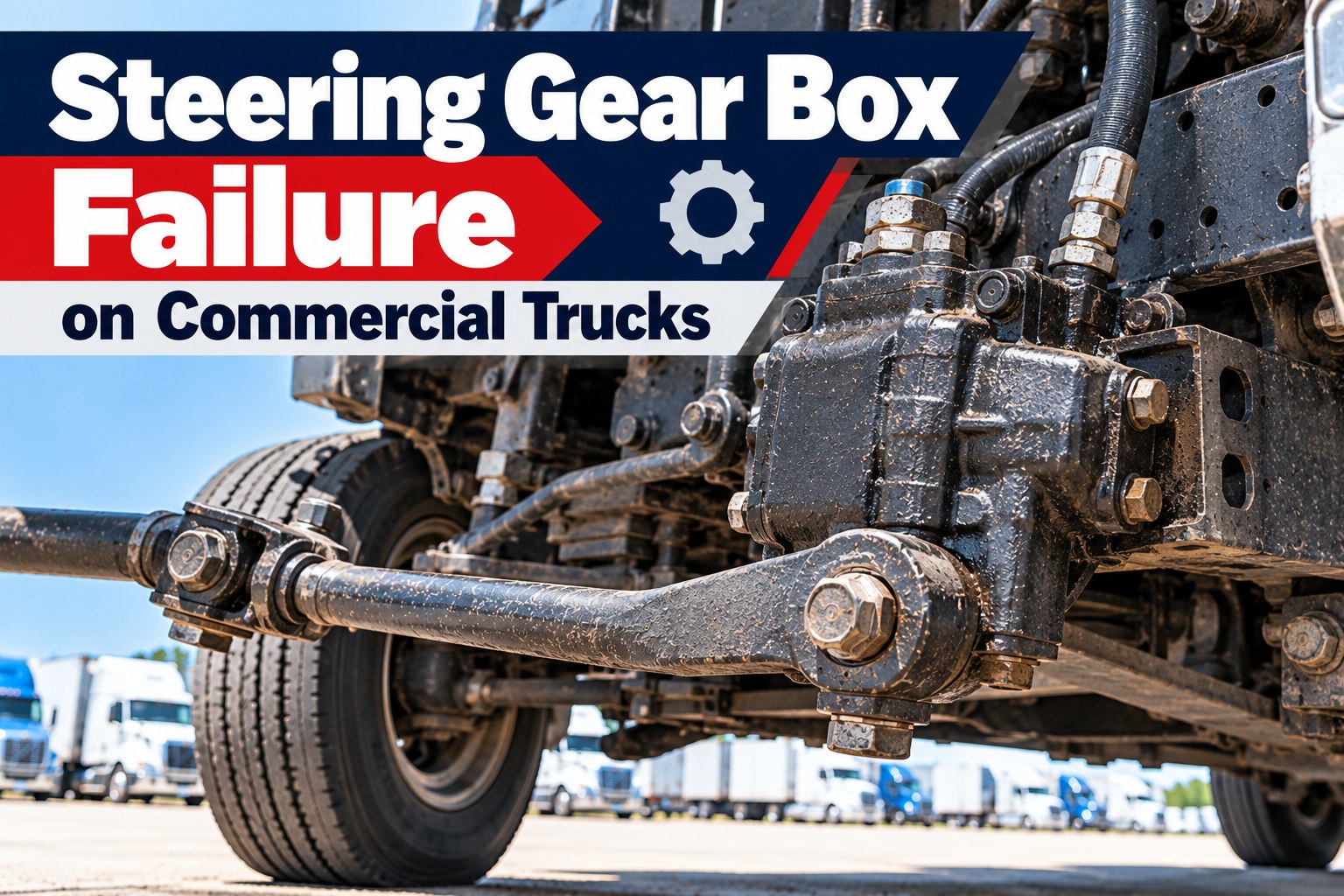
Steering gear box failure on a truck means the gear that multiplies the driver's steering effort has worn, leaked or lost pressure, so the steering feels heavy, loose or noisy. The first signs are a whine, a fluid drip, wander or free play, and the last sign can be a steering defect that puts the truck out of service. This page covers how the gear works, the symptoms, the causes, how to diagnose it before condemning it, the repair options, the cost and a service-interval table. Schedule a call to put steering fluid and leak checks on a PM schedule.
STEERING DIAGNOSTICS · SHOPS AND FLEET MANAGERS
The Gear Box Gets Blamed for What the Pump, the Fluid and the Linkage Did
A gear replacement is the most expensive steering repair there is, and it is often ordered before anyone tests the pump or checks the linkage. Rule out the cheap causes first.
BEFORE YOU CONDEMN THE GEAR
1
Read the fluid
Color, smell, level and foam.
2
Test the pump
Pressure and flow.
3
Inspect the linkage
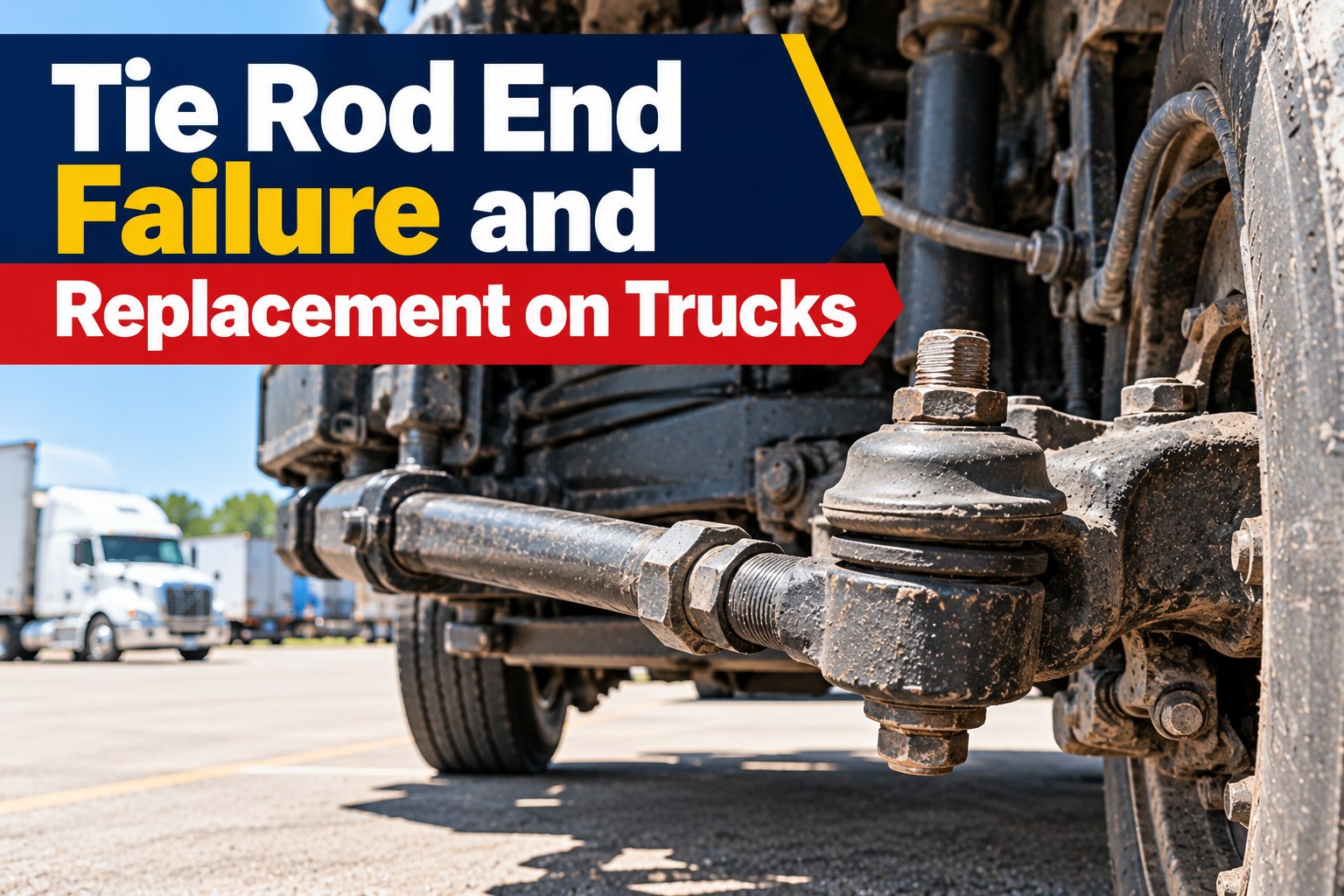
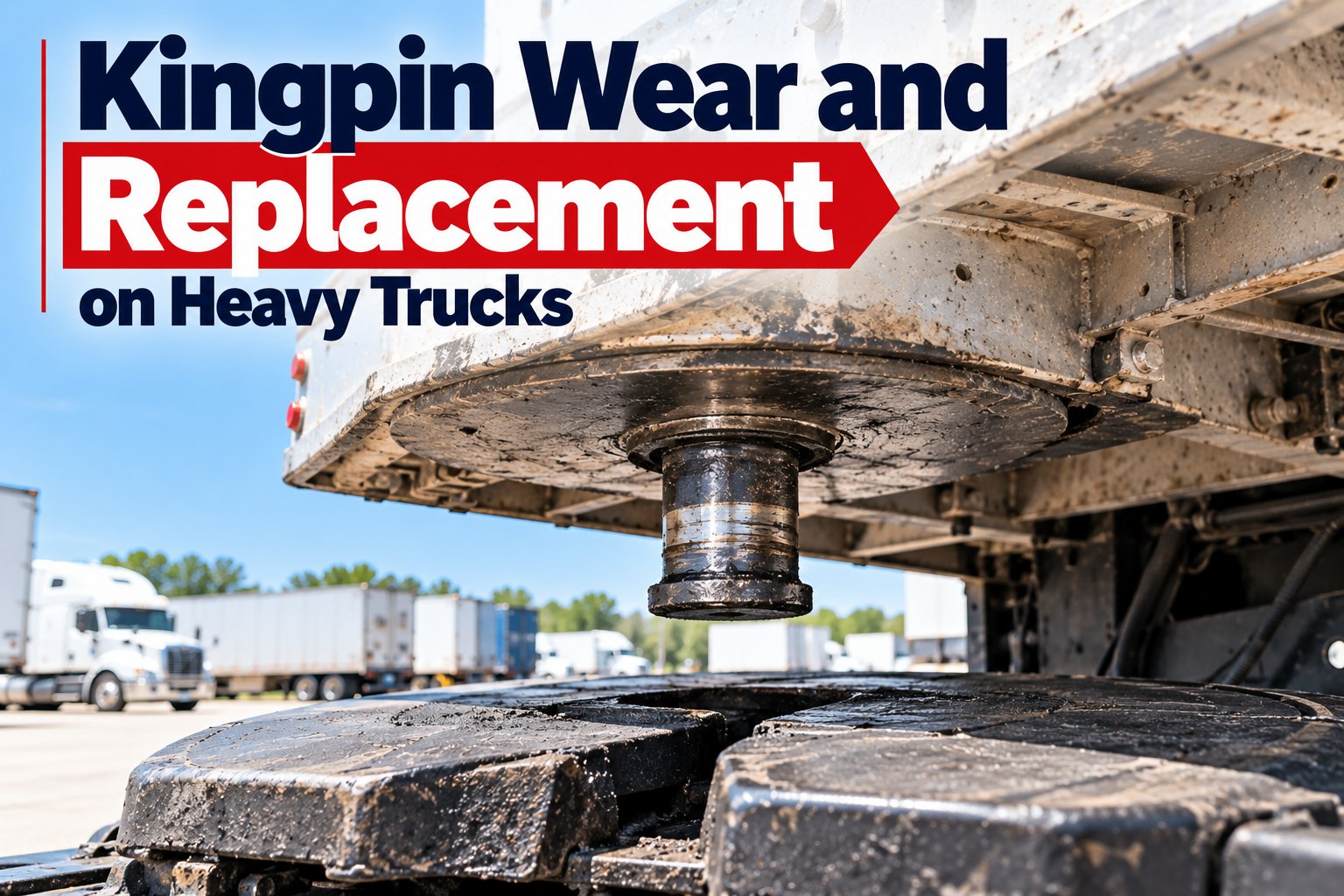
Ends, arms, kingpins, bearings.
4
Then judge the gear
Wheel wiggle at the input shaft.
How a Truck Steering Gear Box Works and What Fails Inside It
Most heavy trucks use an integral hydraulic gear, with the piston, valve and recirculating-ball mechanism in one housing
Integral hydraulic gears such as the Sheppard M-Series and D-Series and the Ross/TRW TAS and THP families are the most common on Class 7 and 8 trucks. Manual gears are largely obsolete, and electric systems are arriving, but hydraulic recirculating-ball steering still plays a major role.
Four systems share the job, so a fault in one often looks like a fault in the gear
THE GEAR
Housing, valve and sector shaft
Seals at the input and output shafts and the end caps are where leaks start.
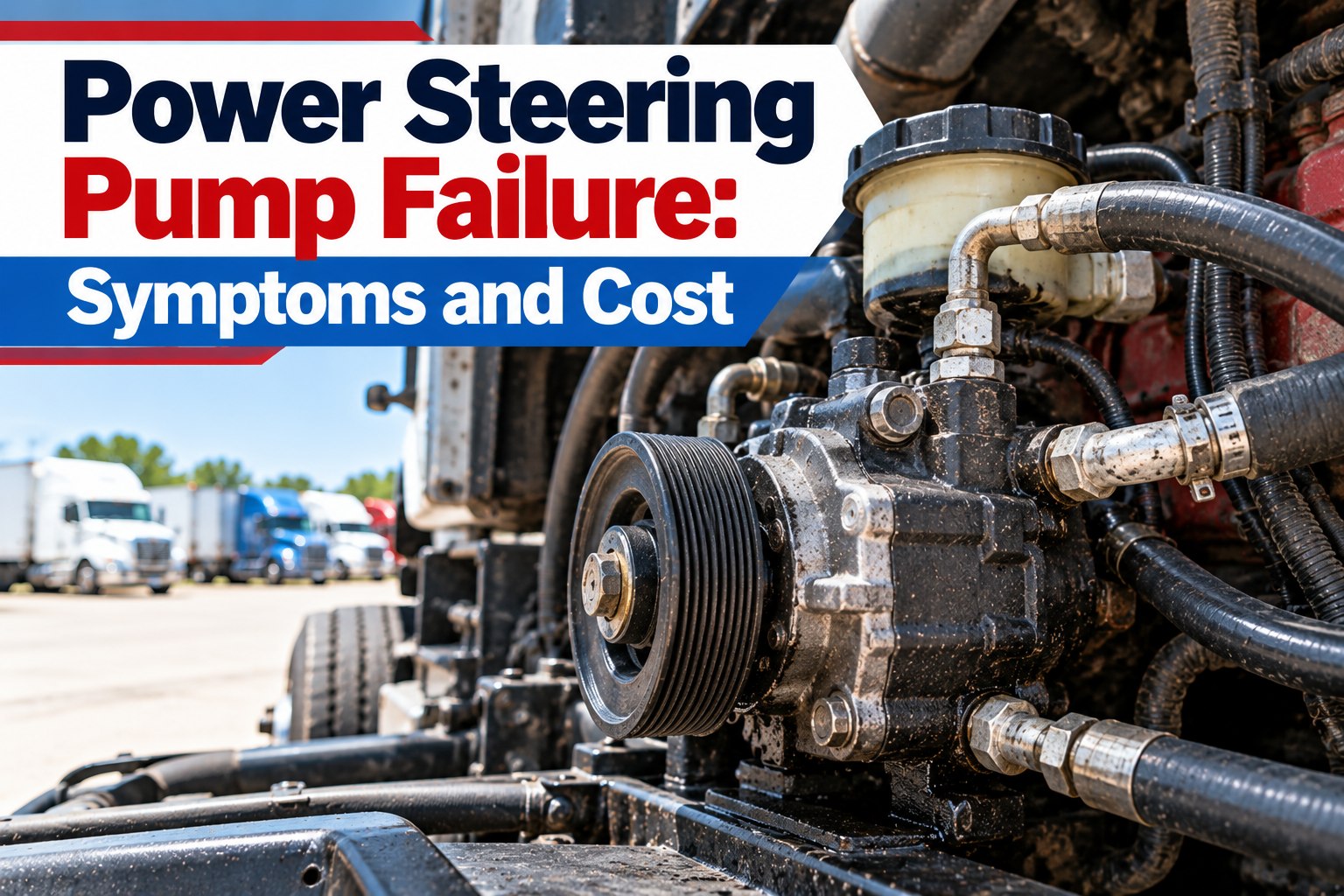
THE PUMP AND BELT
Makes the pressure and flow
A weak pump mimics a worn gear, and a whine points here first.
THE FLUID
Carries heat and wear debris
Its color, smell and level tell you what is failing before you open anything.
HOSES AND FITTINGS
Carry high pressure
A failed hose can spray hot fluid, so it is a fire and burn risk as well as a leak.
Steering Gear Box Failure Symptoms: Noise, Feel and Fluid
Sort the driver's report into noise, feel and what is on the ground
NOISE
- Whining that rises with RPM or steering input
- Groaning in turns
- Belt squeal
- Grinding or clunking
FEEL
- Heavier steering effort, or heaviness that comes and goes
- Wander and a slow return to center
- Wheel vibration
- Free play before the wheels respond
FLUID
- Fluid on the ground
- A low reservoir
- Dark, milky or foamy fluid
A whine points to the pump, while free play and wander point to the gear or the linkage
GEAR BOX
- Free play at the wheel
- Wander on straight roads
- Hitching and hard spots
- Leaks at the input or output shaft
VS
POWER STEERING PUMP
- Whine when turning
- Worse with low fluid
- Leaks at the pulley or reservoir
- Heavy effort when pressure is weak
Steering Gear Box Failure Causes: Fluid, Leaks, Air and Wear
Contaminated fluid tells you what is failing, so read it before you drain it
Dark brown or black
Oxidation or overheating
Metal flakes
Internal wear
Foamy or spongy
Air from low fluid, loose connections or a pump seal
A burnt smell
Thermal breakdown of the fluid
A small leak, air and debris can chain together into a full gear replacement
1
Seal leaks
Pump, gear or hose seals start to weep.
→
2
Fluid drops
Low level and loose connections let air in.
→
3
Pump cavitates
Foaming fluid starves the pump.
→
4
Debris spreads
Metal debris scores internal surfaces.
→
5
Gear replaced
A seal kit is no longer enough.
Steering fluid service overdue? Schedule the check before a leak turns into a gear replacement.
Set fluid, hose and linkage reminders per truck, and log every driver complaint about whine or wander against the unit.
How to Diagnose a Steering Gear Box Before Condemning It
Rule out the linkage and the pump first, because both mimic a worn gear
1
Inspect the linkage first
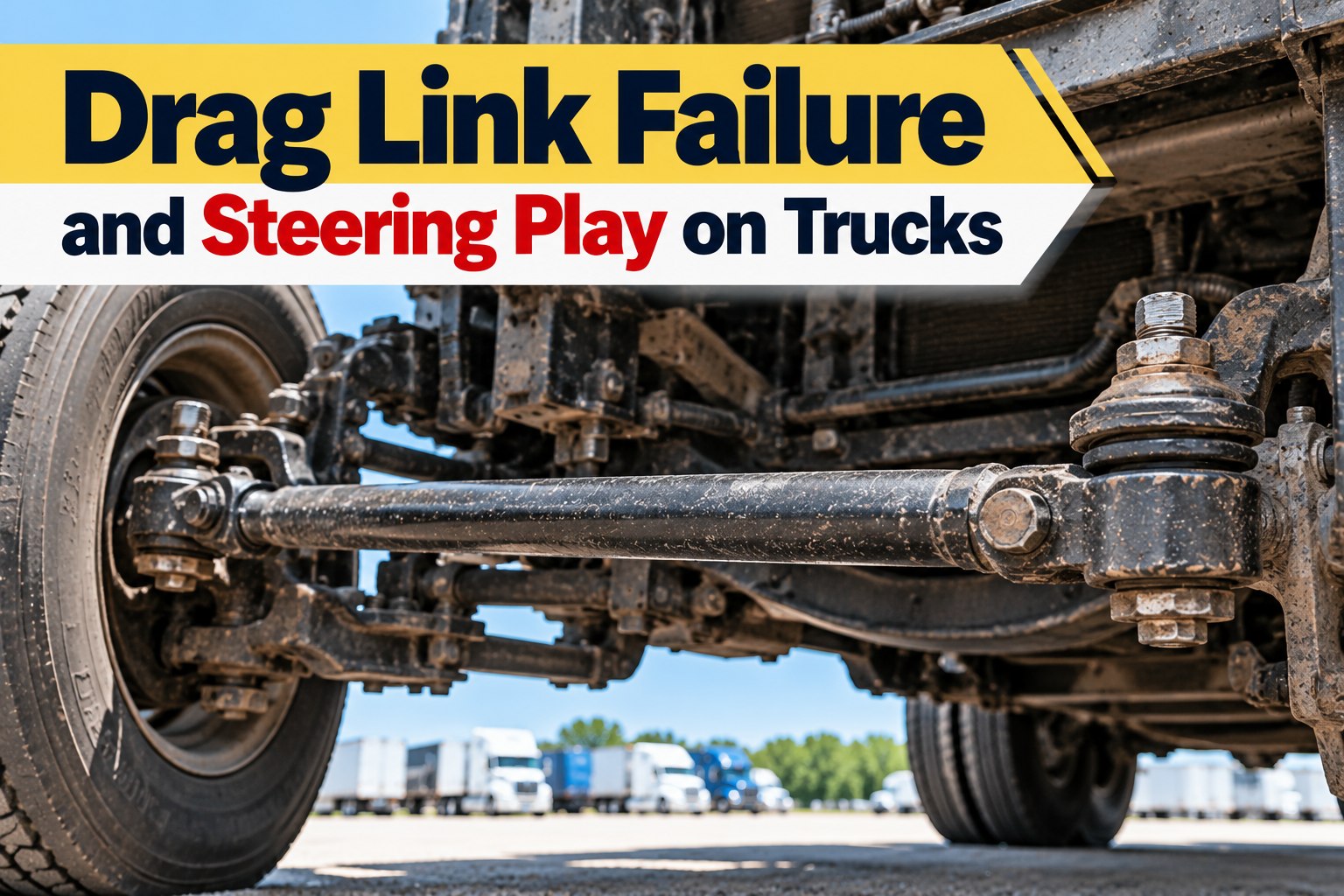
Drag link ends, tie rods, pitman arm, kingpins, wheel bearings and loose mounts all cause play.
→
2
Run a pressure and flow test
A weak pump mimics a worn gear, so test before condemning it.
→
3
Wiggle the wheel, watch the gear
If the input shaft moves but the pitman arm does not, the play is inside the box.
→
4
Check the sector shaft
It should only rotate. Side-to-side movement points to wear.
Adjusting the gear is a temporary fix at best, so do not rely on it
Adjustment has limits. One diesel-truck guide describes turning the adjuster screw about 1/8 turn and replacing the box if 1/8 to 1/4 turn does not help. Overtightening can cause stiff steering or binding. Follow the gear maker's procedure for your model.
Steering Gear Box Failure Fix: Seal Kit, Rebuild, Remanufactured or New
Match the repair to the condition of the housing and the hard parts
SEAL KIT
Fix the leak on the truck
Viable when the housing and critical hard parts are still serviceable.
REBUILD
Replace seals and wear parts
Worn seals and parts are replaced when the housing is sound.
REMANUFACTURED
Fully disassembled and tested
Cleaned, inspected, rebuilt and tested for hydraulics, leaks and load.
NEW
Same fit as a matched reman
One source says new offers no fitment advantage over a properly matched reman unit.
Verify the stamped model number, and set relief and steering stops after the install
Gears that look alike can differ in ratio, mounting and relief setup, so match the exact stamped model number. Check the relief plunger or poppet settings and the steering stops after gear, axle, pitman arm or alignment work, and match the pump flow and pressure to the gear.
Steering Gear Box Failure Cost: Shop Rates, Roadside Premiums and Downtime
A gear replacement can run $2,500 to $5,000 in the shop and more at the roadside
These ranges come from one 2026 maintenance guide. Roadside repair runs about 30 to 50 percent above shop cost, before towing and lost revenue.
STEERING SERVICE COST RANGES, US DOLLARS. PURPLE IS SHOP, AMBER IS ROADSIDE
Fluid service, shop
$150 – $300
Pump replacement, shop
$800 – $1,500
Pump replacement, roadside
$1,200 – $2,200
Gear rebuild, shop
$1,800 – $2,500
Gear rebuild, roadside
$2,800 – $4,000
Gear replacement, shop
$2,500 – $5,000
Gear replacement, roadside
$4,000 – $6,500
Downtime, hoses and a missed leak add to the bill
The same guide puts unscheduled downtime at $448 to $760 per vehicle per day, and a hose replacement at $100 to $200. Neglected leaks and low fluid can progress to pump damage and gear wear, which turns a seal kit into a gear replacement.
$150 – $300
steering fluid service in the shop
$2,500 – $5,000
gear replacement in the shop
$448 – $760
unscheduled downtime per vehicle per day
What a Steering Gear Box Defect Means at the Roadside
Excess lash, loose parts and leaks can put the truck out of service, and most repairs cannot be done roadside
Plan for a tow. Under federal steering rules and CVSA criteria, excessive lash, loose components and leaks on moving parts can trigger removal from service, and most steering defects cannot be fixed at the roadside. Missed loads and driver detention follow.
Steering Gear Box Service Intervals and Fleet PM Checklist
One guide's intervals, from monthly level checks to a fluid change every 100,000 to 150,000 miles
TASK
STANDARD DUTY
SEVERE DUTY
TASKFluid level and condition
STANDARD DUTYMonthly or each PM
SEVERE DUTYWeekly
TASKFull fluid change
STANDARD DUTY100,000 – 150,000 miles or annually
SEVERE DUTYAbout 75,000 miles
TASKHoses, belt and pump check
STANDARD DUTYEach PM service
SEVERE DUTYEach PM service
TASKLinkage inspection
STANDARD DUTYEach PM or annually
SEVERE DUTYEach PM
Check fluid and leaks at every PM, and test the gear when the steering feels wrong
At every walkaround and PM
- Check fluid level and look at its color and smell
- Look for fluid on the ground and wet spots on the frame rail
- Check hoses, fittings and the belt
- Log any driver report of whine, heaviness or wander
- Check steering stops and linkage for looseness
When steering feels heavy, loose or noisy
- Inspect input and output shaft seals for weeping
- Run the wheel-wiggle test and watch the input shaft and pitman arm
- Pressure and flow test the pump if the steering feels heavy
- Inspect the linkage and kingpins before blaming the gear
- Record fluid condition and set the next fluid change reminder
Prevent Steering Gear Box Failure Downtime: Schedule Fluid and Leak Checks and Log Every Repair
FleetRabbit turns a driver's note about whine, heaviness or wander into a work order, then keeps the fluid check, the leak repair and the gear service on that truck's record. PM reminders bring the next fluid change up on time, and repeat steering faults show up as history before they become a tow.
Fluid change reminders
Leak reports to work orders
Steering history per truck
Repair cost per unit
Frequently Asked Questions
Quick answers on steering gear box symptoms, causes, fixes and cost
What are the symptoms of steering gear box failure?
Free play at the wheel, wander on straight roads, hitching or hard spots, heavy steering, a slow return to center, and fluid leaks at the input or output shaft. A whine usually points to the pump.
What causes steering gear box failure?
Fluid contamination, leaks at the seals and hoses, air in the system, pump cavitation that spreads metal debris, and normal wear, often made worse by neglected fluid service.
How do you fix a steering gear box?
Fix leaks with a seal kit where the housing is serviceable, or rebuild or replace the gear with a remanufactured or new unit. Rule out the pump and linkage first, and match the exact model number.
How much does steering gear box replacement cost?
One 2026 guide lists $2,500 to $5,000 in the shop and $4,000 to $6,500 at the roadside for a gear replacement, with a rebuild at $1,800 to $2,500. Prices vary by truck and shop.
How do you tell a bad gear box from a bad pump?
A pump usually whines, worse with low fluid, while a gear shows free play, wander and shaft leaks. A pressure and flow test settles it, because a weak pump mimics a worn gear.
How often should power steering fluid be changed?
One guide suggests every 100,000 to 150,000 miles or annually, about 75,000 miles in severe duty, and sooner if the fluid is contaminated. Follow the OEM schedule.
What does FleetRabbit cost?
FleetRabbit is free for up to three vehicles and $5 per vehicle per month after that.
Track 3 trucks free.
Catch Steering Gear Box Failure Early: Put Every Fluid and Leak Check on the PM Calendar
A steering system with fresh fluid, tight hoses and a logged history costs a few hundred dollars a year. One that is ignored can cost a gear, a tow and a missed load. Put the interval on the record and let the reminder do the remembering.
Free tier for up to 3 vehicles · No credit card required · Inspections and repairs stored per unit
October 10, 2026By Sam Parker
All Blogs