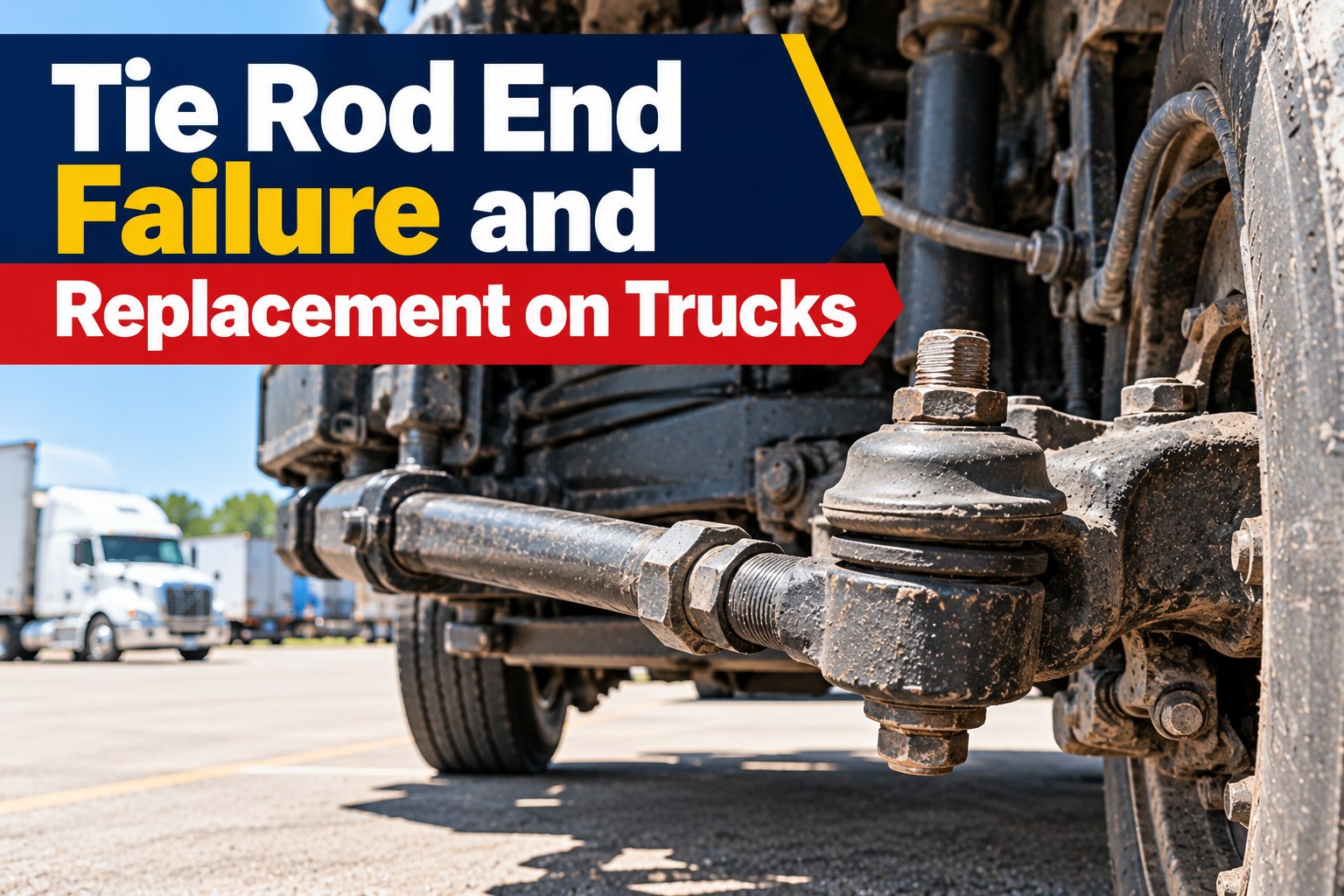
Tie rod end failure on a truck means the ball-and-socket joints at the ends of the tie rod have loosened, seized or broken, so the front wheels no longer follow the steering arm exactly. The first signs are wander, a loose feel, a shimmy and uneven steer tire wear, and the last sign can be a joint that separates and takes steering control with it. This page covers how tie rod ends work, the symptoms, the causes, how to test them, the fix, the part prices and a PM checklist. Schedule a call to put steering inspections on a PM schedule.
STEERING DIAGNOSTICS · SHOPS AND FLEET MANAGERS
The Cheapest Part in the Steering Linkage Is the One That Can End the Trip
A tie rod end costs less than a tire, so it gets replaced last. When it separates, the truck keeps rolling with a wheel the driver no longer controls.
THE HAND TEST, ONE TRUCK BULLETIN
No movement
The socket is serviceable.
Under 1/8 in (3 mm)
Replace at the next practical service stop.
1/8 in (3 mm) or more
Remove from service for replacement.
Other guides use tighter limits. Confirm which standard applies.
How Tie Rod Ends Work and Where They Wear in a Truck Steering Linkage
Tie rod ends connect the steering arms to the tie rod, so every steering input passes through them
Each end is a ball stud in a socket. It lets the linkage move up and down with the suspension while it keeps the wheels pointed where the driver steers, so free play in the socket becomes free play at the tire.
Three details decide how long an end lasts: the socket, the boot and the stud seat
TIE ROD END
Ball stud in a socket
Passes every steering input from the arm to the tie rod, so any free play is lost steering precision.
BOOT AND GREASE
Keeps grease in and grit out
A cracked, torn or missing boot lets grit reach the socket, and the joint fails later.
STUD AND NUT
Seats in the steering arm taper
A stud that is not seated tight, or a loose nut, is a repair on its own.
Tie Rod End Failure Symptoms: What Drivers Report and Technicians Verify
Loose steering and uneven tire wear are the first reports
Drivers describe the steering rather than the part. Any of these should send the truck for a hand-play test.
Loose or dead feel, with slack before the wheels respond
Steering wander and constant corrections
Pull to one side
Steering wheel off-center driving straight
Steering wheel vibration or shimmy at speed
Clunking or rattling over bumps and in turns
Uneven or fast wear on steer tire edges
Wheels still misaligned after an alignment
Rule out look-alikes, because kingpins, wheel bearings and alignment cause the same signs
Persistent misalignment is a clue. If the wheels stay misaligned after an alignment, or tire wear continues, a worn end is a likely cause. Check the whole front end before and after the repair.
Tie Rod End Failure Causes: Why Ends Loosen, Seize or Snap
Impact, load and contamination do most of the damage
IMPACT
Potholes and curb strikes
Impact under a heavy load is a classic cause of damage to the stud and socket.
LOAD
Heavy-duty load demands
Steer axles carry high loads, and the joints turn under that load every time the driver steers.
ROADS
Rough road conditions
Constant vibration and shock work the socket loose over time.
CONTAMINATION
Torn or missing boots
Grease escapes and grit gets in, so the socket wears or seizes.
FASTENING
Loose connections
A stud not seated in its taper, or a loose nut, lets the joint move.
EXPOSURE
Neglect of the linkage
Outer ends sit in dirt, water and salt, and wear faster than inner ones.
Tie rod end inspection overdue? Schedule the steering check before wander becomes a tow.
Set steering inspection reminders per truck, and log every driver complaint about wander or pull against the unit.
How to Test a Tie Rod End: Hand Play, Rotation and Boot Checks
Run four checks in order, with the engine and wheels set up the right way for each
1
Rock the wheel, engine on
Lightly rock the steering wheel and watch the threaded joints and stud nuts. Any looseness needs repair.
→
2
Push and pull by hand, engine off
With wheels straight, push and pull the socket by hand along the stud axis with about 50 to 100 lbs. Any free play means replace it.
→
3
Check it twists freely
The joint should rotate smoothly by hand. A seized joint has destroyed bearings and can stop the wheels returning to center.
→
4
Inspect the boot and the seat
Look for a cracked, torn or missing boot, a stud seated tight in its taper and a tight nut.
No levers. Do not use a wrench or other leverage during the play check. It can skew the result and damage the component.
Published limits differ, so confirm which standard applies before you decide
One guide rejects an end at 0.030 inch of vertical movement, while a truck-steering bulletin sets 1/8 inch (3 mm) as the point to pull a truck from service and says to replace anything with less play at the next practical stop. They are different checks, so use the manufacturer's specification and your inspection standard.
PUBLISHED TIE ROD END MOVEMENT LIMITS, INCHES
Reject at this vertical movement, per one inspection guide
0.030 in
Remove from service at this movement, per one truck-steering bulletin
0.125 in
Tie Rod End Failure Fix: Replace Both Ends, Then Align All Axles
Replace worn ends in pairs and align afterward, or the tire wear carries on
Worn ends have to be replaced to restore proper alignment. Replacing both sides at once avoids a second alignment, and a bent tie rod should be dealt with immediately.
REPLACE
Both sides together
It avoids a second alignment and a second breakdown on the other end.
ALIGN
Every axle, after the repair
Alignment is required after replacement, and all axles should be aligned to protect tire shoulders.
VERIFY
Zero play and a seated stud
Re-check the hand play, the stud seat and the nut before the truck returns to service.
Tie Rod End Failure Cost: Listed Part Prices and the Price of Waiting
Listed truck tie rod ends run from about $35 to over $500, depending on the truck
These are catalog listings from three sellers for parts only. Labor and alignment are extra, and fitment depends on the truck, so confirm part numbers before ordering.
LISTED HEAVY-TRUCK TIE ROD END PRICES, US DOLLARS EACH
Peterbilt all-makes, 1.50 in
$34.57
Meritor right-hand end
$40.86
Elite Truck Parts right-hand end
$56.74
Freightliner aftermarket 6073380310
$139.32
Freightliner Cascadia 126, 2022
$512.99
A small linkage fault can grow into steering damage and rapid tire loss
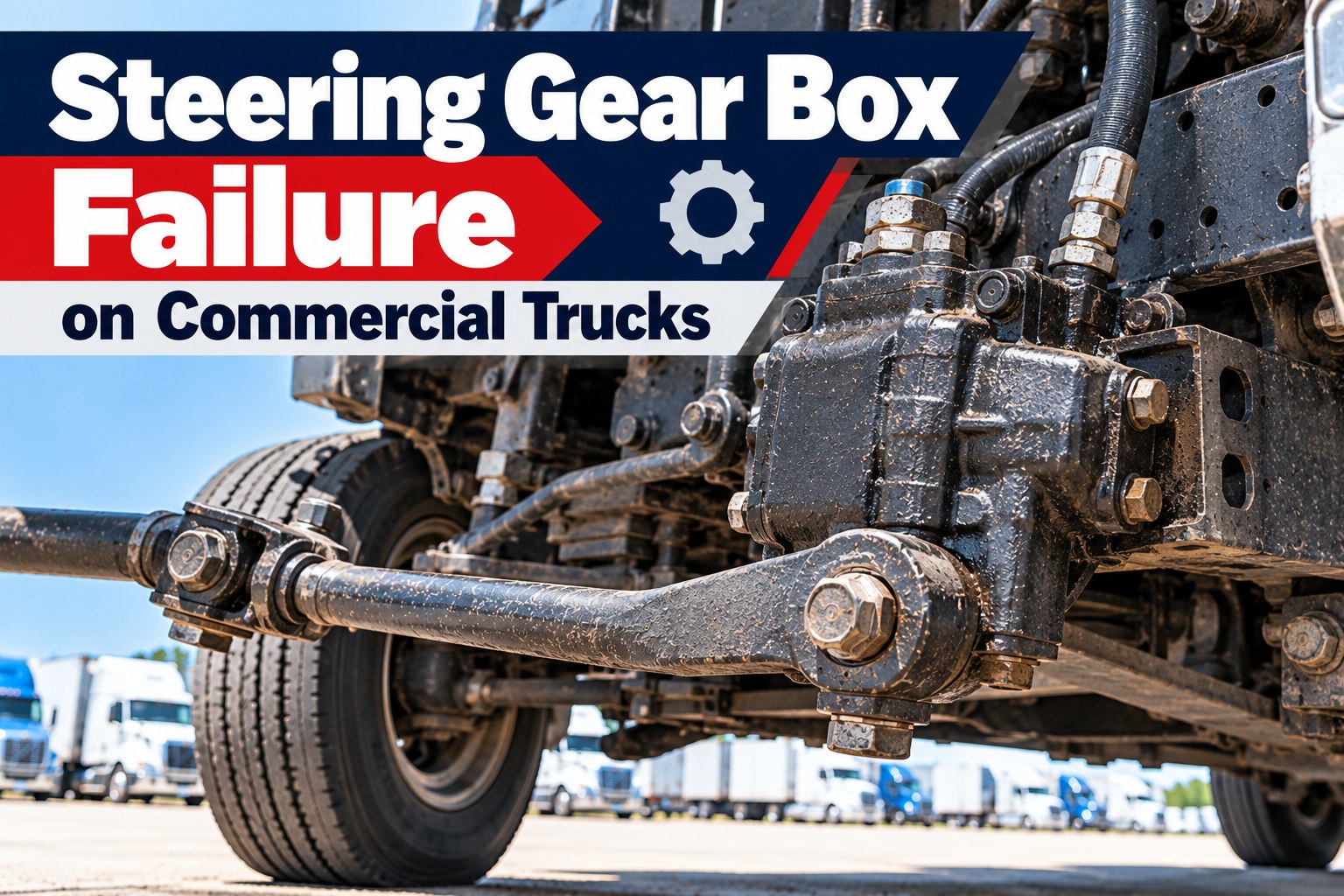
A worn joint wears tires quickly, and vibration from it can damage other steering components. One inspection guide gives a loose pitman arm nut as an example, where a $50 repair can become a $2,500 steering gearbox.
$35 – $513
listed price per heavy-truck tie rod end
$50 → $2,500
one guide's loose pitman arm nut example
10,000 – 15,000 mi
typical PM-A interval for a steering check
Tie Rod End Inspection Checklist for Fleet Preventive Maintenance
Look and listen at every pre-trip, and hand-test every joint at each PM service
At the driver's pre-trip and quick checks
- Rock the steering wheel with the engine on and watch the joints
- Look for cracked, torn or missing boots
- Check stud nuts and cotter pins are in place
- Log any driver report of wander, pull or shimmy
- Check steer tires for edge wear
At each preventive maintenance service
- Push and pull every socket by hand, engine off, wheels straight
- Check each joint twists freely and does not bind
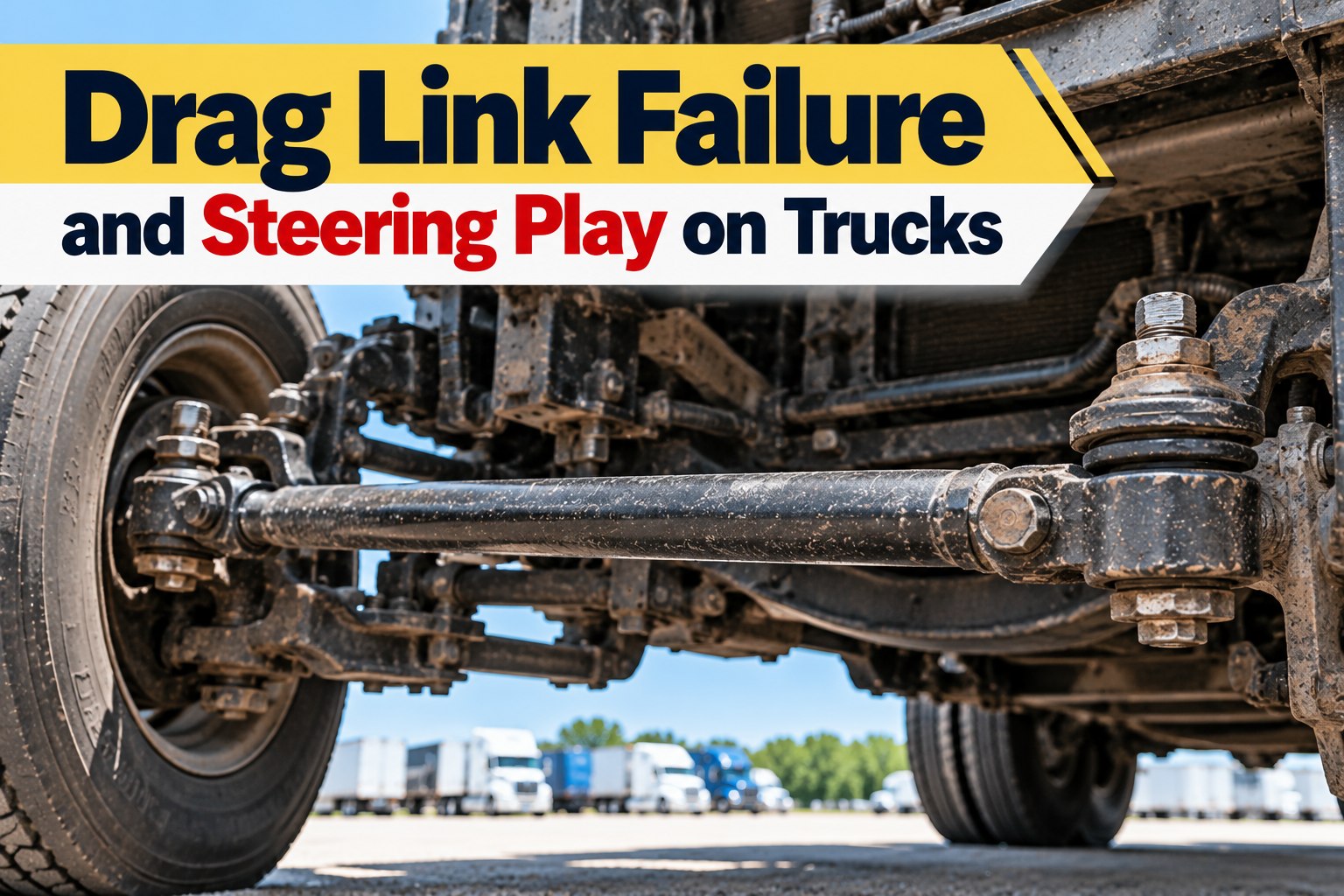
- Check the drag link, pitman arm nut and steering gear for looseness
- Replace worn ends in pairs, and align all axles afterward
- Record the findings and set the next steering inspection
Prevent Tie Rod End Failure Downtime: Schedule Steering Inspections and Track Every Repair
FleetRabbit turns a driver's note about wander, pull or a shimmy into a work order, then keeps the hand-play result, the repair and the alignment on that truck's record. PM reminders bring the next steering check up on time, and repeat steering faults show up as history.
Steering inspection reminders
Wander reports to work orders
Play readings per truck
Repair cost per unit
Frequently Asked Questions
Quick answers on tie rod end symptoms, causes, fixes and cost
What are the symptoms of tie rod end failure?
A loose or dead steering feel, wander, pull, an off-center steering wheel, vibration, clunking over bumps, uneven steer tire wear and wheels that stay misaligned after an alignment.
What causes tie rod end failure?
Impact from potholes and curbs under heavy loads, high load demands, rough roads, loose connections, and torn boots that let grit into the socket.
How do you fix a bad tie rod end?
Replace the worn end, preferably both sides, check the stud seat and nut, and align the axles afterward.
How much does tie rod end replacement cost?
Listed heavy-truck ends run from about $35 to over $500 each, before labor and alignment. A general passenger-car guide puts a whole job at $100 to $300, which does not apply to heavy trucks.
How much play is too much in a tie rod end?
Any free play found by hand means replacement. One bulletin pulls a truck from service at 1/8 inch (3 mm), and another guide rejects at 0.030 inch. Confirm which standard applies.
Can I drive with a bad tie rod end?
A worn end can separate and cause sudden loss of steering control, so do not leave it. Replace it at the next practical stop if play is small, and pull the truck from service at the out-of-service limit.
What does FleetRabbit cost?
FleetRabbit is free for up to three vehicles and $5 per vehicle per month after that.
Track 3 trucks free.
Catch Tie Rod End Failure Early: Log Every Steering Check Before the Next Run
An end that is hand-tested, logged and replaced on schedule costs a part and a short job. One that is ignored can cost a tire set, a steering gear or a wreck. Put the check on the record and let the reminder do the remembering.
Free tier for up to 3 vehicles · No credit card required · Inspections and repairs stored per unit
October 10, 2026By Derek Goes
All Blogs