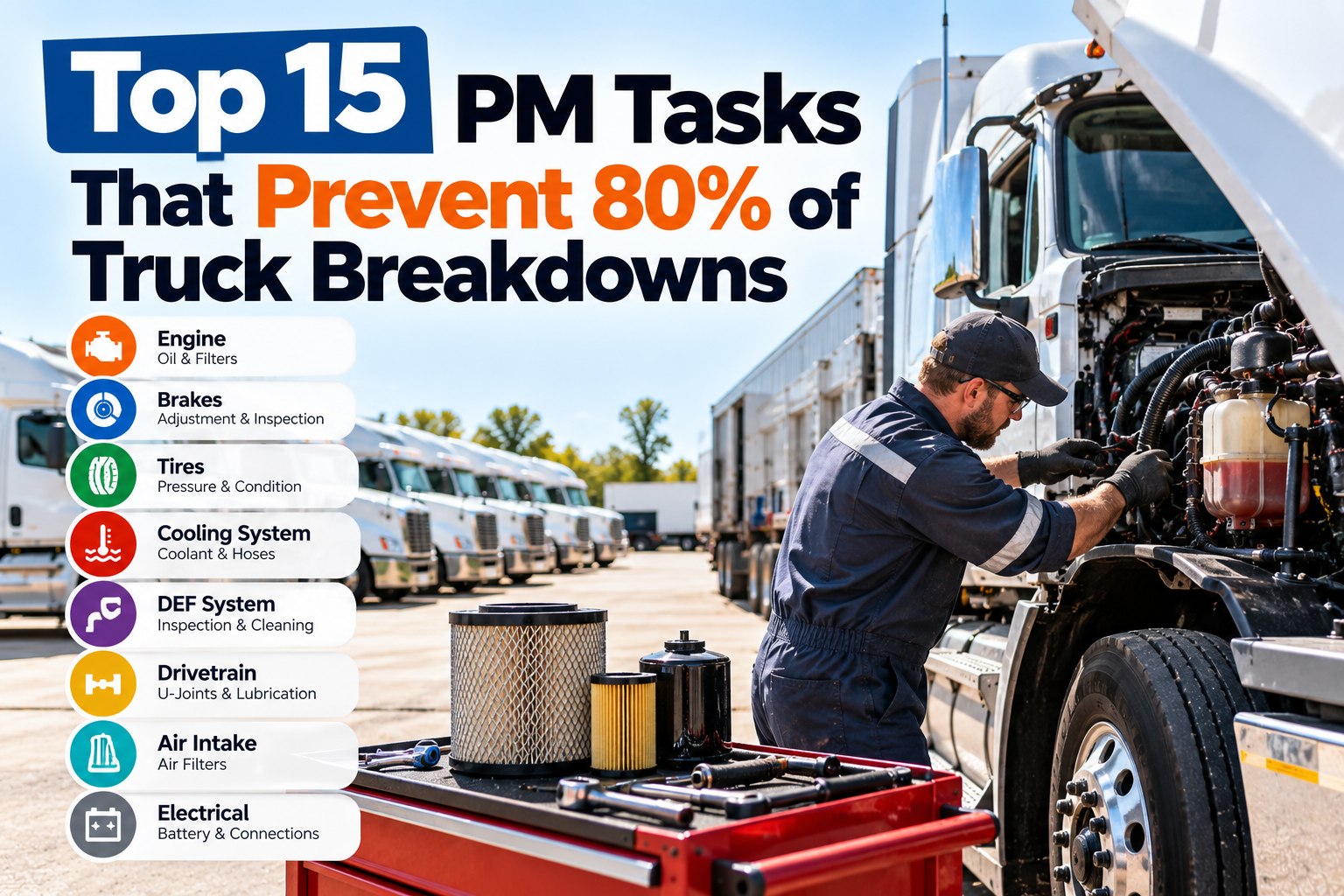
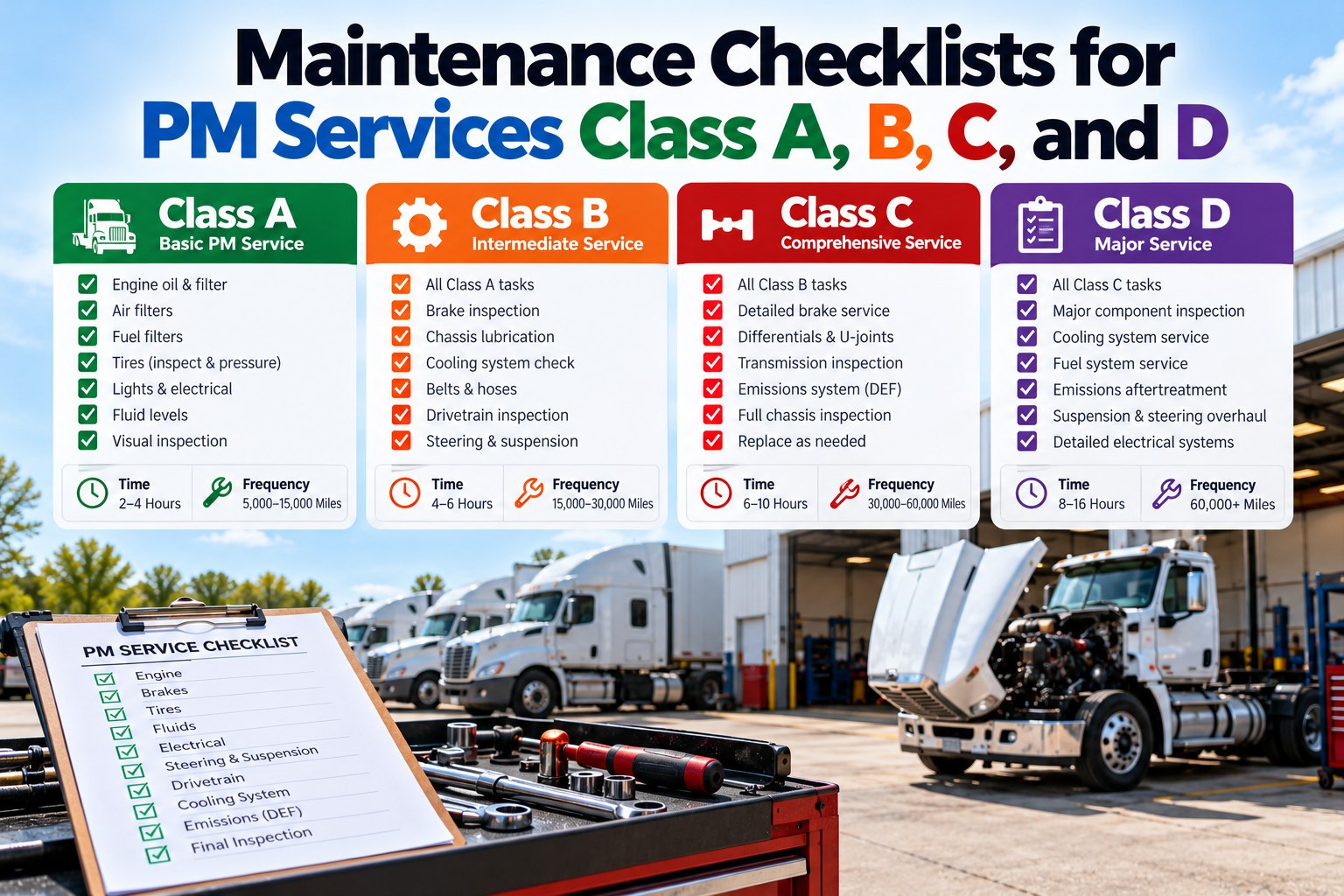
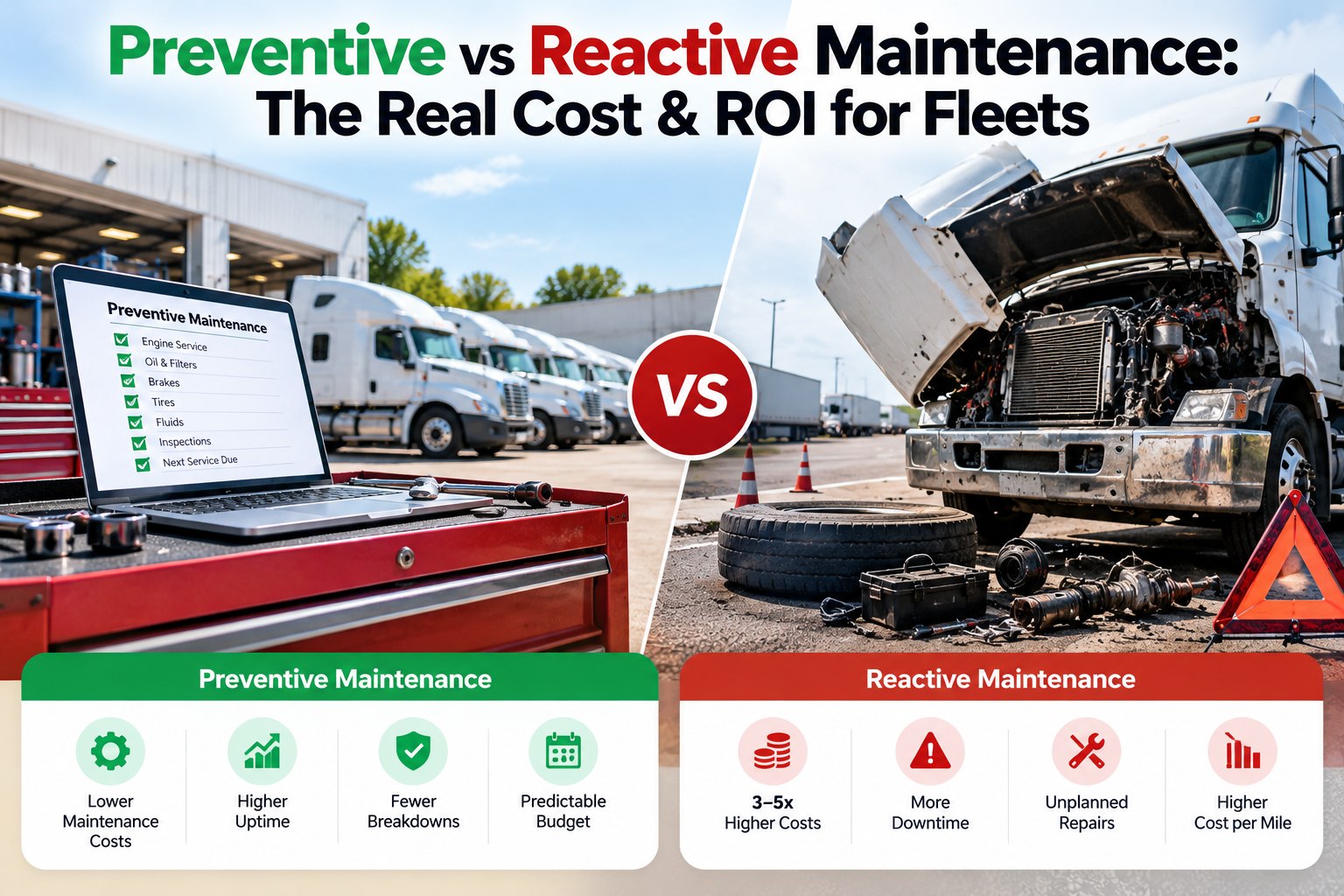
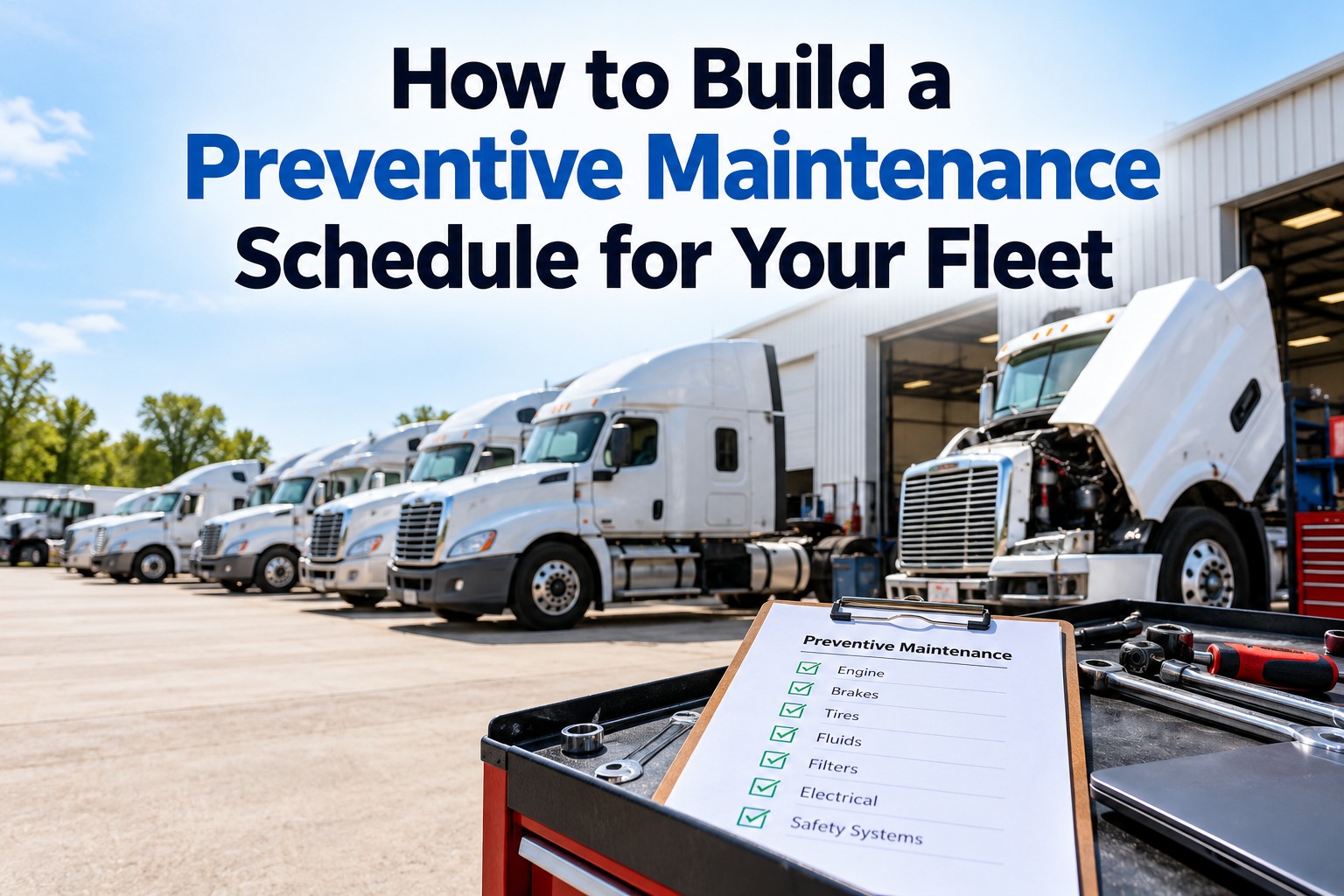
The most useful preventive maintenance tasks are the ones aimed at the systems that cause the most breakdowns: tires, brakes, the engine and cooling system, electrical and cranking, and lighting. In one benchmark, five systems accounted for roughly two-thirds of roadside repairs. This page ranks fifteen PM tasks by the system they protect, says when each should happen and shows how to put them on a schedule. Schedule a call to put these 15 tasks on your PM schedule.
BREAKDOWN PREVENTION · FLEET MANAGERS AND SHOP LEADS
A Handful of Systems Cause Most Roadside Calls, So Start Your PM Where They Do
Fifteen tasks, ranked by the systems that strand trucks most often, with when to do each one and what it catches.
TOP FIVE SYSTEMS IN ROADSIDE REPAIRS
Tires and brakesTasks 1 to 5
Power plantTasks 6 to 10
Cranking and lightingTasks 11 to 15
About 66 to 70 percent of roadside repairs.
What the 80/20 Idea Means for Truck Breakdowns
A few systems account for most breakdowns, though the best public data says about 70 percent, not 80
The Pareto idea is that a small number of causes produce most of the problems. A TMC and FleetNet benchmark reported that the five most frequently repaired systems made up 66 percent of breakdown and unscheduled repairs, and about 70 percent in a later quarter, with tires, brakes, power plant, lighting and cranking leading. So the principle holds, even though 80 percent is a shorthand and not a measured figure.
SHARE OF ROADSIDE REPAIRS BY SYSTEM GROUP, PERCENT. TMC AND FLEETNET BENCHMARK, 2021
Five systems: tires, brakes, power plant, lighting, cranking
66% - 70%
Inspection data points at the same systems, with brakes, tires and lights on top
Roadside inspections measure out-of-service violations, which are not the same thing as breakdowns. In the 2025 International Roadcheck, brakes accounted for 24.4 percent of vehicle out-of-service findings, tires for 21.4 percent and lights for 14 percent. That is more than half of all findings in three systems.
SHARE OF VEHICLE OUT-OF-SERVICE FINDINGS, PERCENT. 2025 INTERNATIONAL ROADCHECK, AS REPORTED BY ONE FLEET-SOFTWARE VENDOR
PM Tasks 1 to 5: Tires, Wheel Ends, Brakes and the Air System
These five protect the systems that top both breakdown and inspection data
1
Check tire pressure and treadTIRESHigh OOS risk
Tire inflation under half of maximum and tread below the minimum depth are both high-risk out-of-service defects, and tires lead roadside breakdown data.
When: Every pre-trip, with a gauge or a tire-pressure system
2
Inspect sidewalls, duals and wheel fastenersTIRES AND WHEEL ENDSHigh OOS risk
Cuts, exposed cord, bulges, mismatched or flat duals, and loose or missing wheel fasteners all appear on the high-risk defect list.
When: Every pre-trip, and at every PM
3
Measure brake adjustmentBRAKESHigh OOS risk
Brake adjustment out of limit tops one 2026 list of defects, and brakes are the largest out-of-service category.
When: At every PM, with a measured check of pushrod stroke
4
Inspect brake linings, hoses and linesBRAKESHigh OOS risk
Worn or contaminated lining and chafed or leaking hoses are high-risk findings, and both are visible before they fail.
When: At every PM, and a visual check on the walkaround
5
Check the air system for leaks and low pressureBRAKES AND AIRHigh OOS risk
An air leak or low air pressure is a high-risk defect, and it takes the brakes with it.
When: Every pre-trip, and a leak check at PM
Tires and brakes on a PM template? Schedule a call and we will set up the pre-trip and PM tasks.
Leave with all fifteen tasks loaded as checklists, with reminders on each unit.
PM Tasks 6 to 10: Engine, Cooling, Air Intake and Fuel
These five keep the power plant fed, cooled and lubricated
6
Test coolant condition and inspect the cooling pathPOWER PLANT
Check coolant condition, hoses, clamps, belts and the water pump weep hole, because cooling failures can end in a damaged engine.
When: At every PM, with a visual check on the walkaround
7
Change oil and filters on a duty-adjusted intervalPOWER PLANT
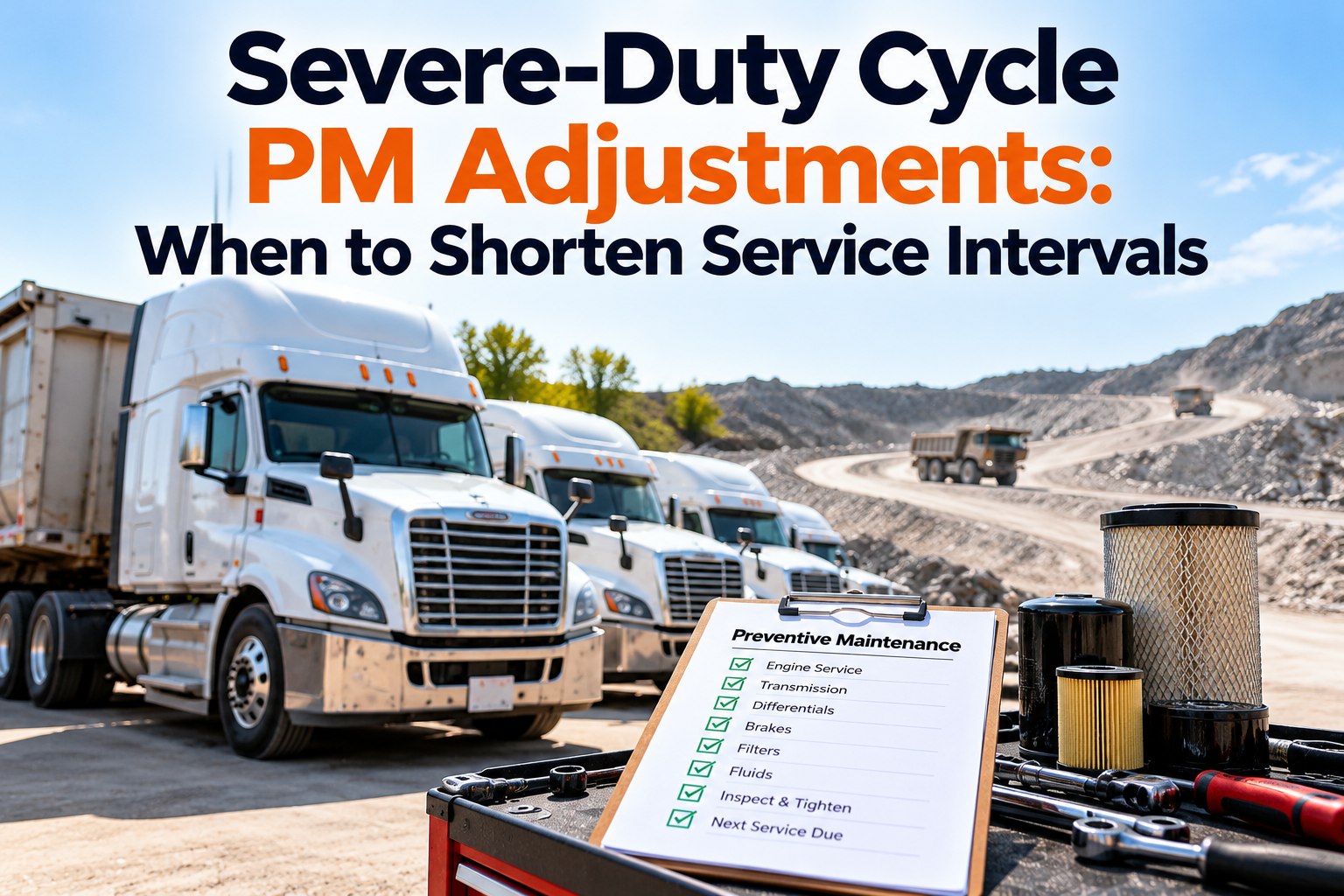
Start from the OEM interval and shorten it for severe duty such as idling, dust or stop-and-go work.
When: On the PM schedule, by miles, engine hours or date
8
Service the air filterPOWER PLANT
A restricted air filter starves the engine, so replace it on restriction or interval, and sooner in dusty work.
When: At PM, or when the restriction indicator shows
9
Replace fuel filters and drain the water separatorPOWER PLANT
Clogged filters and water in the fuel can cause power loss and no-start calls.
When: On the PM schedule, and drain on the walkaround
10
Look for oil, coolant and fluid leaksPOWER PLANTMedium OOS risk
Fluid leaks are on the defect list at medium risk, and a small leak often points to a bigger repair.
When: Every walkaround, and under the truck at PM
PM Tasks 11 to 15: Electrical, Lighting, Emissions, Steering and the Coupling
These five cover cranking, lighting, the aftertreatment system and the parts that connect the truck to the road
11
Test batteries and clean the connectionsCRANKING
Cranking and electrical faults are a top-five breakdown system. Test each battery and measure voltage drop across the cables.
When: At every PM, and before cold weather
12
Check charging system outputELECTRICAL
An alternator that under or overcharges kills batteries, so check charging voltage with the loads on.
When: At every PM
13
Check all lights and electrical connectionsLIGHTINGHigh OOS risk
Lighting is a top-five breakdown system, and an inoperative brake light is a high-risk defect.
When: Every pre-trip, including the trailer connection
14
Check DEF and the aftertreatment systemEMISSIONSMedium OOS risk
Exhaust leaks and DPF faults are on the defect list. Check DEF level and act on aftertreatment warnings early.
When: Every pre-trip for level, and at PM for the system
15
Inspect steering, suspension and the couplingSTEERING AND COUPLINGHigh OOS risk
Steering play, linkage wear, suspension and U-bolt defects and fifth-wheel defects are all on the 25-defect list.
When: At every PM, with the fifth wheel checked on each coupling
Which of the 15 Tasks Belong in the Pre-Trip and Which in the PM Bay
The driver catches the visible and fast-changing items, and the shop does the measured ones
Driver pre-trip and walkaround
Tire pressure, tread and sidewalls
Wheel fasteners and duals
Air system pressure and audible leaks
Lights and the trailer connection
DEF level and dash warnings
Fluid leaks under the truck
Shop PM
Brake adjustment, linings, hoses and lines
Coolant, hoses, belts and water pump
Oil and filter service, duty-adjusted
Air filter and fuel filter service
Batteries, cables and charging output
Steering, suspension and fifth wheel
How to Measure Whether the 15 Tasks Are Working
Track miles between breakdowns against your own history, then compare with the benchmark
The same TMC benchmark reported the miles between unscheduled road repairs below for Q2 2021. It is dated and varies by sector, so use it as a reference point and trust your own trend more.
AVERAGE MILES BETWEEN BREAKDOWNS BY SECTOR, Q2 2021. TMC AND DECISIV BENCHMARK
Set up the tasks
All 15 tasks are on a PM or pre-trip template
Each task has an interval or a trigger
Pre-trip tasks are captured on the DVIR
Each defect found becomes a work order
Measure the result
Breakdowns are logged by system, not just by truck
The top five systems are reviewed each quarter
Repeat failures on the same unit are flagged
Miles between breakdowns is tracked against your own history
Prevent the Breakdowns That Cause Most Roadside Calls: Schedule All 15 PM Tasks and Log Every Defect in FleetRabbit
FleetRabbit puts the tire, brake, engine, electrical and lighting checks on recurring PM schedules per unit, turns DVIR defects into work orders and keeps every repair on the truck's record. Reminders go out before a service is due, and repeat failures show up by system.
PM checklists per unit
DVIR defects to work orders
Reminders before due
Repair history by system
Frequently Asked Questions
Quick answers on the PM tasks that prevent the most truck breakdowns
Which PM tasks prevent the most breakdowns?
The ones aimed at tires, brakes, the engine and cooling system, electrical and cranking, and lighting. One benchmark found five systems made up 66 to 70 percent of roadside repairs.
Do 15 tasks really prevent 80 percent of breakdowns?
No source measures that exactly. The Pareto idea holds, because a few systems cause most breakdowns, but the best public figure is about 70 percent for five systems. Your own data is the better guide.
What are the most common out-of-service defects?
Brakes, tires and lights lead. In the 2025 International Roadcheck, brakes were 24.4 percent, tires 21.4 percent and lights 14 percent of vehicle out-of-service findings.
What should drivers check, and what should the shop check?
Drivers cover tires, wheel ends, air leaks, lights, DEF level and visible leaks on the pre-trip. The shop covers measured items such as brake adjustment, coolant, filters, batteries and steering at PM.
How often should these tasks be done?
Visible items daily on the pre-trip, and measured items at each PM. Set intervals from the OEM manual and shorten them for severe duty.
How do I know the tasks are working?
Track miles between unscheduled repairs and the share of repairs that are planned. Compare against your own earlier numbers first.
What does FleetRabbit cost?
FleetRabbit is free for up to three vehicles and $5 per vehicle per month after that.
Track 3 vehicles free.
Put the 15 Highest-Impact PM Tasks on Every Truck's Record
Most breakdowns come from a short list of systems, and most of those give warning at a walkaround or a PM. Load the tasks once, let reminders carry them, and keep the record of what each check found.
Free tier for up to 3 vehicles · No credit card required · Checks and repairs stored per unit
October 12, 2026By Sam Parker
All Blogs