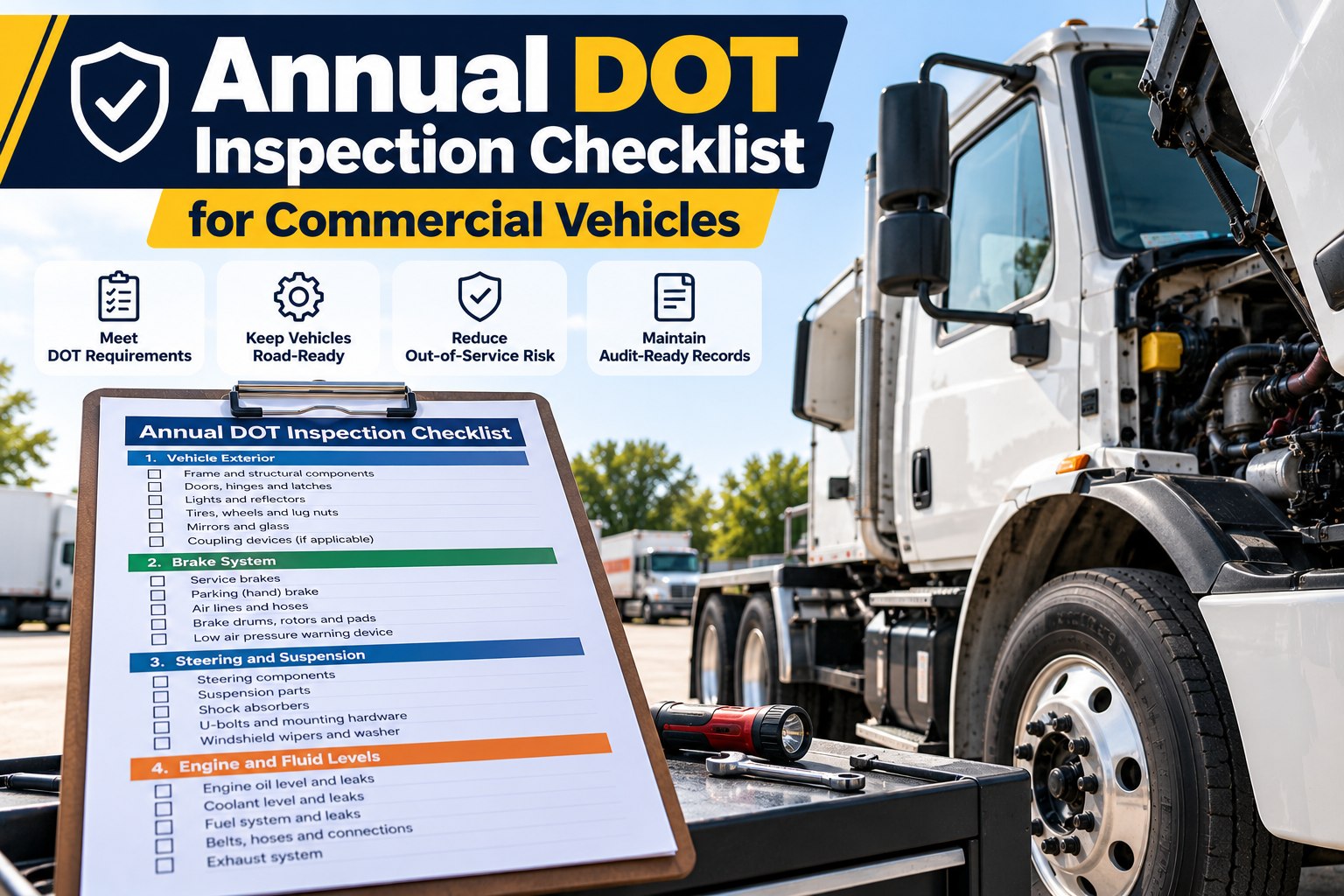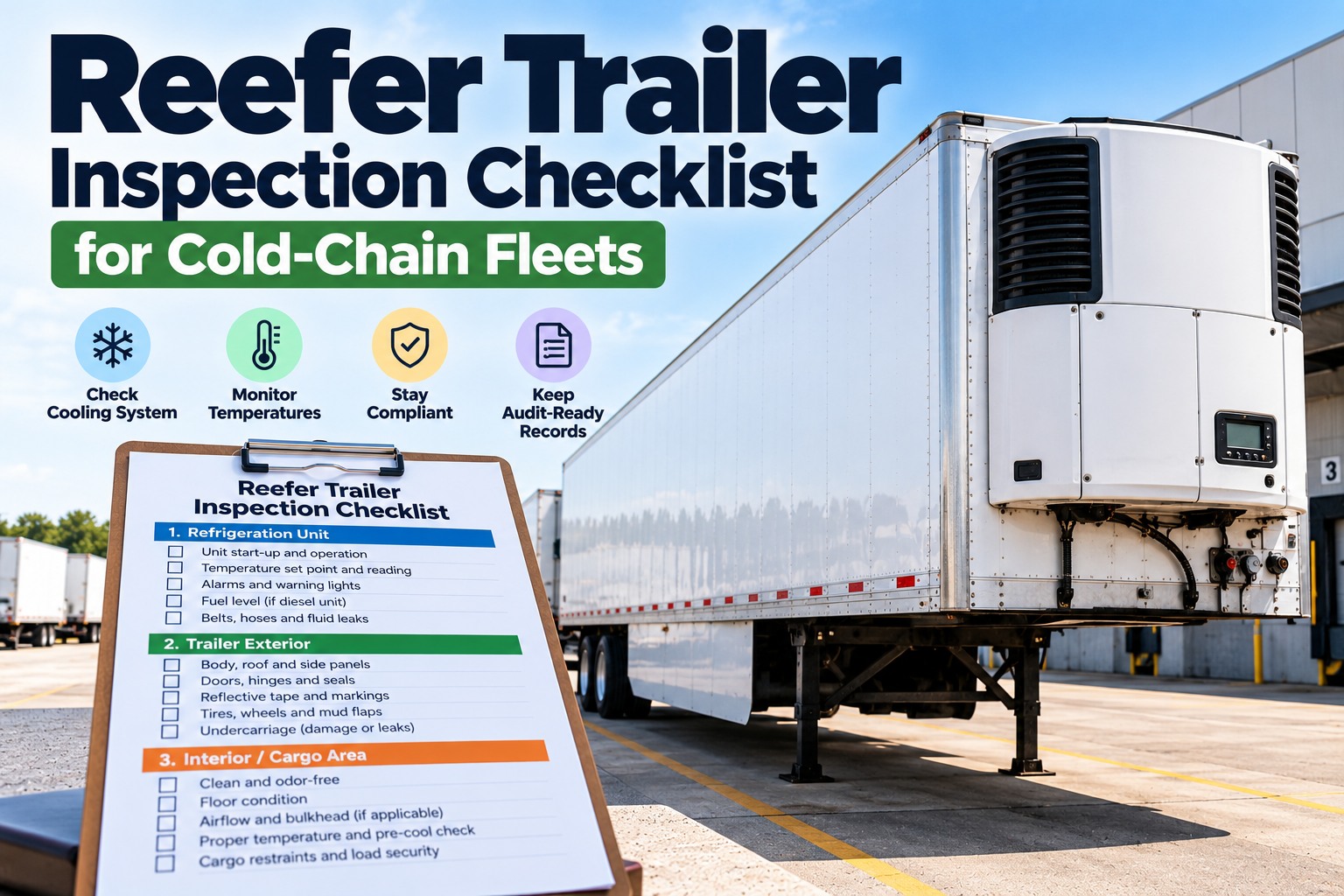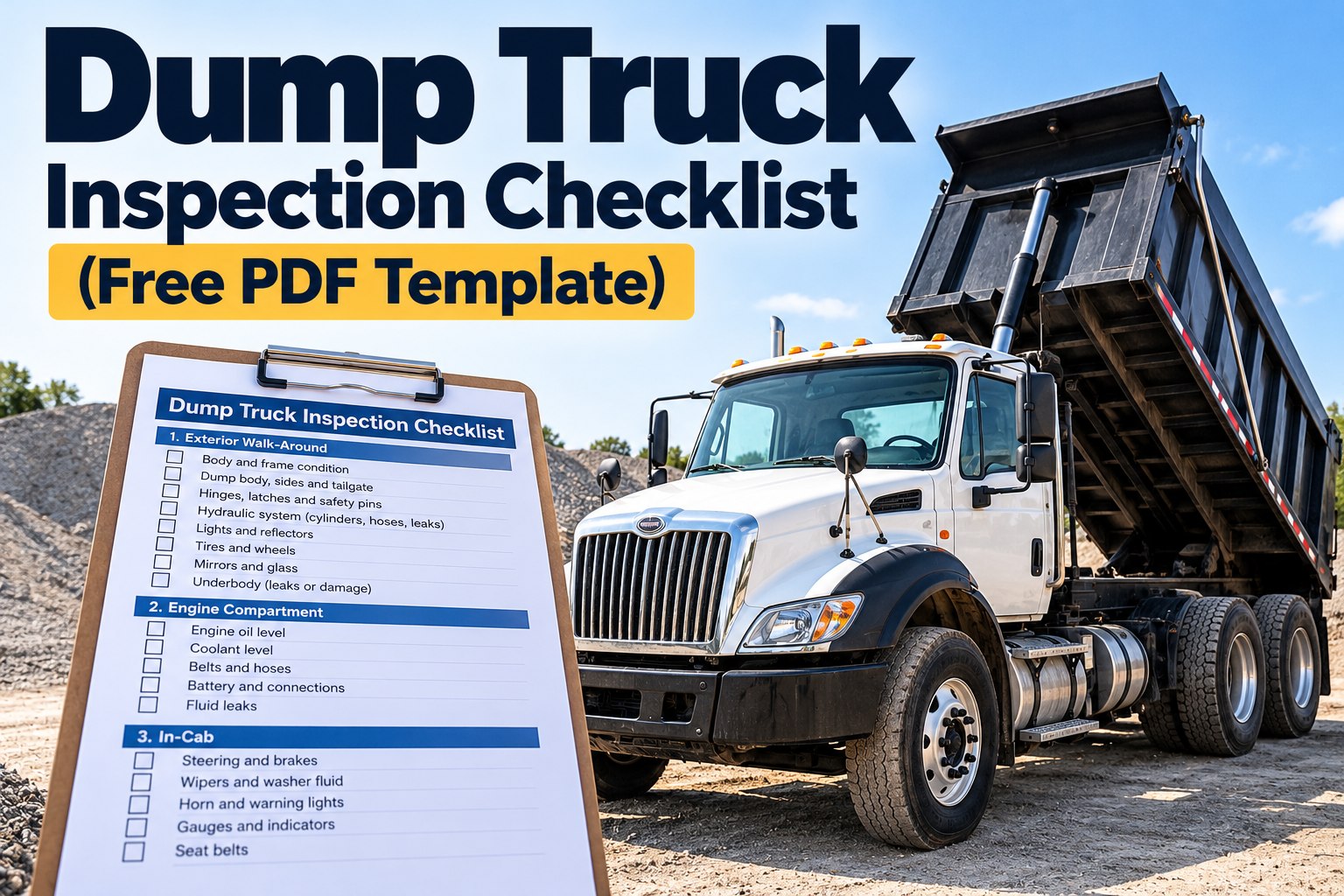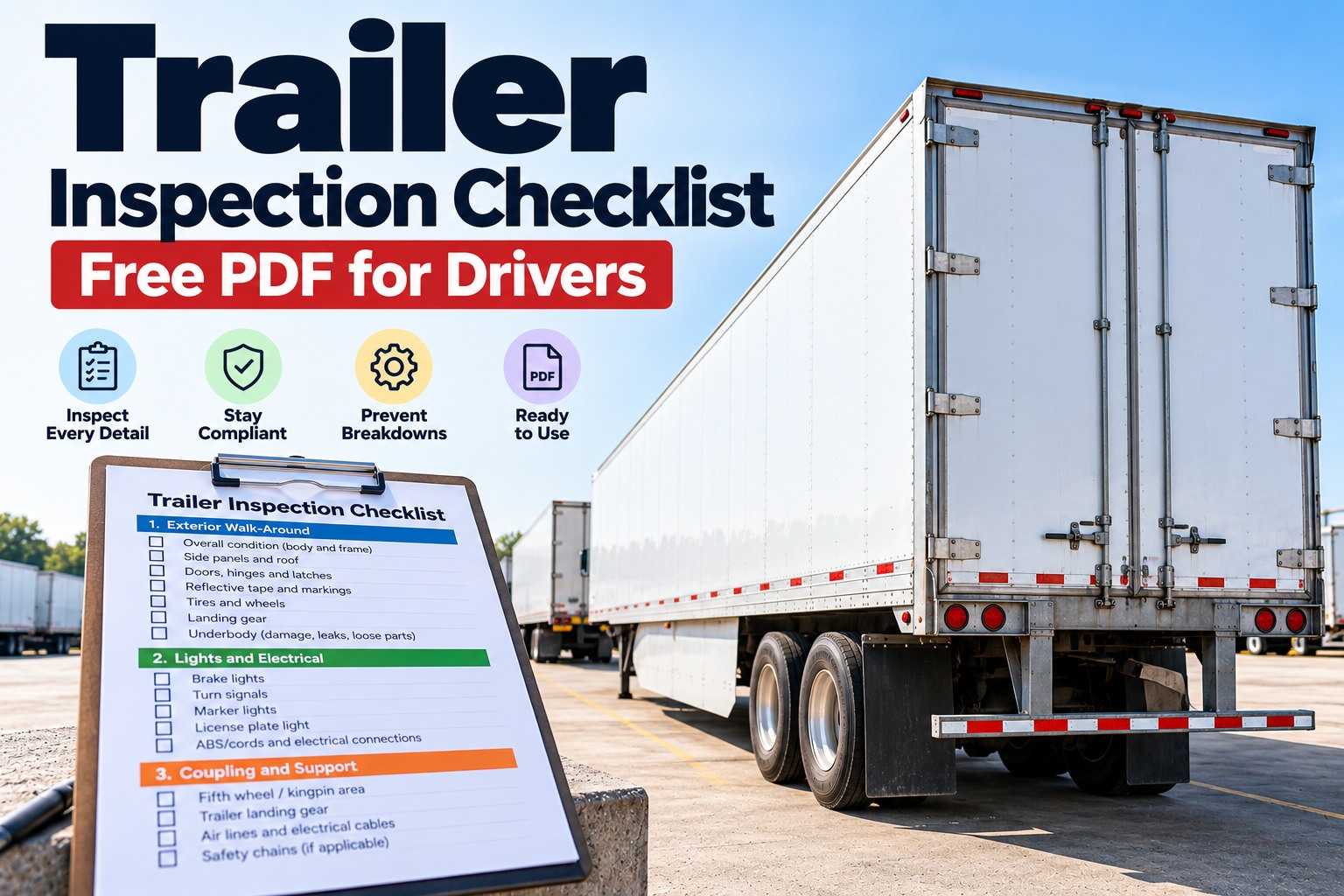
A trailer inspection checklist is a walk from the fifth wheel to the rear doors, checking the coupling, air and electrical connections, landing gear and frame, wheels and brakes, doors and lights, and the load. Trailers are easy to skip because the tractor gets the attention, yet tires, brakes, lights and cargo securement are the categories that put the most vehicles out of service. This page has 24 checks in six stations, and every one says what failure looks like. Schedule a call to put your trailer checks on every driver's phone, or compare it with the tractor pre-trip checklist.
Where Trailers Lose Inspections
At the 2025 International Roadcheck, inspectors wrote 13,553 out-of-service vehicle violations across 56,178 inspections. Four of the five biggest categories are trailer items, and they set the order of the stations below.
The Checklist: Six Stations, Front to Back
Each check has a plain description of what failing looks like, so a driver does not have to guess whether something counts. Tick a box only after you have looked.
- Kingpin fully seated in the fifth wheel jawsFail: There is a visible gap between the plates or the jaws are not locked.
- Release handle latched and locking pin in placeFail: The handle is not fully home.
- Fifth wheel mounting bolts present and tightFail: Bolts are missing or the mount is cracked.
- Tug test: pull gently against the trailer brakesFail: The trailer moves or the connection shifts.
- Glad hands seated, seals intact, no audible leaksFail: Air leaks you can hear, or lines are chafed through.
- Air lines and electrical cable routed clear of tiresFail: Lines drag, kink or are cut.
- Air holds steady with the engine offFail: Pressure drops faster than the test allows.
- ABS lamp goes out after the trailer is powered upFail: The lamp stays on.
- Landing gear fully raised and crank securedFail: Gear is bent, loose or not fully raised.
- Frame rails and crossmembers free of cracksFail: A crack or break is visible.
- Sliding tandem pins fully engagedFail: A pin is missing or not engaged.
- Springs, hangers and air bags intactFail: A broken spring or deflated air bag.
- Tread at least 2/32 in on every trailer tireFail: Tread is below the limit, or cords show.
- Tires inflated correctly, no bulges or cutsFail: A flat, bulge or sidewall cut.
- All lug nuts present, hub seals dryFail: A missing lug nut or oil on the wheel.
- Brake chambers, pushrods and slack adjusters soundFail: Stroke over the limit or a leaking chamber.
- Doors close, latch and sealFail: A door that will not latch.
- Rear impact guard straight and uncrackedFail: Guard is missing, bent or cracked.
- Tail, brake, turn, marker and clearance lights workFail: Any required lamp is out.
- Red and white reflective tape complete and visibleFail: Large sections are missing. Faded tape is a defect to report.
- Cargo blocked, braced and tied downFail: Cargo can shift, or tiedowns are damaged.
- Tiedown rating covers the loadFail: Total working load limit is under 50% of cargo weight.
- Seal number matches the paperworkFail: Seal is missing or does not match.
- Registration, annual inspection and DVIR book on handFail: A required document is missing.
Add These Checks for Your Trailer Type
The six stations apply to every trailer. Add the block that matches the equipment.
Tiedown Math for Flatbeds and Open Loads
Federal cargo securement rules are in 49 CFR Part 393. Two numbers cover most loads: how much total strength the tiedowns need, and how many of them. Read the general rule.
| Cargo length | Cargo weight | Minimum tiedowns |
|---|---|---|
| Up to 5 ft | Up to 1,100 lb | 1 |
| Up to 5 ft | Over 1,100 lb | 2 |
| Over 5 ft, up to 10 ft | Any | 2 |
| Over 10 ft | Any | 2, plus 1 for each additional 10 ft or fraction |