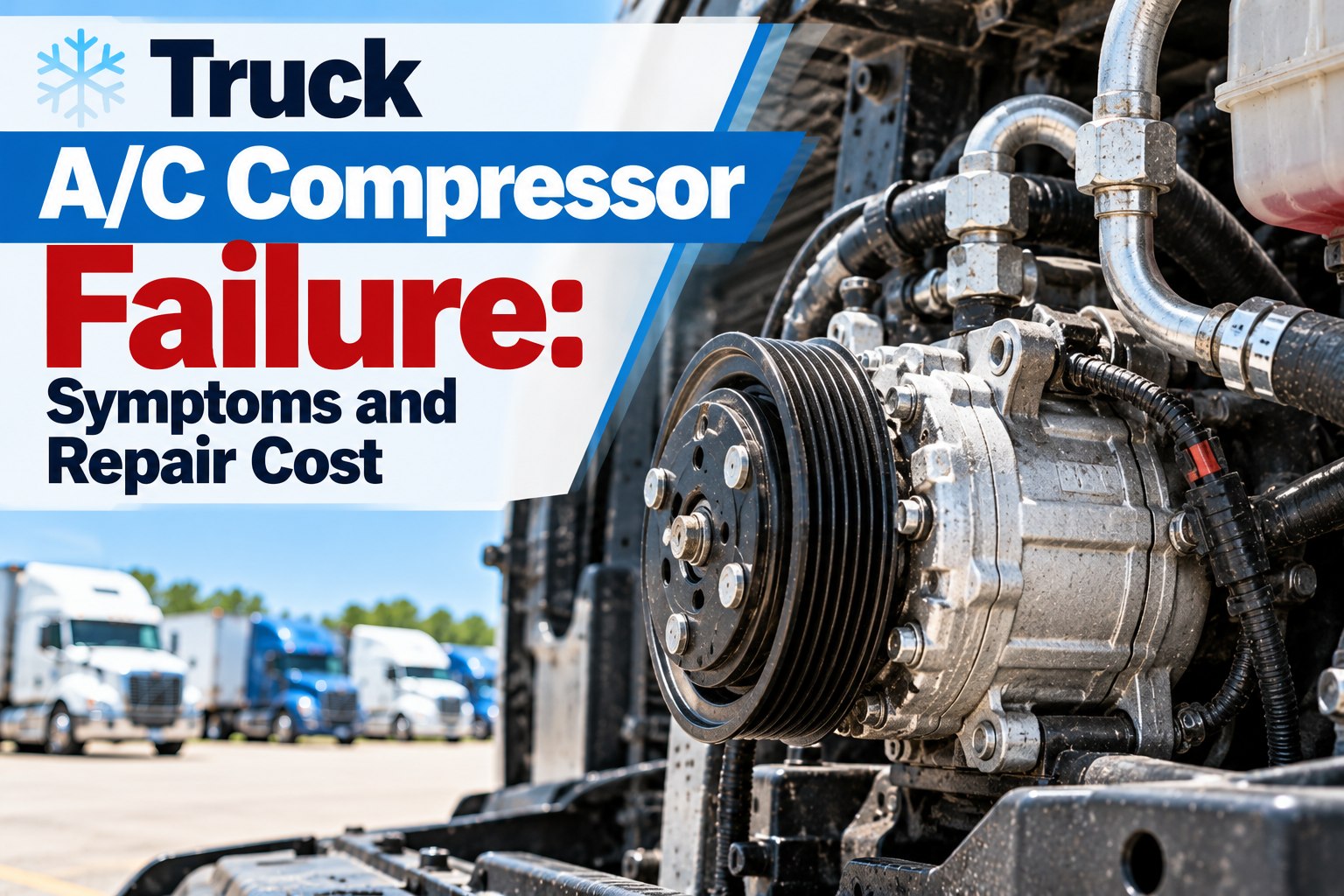
Truck A/C compressor failure means the pump that circulates refrigerant has worn, seized or lost its clutch, so the cab stops cooling. The first signs are warm air, a clutch that will not engage and a grinding or squealing noise, and the last sign is a seized compressor that sends debris through the whole system. This page covers how the cooling loop works, the symptoms, the causes, how to diagnose the compressor before replacing it, the fix, the cost and a PM checklist. Schedule a call to put A/C inspections on a PM schedule.
TRUCK A/C DIAGNOSTICS · SHOPS AND FLEET MANAGERS
The Cab Quits Cooling Long Before the Compressor Quits Pumping
A slow leak, a bad relay and a worn clutch can all end in warm air. Find which one it is before a compressor is ordered, because the wrong repair costs twice.
THE REFRIGERANT LOOP
CompressorWEAR POINT
→
Condenser
↑
↓
Evaporator
←
Drier and expansion valve
Heat leaves the cab at the evaporator and leaves the loop at the condenser.
How a Truck A/C Compressor Works and Where It Fits in the Cooling Loop
The compressor pumps refrigerant around the loop, and the clutch decides when it runs
The compressor squeezes the refrigerant so the loop can move heat out of the cab. The clutch connects it to the engine belt only when the A/C is on, and a low-pressure switch shuts the clutch off if the charge is too low, to protect the compressor.
Six parts decide whether the cab cools, and several of them mimic a failed compressor
Compressor
Pumps the refrigerant
Squeezes the gas so the loop can move heat out of the cab.
Clutch
Starts and stops the compressor
A worn clutch or coil shows as no click, or a clutch that cycles rapidly.
Condenser
Gets rid of the heat
A clogged condenser gives poor cooling that looks like a compressor fault.
Receiver-drier
Catches moisture and debris
Replaced every time the compressor is replaced.
Expansion valve
Meters the refrigerant
A faulty valve also causes poor cooling.
Evaporator
Cools the cab air
Replacement is a larger repair than a compressor on some trucks.
Truck A/C Compressor Failure Symptoms: What Warm Air, Noise and Leaks Mean
Six signs point toward the compressor, and each one has a likely meaning
WHAT YOU NOTICE
WHAT IT POINTS TO
WHAT TO DO
WHAT YOU NOTICEWarm or inconsistent air
WHAT IT POINTS TOLow pressure, often from a leak
WHAT TO DORead the gauges and check for leaks
WHAT YOU NOTICEClutch does not click, or cycles rapidly
WHAT IT POINTS TOClutch, relay, switch or low charge
WHAT TO DOTest the fuse and relay, then the pressure switches
WHAT YOU NOTICEGrinding, rattling or squealing
WHAT IT POINTS TOWorn bearings, loose internals or a slipping belt
WHAT TO DOInspect the compressor, clutch and belt
WHAT YOU NOTICEOily residue at fittings or the body
WHAT IT POINTS TOA refrigerant leak
WHAT TO DOFind the leak, and repair it rather than topping up
WHAT YOU NOTICEA burning smell
WHAT IT POINTS TOA slipping clutch or a coil electrical fault
WHAT TO DOInspect the clutch and wiring
WHAT YOU NOTICEPressure readings that stay low, run high or swing
WHAT IT POINTS TOCompressor trouble
WHAT TO DOPressure test, then inspect the clutch and bearings
Warm air alone is not proof, because a condenser, a valve or a leak elsewhere looks the same
Diagnose before you buy. A failing condenser, a clogged expansion valve or a leak can produce the same symptoms as a failing compressor. A pressure test and leak detection tell them apart.
Truck A/C Compressor Failure Causes: From a Small Leak to a Seized Unit
A slow leak starves the compressor of oil, and that is how many failures begin
1
Slow leak
Refrigerant escapes at a fitting, hose or seal.
→
2
Low charge
The low-pressure switch may stop the clutch.
→
3
Oil starvation
Low refrigerant starves the compressor of lubrication.
→
4
Wear and seizure
Bearings and the clutch wear, and the unit can seize.
→
5
System flush
Debris spreads through the loop and the repair grows.
Electrical and control faults can switch the compressor off without damaging it
Blown fuse or bad relay
Cuts power to the compressor circuit. Often overlooked and inexpensive to fix.
Faulty pressure switch
Makes the system think conditions are unsafe. Replacing it often fixes the problem.
Corroded connector pins
Interrupt the signal to the clutch.
Failed clutch coil
The clutch will not engage, even though the compressor may be fine.
A/C check overdue? Schedule the leak and clutch inspection before the cab stops cooling.
Set A/C inspection reminders per truck, and log every driver complaint about warm air or noise against the unit.
How to Diagnose a Truck A/C Compressor Before Replacing It
Check the electrical items first, then the pressures and leaks
Electrical and clutch checks
- Check the fuse and the relay
- Inspect clutch engagement
- Scan the ECU for HVAC fault codes
- Check belt tension and pulley condition
Pressure and leak checks
- Read the low-side and high-side pressures with gauges
- Run leak detection around fittings, hoses and seals
- Inspect the clutch and bearings
- Rule out a clogged condenser or a faulty expansion valve
Use the pressure readings to confirm the diagnosis, and leave refrigerant work to certified staff
Pressurized system. One guide gives normal R-134a operating pressures as about 25 to 45 psi on the low side and 200 to 250 psi on the high side. Refrigerant recovery and recharge need certified equipment and personnel, and the underhood label or service manual has the correct values for your truck.
Truck A/C Compressor Failure Fix: Replace the Compressor and What It Contaminated
Replace the receiver-drier and flush the loop every time, or the new compressor fails early
1
Match the compressor
Choose an OEM or compatible unit for the truck model. Transfer the clutch if the new unit does not have one.
2
Replace the receiver-drier
Do it every time the compressor is replaced, and flush the loop to remove contamination.
3
Add the specified PAG oil
Use the manufacturer quantity, and inspect belts and the tensioner at the same time.
4
Evacuate, then charge by weight
Hold at least 500 microns for 30 to 45 minutes, then charge with the correct refrigerant by weight.
Fix the leak instead of topping up, because a recharge alone brings the failure back
Refrigerant leaks cause low charge and should be repaired, not just topped off. Repeat failures add cost, and contaminated refrigerant can point to damage across several components, so an experienced diesel or heavy-truck shop saves time on the diagnosis.
Truck A/C Compressor Failure Cost: Compressor, Recharge, Leak and Labor Ranges
A compressor replacement can run $1,200 to $3,000 with labor, and contamination pushes it higher
Purple bars are repair prices from one heavy-truck shop guide. Amber bars are parts and labor ranges from a separate parts guide, so they do not add up to the purple ones. Prices vary by truck and shop.
TRUCK A/C REPAIR PRICE RANGES, US DOLLARS. PURPLE IS REPAIR JOBS, AMBER IS PARTS AND LABOR
Compressor replacement, labor included
$1,200 – $3,000
Recharge, no major failure
$200 – $500
Condenser replacement, for comparison
$700 – $1,800
Evaporator replacement, for comparison
$1,000 – $2,500
Compressor unit, parts only
$250 – $900
Labor for the job
$200 – $600
Full system service
$500 – $1,500
A catastrophic failure turns a single-part repair into a full system flush
If a compressor fails catastrophically, debris spreads through the loop and a part swap becomes a system job. Early diagnosis reduces downtime, avoids unnecessary parts and keeps a driver out of a hot cab.
$1,200 – $3,000
compressor replacement, labor included
$200 – $500
recharge when no major failure is found
$300 – $1,000+
leak repair
Truck A/C Compressor PM Checklist for Fleets
Look for leaks and test the clutch at each PM, and do not wait out hot weather
At every walkaround and PM
- Check belt tension and pulley condition
- Look for oily residue at fittings, hoses and the compressor body
- Confirm the clutch engages when the A/C is switched on
- Check the condenser is not clogged with debris
- Log any driver report of warm air, noise or a smell
When the cab stops cooling
- Read the pressures before adding any refrigerant
- Run leak detection and repair the leak first
- Test the fuse, relay and pressure switches
- Replace the receiver-drier and flush if the compressor is replaced
- Record the repair and set the next A/C check
Prevent Truck A/C Compressor Failure Downtime: Schedule A/C Inspections and Track Every Repair
FleetRabbit turns a driver's note about warm air or a noisy compressor into a work order, then keeps the leak check, the recharge and the compressor repair on that truck's record. PM reminders bring the next A/C inspection up before the hot season, and repeat A/C faults show up as history instead of surprises.
A/C inspection reminders
Warm air reports to work orders
Recharge history per truck
Repair cost per unit
Frequently Asked Questions
Quick answers on truck A/C compressor symptoms, causes, fixes and cost
What are the symptoms of truck A/C compressor failure?
Warm or inconsistent air, a clutch that does not engage or cycles rapidly, grinding, rattling or squealing, oily residue at fittings, a burning smell and abnormal pressure readings.
What causes truck A/C compressor failure?
Low refrigerant from a slow leak is the most common cause. A worn clutch, contamination, electrical faults and general wear also play a part, and they often combine.
How do you fix a failed truck A/C compressor?
Confirm it with pressure and leak tests, replace the compressor, replace the receiver-drier, flush the loop, add the specified oil, evacuate and charge by weight.
How much does truck A/C compressor replacement cost?
One shop guide puts it at $1,200 to $3,000 with labor. A parts guide lists the compressor at $250 to $900 and labor at $200 to $600. Contamination raises the total.
Is it the compressor or the clutch?
No click, or a clutch that does not spin with the pulley, points to the clutch. Check the fuse, relay and pressure switches first, because replacing the clutch alone may be enough on some units.
Can I drive with a failing A/C compressor?
The truck is technically drivable, but long-term operation without cooling is not recommended, because it can cause driver fatigue. An early fix prevents larger repairs.
What does FleetRabbit cost?
FleetRabbit is free for up to three vehicles and $5 per vehicle per month after that.
Track 3 trucks free.
Catch Truck A/C Compressor Failure Early: Put Every Leak Check and Recharge on Record
A leak that is found and fixed at a PM costs a small repair. One that is topped off again and again can cost a compressor and a flushed system. Put the check on the record and let the reminder do the remembering.
Free tier for up to 3 vehicles · No credit card required · Inspections and repairs stored per unit
October 10, 2026By Derek Goes
All Blogs