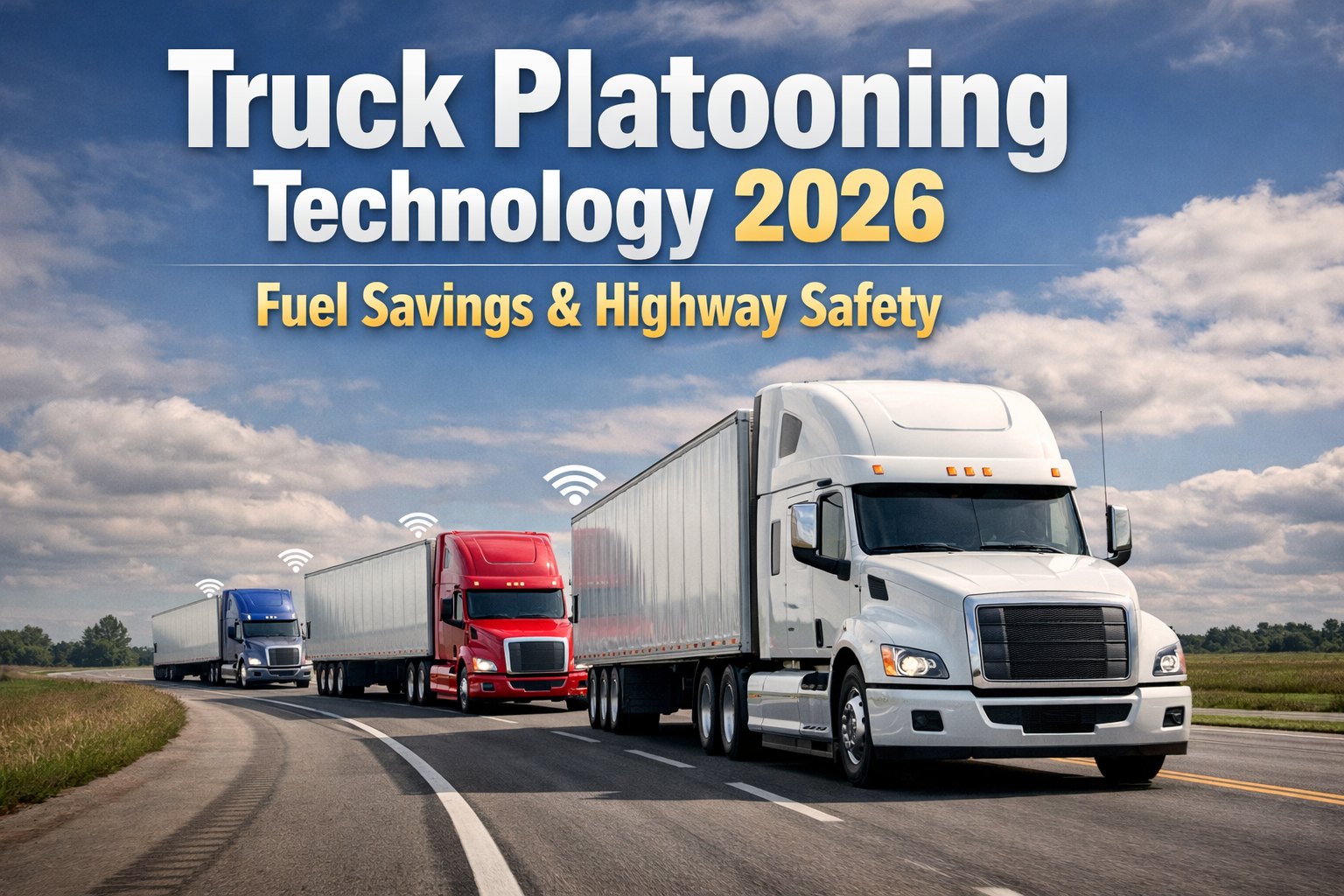
Truck platooning technology is revolutionizing highway freight transportation in 2026, with V2V-connected convoys now delivering proven 10-15% fuel savings across major US and European corridors. As pilot programs transition from controlled tests to full commercial operations, forward-thinking fleet operators are racing to understand how this game-changing technology can slash their fuel costs, improve safety records, and position their fleets for the autonomous future. This comprehensive guide examines everything fleet managers need to know about truck platooning in 2026from real-world performance data and ROI calculations to implementation requirements and regulatory considerations.
The convergence of vehicle-to-vehicle (V2V) communicationadvanced driver assistance systems (ADAS), and evolving state regulations has made 2026 the breakthrough year for commercial truck platooning. Major carriers are moving beyond pilot phases, and the technology is proving its value on high-volume routes where conditions favor convoy operations. For fleets already using modern fleet management software, platooning represents the next evolution in operational efficiency.
Want to see how leading fleets are preparing for platooning? FleetRabbit provides the operational visibility and analytics foundation you need. Book a free demo to learn more.
What Is Truck Platooning Technology?
Truck platooning is a breakthrough connected vehicle technology that wirelessly links two or more trucks in a tight convoy formation using vehicle-to-vehicle (V2V) communication and automated driving systems. The lead truck is operated by a professional driver who controls the convoy, while following trucks automatically synchronize their speed, braking, and steering through real-time wireless connectivity—maintaining safe distances as close as 30-50 feet that would be impossible for human drivers to achieve safely.
This close-formation driving creates significant aerodynamic benefits. Following trucks travel in the lead truck's slipstream, dramatically reducing air resistance and fuel consumption. It's the same principle as drafting in NASCAR or cycling pelotons, but applied to commercial freight with sophisticated automation ensuring safety.
How V2V Truck Platooning Works
Modern truck platooning systems integrate multiple technologies working in perfect coordination:
V2V Communication
Dedicated Short-Range Communications (DSRC) or C-V2X radio transmits braking, acceleration, and steering commands between trucks with latency under 20 milliseconds—10x faster than human reaction time.
Radar & Sensor Array
Forward-facing radar, lidar, and cameras continuously monitor the lead vehicle and surrounding traffic, providing multiple redundant safety systems that never get tired or distracted.
Automated Vehicle Controls
Electronic braking systems (EBS), adaptive cruise control, and lane-keeping assist execute platooning commands automatically with precision no human driver could match.
Fleet Management Integration
Cloud-based platforms coordinate platoon formation, optimize routes, and provide real-time monitoring through integration with existing fleet management software systems.
Platooning Automation Levels Explained
The trucking industry defines platooning capabilities across four distinct levels, similar to autonomous driving classifications. Understanding these levels is critical for fleet operators evaluating adoption timelines:
| Level | Technology Description | Driver Requirements | 2026 Availability |
|---|---|---|---|
| Level 1 | Cooperative Adaptive Cruise Control (CACC) | Driver in all trucks, hands on wheel | Commercially available now |
| Level 2 | Automated following with driver supervision | Driver in all trucks, active monitoring | Commercial pilots active |
| Level 3 | Conditional automation in following trucks | Lead driver only; followers can disengage | Limited pilots in 2026 |
| Level 4 | Fully driverless following trucks | Driver in lead truck only | Testing phase only |
Most commercial platooning deployments in 2026 operate at Level 1 or Level 2, with Level 3 trials underway in controlled corridor programs. Level 4 operations—where following trucks operate completely without drivers—remain in testing but represent the technology's ultimate cost-saving potential.
See How FleetRabbit Prepares Fleets for Emerging Technology
Modern fleet management starts with operational visibility. FleetRabbit provides the analytics foundation fleets need to evaluate and adopt new technologies like platooning.
Truck Platooning Fuel Savings: Real Numbers from 2026
The primary economic driver for truck platooning adoption is substantial aerodynamic fuel savings. When trucks travel in close formation, following vehicles experience dramatically reduced air resistance—delivering measurable fuel economy improvements that directly impact your bottom line.
Documented Fuel Savings by Platoon Position
Annual ROI Calculator: What Platooning Saves Your Fleet
For a typical long-haul trucking operation, platooning fuel savings translate to significant annual cost reductions. Here's a realistic calculation for a 10-truck fleet:
Real-World ROI Example: 10-Truck Long-Haul Fleet
*Savings increase with higher platoon-eligible route percentage and fuel prices
Beyond Fuel: The Complete Benefits Picture
While fuel savings drive the ROI conversation, truck platooning delivers additional operational advantages that compound the value proposition:
V2V braking reaction times under 100 milliseconds vs. 1-2 seconds for human drivers. Automated systems never get drowsy, distracted, or make judgment errors.
Following truck drivers experience significantly lower cognitive load, potentially extending safe driving hours and improving job satisfaction—critical during the ongoing driver shortage.
Closer following distances mean more trucks per mile of highway, reducing congestion on high-traffic freight corridors and improving overall supply chain efficiency.
Proportional to fuel savings, platooning cuts emissions—supporting fleet sustainability goals, ESG reporting requirements, and shipper environmental mandates.
Ready to Optimize Your Fleet Operations?
FleetRabbit helps fleets track efficiency metrics, reduce fuel costs, and prepare for emerging technologies. Start with a free demo today.
Real-World Truck Platooning: 2026 Pilot Programs
Commercial truck platooning has moved well beyond laboratory testing into real-world highway operations. Several major programs are demonstrating the technology's commercial viability across different geographies and operational contexts.
Active Platooning Programs Worldwide in 2026
I-10 Southwest Corridor Program
Multi-state platooning corridor connecting Texas, New Mexico, and Arizona. Over 500,000 platooning miles logged since 2024 with participation from major LTL and truckload carriers demonstrating commercial viability.
EU Truck Platooning Challenge
Cross-border platooning operations spanning Germany, Netherlands, Belgium, and beyond. Pioneering Level 3 operations with reduced driver requirements in following vehicles under EU regulatory frameworks.
Japan Expressway Pilots
Government-backed platooning trials on designated expressway segments with aggressive plans for commercial deployment by 2027. Testing includes groundbreaking Level 4 driverless following truck operations.
How Carriers Are Implementing Platooning
Fleet operators adopting platooning technology are taking different strategic approaches based on their operational characteristics and route profiles:
Dedicated High-Volume Lane Pairs
Carriers with consistent freight between specific terminals deploy platooning on those dedicated routes, maximizing time in platoon formation and capturing the highest possible ROI from their equipment investment.
Dynamic Real-Time Matching
Forward-thinking fleets use real-time coordination platforms to form platoons opportunistically when trucks from different origins converge on common highway segments—similar to how rideshare apps match drivers and passengers.
Cross-Carrier Industry Consortiums
Industry groups are testing multi-carrier platooning, where trucks from competing fleets form platoons on shared routes and split efficiency gains—a model that could dramatically increase platoon formation opportunities.
Implementation Challenges: What Fleet Managers Must Know
Despite promising results, fleet operators evaluating platooning technology must navigate several practical challenges that affect deployment decisions and timeline.
Regulatory Landscape by State
Platooning regulations vary significantly across US jurisdictions, creating a patchwork that fleet managers must understand:
US Truck Platooning Legal Status (2026)
- Platooning Permitted (25+ States): Texas, Georgia, Arkansas, Michigan, Ohio, Tennessee, North Carolina, South Carolina, Alabama, and others have enacted legislation explicitly permitting truck platooning with varying operational restrictions.
- Following Distance Exemptions Required: Most states require specific permits or exemptions from minimum following distance laws, which typically mandate 300+ feet between commercial vehicles—impossible for effective platooning.
- Driver Requirements Still Universal: All current US platooning operations require licensed CDL drivers in every vehicle. Level 4 exemption applications allowing driverless following trucks are under review in several states but none approved for commercial use yet.
Technology & Equipment Requirements
Per-Vehicle Equipment
- V2V communication hardware ($2,000-5,000)
- Forward collision radar and sensor array
- Electronic braking system (EBS) compatibility
- Platooning-enabled ECU software license
Fleet System Integration
- Real-time GPS tracking integration
- Platoon coordination software platform
- Driver training and certification programs
- Updated maintenance protocols
Operational Requirements
- Compatible route profiles (highway-heavy)
- Sufficient freight density for platoon formation
- Terminal scheduling coordination
- Weather and traffic contingency procedures
Common Implementation Barriers
Fleet operators consistently report these challenges when evaluating platooning deployment:
Get Expert Fleet Management Guidance
Whether you're evaluating platooning or optimizing current operations, FleetRabbit's team can help you build a more efficient fleet. Schedule a personalized consultation today.
Future of Truck Platooning: 2026-2030 Roadmap
The truck platooning market is positioned for explosive growth as technology matures and regulatory frameworks catch up with innovation. Industry analysts project several key developments over the next five years.
Technology Evolution Timeline
Level 2 Goes Mainstream
Widespread commercial availability of Level 2 platooning systems from all major truck OEMs. Cross-manufacturer compatibility standards begin emerging through industry consortiums.
Level 3 Corridor Programs Launch
Designated interstate corridors in Texas, Ohio, and other states begin permitting Level 3 operations where following truck drivers can legally disengage during platoon mode.
Multi-Carrier Coordination Platforms
Industry-wide coordination platforms enable real-time dynamic platooning across competing carrier fleets, dramatically increasing formation opportunities and utilization rates.
Level 4 Commercial Operations Begin
First commercial Level 4 operations with fully driverless following trucks on approved interstate segments, delivering the technology's maximum labor cost savings potential.
Market Size & Growth Projections
The commercial truck platooning market is projected to grow substantially as fleet adoption accelerates:
Frequently Asked Questions About Truck Platooning
Real-world commercial platooning operations consistently demonstrate 10-15% fuel savings for following trucks and 4-5% for lead trucks. The platoon-wide average is typically 7-10% depending on convoy size, following distance, and route conditions. Savings are highest on flat, straight interstate highway segments with minimal traffic interference requiring platoon separation.
Yes, over 25 US states have enacted legislation explicitly permitting commercial truck platooning, typically requiring exemptions from minimum following distance laws. States with active frameworks include Texas, Arkansas, Georgia, Michigan, Ohio, Tennessee, and North Carolina. However, all current US platooning operations still require licensed CDL drivers in every vehicle—fully driverless following trucks are not yet permitted for commercial use in any state.
Truck platooning requires V2V communication hardware (DSRC or C-V2X radios), forward-facing radar and sensor arrays, compatible electronic braking systems, and platooning control software. Equipment costs range from $2,000-5,000 per truck depending on OEM and features. Good news: many 2024+ model year trucks from major manufacturers include platooning-ready hardware that can be activated with software updates and licensing.
Cross-manufacturer platooning is currently limited but improving rapidly. Industry standards are emerging to enable interoperability, but most 2026 commercial deployments involve trucks from the same OEM or trucks equipped with standardized third-party aftermarket platooning systems. Multi-brand native compatibility is expected to improve significantly by 2028 as common communication protocols are adopted industry-wide.
Level 4 platooning—where following trucks operate completely without onboard drivers—is currently in advanced testing but not commercially available anywhere. Industry analysts project limited Level 4 commercial operations on designated interstate corridors could begin by 2030. However, regulatory approval, liability frameworks, insurance policies, and public acceptance remain significant factors that could accelerate or delay this timeline substantially.
Preparing Your Fleet for the Platooning Future
Truck platooning technology in 2026 represents a maturing opportunity for fleet operators laser-focused on fuel efficiency, safety improvement, and competitive positioning. With documented savings of 7-10% on eligible routes and proven safety benefits, the economics are compelling for fleets with consistent high-volume interstate lanes and the operational discipline to coordinate platoon formation.
However, platooning is not a universal solution for every fleet. Success depends heavily on route characteristics (interstate vs. regional), freight density patterns, state regulatory environments, and existing fleet equipment composition. Operators considering platooning adoption should carefully evaluate what percentage of their miles are realistically platoon-eligible, whether their OEM equipment supports the technology, and whether coordination with other carriers could expand formation opportunities.
As the technology evolves toward Level 3 and eventually Level 4 automation, early adopters are building critical operational experience that will position them to capture dramatically greater benefits as regulatory frameworks mature. For fleets not yet ready to deploy platooning, ensuring visibility into current operations through robust fleet management software creates the essential foundation for evaluating and adopting emerging technologies when the time is right.
Get the Visibility Foundation for Future Technology
FleetRabbit provides the real-time tracking, analytics, and operational visibility that forward-thinking fleets need to maximize current efficiency and prepare for emerging technologies like platooning.